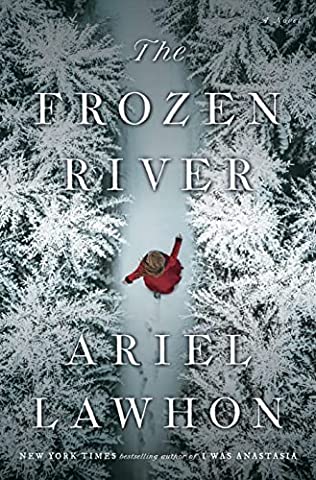
The Frozen River
by Ariel Lawhon
Martha Ballard is a historical figure, a midwife who also had other medical skills. She is an unusual figure for her time—literate (a rarity) and a wife and the mother of a large brood who traveled the area quite independently to deliver babies. In Ephraim, she had a strong, trusting, industrious, and helpful husband. He was a man of faith. He saw his wife’s potential and taught her how to read. He also helped her overcome trauma she had suffered as a young lady.
The setting of The Frozen River is the winter of 1789-1790 (actually 1785 in historical records) and was known as “the year of the long winter” in Hallowell, Maine. Martha is called to document a body found in the river, caught by ice. Thus begins a murder mystery that is so much more. A pastor’s young wife is the victim of multiple violent rapes. In the process of disclosing the truth of the events, the author also reveals much about women’s rights at that time. In summary, they had few. To even give testimony in court a woman had to be accompanied by a husband or father. It was clear that a man’s testimony had greater weight than a woman’s. Premarital sex was fairly common, but if a pregnancy was the result, the woman could be jailed or fined. The man incurred no consequences.
Pre-Bill of Rights, the court system was very different than what we have in America today. It was similar to what is commonly referred to as “frontier justice.” Townsfolk flocked to a local trial where the jury was composed solely of men and the judge was likely to be biased. There were other levels of courts depending on the accusations and the findings of a lower court. In some cases it was clear that justice would not be done, and so men would take action on their own following the dictum of “an eye for an eye.”
Death from natural causes, sickness, childbirth, or accidents was something the people of that time had to live with. Although expected, accepting it was still very difficult, especially for mothers. Life was not easy, and circumstances often left people bereft of material needs and emotional support.
The author, Ariel Lawhon, makes the characters come alive. Without being melodramatic, she presents the characters as real people with flaws and strengths, individuals that the reader will really like despite some weaknesses or truly detest because of the evilness they harbor in their hearts. There were many secrets to be revealed, but those were skillfully hidden until the author chose to disclose them. Even then, the motivation for the matter might remain unknown for a time. Because of the rapes and other types of violence found in the book, it is a hard book to read and certainly not a book to read right before bedtime. It is a page turner that is not for the faint of heart, but reveals so much about a remarkable woman and a time of history that required much of people.
Rating: 5/5
Category: Historical Fiction
Notes: 1. The Author’s Notes at the end delve into the historical accuracy of the book and the author’s resources. She estimates that about 75% of the book “closely follows the historical record.” The rest is “what could have happened.” As all works of historical fiction, the author had to flesh out events and characters to create a story of interest that flows.
2. I do recommend this book, but I would be remiss if I did not include a warning of violence and rape for any potential readers for whom those topics are triggers. There is also some swearing.
3. This book is excellent for book club discussion. Our group engaged in topics that covered the many themes found in the book extending past the regulars of characters and setting to symbolism of a silver fox and the all important river.
Publication: 2023—Doubleday
Memorable Lines:
Memory is a wicked thing that warps and twists. but paper and ink receive the truth without emotion, and they read it back without partiality. That, I believe, is why so few women are taught to read and write. God only knows what they would do with the power of pen and ink at their disposal.
The act of mothering is not limited to the bearing of children. This is another thing that I have learned in all my long years of midwifery. Labor may render every woman a novice, but pregnancy renders every woman a child. Scared. Vulnerable. Ill. Exhausted. Frail. A pregnant woman is, in most ways, a helpless woman. Her emotions are erratic. Her body betrays her.
“No baby is conceived apart from the will of God, May. If you are pregnant, it means that you have been touched by Providence, and you will never hear me say an ill word about the child you carry. Nor will I let anyone do so in my presence.”
This is a new thing I’ve discovered about myself in recent years. The noises. Stand and groan. Sit and grunt. Some days it seems that I can hardly take a step without some part of my body creaking or cracking and this—even more than the gray hairs and the crow’s-feet at my eyes—makes me feel as though I am racing down the final stretch of middle age.


 education pathways
As you know, I shy away from books like this, I am all about non stressful reading, life itself is stressful enough, I read to get away!
Jenna
LikeLiked by 1 person
Although I am glad I read the book, it is a hard book to read with so many difficult events. I understand reading to escape our stressful lives; I do a lot of that too!
LikeLiked by 2 people
I love a good murder mystery as long as it is fiction. Awesome review Linda.
LikeLiked by 1 person
With this book being 75% fiction, I’m not sure which crimes are fictional.
LikeLike
Excellent review, Linda. This was a wonderful book, but full of such substance. I can see why it was such a great book club pick.
LikeLiked by 1 person
Yes, despite my love of cozy mysteries, they do not have the depth of this kind of book.
LikeLiked by 1 person