
Home » Posts tagged 'Jesus' (Page 3)
Tag Archives: Jesus
Help is Here: Finding Fresh Strength and Purpose in the Power of the Holy Spirit
Help is Here
by Max Lucado

In the way Max Lucado presents information in all of his writings, he tells us in Help is Here about the Holy Spirit—with lots of Scripture as the basis to which he adds humor and anecdotes to make his point clear and personalize it for the reader. I never realized how many verses of the Bible, especially the New Testament, talk about the Holy Spirit: who He is, His job description, and how we can access His power and help. As always, Max points the reader to God: the Father, the Son, and the Holy Spirit.
When you are in such despair that you don’t know how to pray, the Holy Spirit will intercede and pray for you. When you have a task that is too big for you, you can have the Holy Spirit walking beside you, empowering you. Nothing is too big or too hard for Him. When you need direction, the Holy Spirit is there. When you feel totally undone, the Holy Spirit can breathe new life into you. If you have never investigated the role of the Holy Spirit, I urge you to read Help is Here. Max explains His role in the world and urges you to welcome the Holy Spirit into every part of your day. Practical and inspirational, Help is Here is a treasure for Christians whether you have been walking with Jesus for a lifetime or you have just met Him. If you are a seeker wanting to know more about God, this is a good book for you too.
Rating: 5/5
Category: Christian, Nonfiction, Inspiration
Notes: Help is Here ends with “Questions for Reflection” prepared by Max’s daughter Andrea Lucado. There is a set of questions for each chapter. The book concludes with a few pages of footnotes.
Publication: September 13, 2022—Thomas Nelson
Memorable Lines:
…your Father is more than willing to release blessings in abundance. You have the Spirit as your advocate and your Father as your provider. You may feel weak, but you’ve never been stronger.
We have a helper, a divine instructor. He will save us from the cul-de-sac of confusion and the dead end of doubt. He does this by enrolling us in the primary course of his university: Jesus Christ.
The chief aim of the Spirit is to escort you into the Sistine Chapel of Jesus and watch you grow wide-eyed and slack-jawed. He will enchant you with the manger, empower you with the cross, embolden you with the empty tomb. He will infect you with his love for the Savior.
The help you need is here. Ask the Spirit to infuse you with his power. Throw open the door! Swing wide the gate! Stand on the threshold and say “Come in!”
Some Golden Daybreak–the Second Coming of Christ
Some Golden Daybreak
by Lee Roberson, D.D.
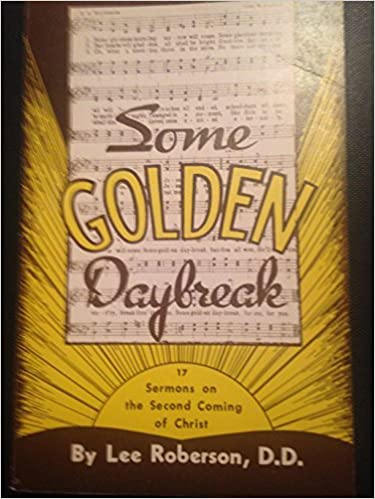
Having worked through two different current Bible studies on the book of Revelation, I came away with more questions than answers. I learned that there are three major perspectives that scholars adopt to address this New Testament book of prophecy. I remember clear teachings when I was a child at Highland Park Baptist Church in Chattanooga, Tennessee, so I searched online for a book by the pastor at that time. On a used book site, I found Some Golden Daybreak, a collection of 17 sermons on the Second Coming of Christ written by Dr. Roberson. Since then, I discovered that Amazon has both paperback and a Kindle version so this book has clearly passed the test of time.
I highly recommend Some Golden Daybreak. Its teachings are based on Scriptures found in both the New and Old Testaments and address such topics as the mark of the beast, Armageddon, and the much debated Great Tribulation. It answered many questions for me satisfactorily. If you have wondered about eternal life and salvation, this book will provide hope, inspiration, and answers.
Rating: 5/5
Category: Christian, Religion
Publication: 1957—Sword of the Lord Publishers
Memorable Lines:
He invites all sinners to come and to drink of the water of life. No one is excluded. All are invited. What is the water of life? It is salvation through faith in Christ. How do we take it? Freely, without money and without price. It is for everyone.
He is coming again. He is coming in power and great glory. The Christ who was prophesied to come as Saviour hundreds of years before He was born; the Christ who walked upon the earth and died upon a cross; the Christ who arose triumphant from the grave; the Christ who ascended back into Glory; the Christ who gave His promise before leaving this earth that He would come again—this Christ is coming.
The more we study the truth of His coming and the more we observe the trends of the times, the more we feel like fervently praying, “Even so, come Lord Jesus.”
Through Gates of Splendor–a call from God
Through Gates of Splendor
by Elizabeth Elliot

Five young men felt God’s call to share the good news of Jesus with an Ecuadoran Indian tribe that had never had positive encounters with outsiders. Their bad experiences date back to the ruthless rubber traders of the 1870’s—“civilized savages against unbaptized savages.” They had Stone Age technology, were feared by other Indians for their unprovoked ambushes, and had a language known only to themselves. The missionaries and their wives had a daunting task. They started by evangelizing more friendly local tribes and establishing bases, many refurbished from areas abandoned by Shell Oil Co. From these bases they did flyovers of the Auca land, first to find where in the jungle the Aucas were living and later to communicate with them by dropping gifts to demonstrate their friendly intentions.
When they felt the time was right, they finalized plans to land and meet with the Aucas in person. The book becomes very intense at that point. After an initial positive meeting, there is literally radio silence instead of the expected call back to the wives. A search and rescue team went in consisting of Ecuadorian military, volunteer missionaries and Indians, and U.S military. It was a dangerous mission.
Although the preparation and action are the basis of the story, the core of the book is faith in God. Elizabeth Elliot, the author of Through Gates of Splendor, was the wife of Jim Elliot, the first missionary of the group to respond to God’s call to contact this people group who had never heard of Him. Jim Elliot was willing to die if need be to share the good news of salvation to the Aucas. He said, “He is no fool who gives what he cannot keep to gain what he cannot lose.” The story of the lives of these young men and their dedication to God is inspiring and many of their notes and thoughts are recorded in this book. In its pages you will see a vivd picture of what God’s call can look like as well as how these missionaries and their wives responded.
Rating: 5/5
Category: History, Christian, Memoir
Notes: The 40th anniversary edition which I read included:
1. Maps
2. Photographs, many taken at great peril by a Life magazine reporter who chose to stay with the search party when he could have returned to the base and safety.
3. Two Epilogues. One was written in 1958 explaining the immediate aftermath of the first contact and one written in 1996 relating the lives of the families as they evolved over the next 40 years.
Publication: Originally 1956
40th anniversary edition in 1996—Living Books (Tyndale)
Memorable Lines:
“If that old engine had quit up there, God alone could have saved me. I might just as well admit it frankly right here; I don’t like to fly over stuff like that and I have to have a pretty good reason to be over it without a good position-check and a good river to identify my position by. But these are people for whom Christ died, and you have to find them before you can take the Gospel to them, so I was happy to have stumbled on them.”
Pete Fleming was one of those who could not be content while the Aucas remained in darkness. In his diary he wrote: “It is a grave and solemn problem; an unreachable people who murder and kill with extreme hatred. It comes to me strongly that God is leading me to do something about it, and a strong idea and impression comes into my mind that I ought to devote the majority of my time to collecting linguistic data on the tribe and making some intensive air surveys to look for Auca houses….I know that this may be the most important decision of my life, but I have a quiet peace about it.
September, 1955, was the month in which Operation Auca really started, the month in which the Lord began to weave five separate threads into a single glowing fabric for His own Glory. Five men with widely differing personalities had come to Ecuador from the eastern United States, the West Coast, and the Midwestern States. Representing three different “faith-missions,” these men and their wives were one in their common belief in the Bible as the literal and supernatural and perfect word from God to man. Christ said “Go ye”; their answer was “Lord, send me.”
50th Wedding Anniversary in Branson, MO


Showboat Branson Belle

Cabin in the Woods





Silver Dollar City

WonderWorks

Performance of “Jesus” at the Sight and Sound Theater

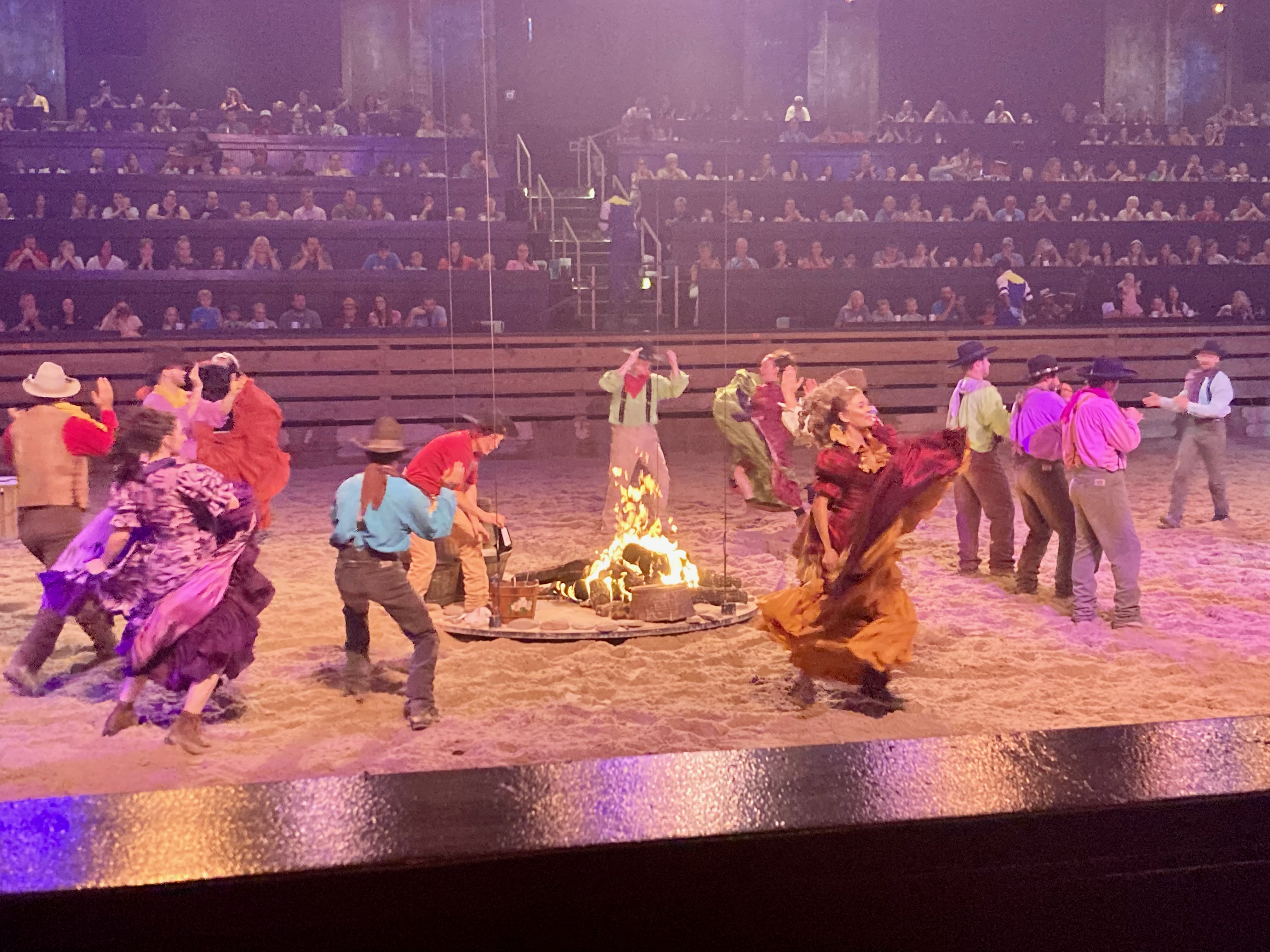

Dolly Parton Stampede
Mission Possible–living a life that counts
Mission Possible
by Tim Tebow
with A. J. Gregory
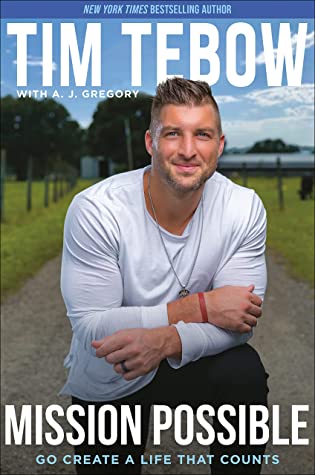
Have you ever thought about the purpose of your life? Tim Tebow, athlete, speaker, and TV sports analyst, shares his ideas on the subject in his latest book Mission Possible. He says that our “big-picture purpose is to bring glory to God wherever you are” and that “Living a mission-possible life means executing the good works that God has already prepared for you to do.”
Tebow lays out in plain language and through Scriptures and anecdotes how each one of us can live out a mission possible life, a life of significance. As head of the Tim Tebow Foundation, Tebow tries to transparently live out his beliefs as he spearheads projects to honor the disabled where they are each crowned king or queen of the prom at Night to Shine events all over the world. He does this to show them how much God loves them and how special they are in God’s eyes. His foundation is also involved in orphanages and health care clinics as well as fighting sexual trafficking. While we can’t all do the things he does or have the influence he has, Tebow says that we can all live out our purpose and make a difference in the lives of others.
In this powerful and inspirational book, Tebow addresses some of the hard problems we face as we try to discover our purpose and make our lives count. Sometimes we encounter obstacles that could keep us from completing our mission, but God can do the impossible if we are willing to be used by Him. God can use us wherever we are, even if we think what we are doing is insignificant. As Tebow notes about Jesus: “He lived fully with purpose in every moment.” That is hard to do but Jesus is the ultimate example for living a life full of purpose.
Our mission possible life will aim for excellence with integrity and gratitude. Tebow also encourages you to pursue your mission with passion. He shares how to find your edge and use it well. He gives guidance for dealing with uncertainties, imperfections, and even failure. He encourages you to take that first step, however small it may be: you don’t have to map out the whole journey before you begin in faith.
There is so much Godly, practical wisdom in Mission Possible. The style is easy to read and well organized, the content is important, and the message is clear. The book concludes with a prayer for those who don’t yet have a personal relationship with Jesus and want to pray to accept Him into their lives. There is another prayer for those ready to make their lives count. This book will make an impact on your life. Read it. Share it. Act on it. You will be glad you did.
I would like to extend my thanks to NetGalley and to WaterBrook for giving me the opportunity to read this book in exchange for an honest review.
Rating: 5/5
Category: Christian, Nonfiction
Notes: Tebow has created 3 companion products that support this book as well as a children’s picture book on the same topic.
Publication: March 8, 2022—WaterBrook
Memorable Lines:
See, my mission was never to put on Night to Shine. Now, I love it and it’s absolutely my favorite night of the year, but my mission was, and continues to be, loving and celebrating and caring for those whom God loves and celebrates and cares for.
God has given us His best, His Son, and has proved that He can be trusted. I may not understand why certain roads have started or ended but I can count on His faithfulness.
We may not be blessed with Tom Cruise’s stunt skills. I can’t sing, and maybe you can’t play football. But there’s one thing we can all do: because of the work Jesus did for us on the cross and through the Resurrection, we can each make our lives count.
Seeing Beautiful Again–encouragement
Seeing Beautiful Again
by Lysa TerKeurst

Are you going through a hard time, something that is devastating and you have no control over? Do you wonder if you’ll ever “see beautiful” again? Lysa TerKeurst experienced three of those, two physical and one relational, in a short period of time. She has written several books that describe her journey. In Seeing Beautiful Again, she has drawn from her experiences and writings to compose a devotional book to guide readers through fifty days of their struggle. The goal is to give hope and demonstrate that by clinging to God’s promises, readers can stay the course and trust God.
Seeing Beautiful Again is divided into sections and each section begins with a letter to the reader from author Lysa TerKeurst. Each devotional begins with Scripture and ends with a prayer. In between Lysa shares her thoughts on the topic. These passages sometimes include parts of her personal story and always draw the reader to God’s truth which can be applied to a personal situation.
TerKeurst’s other books like Forgiving What You Can’t Forget examine in depth our response to hurts. This devotional is a daily dose of encouragement to fight the good fight and to remember God’s love and His promises in the middle of the trauma.
I would like to extend my thanks to Edelweiss and to HarperCollins Christian Publishers for giving me the opportunity to read this book in exchange for an honest review.
Rating: 4/5
Category: Religion, Christian Life, Women’s Issues
Notes: Devotional
Publication: March 30, 2021—Harper Collins Christian Publishers
Memorable Lines:
Their victory never hinged on their ability or any of their well-thought-out plans. It was solely dependent on their unwavering obedience offered to a loving and mighty God.
My job is to be obedient to God. God’s job is everything else.
Father God, thank You for reminding me I can trust You in the waiting. I know I can entrust every season of my life into Your hands. Thank You for being present in every moment, strengthening me in the places that I feel inadequate to keep going. When I feel uncertain about what’s ahead, remind me of who You are. I know it will get me through. In Jesus’ name, amen.
The First Christmas–Eastern philosophical take on the Nativity story
The First Christmas
by Stephen Mitchell
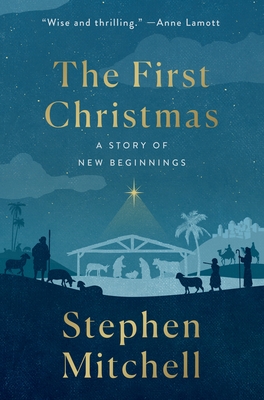
While I am not a theological scholar, I have been a Christian for over sixty years. Those are years in which I have studied the Bible, and God has grown my faith. When the author of this book gives an interpretation that I disagree with, I can accept that as a difference of opinion. An example in Stephen Mitchell’s The First Christmas is the angel Gabriel’s appearance to Mary. In the Bible this event is reported in chapter one of Luke. I believe this account literally, that the angel Gabriel appeared to Mary in a physical form and spoke to her in an audible voice. In fact, there is a dialogue recorded there. The author wants to interpret the appearance as a bright light (“the best I could come up with,” he says) and its communication as “empathy and telepathy,” nothing “so gross as speech.” Based on the writings in Luke, the author is creating a fiction that, though unconfirmed, could have happened. Many describe near death experiences as a comforting, blinding, white light. So, here, the author is using his imagination within the context of an angel visiting Mary.
What is more believable in his telling of the story are the extensive thought processes that Mary must surely have engaged in during the days and months following the angel’s announcement that she had been chosen to bear the Son of God as He comes to Earth in human form. The Bible doesn’t give details of all of her thoughts and feelings, but it does record her song of praise often called The Magnificat (Luke 1:46-55). Luke also shows us that her response is meditative.
There were shepherds who had an angelic visitation. After that they came to worship the baby Jesus, explaining how they found the little family in Bethlehem filled with visitors paying their taxes. “Mary treasured up all these things, pondering them in her heart” (Luke 2:19). Using common sense and based on Biblical evidence that Mary was a reflective person, the inner dialogue the author creates is believable, even if you don’t agree with all the fictional details.
There are some larger issues with this novel, however, that bother me. Mary says “No one had ever prophesied that the Messiah would never die.” This statement skirts the issue that there were many Old Testament prophecies which predict the Messiah would be resurrected to reign in His eternal kingdom. Her statement feels like a deliberate distraction in the text. Author Mitchell is clear that Mary would know the Jewish teachings. Therefore, she would have been aware of the many prophesies that Jesus would be resurrected and sit on the right hand of God the Father (Psalm 110:1). Psalm 49:15 says “But God will redeem my soul from the power of the grave, for He shall receive me.” Interpretations are acceptable, but contradictions are not.
The format of the book is interesting. The author states “my only agenda was to inhabit the characters.” He tries to put himself into an ancient time and experience it as each of the characters in the Nativity story might have. As he looks at the role each person or animal had in this pivotal moment, the author makes the decision to tell the story in the third person for the people and first person for the animals. He separates the chapters with an “Interlude” which is his opportunity to reveal his thoughts as an author and provide some background information. This format (which he explains in an Interlude is based on “the glorified sestet of an Italian sonnet) is a good choice for this book. Unfortunately, the author deviates in the second part of Mary’s story and interrupts the tale as he inserts his “authorial I” into her story rather than waiting for the Interlude. This happens again in Joseph’s story. In general I found Joseph’s tale more convincingly told. Oddly though, Mary and Joseph were approached in the book by angels who were totally different in appearance with Joseph’s angel not even culturally appropriate to the time period.
The section of The First Christmas that tells of the visit of the wise men is an elaborate fictional tale of two Jewish scholars who travel to the East studying Buddhism and other mystic philosophies that concentrate on meditation and finding the god within. It deviates from Scripture in many ways, most notably in the visions of the future of Jesus and his family that the men have as they sit with Mary, Joseph, and baby Jesus. (In the book, they visit the family in the stable whereas most Christians believe this visit occurred somewhat later as the Bible says the wise men or magi went to a house.) If you believe that Jesus is the Son of God and He was with God from before the creation of the world, as set forth in John 1:1-3, then much of this chapter is disturbing. They envision a confused young man, estranged from His family, and perhaps mentally deranged. A reading of any one of the four gospels shows anything but what they see for His future. He was fully man and fully God. Their supposed vision is not in character. They even shortcut and omit important parts of His death, fantasize his burial in a mass grave, and totally neglect His resurrection.
The last major section focuses on the donkey and is my favorite. The donkey tell the Nativity story from his perspective. Recalling ancient donkey traditions, he retells the Biblical story of Balaam’s donkey who could both see angels and could talk. He points out the good qualities of donkeys—intelligence, honesty, service, dignity, and trustworthiness.
I have an admiration for the author as a multi-lingual translator, well-versed in many Eastern religions and philosophies. He possesses a great imagination and makes connections from various works of literature. I hope that he will return to the Bible to connect with Jesus in a personal relationship. I don’t regret reading The First Christmas as an intellectual exercise, but I don’t recommend it as an Advent activity or as a pleasure read.
I would like to extend my thanks to NetGalley and to St. Martin’s Press for giving me the opportunity to read this book in exchange for an honest review.
Rating: 2/5
Category: Religion & Spirituality, General Fiction (Adult)
Publication: November 9, 2021—St. Martin’s Press
Memorable Lines:
[From the chapter Yosef (Joseph)] Where was the Lord now? Not here, not amid this swirling chaos. But if the Lord was not with him, it was his own fault. He knew that. God had not left him; he had left God. It could be no other way.
[From the chapter Yosef—speaking of Maryam (Mary)] She was graced with a quality he had been striving for all his life, ever since he had realized what his purpose, what the purpose of every Jew, was: to love God with all his heart and to fulfill His commandments as impeccably and with as much joy as he could summon.
[From the chapter The Donkey] …throughout the day angels from every order of the hierarchy descending to take a peek at the new little visitor. They don’t knock or announce themselves; they just fly in through the roof or the walls, without so much as a by-your-leave, and nobody greets or even notices them. When they see me, though, they nod to acknowledge my presence and to let me know that they know I know.
God Will Help You–overcoming the hard times
God Will Help You
by Max Lucado

Even in the best of times, we all have troubles, difficulties to face. In this pandemic, many are overwhelmed by the chaos, the darkness, the isolation of lockdowns. For some, the depths of despair have led to suicide, but Max Lucado has a better answer for this “winter of our discontent”….God. In God Will Help You, Lucado says “No matter the challenge or the question, by God’s grace you can face it. He is up to the task. And he will help you.”
Lucado is, by nature, a storyteller, and he uses stories, both from the Bible and from encounters he has had with others, to demonstrate some of the ways God can intervene in our stories. In each chapter, he addresses a different issue and then provides questions for reflection and Bible verses to remind you of God’s help. He closes each chapter with a prayer that you can pray in those circumstances, because sometimes we are so overwhelmed that we just don’t even know how to frame our petitions. Lucado has a way with words. In talking, for example, about God’s grace, he says we have been “doused” with it. What a perfect description!
So, if you’re feeling anxious, fearful, stuck in your circumstances, lonely, sick, or filled with grief, Max Lucado can’t fix those problems, but he can direct you to Jesus. You see, God already knows about your unsolved problems and your struggles to negotiate everyday life. He sees your heart and understands your needs. He is there to give you guidance. In his book God Will Help You, Lucado shows how God will come alongside you each and every day.
I received a complimentary copy of this book. Opinions expressed in this review are completely my own.
Rating: 5/5
Category: Christian, Self-Help, Inspirational
Notes: Having gone through a lot of changes in my life, especially in the last twelve years, I found this statement particularly meaningful: “So make friends with whatever’s next. Embrace it. Accept it. Don’t resist it. Change is not only a part of life; change is a necessary part of God’s strategy. To use us to change the world, he alters our assignments.”
Publication: December 29, 2020—Thomas Nelson
Memorable Lines:
The presence of anxiety is unavoidable, but the prison of anxiety is optional. Anxiety is not a sin; it is an emotion. (So don’t be anxious about feeling anxious.)
…celebrate his goodness, faithfulness, and forgiveness. These characteristics of God remain true no matter what you are going through.
But if you see your troubles as opportunities to trust God and his ability to multiply what you give him, then even the smallest incidents take on significance.
Had Jesus chosen to do so, he could have proclaimed a cloud of healing blessings to fall upon the crowd. But he is not a one size-fits-all Savior. He placed his hands on each one, individually, personally. Perceiving unique needs, he issued unique blessings.
The Best Christmas Pageant Ever–a Christmas favorite
The Best Christmas Pageant Ever
by Barbara Robinson

Most people enjoy a good Christmas story. For example, Charles Dickens’ A Christmas Carol is emblematic for many of the Christmas spirit of generosity that we would like to see year round. Barbara Robinson’s The Best Christmas Pageant Ever is another story that has captured the imagination of readers of all ages. A humorous children’s chapter book, the story tells of the year the Herdmans, “absolutely the worst kids in the history of the world,” decide they want to be a part of a church’s annual Christmas pageant.
The narrator’s mother directs the pageant for the first time, and we experience her determination, kindness, and patience as she explains the story of Jesus to the unchurched Herdmans. We are also treated to a new, unsanitized view of the nativity story. One of the Herdman clan indignantly wants to know why Joseph didn’t tell the innkeeper who Jesus is. Another finds it strange that they tie the baby up in wadded up clothes and put him in a food trough. The Herdmans plot revenge on the wicked Herod; the Angel of the Lord, as played by Gladys, the youngest Herdman, comes down from above like a superhero from a comic book.
Appealing to children and adults alike, The Best Christmas Pageant Ever might well become a Christmas tradition in your family. Parts of it are laugh out loud funny, and other parts will give you pause. It has been made into a movie and a play, but I can’t imagine anything better than cozying up with the family and sharing the book together.
Rating: 5/5
Category: Children’s Fiction
Notes: Interest Level—all ages
Intended Reading Level—Grades 3-7; Ages 8-12 years
Publication: 1972—Scholastic Inc. (Harper Collins)
Memorable Lines:
Most of us spent all week in school being pounded and poked and pushed around by Herdmans, and we looked forward to Sunday as a real day of rest.
Mother said…“Why, it’s going to be the best Christmas pageant we’ve ever had!” Of all the lies she’d told so far, that was the biggest, but you had to admire her. It was like General Custer saying, “Bring on the Indians!”
“I don’t know what’s going to happen. It may be the first Christmas pageant in history where Joseph and the Wise Men get in a fight, and Mary runs away with the baby.”
Why God Calls Us to Dangerous Places–taking the Good News around the world
Why God Calls Us to Dangerous Places
by Kate McCord
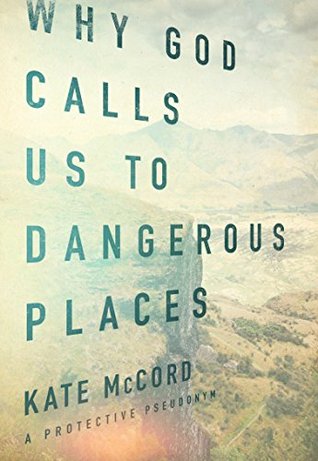
If you have ever wondered what it is like to be a missionary or why people would answer the call of God to go live in a hostile environment, then read Why God Calls Us to Dangerous Places. Author Kate McCord was a “business process consultant in global biopharmaceuticals.” She had a comfortable life and enjoyed her material blessings, friends, and church. In 2000, God started a process in her heart that led her four years later to Afghanistan to work for an NGO (nongovernmental organization). She became a project manager working to improve the lives of the people around her and share Jesus with her neighbors. She learned the language and the culture and relied on God through the Holy Spirit to help her negotiate the minefields of talking about Jesus in such a way that it would not result in her expulsion or execution.
Chapter by chapter McCord helps us dive deeper and deeper into an understanding of God’s calling and how it affects the person feeling the pull to devote themselves and their talents solely to the work of God. She describes how these decisions also affect their friends, families, and churches. McCord explores the kinds of people who are called, the places where they minister, and the difficulties and stress of living in a different culture under uncomfortable living conditions along with spoken and implied threats of violence. She relates all of this through descriptions of her own experiences and testimonies of others living in various countries. She backs up her discussion with stories from the Bible and with Scriptural references to support her theological underpinnings.
It is one thing to write about the missionary life; it is another to live it. McCord has done both and is able to share the calling and journey in a way that draws the reader into her story. I recommend this book for Christians who want to explore the call of Jesus on them personally or those they care about. I also recommend it for non-Christians seeking to understand what it is about this Jesus that makes people want to follow Him through the good times and the bad, enjoying an abundant life on earth with the assurance of an eternal life with Him in heaven.
Rating: 4/5
Category: Christian, Nonfiction
Publication: September 1, 2015—Moody Publishing
Memorable Lines:
We ask our question from the experiences of living in places of chronic stress, sporadic trauma, and brutal martyrdom. Both we who go, and those who love those who go, face the deep evil in the world and turn to God with all our human fragility. We ask the question: why does God call us to dangerous places?
Jesus calls us to dangerous places because He loves people who live in dangerous places. he loves the perpetrators of violence and the victims of violence. he loves the children and the old, the men and the women, the rich and the poor.
Yet they had heard those warnings, just as we, before we boarded airplanes to dangerous places, understood that we were walking into a darkness so deep it might someday overwhelm us. We counted the cost, at least as well as we could. We each said, “He’s worth it. Jesus is worth it.”
 education pathways