
Home » Posts tagged 'Jesus' (Page 2)
Tag Archives: Jesus
Easter: The Season of the Resurrection of Jesus
Easter: The Season of the Resurrection of Jesus
By Wesley Hill
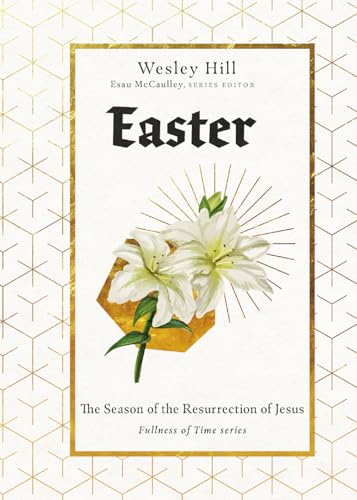
Continuing the Fullness of Time series, my book club very appropriately read Easter this month. It is a short book. Not a devotional, not an academic tome, Easter begins with a very engaging introduction describing a Great Vigil of Easter service Wesley Hill attended at a beautiful cathedral in England twenty years ago. He then moves into the story of the first Easter when Jesus Christ rose from the dead. He documents what he describes with Scripture references from all four Gospels weaving in important information about the context of the accounts.
Next, Hill discusses the liturgy used in Anglican and other churches relating baptism symbolically to the resurrection and the new life believers receive when they decide to follow Jesus. Easter is a movable feast, not occurring on the same calendar day each year. It is a complicated calculation, but Hill does share how to figure it out and the factors on which it is dependent. (Or, like me, you can just look the date up on the Internet or a calendar.)
Hill does not just leave us with a risen Lord. He moves on to how the church liturgy highlights the book of Acts which focuses on Jesus’ disciples. Their world has been turned upside down, but Jesus does not abandon them. When He ascends to be with God the Father in heaven, He leaves instructions for His followers to share the Good News and promises to send a helper, the Holy Spirit, to empower them.
Rating: 5/5
Category: Christian, Religion, Spirituality, Theology
Notes: The Fullness of Time series is edited by Esau McCaulley. It is composed of six stand alone books that can be read in any order: “Each volume in the Fullness of Time series invites readers to engage with the riches of the church year, exploring the traditions, prayers, Scriptures, and rituals of the seasons of the church calendar.” A seventh book is currently in process to complete the series.
Publication: 2025—InterVarsity Press
Memorable Lines:
Mercy for the undeserving is the overriding, hope-awakening theme of Easter.
Prayer, then, is our asking for what we need from the one who has triumphed over the world’s processes of decay and disorientation. We aren’t trapped by the limited options of life as we’ve always known it. Jesus is alive, and he exhales healing vitality, and wholeness into our world. His Spirit is with us.
The Lord is risen! The Lord is risen indeed! Alleluia!
What Happens Next: A Traveler’s Guide through the End of this Age
What Happens Next
by Max Lucado

Are you one of the many people tired of the chaos in our times? Are you wondering if we are about to experience the end of this age on Earth? Max Lucado has some answers as he provides a timeline in What Happens Next. His timeline is taken from Biblical prophecies and teachings. He is not going to give you a date for when the world as we know it is going to end because Jesus says in the Bible that only God the Father knows when that will be. Nevertheless, there are many Scriptures that spell out the events of the end times and their sequence. Max shares these to give you a hope, something to look forward to if you have accepted Jesus as your Savior.
Max literally uses a timeline graphic, however, to take you through the steps, clearly and one at a time. Futuristic prophecies are not just found in the book of Revelation where much of the end times is described, but are also in books such as Daniel and Isaiah. About this time last year, I did a study of the book of Revelation using several sources, but I did not come away with as clear an understanding as I did from reading What Happens Next.
Max Lucado has been in the ministry since 1978, and is a prolific author with a very relatable style. His goal is not to scare anyone into Heaven, but he doesn’t shy away from talking about Hell either. There are some controversies among scholars related to end time prophecies. Max explains the various viewpoints on the timing of the rapture, for example. Then he states which he believes is accurate and why. As is typical of Lucado’s writing, he includes anecdotes to tie into the spiritual point he is making, sometimes lightening the lessons and always clarifying them.
If you are a believer in Jesus, this book will give you a fresh appreciation of how much God loves you and certainty about your future. If you are not, you will find answers to questions you have about the end times, God, and how you can have a personal relationship with Him. I strongly recommend What Happens Next.
Rating: 5/5
Category: Nonfiction, Religion and Spirituality, Christian, Theology
Notes: 1. The book ends with “Questions for Reflection” for each chapter including the Big Idea, Application, and a prayer.
2. There is also a six-session Bible study on the end times, with the same title, that can be bought to accompany this book. It is appropriate for group or individual study. It has a workbook and streaming access to professionally created videos with talks presented by Max Lucado who is an excellent speaker. He is not speaking from a pulpit so it feels like a heart to heart conversation.
3. If you want a taste of Max Lucado and this book, I recommend going to YouTube where Max is currently posting on his channel a series called “Fresh Hope.” He has just added the third video.
Publication: 2024—Thomas Nelson (Harper Christian)
Memorable Lines:
God is the God of divine interruptions. Holy surprises. Who could have imagined God living on earth? But he came. Who could’ve imagined God hanging on a cross? But he died. Who could have imagined the empty tomb? But he rose from the dead. He intervenes in mighty and miraculous ways.
He has before.
He will again.
In the meantime keep an eye toward the sky. Live in such a way that Christ will find you faithfully looking for him.
That day is coming. God will put a crown on your head and a hand on your shoulder and bless you…Each child you hugged, he will praise you for it. Every time you forgave, he will praise you for it. Every penny you offered, truth you taught, prayer you prayed, he will praise you for it. He’ll praise you for the day you refused to give in and the season you refused to give up. But most of all, he’ll praise you for saying yes to Jesus.
Epiphany: The Season of Glory
Epiphany: The Season of Glory
by Fleming Rutledge
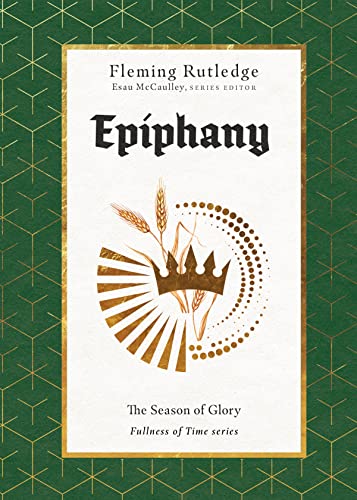
If you didn’t know anything about Fleming Rutledge before you began her tome on Epiphany, you would certainly quickly ascertain for yourself that she is a theological scholar. One of the first women to be ordained by the Episcopal church, she has spent her life studying the Bible and serving as a priest. As an author she has written many books and is known as an expert on the works of Tolkien. There is no fluff to be found in Epiphany: The Season of Glory.
Epiphany is celebrated on January 6 as the day the Magi brought their gifts to the Christ child, manifesting the glory of God and acknowledging the inclusion of Gentiles in the worship of Jesus. The day in many churches is extended into a season which celebrates other events in which the glory of God is preeminent: the baptism of Jesus by John the Baptist, the miracle of wine at Cana, and the transfiguration on the mountain top.
This book explains why we celebrate the day and season of Epiphany. It is a deep study which answers many questions for the reader and may well initiate many new questions. It is a work that requires time, careful reading, and thought. As other theological books, there are footnotes at the end. Many are reference sources for ideas and quotes in the book. Rutledge’s footnotes, however, include expansions on the various topics within and enlarge the experience for the reader. They are as interesting and thought provoking as the main body of the book.
Epiphany: The Season of Glory is part of the Fullness of Time Series which seeks to explain the liturgical calendar of many churches such as Anglican, Episcopal, and Lutheran. Many other churches are also finding renewal through experiencing the traditional seasons. As the editor of the series states “We want readers to understand how the church is forming them in the likeness of Christ through the church calendar.” The six books in the series are by different authors and can be read as standalones. This book is more intellectually challenging than the other books in the series, but they are all worthy reads.
Rating: 5/5
Category: Nonfiction, Christian, Religion
Notes: standalone, but part of the Fullness of Time Series
Publication: 2023—InterVarsity Press
Memorable Lines:
There will always be those who do not recognize him, but they will nevertheless be in his sight and have a part in his eternal plan (see Romans 11). The church, however, in its observance of Epiphany, is to take care of its calling, to point to Christ’s glory, and let his glory take care of itself.
Telling stories about Jesus, what he said and what he did, is an essential part of spreading the gospel. But without the doxa, the glory of the only Son from the Father, it is an incomplete gospel.
The season teaches us to value the entire fellowship of believers, because Jesus calls persons to himself without regard to their station, reputation, accreditation, or accomplishments—and we see how we can begin to be transformed by the action of his Hoy Spirit working through the unearned and undeserved gifts that he bestows.
Be of Good Cheer: A Christmas Devotional
Be of Good Cheer: A Christmas Devotional
by Susan Hill
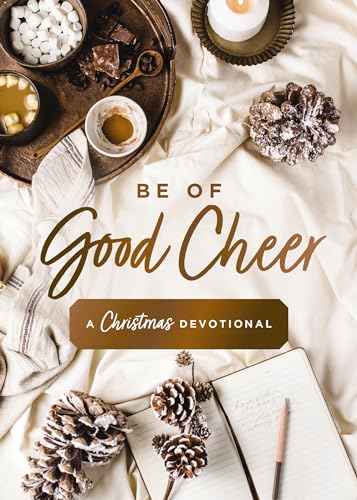
The season of Advent has come and gone on the Christian calendar as we remembered the arrival of Jesus, the King of Kings, who was born, as predicted in the Old Testament, in the little town of Bethlehem. His humble birth was just the beginning of the earthly story of the long awaited Messiah who was both fully God and fully man. He experienced in his perfect body all the things that we experience—grief, joy, pain, love, hunger, disappointment. Then he sacrificed himself on the cross to redeem men from their sins.
Be of Good Cheer is a 40 day devotional that draws the reader to the character of Jesus and focuses on words that are elements of a Christ-filled life. In fact, if you are looking for your “word” for 2025, this could be a resource for inspiration for that project.
This small book is a visual delight with illustrations that are both photographs and paintings. It makes a nice coffee table book that can be read through as an Advent devotional according to each day or picked up by a casual guest to peruse at their leisure. The smooth, heavy weight paper adds touch to the pleasures of holding this book. Each chapter has a one word title followed by a relevant Scripture reference. For example, Chapter 1 is “Cheer” with the verse “Rejoice in the Lord always. I will say it again: Rejoice!” (Philippians 4:4). A short message ends with a suggestion on how to live out the word, how to apply it. This is followed by a brief prayer.
I enjoyed reading each passage. I think this book would make a nice gift for many in 2025.
Rating: 5/5
Category: Nonfiction, Christian, Devotional
Publication: October 1, 2024—Zondervan
Memorable Lines:
From Glory: To give glory to God doesn’t mean to give God something He lacks—it means to proclaim the magnificent glory He already possesses. God’s glory can be defined as all the things that make Him heavenly—His omniscience, omnipotence, and perfect love.
From Miracles: Christmastime is the ideal time to reflect on the reality that God is in the miracle business and routinely accomplishes the impossible. Is there a specific area in your life where you need God to work? Be encouraged that you serve a God who can do all things.
From Kindness: God, thank You for the countless ways You have lavished acts of kindness on me. Help me see the ways You are kind, and lead me to people who need my kindness.


Church of the Good Shepherd–Anglican
December 27, 2024
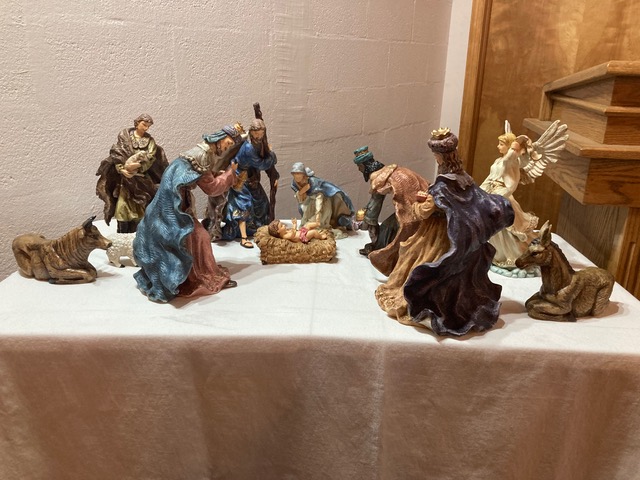
The Advent candles flicker with the arrival of Christ, the Light of the World.

The Wise Men have been added to the nativity scene in readiness for January 6.
Gloria in Excelsis Deo!
The Watchmaker’s Daughter: the true story of World War II heroine Corrie Ten Boom
The Watchmaker’s Daughter
by Larry Loftis

The Hiding Place, the original popular story of Corrie ten Boom, written with John and Elizabeth Sherrill, was released in 1971 and made into a movie in 1975. Corrie, skilled in watch repairs, and the rest of the ten Boom family saved many Dutch—both Jews and non-Jews—from being sent to prison, concentration camps, and labor camps by German Nazis in World War II.
Although The Hiding Place was a landmark book in telling the story of this remarkable Christian lady, Larry Loftis has gone even further in writing The Watchmaker’s Daughter. His research into the background of the World War II setting of the book sets the reader up to better understand the times culturally and politically and the invasion of Holland. His research includes examining photos and original small books by Corrie ten Boom along with memorabilia that are archived in the Billy Graham Center Archives at Wheaton College. Corrie ten Boom did not keep a diary, but Loftis sought out many other primary sources including journals and letters from survivors who had been hidden in the ten Boom home.
Corrie and her older sister Betsie were interned in Ravensbrück Concentration Camp for their crimes of hiding Jews. There these Christian sisters had a ministry within the barracks, holding secret Bible studies and encouraging the other women to hold strong despite the horrible conditions and continuous threat of execution. Upon release, Corrie began a ministry of traveling internationally with a message of forgiveness and established 3 different centers, one in a transformed concentration camp, to meet the physical and emotional needs of survivors. Betsie had a vision of the centers while they were still in the camp at a time when the fulfillment of her vision seemed impossible. Corrie’s story is an amazing one showcasing the love of God and the power of forgiveness.
Rating: 5/5
Category: Biography, Nonfiction, Christian, History
Notes: Even if you think you know the story of Corrie ten Boom, I encourage you to read this book. Corrie’s story is unforgettable, and her courageous life of dependence on God extended way past the events in Ravensbrück. Loftis’ research and writing along with Corrie’s life and faith make this book remarkable.
Publication: 2023—HarperCollins
Memorable Lines:
This was the hardest part—the hatred. Over ensuing days Corrie tried to be nice to the woman, but to no avail. “She seemed to be entirely devoid of human feeling,” Corrie recalled, “and altogether hard, hostile, and wicked…Why should they always snap and snarl at us? I always greeted them with a pleasant ‘Good morning,’ but everything seemed to glance off their impenetrable armor of hate.”
“My sister died here,” she told Tiny. “She suffered so much. I, too, have suffered. But Jesus is always with us. He did a miracle in taking away all my hatred and bitterness for my enemies.”
For more than fifty years the Beje had been her own hiding place, her refuge. But Ravensbrück had taught her that this magnificent home—with all of its memories—was but a shadow; her true hiding place was Christ.
Surprised by Oxford–an intellectual’s search for meaning
Surprised by Oxford
by Carolyn Weber

Carolyn Weber had quite a culture shock when, as a scholarship student, she transported herself from Western Ontario into the revered halls of Oxford University. In that first year of working on her Master of Philosophy degree, she was introduced to a different system of learning and classes. She was expected to learn for the sake of learning and to pursue academic interests through tutorials—meetings of small groups of students with a professor. Along with tea or sherry, the groups dove into intellectual pursuits that exhilarated this future professor of literature.
Along the way, Weber discovered a diverse group of friends from a variety of backgrounds who challenged each other in the friendly way comrades can have in the pub over a pint at the end of a long day of studying. She discovered a diversity of spiritual beliefs from atheist to Eastern religions, but none kindled in her the desire to investigate like the Christian faith did. The Christian students and professors were not what she expected. No one was standing on street corners thumping a Bible. Instead, when they found she was interested, they encouraged her to actually read the Bible and to attend groups where the writings of C.S. Lewis were discussed.
Through Surprised by Oxford, I learned a lot about the University of Oxford that contradicted the stereotypes that are generally shared in media. It was interesting to watch her personal and intellectual growth, to see her search within herself for spiritual meaning and communication with God. Obviously a lover of literature, Weber begins each chapter with poetry and sprinkles other lines of poetry throughout the book, especially as she and her friends quote poetry to each other in the context of their discussions.
Rating: 5/5
Category: Memoir, Christian
Publication: 2011—Thomas Nelson
Memorable Lines:
I had no real need of believing in men, God incarnate or otherwise. Fathers especially were not to be trusted. They did not even seem relevant really. That much I had learned. That much I brought with me.
“Despair is the greatest sin,” Dr. Nuttham finally responded slowly. “It involves forgetting that God is there. Forgetting that He is good and that all He is and does extends from and works toward this perfect goodness. That doesn’t mean that He allows evil, or creates it, or perpetuates it. That’s our entwinement. Rather, He uses even our evil toward His good. We all need forms of remembering this first great love…writing, reading, creating, being.”
“Jesus brings the most radical message there is into any society at any time: you are beloved; you are worth a price that only the God of the universe could pay.”
The Prodigal God: Recovering the Heart of the Christian Faith
The Prodigal God
by Timothy Keller
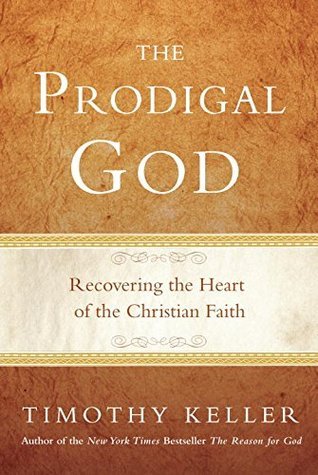
You may feel the urge to read that title twice. Wait, you say, the parable in the Bible is commonly referred to as “The Prodigal Son”! One of the meanings of prodigal, however, is “recklessly extravagant,” and that is the kind of love God has for us.
The Prodigal God is a fairly short book that uses Jesus’ parable about a spendthrift son who wastes his inheritance on immoral living to explain the good news of God’s love and salvation. If you are not familiar with the tale, it’s okay because Keller shares the story as told by Luke at the first of his book. As you read it you will be reminded that there are two brothers who both have bad attitudes. The younger brother engages in wild living, but the older brother who exemplifies the religious leaders listening to the parable has an attitude problem as well. These self-righteous scribes and Pharisees try to follow the letter of the law but not the spirit of the law. One of the chapter titles is “The Two Lost Sons.” Neither son shows the respect for the father that would be expected according to the customs of their culture.
This is a great book to read if you are seeking a personal relationship with God. It is also good for those who are already followers of Jesus. I particularly appreciated the examination of the characters’ actions in the light of the time and place where they lived. It made a story I have long been familiar with come alive. Keller compares the feast at the end of the parable with “the great festival of God at the end of history” and explains four ways in which salvation is like a feast. This book will challenge your mind and heart.
Rating: 5/5
Category: Christian, Nonfiction, Religion, Theology
Publication: 2008—Penguin Group
Memorable Lines:
…sin is not just breaking the rules, it is putting yourself in the place of God as Savior, Lord, and Judge just as each son sought to displace the authority of the father in his own life.
…the prerequisite for receiving the grace of God is to know you need it.
We must learn how to repent of the sin under all our other sins and under all our righteousness—the sin of seeking to be our own Savior and Lord. We must admit that we’ve put our ultimate hope and trust in things other than God, and that in both our wrongdoing and right doing we have been seeking to get around God or get control of God in order to get control of those things.
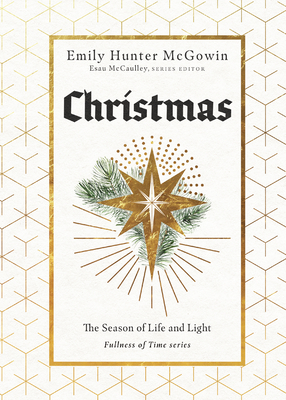
Christmas: The Season of Life and Light
Christmas: The Season of Life and Light
by Emily Hunter McGowan
In reading the book Advent (reviewed here) by Trish Harrison Warren, I learned much about liturgical Protestant churches (typically Lutheran, Anglican, and Episcopalian) that follow a structured, participatory format with foundations in practices of the early Christian church. The church calendar begins with the season of Advent focusing on repentance and the anticipated coming of the Messiah, which is celebrated on December 25th at the commencement of the Twelve Days of Christmas.
I decided to follow up my reading of Advent with the book entitled Christmas: The Season of Life and Lightwhich is also in the Fullness of Time series, but is written by a different author, Emily Hunter McGowin. I was pleased that Christmas held many of the same qualities that are found in Advent. Both are short books and very readable, but are packed with theological truths. McGowan did a lot of research, as witnessed by her footnotes, and she includes a brief list of books for further reading at the end of each chapter. After a fairly personal introduction, she very appropriately begins with the origins of the celebration focusing on the debates about when Christ was actually born. Much of the book discusses God in relationship to people. God’s gift of His Son can be related to the gifts we give at Christmas. Jesus was born in a poor family, and He was concerned about the poor all through his three year ministry. He leaves Christians with the mandate to give sacrificially to the poor. Decorations are an important part of our Christmas customs in the West, and her analysis of their role is found in the chapter “God of Creation and Re-Creation.” McGowan does not gloss over the tragedy of Herod’s slaying children in an attempt to ensure his throne from the threat of this newborn King. Singing and lighting candles are highlighted in her discussion of life and light.
Christmas ends with an appendix listing the “appointed Scriptures and collects” or prayers for Christmas found in the 1979 Lectionary and the Book of Common Prayer. I look forward to reading the other books in the series, all by different authors: Epiphany, Lent, Easter, and Pentecost.
Christmas permeates our society in cultural as well as religious ways. Therefore, this series has benefits of instruction and understanding for all—Christians who use the Book of Common Prayer and those who don’t, as well as those who aren’t followers of Jesus. I invite you to read this book to examine the truths behind our customs and the reasons Jesus Christ is the focus of this season named after Him.
Rating: 5/5
Category: Christian, Nonfiction, Religion, Theology
Notes: part of the Fullness of Time series which can be read in any order
Publication: 2023—InterVarsity Press
Memorable Lines:
Profligate shopping sprees and conspicuous consumption notwithstanding, the practice of gift-giving in itself remains evocative of the central mystery of Christmas: the incarnation of God in Christ. Christmas is about God’s great gift to us, which is God’s own self in the person of Jesus Christ.
In fact, children are among those people with whom Jesus so closely identifies that they become a sacramental sign. The hungry, the thirsty, the stranger, the unclothed, the sick, the imprisoned, children—Jesus says of all these that to welcome and serve them is to welcome and serve him (see Matthew 18:5; 25:40; Mark 9:37). So we separate ourselves from the poor, needy, and vulnerable at our collective peril.
Advent–Hope and Repentance
Advent: The Season of Hope
by Tish Harrison Warren

I have almost finished reading Advent by Tish Harrison Warren for the second time this season. It is a small book that packs a powerful punch and is worthy of a reread.
In the Protestant churches of my childhood and most of my adult years, “advent” was a word I rarely heard. The focus was on Christmas and making sure the cultural aspects of the celebration (e.g. decorations, gifts, and parties) did not take prominence over the spiritual foundation: “Jesus is the reason for the season.” In more recent years, I have worshiped in Protestant churches that follow the liturgy found in the Book of Common Prayer. Warren’s book has helped me unravel the church calendar year which begins with Advent and to understand Advent itself.
This tiny book explains the three comings or advents of Christ. We celebrate His birth in Bethlehem at Christmas and look forward to what we refer to as “His Second Coming” when He will reign as King of Kings. Warren says there is a third coming which we currently experience when He dwells in our hearts as we are filled with the Holy Spirit.
There are many themes of Advent discussed in this book, but the ones that impact my heart the most are “repentance and hope” and “darkness and light.” Warren refers to four prayers composed for the Advent season in the Book of Common Prayer. In addition to talking to God, these prayers or collects lead the reader to a deeper understanding of Christian theology and what we believe as Christians. She explains eight practices of Advent for those who want to use this season to meet with God and draw closer to Him during the course of the four weeks of Advent that lead up to Christmas.
Perhaps my favorite chapter in the book Advent is entitled “Crying Out: Two Prophets of Advent.” Who prophesied most about the advent or coming of Jesus? Isaiah in the Old Testament and John the Baptist in the New Testament. It is a good beginning place if you want to learn more about prophecies from the Old Testament that were fulfilled in the New Testament and prophecies that are yet to be fulfilled when Jesus comes again, not as a baby in a manger, but as the Messiah who returns to banish Satan and evil and rule on Earth for eternity with justice, peace, and love.
Rating: 5/5
Category: Christian, Theology
Notes: 1. “Each volume in the Fullness of Time series invites readers to engage with the riches of the church year, exploring the traditions, prayers, Scriptures, and rituals of the seasons of the church calendar.” These are standalone books, each written by a different author: Advent, Christmas, Epiphany, Lent, Easter, Pentecost.
2. This is a choice for my book club and lends itself well to group discussion, but it is also perfect for devotion, study, and meditation for individual readers.
Publication: 2023—InterVarsity Press
Memorable Lines:
Advent comes each year and quietly asks me to pause, to remember that we do not bring the kingdom of God to the world through our own effort or on our own timeline. We wait for one outside of us and outside of time. We wait for our coming king.
Advent is training in hope because this season tells us that when things lie fallow they do not lie in waste; things that seem dormant are not dead, and times of waiting are not without meaning, purpose, or design. God is working, sometimes almost imperceptibly, deep beneath the surface of time. Waiting is part of his redemption. It is part of his gift to us. It is part of his grace.
The love of God is the blazing fire that purifies us, remakes us, and sets right all that is broken in us and in the world. The love of God brings us to repentance. The love of God sets the oppressed free and makes all things new. The love of God insists on truth and justice. The love of God reveals every hidden thing. And it is this love that is coming for us.

