Home » Historical Fiction (Page 5)
Category Archives: Historical Fiction
A Lineage of Grace–5 novellas point to Jesus
A Lineage of Grace
by Francine Rivers
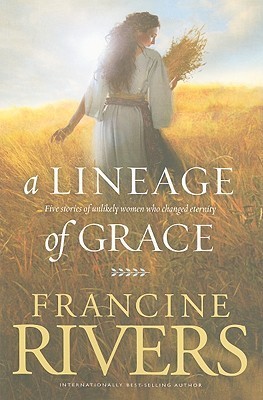
In the patriarchal societies of the Old and New Testaments of the Bible, there are many stories of men and their relationships with God, but there are also stories of women who played an important role in history. In the fictional stories of A Lineage of Grace, Francine Rivers chose out five women who are noted in the Bible for their lives and actions as well as their place in the earthly lineage of Jesus Christ, the Messiah or Savior, who came to Earth as a man to save people from their sins, restoring them to relationship with God.
Rivers has written five novellas which are available singly or as an anthology. Scripture is woven all through the book, but at the end of each novella there is a discussion guide that includes the specific Scripture passages from which the story is drawn. The plot is found in the Bible and is the backbone of the tale which Rivers fleshes out using knowledge of the history of the area and the culture of the times.
Unveiled is the story of Tamar, a young Canaanite married to an abusive husband. Her father-in-law, the Israelite Judah, is consumed with guilt over his actions towards his brother Joseph. Much of the story deals with Tamar’s need to have a son and the various devious means used to accomplish that goal.
Unashamed is the second story and one that is more familiar to many readers. It focuses on Rahab, a harlot, who is instrumental in Joshua’s successful destruction of Jericho. The author expertly fleshes out the character of Rahab. We see how she might have come to be in this position as well as her strength, intellect, and the trust she placed in the living God of the Israelites as opposed to the idols her family worshipped.
Unshaken is another familiar story, that of Ruth the Moabitess. When Ruth, her mother-in-law Naomi, and her sister-in-law all found themselves widowed, she decided to follow Naomi back to Bethlehem and trust in the God of Israel. She kept them from starvation and in the process God led her to a kinsman who continued the lineage.
Unspoken relates a version of a complicated plot set in motion by King David’s lusting after Bathsheba, another man’s wife. The Biblical story itself has soap opera drama to it and could be a morality tale about the consequences of sin. Rivers makes the characters come to life with assumed fictional motivations and background, all believable and appropriate to David’s status as King and what we know from the Bible about the people who surrounded him. Despite their sins, when David and Bathsheba sought forgiveness, God gave it to them, but they did suffer consequences. The story continues on past the initial drama through the rest of David’s life and the transfer of power to his son Solomon.
Unafraid is the story of Mary, the mother of Jesus. As a young teenager she showed courage, strength, and trust in God in her response to an angel telling her that, unmarried, she would become pregnant through the Holy Spirit with the Son of God. Betrothed to Joseph, she could have been disgraced and executed according to Jewish law. She endured an uncomfortable donkey trip to Bethlehem in her last month of pregnancy and gave birth to her first child in a stable without the help of a midwife.
This novella takes us through many of the events she witnessed as Jesus began his ministry all the way through his devastatingly horrible crucifixion to his glorious resurrection. Rivers writes what she thinks Mary’s inner struggles must have been and the way she always pointed attention to Jesus and not to herself. In fact, although Jesus made sure she was cared for after his death by his disciple John, he never elevated her as worthy of worship and she never sought such a role.
I enjoyed A Lineage of Grace which is thought provoking. The author made the characters of the Bible come alive and although separate in time and distance, I could see the links between the stories as they all lead to Jesus. The genealogies in the Bible can get tedious, especially if you are trying to pronounce some of those names! The core of this book is found in genealogies, but it comes alive as you look in depth at the bigger picture. Indeed, it’s all about the great Three in One: God the Father, His Son Jesus Christ, and the Holy Spirit.
Rating: 5/5
Category: Historical Fiction, Christian
Notes: My book club read this over five weekly meetings, and it worked well over a busy summer when members could drop in and out without losing the meaning of a longer work.
Publication: 2009—Tyndale House
Memorable Lines:
Unveiled—Was Bathshua blind to what she caused in this household? She constantly pitted son against father and son against son. She argued with Judah over everything—and in front of her sons—teaching them to rebel and follow their own desires rather than do what was best for the family. It was no wonder her mother-in-law was miserable! And everyone was miserable right along with her.
Unashamed—Jericho looked as though a hand had come down from heaven and flattened it against the earth. The walls and towers were scattered stones that had collapsed and rolled outward. Screams still rent the air as smoke and fire rose.
Unshaken—After Mahlon’s death, she decided she would never again allow her mind to dwell on things beyond her control. The future was one of these things. She would face whatever came and do the best with whatever life God gave her.
Unspoken—Yet, crouched at the door was a greater enemy than those who camped around Israel. And a greater battle was coming—one that could tear a nation to pieces. The battle would not take place in the mountains, valleys or plains of Israel. It would take place in the wilderness of the human heart.
Unafraid—“Hasn’t God always chosen things the world considers foolish in order to shame those who think they are wise? Maybe God chose a peasant girl to be his mother and a carpenter to be his earthly father because the Messiah is meant for all our people, not just those who dwell in the fine houses of the provinces or the palaces of Jerusalem.”
Before We Were Yours–stealing and selling children
Before We Were Yours
by Lisa Wingate
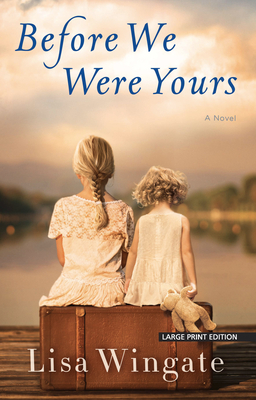
This tale is based on actual events at the Memphis Tennessee Children’s Home Society in 1939 where Georgia Tann collected babies and sold them to adoptive parents. Sometimes she had police round them up from the streets. Other times she scammed unsuspecting parents when the groggy mothers of newborns were asked to sign papers which in fact turned the babies over to the state.
In this story, Rill (later renamed May), is 12 years old and given responsibility for her siblings when her mother has to go to the hospital for a difficult delivery. Scary men show up to their shanty boat telling the children lies and forcing them to go to the children’s home where as “swamp rats” they were treated despicably.
This is a dual timeline book, and the protagonist in the present time is Avery, a lawyer from the prominent Stafford political family in South Carolina. She is being groomed to take over her father’s political office if he succumbs to cancer.
In a chance meeting, May takes Avery’s bracelet, a dragonfly bracelet that is a family heirloom given to Avery by her Grandma Judy. In recovering the jewelry, Avery discovers a mysterious connection. Despite Judy’s gradually succumbing to Alzheimer’s, Avery pursues the relationship between the two women.
Before We Were Yours reveals a very sad series of events in U.S. history. Georgia Tann was a ruthless woman who took advantage of poor families during the Depression as well as families hurting from childlessness. The book is complex but Lisa Wingate tells the story with compassion. She researched her topic well and created a fictional tale that is substantiated by reported events and melds the facts into a compelling story.
Rating: 5/5
Category: Historical Fiction
Notes: Random House has an online book club kit that has resources that any reader would find beneficial, whether reading the book individually or with a group.
Publication: 2017—Ballentine
Memorable Lines:
She stops short of repeating the woman’s naughty words. Camellia’s eaten enough soap to clean up the inside of a whale in her ten years. She’s practically been raised on it. It’s a wonder bubbles don’t pour out her ears.
There’s no denying that Magnolia Manor is more upscale than the nursing home May Crandall lives in, but both places face the same underlying challenge—how to provide dignity, care, and comfort as life turns difficult corners.
“A woman’s past need not predict her future. She can dance to new music if she chooses. Her own music. To hear the tune, she must only stop talking. To herself, I mean. We’re always trying to persuade ourselves of things.”
Bookclubbed to Death–story within a story
Bookclubbed to Death
by V. M. Burns
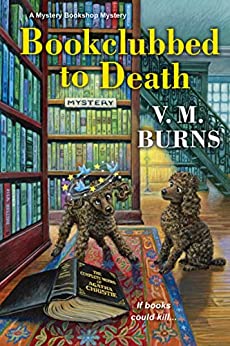
Samantha “Sam” Washington owns Market Street Mysteries Bookshop on the Lake Michigan shoreline. Her grandmother Nana Jo helps out at the bookstore and with the mysteries in which Sam manages to get enmeshed. Nana Jo lives in a retirement community and has a cadre of friends who always want to help out too. Sam’s sidekicks are her two toy poodles Snickers and Oreo. Her fiancé Frank is retired from secretive government agencies and still has contacts that prove to be invaluable when Sam needs to prove her innocence after a murder victim is found in her store.
Sam is also a writer awaiting publication of her first book. She needs a distraction when the investigation becomes overwhelming. Then she involves herself with manuscripts that are in process. They are historical fiction pieces; the novels she writes mirror her real-life problems and help her think them through. In this case we read her book about King George VI who needs Lady Elizabeth’s help in unraveling a murder mystery at Windsor Castle. Just as in Sam’s real-life mystery, Lady Elizabeth surrounds herself with trusted volunteers and assigns them jobs. Then Lady Elizabeth puts the clues together to discover opportunity, motivation, method, and the killer.
In the present day murder, Sam has to deal with Delia Marshall, an important reviewer who could ruin Sam’s writing career. Sam agrees to allow Delia and her book club, the Mystery Mavens, the use of her bookstore for their meeting when the library is closed for repairs after a tornado. At first Sam caters to Delia’s unreasonable requests, but eventually stands firms. She soon discovers that Delia is quite unpopular, and it becomes necessary for her to find out why.
The author’s technique of echoing the theme and plot of one story within another is interesting. It is not my favorite way of storytelling, but the author does it well. It will appeal to lovers of cozy mysteries, historical fiction, royalty, and dual timeline as Bookclubbed to Death combines all into one work of fiction.
I received a complimentary copy of this book in exchange for an honest review. Opinions expressed in this review are completely my own.
Rating: 4/5
Category: Mystery
Notes: #8 in the Mystery Bookshop Mystery Series, but could be read as a standalone. I have only read one other in the series, #6, so you can see that the author does a good job in providing any needed details.
Publication: December 27, 2022—Kensington
Memorable Lines:
“But rather than using her brains to help others, she used hers to sleuth out secrets. Everyone has secrets they’d rather weren’t made public. Delia found out what they were and figured out how to use them to her benefit.”
“You inspired me. You came into that room like a … giant. You weren’t afraid of Delia. You knew she could destroy your career, but you still burst into that room and challenged her. You weren’t afraid of Delia Marshall. That’s when I gained courage. I knew I needed to do something.”
… writing allowed my subconscious to sort through the clues and figure out things my conscious mind couldn’t, then I needed to write. I needed all of the help I could get.
The Book of Lost Friends–unforgettable
The Book of Lost Friends
by Lisa Wingate
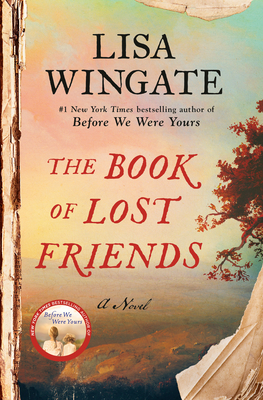
Slavery and the Civil War tore families apart—especially Black families. Some of their stories appeared in the newspaper Southwestern Christian Advocate as desperate appeals to locate or discover news of long lost family members. Pastors were encouraged to read them to their congregations, and optimism sprang up in the hearts of many former slaves as they hoped and prayed to be united many years later with family who in countless cases were only a name passed down from parent to child. I can’t imagine the pain parents suffered at having their children ripped away from them and sold often never to be heard from again. The Black slaves were people, but they were regarded as disposable property.
The Book of Lost Friends begins with the story of Hannie Gossett who misses her family desperately. Unable to read or write, she has all of their names recorded in her memory. In 1875, Hannie and Tati who raised her are close to completing a ten year period of working a piece of land that belongs to her former slave owners. Just as the contract’s transfer should be completed, the former master disappears and the contract is put in jeopardy. Hannie begins a journey with great risks to find him. A black woman traveling alone is a dangerous undertaking, and her departure could annul the very contract she is trying to locate.
This novel has a dual timeline. Every other chapter alternates to tell the story of Benny Silva, a young teacher who has a past with secrets but a heart to make a difference for her students growing up in poverty in Augustine, Louisiana, in 1987. Constantly bombarded with negative messages about their worth, these students go to a different school from those who have more prosperous parents. The school building is in bad shape, the students’ attendance and behavior are abysmal, and parent support is almost non-existent.
When Benny discovers and obtains access to a private library of books, she thinks she may have found a motivator for her students. She wins support from some local women the students respect, and the teens become excited about a school project.
As both timelines move forward, it is difficult for the reader to leave one timeline to see where the story is going in the other timeline. In a good dual timeline novel, the reader is equally interested in both timelines and in discovering where they cross or overlap. Lisa Wingate is an expert at storytelling and at weaving her tales together. There are many other fascinating characters, and The Book of Lost Friends quickly became a book I didn’t want to put down. It is so well told that I could put myself in the story imagining vividly the struggles of the former slaves and of the students captive to poverty and dysfunctional families.
Rating: 5/5
Category: Historical Fiction
Notes: 1. All of the Hannie chapters include a letter to the editor of the Lost Friends column so you can read for yourself this part of history.
2. At the author’s website, lisawingate.com there are valuable resources listed under the heading “for book clubs” that include discussion questions and pictures and information the author gathered by visiting plantations and national parks. There are also links to pertinent interviews and podcasts as well as a database that has been created based on the Lost Friends letters.
Publication: 2020—Ballantine Books (Random House)
Memorable Lines:
Few things are more life affirming than watching an idea that was fledgling and frail in its infancy, seemingly destined for birth and death in almost the same breath, stretch its lungs and curl its fingers around the threads of life, and hang on with a determination that can’t be understood, only felt.
The thing about so many of the kids here—country kids, town kids, a sad majority of these kids—is that their norm is constant drama, constant escalation. Conversations start, grow louder, get ugly, get personal. Insults fly and then lead to pushing, shoving, hair pulling, scratching, throwing punches, you name it…All too often children in Augustine grow up in a pressure cooker.
When you’re a kid in a tough family situation, you’re painfully vulnerable to trying to fill the void with peers. As much as I’m in favor of young love in theory, I’m also aware of the potential fallout. I can’t help feeling that Lil’ Ray and LaJuna need a teenage relationship about as much as I need five-inch stilettos.
Beneath His Silence–guilt and forgiveness
Beneath His Silence
by Hannah Linder

“Gothic-Style Regency Romance” encapsulates Hannah Linder’s new historical fiction novel Beneath His Silence. The beginning of this romance did not appeal to me at all with its mishmash of characters, settings, and mysterious motives. The first part of the book is confusing but gradually straightens itself out into a reasonable plot that continues to tease the reader with questions of who did what to whom and why. With the main male character, Lord Henry Sedgewick, consumed by guilt and admitting his crime, the reader must persevere along with the female protagonist, Ella Pemberton, who struggles to find the truth and control her emotions.
My favorite character is Lord Sedgewick’s son Peter, a loved and lovable lad. Ella assumes a new name and identity and becomes his governess to get into the household and avenge the deaths of her sister and her father.
The ending of the book is packed with action, danger, and heroics. Mysteries and love are revealed, but not without a cost. There are several romantic overtures to Lord Sedgewick who is a widower. The characters’ actions conform to the requirements of the times for the various classes and genders and stand out in stark contrast to expectations for the twenty-first century. The themes of the book revolve around a relationship with God, guilt, and forgiveness. Despite my initial misgivings, I did stay up late to finish what became a page turner.
I received a complimentary copy of this book in exchange for an honest review. Opinions expressed in this review are completely my own.
Rating: 3/5
Category: Christian, Historical Fiction, Romance
Publication: November 1, 2022—Barbour Publishing
Memorable Lines:
There’d been no laughter for a long time…But maybe now things would be better. If Miss Woodhart could offer the boy love, if her presence could bring him laughter, if truth of his own mother could forever be kept from his ears…Maybe Peter could escape the punishment. The punishment Henry had brought on them both.
Was this how all inferiors felt? How demeaning to be treated as if one’s presence was not noticed. Had she ever treated anyone thus at Abbingston? Ah, yes. She most certainly had. Not out of meanness, of course, but rather from a lack of thought or consciousness. She resolved to do better in the future.
“I can believe that God created the world,” she whispered, “but how can I believe He is the author of such dreadful circumstances?” “I cannot convince you, Miss Woodhart, nor can I make you believe.” The evening shadows deepened around them. “I can only testify of Him. I am afraid the rest is something you must discover yourself.”
The Ways We Hide–“escapologist extraordinaire”
The Ways We Hide
by Kristina McMorris

Admittedly it is hard to write a “happy” book about World War II. The Ways We Hide is definitely not a cheerful book. While she avoids graphic descriptions of the violence of the war, author Kristina McMorris excels at conveying the overwhelming sadness of the personal tragedies, even those that occurred pre-war, early in the orphaned protagonist Fenna’s life. When she escapes from an orphanage in the U.S., she is taken in by her best friend Arie’s family despite their religious differences. The parents in both families are Dutch immigrants. As young adults they discover their romantic love for each other, but Fenna suddenly leaves her adoptive family without explanation.
Taking her love of magic to the stage, Fenna becomes a self-made illusionist in the style of Houdini. She is recruited by the British in World War II to devise gadgets and conceal them in support of Allied troops in Europe. The British ask her to go to Holland on a dangerous rescue mission to find Arie, but more more is involved than her handlers are telling her.
The story is well played out with unexpected twists around every corner. This work of historical fiction is well written and extremely well researched. I can’t say that it is a page turner for me because it is so sad. The characters have little hope for positive outcomes, but pursue their noble goals against all odds. The work is undercover, classified, and occurs in Nazi controlled areas. Therefore, it is hard to know who can be trusted.
The author explains at the end of the book her framework for inserting the fictional Fenna into the mostly historically accurate backdrop with some slippage of time. She has researched her subjects well which include not only the war efforts but also an anti-labor strike event that changed Fenna’s life forever.
The ending is not a happily ever after with the protagonists riding off into the sunset, but how could it be when so many people have died? Despite the reality of the situation, the author does manage to conjure up a “lemons into lemonade” scenario for Fenna that is satisfying and actually sweet. I am glad I read this book which reveals a lot about undercover work, dangers, and relationships in World War II.
I received a complimentary copy of this book in exchange for an honest review. Opinions expressed in this review are completely my own.
Rating: 4/5
Category: Historical Fiction, Women’s Fiction
Notes: 1. There are author notes at the end which explain in detail how McMorris got her inspiration for the various parts of the book. It is followed by suggestions for further reading for those who would like to learn more about the topics in the book.
2. Online there is posted a Book Club Guide on the author’s website (kristinamcmorris.com). While I do recommend this book for book clubs, individual readers will also find this guide helpful in visualizing the setting and the culture. It includes Dutch inspired recipes plus a recipe for invisible ink (not the lemon juice type). There are questions designated as a Reading Group Guide. Perhaps most importantly to me, there are fifteen photographs that will transport the reader back in time. There are also QR codes for videos and other additional resources online. In addition, there are suggestions for group activities to enhance book club meetings.
Publication: September 6, 2022—Sourcebooks Landmark
Memorable Lines:
Traveling in clusters pallbearers carried pure-white caskets low at their sides. The dimensions of each befitted a child, the weight minuscule compared to the burden.
In this instant I consider a potential reason my life has been repeatedly spared. Could it be to attain justice for the victims of a cruel and callous enemy?
He offers his hand with a caring look. “May our paths cross again,” he says, “in a better world.” It’s impossible to envision any future beyond the immediate challenges ahead. Still, I accept his handshake, grateful for the notion.
The Mapmaker’s Daughter–love and the sea
The Mapmaker’s Daughter
by Clare Marchant

In The Mapmaker’s Daughter, the reader will find:
- A successfully handled dual timeline
- Two women who love their men
- Two men who love the sea and adventure
- Some history concerning the control of England
- Settings of time: 1569, 1580, and 2022
- Settings of place: Amsterdam, Low Countries; Hay-on-Wye, Wales; London, England
- Filth and dangers of the cities
- Persecution of Protestant Huguenots by Spanish Catholics
- Cartography, engraving, map shops
- Queen Elizabeth’s court and appropriate dress and protocol
- The place and function of women
- Sea battles
- The knighting of Francis Drake
This work of historical fiction focuses on Freida, a woman from a family of cartographers. She survives a massacre as a child, but finds herself in similar circumstances as a mother. She becomes uncomfortably entangled with Queen Elizabeth’s court where her husband, a dashing privateer, is not welcome. Moving forward to our century, the protagonist is Robyn who has been studiously avoiding the declaration of her husband’s death for seven years. The Mapmaker’s Daughter will reveal how their stories intertwine.
I received a complimentary copy of this book in exchange for an honest review. Opinions expressed in this review are completely my own.
Rating: 4/5
Category: General Fiction, Historical Fiction, Women’s Fiction
Notes: 1. I was interested in reading information in general on what was fact and what was fiction. There was nothing that addressed this in my Advanced Reader Copy.
2. I find the many references to clothing quite interesting and scurried to the Internet on multiple occasions to look up words like “kirtle” to more fully understand the garb of the time.
Publication: September 1, 2022—Avon Book, UK
Memorable Lines:
The queen may be the bee at the centre of the hive, but she was still harbouring enemies within.
What filled her inside, always there, twisting her guts and suffocating her, was the anger that Nate had chosen such a dangerous career, that he had opted to race a yacht sometimes in perilous, risky waters, which had ultimately taken him from her.
The temporary confidence she’d arrived with drained through her body to her feet and disappeared into a puddle on the floor. Other guests pushed around her until she felt like a piece of flotsam being dragged back and forth on the dark waves of the sea she’d recently sailed upon.
The Little Books of the Little Brontës–creativity in childhood
The Little Books of the Little Brontës
by Sara O’Leary
illustrated by Briony May Smith

This little book of historical fiction introduces children to the famous Brontë family. The girls, Charlotte, Emily, and Anne, and their brother Branwell are raised by their father who is a vicar, their aunt, and a housekeeper. They grow up in relative poverty, but have a fun life with much time to exercise their creativity as they are homeschooled and spend a lot of time exploring the moors. Almost anywhere they go would be by foot.
The Little Books of the Little Brontës tells how they loved to read and as children they made tiny books for each other and for their toy soldiers. As they grew older, their reading passion was turned to writing. The sisters died young, but their books are still eagerly read today.
I enjoyed this fictional view of the Brontës’ childhood. It is easy for children to follow. I particularly liked the illustrations; they are delicate, detailed, and whimsical. After explaining that the sisters had short lives, the author takes the reader back to their happy early years which is a sweet ending and very appropriate to a children’s book.
I received a complimentary copy of this book in exchange for an honest review. Opinions expressed in this review are completely my own.
Rating: 5/5
Category: Children’s Fiction, Historical Fiction
Notes: 1. Includes directions on how to make a little book.
2. There are Author’s Notes containing information about the family for adults.
3. The book ends with an extensive Bibliography.
4. Ages 5-9, Grades K-4
5. Print length: 40 pages.
Publication: October 17, 2023—Tundra (Penguin, Random House Canada)
Memorable Lines: (which is also the first sentence)
Many years before you were born,
sometime in the long ago,
a child named Charlotte Brontë
made a little book for her little sister Anne.
A Certain Darkness–could WWI have ended sooner?
A Certain Darkness
by Anna Lee Huber
Lord Ardmore—a good name for an evil person. Although he is not physically present in A Certain Darkness, his influence and machinations pervade the events of this spy novel. Verity Kent and her husband Sidney are a rich and glamorous couple who are both well known in the intelligence circle for undercover work for the British during WWI. Sidney is also a war hero. In this book, they are once more called into service by their country to discover potentially damaging evidence.
In this action packed drama, Verity and Sidney don’t know whom to trust as they try to uncover how a murder occurred on a train and in a jail cell without anyone seeing either crime. Verity is a polyglot, a helpful skill as the couple interacts with French, German, Dutch, and Flemish speakers. One of my favorite scenes involves Verity speaking in their language to someone who is previously unaware that she can understand their conversations with others—rather embarrassing for the speaker.
The plot is complicated because the events that occurred during and after the war are quite complex. Just when I thought I wasn’t enjoying the book because of the intricate historical references, the action and intrigue picked up and I couldn’t wait to read what would happen next.
Both characters suffer from the horrors and stresses of the war, but there are some mental and emotional breakthroughs for both of them in this book. Whereas in the first book I read in the series (#2) I found the couple rather frivolous, I have come to like and respect both of them as I have gotten to know them better. There has also been more character development with each book. If you are interested in history or like spy mysteries, you will enjoy this series including A Certain Darkness. It closes out with a very important hook that will keep me and other readers anxious to read the next book in the series.
I received a complimentary copy of this book in exchange for an honest review. Opinions expressed in this review are completely my own.
Rating: 4/5
Category: Mystery, Historical Fiction
Notes: 1. #6 in the Verity Kent Mystery Series. I do not recommend this book as a standalone. There is just too much necessary background provided in the previous books.
2. Clean.
3. One of the themes of this book concerns the ending of WWI. I did an Internet search on this topic and found this is a concern for some historians. In her introduction, Huber lists a recently published nonfiction book on this subject that she used as a resource for her fiction book.
Publication: August 30, 2022—Kensington
Memorable Lines:
Much of intelligence gathering in general was accepting that there were few total victories, few clear choices of right and wrong. Everything was shaded in gray. One had to make judgment calls, constantly wagering possible sacrifices versus gains. Sometimes you got it right and sometimes you got it wrong. But whatever the outcome, you had to swallow the guilt and disgust such decisions and compromises at times wrought.
I recognized what game he was playing, for he’d learned it from the best. After all, Lord Ardmore didn’t simply aim to outwit his opponents, but to corrupt and demoralize them. To turn them against themselves, against their very morals.
“I’d accepted long ago that the war was utterly senseless.” His voice rasped as if being dragged from the depths of his lungs. “That I was simply stuck. Just a little cog in a great monstrous machine that couldn’t be stopped and would one day consume me as well.”
Three Sisters–survival in the midst of death
Three Sisters
by Heather Morris

I present to you a review for a book that will transport you unwillingly from Slovakia into the death camps of Auschwitz and Birkenau. The horrors are especially difficult to read about because this novel was so well researched including interviews with primary sources, two of the three sisters who are protagonists in Heather Morris’ Three Sisters. The third sister had passed away before the author began this project. Unlike some survivors of the concentration camps, these sisters talked about their experiences to people who wanted to hear, especially their family members. These relatives were a treasure trove of information about the camps, the Nazi selections of individuals, hiding from the SS, and the kindness and treachery of nonJews.
Family, of course, is very important to Cibi, Magda, and Livi, the three sisters. Their father makes them promise to always stay together and support each other. Their grandfather gives them the mantra of “hope and strength” which they carry with them through the worst of times. Later they can joke about bad conditions by comparing them to the deprivation they experienced in the camps.
Three Sisters is a hard book to read, but another worthwhile reminder to not allow this history to repeat itself. Ironically, the last part of the book which was about happier times brought the strongest emotional response from me. This reaction is a tribute to Heather Morris as a storyteller who, despite the tragic subject matter, brings her characters to life in such a way that you feel like you really know them and you understand them as much as is possible as an outside observer.
I recommend this book. I know these characters will stay with me for a long time.
I received a complimentary copy of this book in exchange for an honest review. Opinions expressed in this review are completely my own.
Rating: 5/5
Category: Historical Fiction, Literary Fiction, Women’s Fiction
Notes: by the author of The Tattooist of Auschwitz
Publication: October 5, 2021—St. Martin’s Press
Memorable Lines:
As the plaintive cries of their families fade, new voices—angry, hate-filled voices—greet them as they make their passage through the town. Their former friends and neighbors are hurling rotten fruit and stale bread at their heads, yelling their joy that the Jews are finally leaving. Cibi and Livi are stunned by the taunts, the full-throated bile being dispensed from snarling mouths.
…they will never forget their desperation to put something, anything, in their stomachs. These days they savor every mouthful, but, more than that, they cherish the freedom to move around the city as they choose, no longer under the watchful and penetrating gaze of a kapo or worse, an SS officer.
Cibi thinks about the space in her heart where God used to live and wonders, for a second, if the peace she feels in her sisters’ arms is a sign that maybe He never really left.
 education pathways