Home » Historical Fiction (Page 3)
Category Archives: Historical Fiction
Sisters Under the Rising Sun–cruelty and bravery
Sisters Under the Rising Sun
by Heather Morris
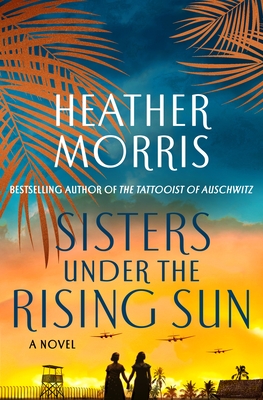
There are so many books that vividly describe the horrors of concentration camps in Europe during World War II, and Heather Morris has written several of these. In Sisters Under the Rising Sun, a work of historical fiction, Morris takes readers to the other side of the world to examine the equally dreadful treatment of civilians and Australian Army nurses in Japanese prisoner of war camps in World War II. Any sense of humanity went out the door on the part of the Japanese captors as their captives struggled to stay alive for almost 4 years with very little food, no medical supplies, unsanitary living conditions, and brutal treatment. There were many deaths, but also many examples of prisoners who survived by faith, loving and supporting each other with survival and hoping for a reunion with loved ones.
One prisoner has an extensive musical background and a lot of talent. She organizes a “voice orchestra” with women’s voices taking the parts of various musical instruments producing classical pieces to the amazement of all and with enthusiastic members. She refuses, however, the request of the camp captain to play a Japanese song, and she is harshly punished.
The groups are moved from camp to camp, each time having to restore the camp into a semi-livable place. They are given only a few inadequate tools for their work (e.g. two machetes to dig graves). Depending on the circumstances, they have to carry water quite a distance or dig wells with coconut shells or their hands. With very little to eat, they have very little energy for the work and weak immune systems. Vermin and rodents are a problem all the time. When the monsoons arrive, they have to repair their roofs with leaves. The heat is unbearable, and thirst is a common companion.
The book begins with a focus on two different groups. One is the brave and dedicated nurses who are addressed as “sisters.” The other is a family group consisting of two biological sisters and their husbands. It took me a little while to get into the story because initially the plot did not have a strong focus and kept going back and forth. Then the characters were united in one storyline which helped a lot. By the end of the story, I was smiling and crying at the resolutions for the various characters. They had become real to me.
I received a complimentary copy of this book in exchange for an honest review. Opinions expressed in this review are completely my own.
Rating: 5/5
Category: Historical Fiction
Notes: 1. As I began Sisters Under the Rising Sun, I pegged this book as worthy of 4/5 stars. By the end, my heart had gone out to the characters. Any book that can do that to me is worthy of 5/5 stars.
2. There is an epilogue that ties up what happened to the major characters when families are reunited. Ena and her sister Norah were prisoners together throughout the whole imprisonment period of almost 4 years but they had no idea what had happened to their loved ones. Especially important are June, a child who got separated from her parents and swept up in the arrests. She was cared for by Ena. Norah’s daughter Sally left Singapore under precarious conditions before everything fell apart.
3. The book ends with notes about what happened to the historical characters that the fictional ones are based on.
Publication: October 24, 2023—St. Martin’s Press
Memorable Lines:
“Be my life short or long, I’ll remember this moment forever. How in the worst possible circumstances two women, who I love more than life itself, found a way to laugh and make me laugh. Thank you, my darlings.’
“No, Sister, we’re not going anywhere. Can’t you see there are people here who need us? Yes, they have probably killed the men, but all our training and everything we stand for means we do not abandon those who need our help. I want you all to remember that where there is life there is hope.”
“I served in the Great War and I’ve been fighting in this one for two years. I thought I had seen and heard the worst of humanity. But today, just now, you have shown me that human brutality knows no bounds. What happened on that beach will not be forgotten. I’ll find a way to make it known and all I ask of you is that you say nothing to another living soul until you are safely back at home.”
A Christmas Gift–sacrificing during hard times
A Christmas Gift
by Glendon Swarthout
illustrated by Myles Sprinzen
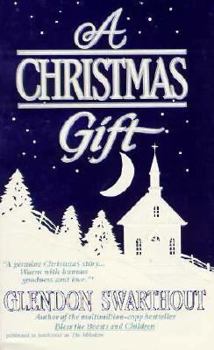
The story of this novella is told from the viewpoint of James Chubb, a thirteen year old boy who is sent from his home in Pennsylvania to his grandparents’ farm in Michigan. In the Great Depression, James’ father can not find work, any kind of work, to support his family. Like many other children in that generation, James was shipped off to live with relatives he had only visited twice. His grandparents were nice, however, and James worked hard for them.
A Christmas Gift covers several generations with a special focus on James’ great-grandfather who died in the Civil War. The reader sees the effect of war on multiple generations and the impact of the Great Depression on hard-working men who feel the shame of not being able to put food on the table. Many of those people would not accept government handouts, which even if accepted were still not enough for survival.
It was certainly not a good year for Christmas gifts. Some children received one practical gift like galoshes or a handmade gift such as a scarf. Many, of course, did not get anything for Christmas. In this story we see an abundance of love in a sacrificial gift.
Swarthout describes in detail the melodeon and the OilPull tractor that play key roles in the plot. He writes about the events of this story in such a way that you feel like you are there witnessing the difficult birth of an out of season lamb and the exhaustion of his grandfather during an evening like no other. He inserts some amusement in the participation of a family of daughters and some wonder in a magical Christmas Eve rescue.
Swarthout is an award winning writer, and his expertise shows in A Christmas Gift as he takes the reader on a journey back in time and into a rural farm setting. There are terms that the modern reader will find unfamiliar as James uses slang from the day. One funny touch is the inclusion of the use of a “party line” on their telephone service.
The trip skillfully manipulates emotions so that the reader feels close to this thirteen year old. Although it is not light-hearted,there is joy and also melancholy to be found in the tale. It is a story that in many ways defies typical genre classification. It is a good read, but each reader needs to decide if it achieves the classic status some feel it deserves.
Rating: 4/5
Category: Historical Fiction, Novella
Notes: 1. This book has also been published under the name The Melodeon (Doubleday, 1977) and has been made into a movie with the title A Christmas To Remember (1978).
2. YouTube has some great videos that will help the author’s wonderful descriptions of the melodeon and the Rumely Oil Pull tractor come alive.
Publication: 1992—St. Martin’s Press
Memorable Lines:
Ella kept two hundred chickens. “Good layers,” she called them — a characteristically rural understatement. Those Leghorns of hers were cornucopias, mother-lodes, veritable volcanoes of eggs.
Our ring was three long and one short, and after five minutes I decided some of the garrulous wives in the neighborhood must be on the line, so I lifted the receiver and listened in. Universal sin absolves individuals, and since everyone did it in those days, listening in on a party line was not considered sinful.
“You have to take the vinegar with the honey. That’s marriage for you.”
Waiting for Christmas–my new favorite Christmas story
Waiting for Christmas
by Lynn Austin
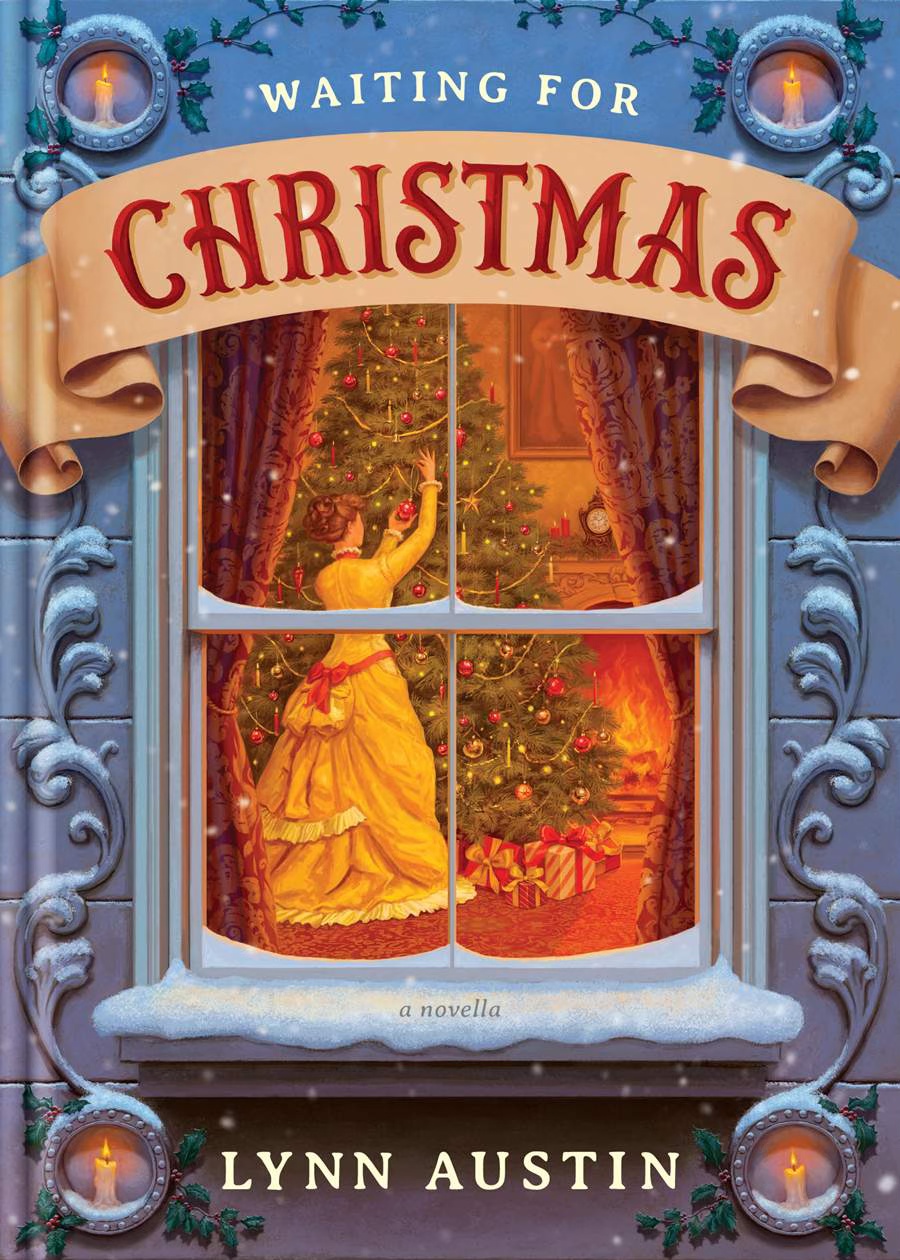
If you are searching for a Christmas story with depth and that calls the characters to examine the true meaning of Christmas, Waiting for Christmas is everything you could want in a Christmas story. I can imagine reading this every year as a new Christmas tradition.
As a novella, it fits well into this busy season, but contains all of the feeling that can be packed into a Christmas story. Addy, raised in wealth and comfort in 1901, gives up that life for the love of Howard, a young lawyer, the son of a preacher, who wants to support Addy without her having to spend any of her inheritance. Addy is active in the suffrage movement to help lift women out of poverty. This couple’s lives are turned upside down when she brings Jack, a runaway orphan, out of the bushes and into her home before he freezes to death. He is adamant that he is not an orphan because his father has promised to return home on Christmas. Meanwhile, he is desperate to find his little sister, often termed by others as an incoherent idiot. They were separated when their mother passed away. In the thousands of orphans in New York City, will Addy, Howard, and Jack be able to find little Polly? How will the children’s father know where to find them as their tenement house apartment has been rented to a poor Russian family?
My eyes filled with tears several times as I read this sweet, but powerful story. I highly recommend it for a great plot and wonderful characters. It brings Jesus’ teachings to light as the characters find ways to live out His example of acting with love towards others, even the unlovely. Addy finds ways to interact with various social groups in meaningful ways. If you want to be more like Jesus, then read Waiting for Christmas to see how the characters in this book respond to the challenges of helping others.
I received a complimentary copy of this book in exchange for an honest review. Opinions expressed in this review are completely my own.
Rating: 5/5
Category: Historical Fiction, Romance, Christian
Notes: Novella
Publication: September 3, 2024—Tyndale House Publishers
Memorable Lines:
He and Addy had experienced both extremes today, from ramshackle tenement to rambling mansion, and he marveled that both were in the same city, on the same 23-square-mile island. In between the extremes were his parents’ modest home and the simple town house he shared with Addy. The entire main floor of their town house could fit inside this echoing foyer, yet Howard felt blessed.
Vulnerable human beings of all ages and disabilities, society’s most helpless people, were being forced to live in appalling conditions simply because they were poor and disabled.
“I’ve prayed some pretty big prayers over the years that seemed to go unanswered. And if I wasn’t careful, I could start to believe that God didn’t love me because He didn’t give me what I’d asked for. I had to learn that my faith shouldn’t depend on whether or not God answers my prayers exactly the way I want Him to.”
Hans Brinker, or The Silver Skates–historical look at Holland
Hans Brinker, or The Silver Skates
by Mary Mapes Dodge
illustrated by Edna Cooke

This children’s novel depicts life in Holland in the early 19th century and according to the author “aims to combine the instructive features of a book of travels with the interest of a domestic tale.” Dodge has done of lot of research so much of the book focuses on Dutch history and customs. Although Hans Brinker is the protagonist, he is not even a character in a large part of the book that describes a skating trip a small group of boys undertake traveling on frozen canals and rivers to various cities.
Hans and his family live in deep poverty because the father Raff had a work accident ten years prior that affected his brain. His wife also can not work because she has to stay home to look after her unpredictable husband. Hans and his sister Gretel are not always treated well because of their social standing. The author states that the circumstances of Raff’s situation were true.
Hans and Gretel have only inefficient wooden skates that Hans carved for them, but both are good skaters. Surprisingly, not much of the story deals with the race for silver skates. Hans is an honorable young man as is shown many times in the story.
The fictional part of Hans Brinker is interesting, even exciting, but the historical portions are less interesting. The boys visit museums on their trip and the history bounces from one item to another just as it would if you were visiting a museum. There are a lot of events referenced that students today do not have the historical background for (e.g. Prince William of Orange who freed Holland from Spain and became King of England). For further personal education on Dutch history or if working with homeschool students, Hans Brinker or the Silver Skates could be a valuable resource. Unless I were teaching a unit on Holland in a classroom, I doubt I would read this to or with Middle Grade students. I found the Preface to be a valuable introduction to what was to follow. I also liked the satisfying Conclusion which shared what happened to the characters as life moved on for them.
Rating: 4/5
Category: Children’s fiction, Historical fiction
Notes: 1. Intended for children 8-12 years old
2. I found this to be a slow read, but there were others in my book club who found the historical references very interesting.
Publication: 1865—George W. Jacobs & Co.
I obtained my copy from Gutenberg Press.
Memorable Lines:
“…the father and I saved and saved that we might have something laid by. ‘Little and often soon fills the pouch.’ ”
“We cannot say what we might have become under other circumstances. We have been bolstered up from evil, since the hour we were born. A happy home and good parents might have made that man a fine fellow instead of what he is. God grant that the law may cure and not crush him!”
Ten years dropped from a man’s life are no small loss; ten years of manhood, of household happiness and care; ten years of honest labor, of conscious enjoyment of sunshine and outdoor beauty, ten years of grateful life—One day looking forward to all this; the next, waking to find them passed, and a blank. What wonder the scalding tears dropped one by one upon your cheek!
The Keeper of Hidden Books–importance of books
The Keeper of Hidden Books
by Madeline Martin

This book is perfect for:
—lovers of books, reading, and libraries
—those who think reading is important for continuity of culture
—people who value ideas
—readers who like the notion of discussion in book clubs
—history buffs
—those interested in Poland—culture, history, role in WWII, underground resistance
—Girl Guides and Boy Scouts
—people who want to know more about the horrific treatment by the Nazis of Jews and Poles.
The Keeper of Hidden Books starts gently with Girl Guides preparing their skills for a war they assumed would never happen. Poland had lost its freedom before, and the Poles were determined it would not happen again. We gradually learn about the lives and values of several of the girls and their families. We witness the responses of the Polish citizens—both heroic and traitorous. As the story progresses we watch the destruction by the Nazis of libraries and books and the valiant efforts of librarians and volunteers who resist this extinction of knowledge. We also observe the desire of people of all ages to maintain access to books that provide escapism during times of hunger, persecution and despair.
This is a good book for me because I treasure books as many of the characters in the novel do. It is a warning to all of us to guard our freedoms, especially the freedom of speech which includes the written word. Hitler worked hard to maintain his power through censorship; we must not let history repeat itself.
I received a complimentary copy of this book in exchange for an honest review. Opinions expressed in this review are completely my own.
Rating: 4/5
Category: Historical Fiction
Notes: The author concludes with notes about her research into the history behind her story, a tale which is based on real events and people in Warsaw. Buried in her discussion of the destruction of books by the Hitler Youth is the statement “But the power of books still endured.” That is a distillation of the theme of this book.
Publication: August 1, 2023—Hanover Square Press (Harlequin)
Memorable Lines:
Now the world crumbled in on itself, burning away the beauty of Warsaw, and there was no more time for reading than there was food to eat.
More and more children were appearing at the library as time went on. Many of them were desperate for distraction, to read about faraway places they could not go, or to transport themselves to mythical lands that could still tease at their dulled imaginations. They wanted stories where villains were vanquished. But books were more than a means of escape for these children; they offered another life to live. They offered hope.
…why Hitler so feared the books he banned. There was power in literature. Brilliant and undeniable. Books inspired free thought and empathy, an overall understanding and acceptance of everyone.
The Frozen River–Remarkable midwife
The Frozen River
by Ariel Lawhon
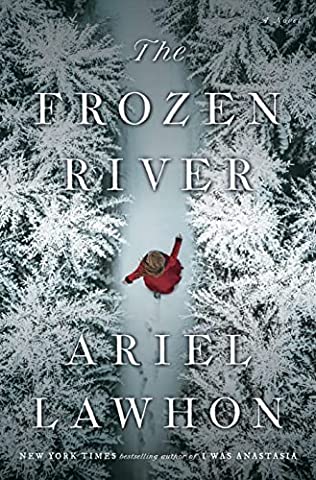
Martha Ballard is a historical figure, a midwife who also had other medical skills. She is an unusual figure for her time—literate (a rarity) and a wife and the mother of a large brood who traveled the area quite independently to deliver babies. In Ephraim, she had a strong, trusting, industrious, and helpful husband. He was a man of faith. He saw his wife’s potential and taught her how to read. He also helped her overcome trauma she had suffered as a young lady.
The setting of The Frozen River is the winter of 1789-1790 (actually 1785 in historical records) and was known as “the year of the long winter” in Hallowell, Maine. Martha is called to document a body found in the river, caught by ice. Thus begins a murder mystery that is so much more. A pastor’s young wife is the victim of multiple violent rapes. In the process of disclosing the truth of the events, the author also reveals much about women’s rights at that time. In summary, they had few. To even give testimony in court a woman had to be accompanied by a husband or father. It was clear that a man’s testimony had greater weight than a woman’s. Premarital sex was fairly common, but if a pregnancy was the result, the woman could be jailed or fined. The man incurred no consequences.
Pre-Bill of Rights, the court system was very different than what we have in America today. It was similar to what is commonly referred to as “frontier justice.” Townsfolk flocked to a local trial where the jury was composed solely of men and the judge was likely to be biased. There were other levels of courts depending on the accusations and the findings of a lower court. In some cases it was clear that justice would not be done, and so men would take action on their own following the dictum of “an eye for an eye.”
Death from natural causes, sickness, childbirth, or accidents was something the people of that time had to live with. Although expected, accepting it was still very difficult, especially for mothers. Life was not easy, and circumstances often left people bereft of material needs and emotional support.
The author, Ariel Lawhon, makes the characters come alive. Without being melodramatic, she presents the characters as real people with flaws and strengths, individuals that the reader will really like despite some weaknesses or truly detest because of the evilness they harbor in their hearts. There were many secrets to be revealed, but those were skillfully hidden until the author chose to disclose them. Even then, the motivation for the matter might remain unknown for a time. Because of the rapes and other types of violence found in the book, it is a hard book to read and certainly not a book to read right before bedtime. It is a page turner that is not for the faint of heart, but reveals so much about a remarkable woman and a time of history that required much of people.
Rating: 5/5
Category: Historical Fiction
Notes: 1. The Author’s Notes at the end delve into the historical accuracy of the book and the author’s resources. She estimates that about 75% of the book “closely follows the historical record.” The rest is “what could have happened.” As all works of historical fiction, the author had to flesh out events and characters to create a story of interest that flows.
2. I do recommend this book, but I would be remiss if I did not include a warning of violence and rape for any potential readers for whom those topics are triggers. There is also some swearing.
3. This book is excellent for book club discussion. Our group engaged in topics that covered the many themes found in the book extending past the regulars of characters and setting to symbolism of a silver fox and the all important river.
Publication: 2023—Doubleday
Memorable Lines:
Memory is a wicked thing that warps and twists. but paper and ink receive the truth without emotion, and they read it back without partiality. That, I believe, is why so few women are taught to read and write. God only knows what they would do with the power of pen and ink at their disposal.
The act of mothering is not limited to the bearing of children. This is another thing that I have learned in all my long years of midwifery. Labor may render every woman a novice, but pregnancy renders every woman a child. Scared. Vulnerable. Ill. Exhausted. Frail. A pregnant woman is, in most ways, a helpless woman. Her emotions are erratic. Her body betrays her.
“No baby is conceived apart from the will of God, May. If you are pregnant, it means that you have been touched by Providence, and you will never hear me say an ill word about the child you carry. Nor will I let anyone do so in my presence.”
This is a new thing I’ve discovered about myself in recent years. The noises. Stand and groan. Sit and grunt. Some days it seems that I can hardly take a step without some part of my body creaking or cracking and this—even more than the gray hairs and the crow’s-feet at my eyes—makes me feel as though I am racing down the final stretch of middle age.
Christy–Appalachian teacher
Christy
by Catherine Marshall

Christy, who lived a protected childhood in Asheville, NC., was nineteen years old when she answered God’s call through the head of a missionary society to move to Cutter Gap, Tennessee, in the Great Smoky Mountains in 1912. Her job was to teach 67 mountain children who had not had steady opportunities for “book learning.” In fact, the one room school house held only a few much used texts for the students. Christy had to take on the additional duty of procuring books and other needed supplies as donations for her students.
In entering Cutter Gap by foot on a cold, snowy day that had finally thawed out enough for the postman to get through, Christy was crossing into another world with its own customs and unique phrases passed down from Scottish heritage. She was startled by the poverty, unsanitary living conditions, and firm adherence to superstitions. Christy was a witness to feuding and its deadly consequences, but she also discovered in the people kindness, grace, and a heart-felt joy in music.
Christy is the story of author Catherine Marshall’s mother as a teenage teacher. As historical fiction, it is more factual than imaginative. Marshall weaves the many tales she heard from her mother into a story that pulls the reader into a culture struggling for survival in the Appalachian mountains. The descriptions in the book paint a picture of the beauty and the harshness of nature in the mountains.
The characters in the book are well developed. One of my favorites is Miss Alice, a Quaker lady admired by all. She travels among three communities on horseback doing everything from administrative work to nursing the sick. She has deep spiritual insights born of experience. The author also reveals traumatic events in Miss Alice’s past that help her understand the tragedies the mountain folk have to cope with on a daily basis. If there ever was a nonjudgmental character, it would be Miss Alice.
This classic deserves a read or reread; a visit to Cutter Gap is one you will enjoy!
Rating: 5/5
Category: Historical Fiction, Christian, Classic
Publication: 1967—McGraw-Hill
Memorable Lines:
Surely one of the chief differences between the veteran teacher and the recruit must be that the experienced can never find enough time, whereas the ingénue struggles to fill the hours, looks forward to dismissal time as a reprieve.
“…if we will let God, He can use even our disappointments, even our annoyances to bring us a blessing. There’s a practical way to start the process too: by thanking Him for whatever happens, no matter how disagreeable it seems.”
I realized something else…there was more to this gracious offer than met the eye. Fairlight Spencer was not just volunteering to do some washing and ironing for me; she was also holding out to me the gift of her friendship. Among the mountain people, this was the most cherished gift of all. It was a breakthrough of those walls of reserve that had so far seemed impenetrable.
“And as for religion being vague—well, it isn’t. It’s been the delight of my life to find God far more commonsense and practical than any human I know. The only time I ever find my dealing with God less than clear-cut is when I’m not being honest with Him. The fuzziness is always on my side not His.”
Ladies of the Lake–bonds of friendship
Ladies of the Lake
by Cathy Gohlke

Viewing the same characters in a split timeline is a good way to tell the story of four girls who formed life long friendships at Lakeside Ladies Academy in Connecticut. They dubbed themselves “Ladies of the Lake.” They were not similar in background, but over their years at the school, they developed a close bond which they sealed with blood signatures at a gazebo on the school grounds, promising to keep in touch and support each other. The split timeline varies between showing the ladies as young people and as adults with a mystery gradually unraveling as the backgrounds and events that shaped them as adults are revealed.
Unfortunately, mistakes were made and things were said that broke some of the bonds. Dot and Addie are the most prominent characters, but they harbor secrets that keep them apart. Loving the same man, the Great War, and the Halifax Explosion all play a tumultuous role in their futures. Can a teenager bring them together?
Ladies of the Lake has a strong Christian theme as the women struggle through seemingly impossible situations. Portia, Addie’s housekeeper, is a woman of faith who gently guides Addie through some difficulties. The author holds up for examination the perspectives of the times on German Americans and Blacks. She invites the reader to see more than one side of an issue For example, people of German descent, former friends and neighbors, might be viewed as the enemy. Blacks were often held in contempt by some as “less than” even though they were put in a position of nurturing white children.
Forgiveness is a strong theme in this book as there are several characters who need to ask and receive forgiveness. Family is another important theme as the girls form a family for each other regardless of their home situations.
Reading this book is an escape into another world, but not one without pain. The characters are described well, and readers can immerse themselves in their lives as the story is full of twists and turns. The author cleverly hides the identity of Dorothy’s husband, but as the book progresses the reader will take pleasure in deciphering who he probably is.
I received a complimentary copy of this book in exchange for an honest review. Opinions expressed in this review are completely my own.
Rating: 5/5
Category: Historical Fiction, Christian, Women’s Fiction
Notes: There are lots of Scripture references and some particularly lovely and meaningful prayers at appropriate places in the story.
Publication: July 11, 2023—Tyndale House Publishers
Memorable Lines:
If I’d had a grandmother or a guardian angel, I would’ve wanted her to be just like Mrs. Simmons…I would have wanted her to be Mrs. Simmons.
She watched as he rejoined his brother, two halves of a whole, one with a slight limp and the other with a sleeve empty since the Great War, neither of which stole appeal from either man. That war had stolen much from the Meyer family, far more than the damage or loss of limbs.
Tears know no quota; mine couldn’t seem to stop.
A Shadow in Moscow–Cold War spies
A Shadow in Moscow
by Katherine Reay
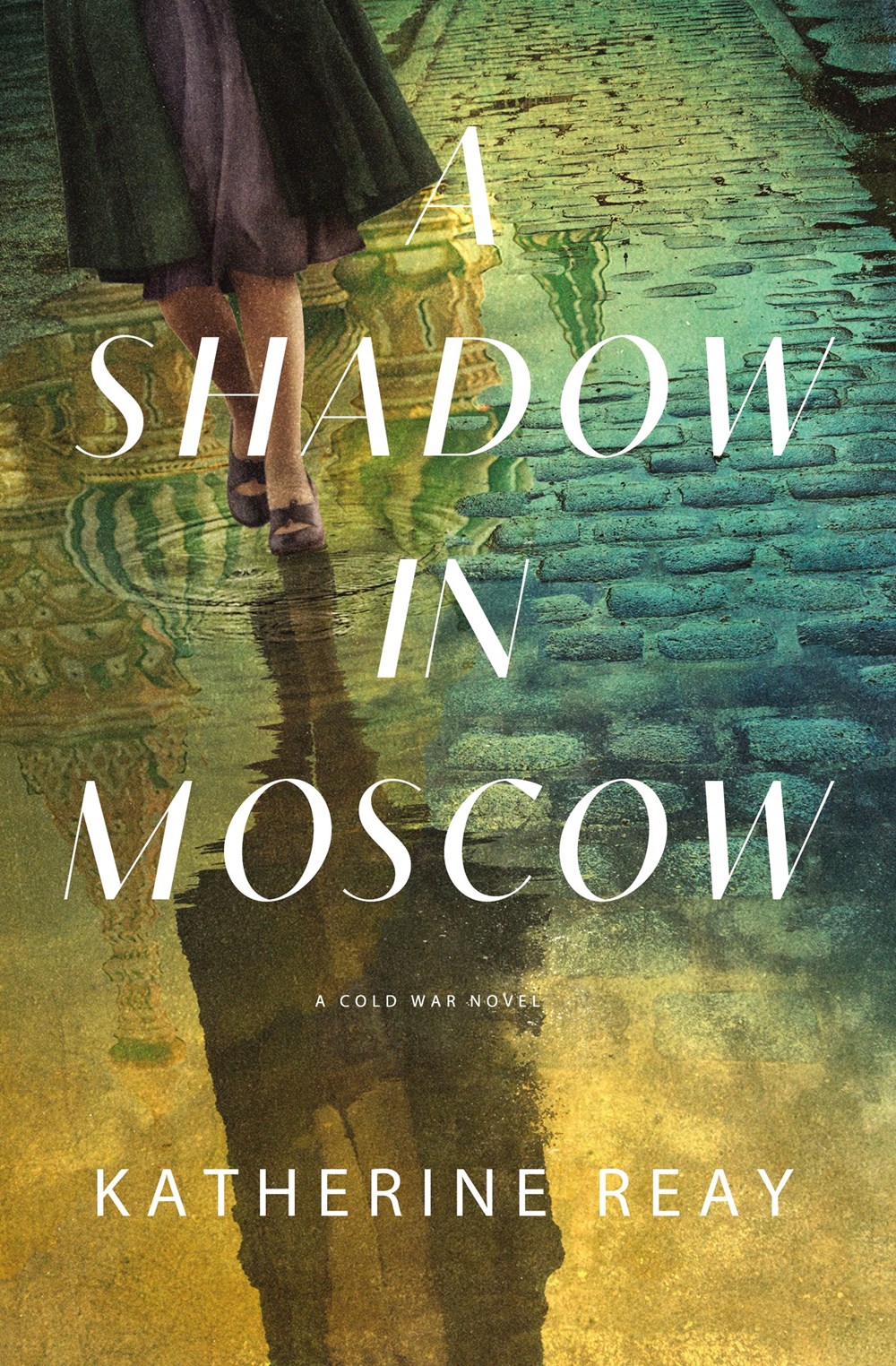
As you can guess from the title A Shadow in Moscow, this book is about spies—two women in particular—and is told in two timelines with a third included in an epilogue. I didn’t like the two timelines for a lot of the book, but by the end I understood why the author chose that style. She purposely does not reveal the connections between the two women operatives until late in the book. She, in fact, keeps a lot of clues from the reader. The whole book is interesting, but a little unsatisfying until the author reveals the relationships to the reader and to the characters themselves. At that point I was shaking my head at the courage, intelligence, and loyalty of these women.
Almost any summary of this work of historical fiction would include spoilers, so I will instead relate some of my impressions. I have read other books by Reay and appreciate her as a writer. She has researched her topic well and has shared information about the Cold War in a way that makes it understandable to the reader. It is hard to comprehend from our position in North America the length and depth of the spy organizations and culture that permeated the world during that era, especially as it involved the Soviet Union, the United States, and Great Britain. This is a story of intelligence agencies (CIA, MI6, and KGB) and counterintelligence agencies. We learn of the extent the KGB went to in their efforts to control the actions and even the thoughts of their people. We see this on an organizational level, but also a personal level as individuals and families are unable to express themselves or know who to trust. As Reay states in her notes to readers, “only in truly understanding our pasts will we be able to navigate—with empathy, humanity, and wisdom—our presents well.”
At two-thirds of the way through this book, I would have given it a moderate stamp of approval. At the end I was overwhelmed with the writer’s talent, with the way the various threads were drawn together, and with the motivations and resolutions for various characters. It will transport you to a difficult time in history when choices, whether based on ethics or on greed, led to life and death decisions.
I received a complimentary copy of this book in exchange for an honest review. Opinions expressed in this review are completely my own.
Rating: 4/5
Category: Historical Fiction
Notes: Discussion questions are included in the back of the book and Reay references other resources on her web page. If this is chosen as a book club selection, I would advise that the members read the whole book before discussing it.
Publication: June 13, 2023—Harper Muse
Memorable Lines:
Jamison’s cramped and stuffy book-lined office is my favorite spot on campus. Something about its dusty, ink-and-paper smell takes me right back to my bedroom and my all-night read-a-thons—because at home you get the best books in secret and only for one night.
Our conformity gives an illusion of power and peace as we are raised to believe our way of life is superior and virtuous. Illusions are powerful things. If you believe them hard enough, they can become one’s reality.
“They’re Americans, Sasha. They have constitutional rights agains that kind of stuff.” The memory is bright and convicting, blinding me with truth. That’s the difference, I think. Forget the bedazzled clothes, the neon colors, the malls, the plentiful vegetables. Forget it all. It’s window dressing hiding the truth. None of that matters because only one thing counts. Rights.
Jayber Crow–Life Story
Jayber Crow
by Wendell Berry
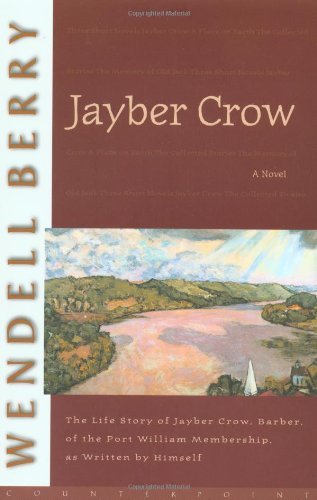
Some books are hard to encapsulate in a book review. Jayber Crow is one of those books. I am grateful to have book club members willing to share their insights and perspectives and give me opportunities to reflect on my own.
Author Wendell Berry is a Kentuckian through and through as is demonstrated in his Port Williams series of 11 novels and additional short story collections with a Kentucky setting. A novelist, poet, agrarian, activist, essayist, and farmer, Berry tells the story of Port William through the lives of his characters. Not a lot “happens” in Port William, but individuals like Jayber Crow are on display for the reader to understand how their experiences determine their strength of character. Jayber Crow has a series of rough circumstances as a child and as a young man; but never viewing himself as a victim, he develops the mental, emotional, and even physical fortitude to become a strong and introspective person. As is often the way in small towns, he is still considered an outsider even after many years of residing in Port William. With the goal of never being under the control of “the man across the desk,” Jayber, who considers himself the town’s most “ineligible bachelor,” has his own business as the town’s barber with side jobs as grave digger and church sexton.
Jayber was born in 1914, so he and all of Port William were affected by both World Wars and the Depression. He was witness to the technological changes that some called progress and others perceived as movements away from self-sufficiency and a difficult, but very satisfying way of life. In the process, they replaced a slower existence powered by manual labor with a more stressful one with a never-ending cycle of debt.
Jayber’s spiritual life is explored in the novel as he was placed in an unloving church orphanage where he thought he was called by God into the ministry. He was given a college scholarship to that end, but had a change of heart as he progressed through his studies. Jayber’s story shows the hand of God working behind the scenes as events from his early days help him as an adult. He is quiet, doing a lot of listening as a barber. As you read this book, you will watch Jayber navigate literal and metaphysical floods. There is a lot of symbolism in the book as related to water and course of direction. His relationships with women are interesting as he finally comes out of his shell by visiting a neighboring town where he will be subject to less town gossip. His marriage covenant is a most unusual one and may leave the reader with more questions than answers.
There is so much to think about in Jayber Crow that it is not a quick or easy to read book. I did enjoy it and recommend it. It takes the reader on a journey across Jayber’s lifetime, but never far from Port William.
Rating: 5/5
Category: Historical Fiction
Notes: 1. #6 in the Port William Series, but works well as a standalone
2. Contains a map and a genealogy of the families of Port William featured in the series.
Publication: 2000—Counterpoint (Berkeley)
Memorable Lines:
Back there at the beginning, as I see now, my life was all time and almost no memory. Though I knew early of death, it still seemed to be something that happened only to other people, and I stood in an unending river of time that would go on making the same changes and the same returns forever. And now, nearing the end, I see that my life is almost entirely memory and very little time.
The talk went the way I love it, so quiet and unhurried I could hear the dampened fire fluttering in the stove.
Her hearing was as sharp as Miss Sigurnia’s was dull. Aunt Beulah could hear the dust motes collide in a sunbeam; she could hear spiders chewing on flies.
The Branches seemed uninterested in getting somewhere and making something of themselves. What they liked was making something of nearly nothing.
Why is hate so easy and love so difficult?
 education pathways