
Home » Historical Fiction (Page 2)
Category Archives: Historical Fiction
A Truth Revealed–ambition and revenge
A Truth Revealed
By Tracie Peterson

At age twelve, Laura Evans lost her mother to consumption in 1858. Her father, Granite Evans, who became her long distance hero, immediately sent her to boarding school. After ten years apart, she finally rejoins him in Cheyenne in the Wyoming territory which was a rough area at that time. Does Laura really know the man she has put on a pedestal for so many years? Is he the gracious, generous man the townspeople admire so much? He doesn’t hide his political ambitions, but is there a limit to what he will do to become governor of the territory or even president of the U.S.?
Wilson Porter is a young minister hoping for a government appointment to work with the Indians in the area. Until treaties can be sorted out, Wilson is employed in a local furniture shop using his woodworking skills to provide a living. When his father dies unexpectedly, Wilson encourages his mother and sister to travel to Cheyenne to be closer to him. Sadly, tragedy strikes the family again in several ways. When Wilson is injured, Laura takes him into her father’s home and nurses him back to health. They come to know each other better, but they also learn about an evil side of Cheyenne.
One of the main plot threads is faith in God. Both Laura and Wilson attend church, but Granite refuses. He blames God for his wife’s death. Wilson also has some questions of faith that he has to work through. Meanwhile, Laura finds support from a group of ladies at church who meet weekly to pray and work on handicrafts.
The characters have depth, and the setting seems true to the Cheyenne area during Wyoming’s territorial days. The Christian faith is consistently woven into the story as many of the characters look to God for strength and wisdom. Life is not a smooth path as the characters endure some very difficult challenges. The author has Laura attend a women’s college in Tennessee which actually existed and added realism to the skills and knowledge Laura had that would have been unusual for a woman during that time period. The theme of evil versus good permeates the novel. I enjoyed this book and am planning to return to the series to pick up the second book in the series which focuses on Laura’s friend Melody.
I received a complimentary copy of this book in exchange for an honest review. Opinions expressed in this review are completely my own.
Rating: 4/5
Category: Christian, Historical Fiction, Romance
Notes: #3 in The Heart of Cheyenne series. The background is fully explained and in good order; it can definitely be enjoyed as a standalone. There is an overlap of characters but there are central protagonists specific to each book.
Publication: November 5, 2024—Bethany House
Memorable Lines:
Rejections from the doctors, church, and family had left Granite hard and angry, and when his beloved wife died, he vowed to make a success of himself in such a way that he could get back at those who had denied her help.
“Evil men will always do evil things, and, yes, there will be times when we suffer the effects, even as God’s beloved children. However, I still believe in His love and goodness.”
“But you know, life is a risk. Every day presents new challenges and heartache. But it also allows for happiness and good gifts. And no matter which come our way, God is there to help us through.”
The Memory of Old Jack–evocative language
The Memory of Old Jack
by Wendell Berry

Author Wendell Berry is loved and even revered by many of his readers. This is the third book I have read by him with my book club. He has written a series of novels describing the land and the people of the fictional Port William community in rural Kentucky from shortly after the Civil War to 1952. As a part of this series, The Memory of Old Jack’s timeline is a little jarring as it jumps repeatedly between Jack on a special September day and the memories he dredges up from a lifetime of experiences. A hard working farmer, he soaked in wisdom about farming and about life from an older neighbor.
My opinion of the character Jack also bounced around as I read about the various events of his life; sometimes I found him admirable and at other times an enigma. He is a rough man, tied to the land he loves so much. He has some regrets about his choices in life, but doesn’t seem to be able to make different choices or fix past mistakes and still stay true to himself.
Perhaps it is because of my own creeping age or the recent deaths of many loved ones, but I found the book very sad. Another member of my book club called it “grim,” and I must agree. It is not sprinkled with uplifting light spots, nothing to raise the heavy veil. There are some supporting characters that I liked, but they did not make up for the melancholy of this tale. Wendell Berry is a good writer in the sense that he effectively writes what I will call poetic prose. A few chapters into The Memory of Old Jack, I was struggling to want to finish this book. I made an attitude changing decision to do a read/listen and that made all the difference. The written language took on a beauty when it became oral.
There is no plot per se; the book moves along from anecdote (in this case memories) to anecdote. Although Berry tells his tale through the main characters, I never found them likable. To like this book, the reader would need to find the characters engaging. For me, it was more a matter of waiting for the next shoe to drop as the story moves to its inevitable conclusion.
The Memory of Old Jack is a vehicle for Berry’s expression of his philosophies about preserving the land and the customs and knowledge necessary for self-sufficiency. Berry was a farmer for forty years in addition to expressing his ideas through environmental activism. A poet, novelist, and essayist, he also worked as a professor. His use of story to promote socio-political thought is reminiscent of the writings of Sinclair Lewis.
This dichotomy of beautiful language in a novel that plods along makes reviewing and ranking it difficult. It deserves five stars, top in my rating system, for eloquent, descriptive language. For elements such as plot and character, I can only award it three stars as a book that I would never read again and am unable to recommend.
Rating: 4/5
Category: Fiction, Historical Fiction, Literary Fiction
Notes: 1. #3 in the Port William Series but all can be read as standalones.
2. Some profanity
3. Narrator Paul Michael of the audio version produced by Christian Audio is good with women’s voices as well as men’s.
Publication: October 8, 1999—Counterpoint
Memorable Lines:
That is what Old Jack has always given him—not help that he did not need but always exactly the help he has needed.
His vision, with the the finality of some physical change, has turned inward. More and more now the world as it is seems to him an apparition or a cloud that drifts, opening and closing, upon the clear, remembered lights and colors of the world as it was. The world as it is serves mostly to remind him, to turn him back along passages sometimes too well known into that other dead, mourned, unchangeable world that still lives in his mind.
…it is hard to keep his mind, ranging around the way it does, from crossing the track of his hard times.Though he would a lot rather let them lie still and be gone, once his mind strikes into his old troubles there is no stopping it; he is in his story then, watching, as he has helplessly done many times before, to see how one spell of trouble and sorrow led to another.
The Bletchley Riddle–young code breakers
The Bletchley Riddle

By Ruta Sepetys and Steve Sheinkin
Written specifically for Middle Grade students, The Bletchley Riddle will appeal to those interested in World War II but not ready for the torturous aspects of the conflict. This book deals with code breaking efforts that were a critical support to the military in winning the war.
Jakob, with mathematical talents, has been recruited from Cambridge and becomes part of the secretive code breaking team at Bletchley Park. His much younger sister Lizzie, who prides herself in being straight forward, escapes from Fleetword, her chaperone who is supposed to escort her from England to live with her Gram in Cleveland, Ohio. Lizzie wants to stay in England to investigate the death of her mother Willa as she does not believe that she died in an explosion in Poland.
This novel becomes very involved as the two youths form relationships with a variety of other interesting characters who live in the area. It’s hard to determine who is a spy and who is not, but Jakob also needs to restore his relationship with Lizzie.
The Bletchley Riddle deals with official decoding using the Enigma machine and with personal riddle solving of secretive messages the pair receives. The book is well written and appropriate for middle grades; the authors knew their audience. While some books written for young people can be captivating for older readers as well, The Bletchley Riddle is not one of them. I have enjoyed other books about Bletchley Park that are more interesting and engaging for adults.
I received a complimentary copy of this book in exchange for an honest review. Opinions expressed in this review are completely my own.
Rating: 4/5
Category: Fiction, Middle Grades, Historical Fiction
Notes: Appropriate for Ages 10+ and Grades 5+
Publication: October 8,2024—Penguin Group (Viking Books)
Memorable Lines:
“Do you always speak your thoughts aloud?” “I do. I’m half American. I’m straightforward. Does that make you uncomfortable?”
She looks with disapproval toward the crumpled papers on the floor. And she’s right. It’s sloppy. I get up to gather the scraps. Even our rubbish is secret here. All of it must be burned.
But the past months have shown that circumstance can be the thief of choice.
The Secret Life of Sunflowers—bringing Vincent van Gogh to the world
The Secret Life of Sunflowers: a gripping, inspiring novel based on the true story of Johanna Bonger, Vincent van Gogh’s sister-in-law
By Marta Molnar

There are many, many works from various media that focus on the artist Vincent van Gogh—books, movies, poems, songs, and of course prints of Van Gogh’s own artwork. The irony is that Vincent Van Gogh was not appreciated as an artist during his own lifetime. His brother Theo was not an artist, but he worked as an art dealer and made enough money to support his own family and his brother so that Vincent could concentrate on his artwork.
The Secret Life of Sunflowers is not about Vincent van Gogh. It tells of the efforts of his sister-in-law, Johanna Bonger van Gogh, to promote Vincent’s art and legacy after the death of both Vincent and shortly thereafter Theo. As a young widow, Johanna had to fight to even get recognized as capable of marketing Vincent’s art. She did this while caring for her young son and earning a living running a boarding house.
This is a dual timeline book. Emsley in our current day is an art auctioneer who faces residual gender discrimination in the art world. Because of the legacy of her bold and controversial Aunt Violet, Emsley pursues her personal and professional goals even in the face of the betrayal of her business partners who were formerly her best friend and her longtime romantic partner. Among other things, Emsley’s aunt bequeaths a diary and some old papers in Dutch to Emsley. They seem to hold secrets about Vincent van Gogh. Emsley has to dive into the meaning of these papers and an ugly small painting her aunt had saved. She accomplished all this while figuring out how to rescue her own business and fulfill her aunt’s final intentions.
The author of this book was intrigued with the story of Johanna, but she had great difficulty in finding information about Johanna in her research. She fleshed out the facts she discovered by adding interesting characters. Both timelines contain supportive friends—for Emsley and her aunt and for Johanna. These three are strong women, but having others come alongside made such a difference in their journeys. Emsley and Johanna both had difficult lives and had to push to make their ways in the world. Alternating between the two timelines was an effective technique as it relieved the building tension surrounding each protagonist.
Rating: 4/5
Category: Historical Fiction, Biographical Fiction
Notes: 1. #1 in the Light and Life Series
2. Includes discussion questions
Publication: July 19, 2022
Memorable Lines:
“Vincent says, If you hear a voice within say you cannot do something, then by all means do that thing, and that voice will be silenced.”
“Sunflowers mean gratitude to Vincent. He never loses faith.” I leaned against my husband and imagined an entire vast field of vibrant golden petals. Thousands of these flowers, unworried about the world, unafraid of the storms, turned as one in gratitude toward the sun.
If life was a rolling river, friendship was the life raft.
The Forgotten Names—forever a timely reminder
The Forgotten Names
by Mario Escobar
translated by Gretchen Abernathy
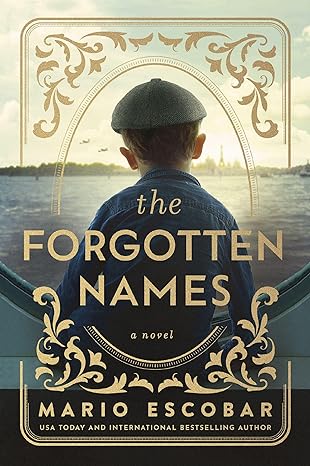
Many historical novels focus on one particular character and develop a story around that character. If it is a dual timeline, then the focus is on one character in each timeline. Escobar’s The Forgotten Names does, in the current timeline, focus on a nonfictional French historian and law student, Valérie Portheret. She spent 25 years identifying at least 90 of the 108 children whose identities were deliberately and necessarily abandoned in the rescue attempt from the Vénissieux internment camp near Lyon. Had their brave parents not signed release forms giving up their parental rights, the children would certainly have been killed by the Nazis who issued mandates for the number of Jews to be “processed.” The Vichy government was theoretically in control of France, but the reality was that they answered to the Nazis who disregarded both the legalities and moralities of the French.
A diverse coalition of Catholics, Protestants, and Jews, including social workers and Resistance organizations, found a loophole in the law. Orphaned minors could obtain an exemption from the roundup that sent the occupants of Vénissieux to their deaths. Escobar tells of the harrowing days and nights spent getting parents to agree, separating the children from their parents, arranging for new homes, transporting them to Lyon, and keeping them until the new parents arrived. All very secretive and all very dangerous for everyone involved in any way.
Escobar is a historian, but he also knows how to tell a story. The chapters are short, encouraging the reader to jump from the end of one into the beginning of the next chapter. The escape story of 1942 is framed by the research story which begins in 1992 when it was still difficult to find a sympathetic advisor. Sadly, the research was hampered by continuing anti-Semitism, rising fascism, and a reluctance to open up wounds of the past. Portheret persisted in locating the children for twenty-five years. The novel is personalized with the backgrounds and experiences of various children and families as imagined by Escobar. In this way, a sad part of history is brought to life with the goal of societies not repeating the horrific tragedies so many suffered through. Portheret originally planned her thesis to examine the life of the infamous Klaus Barbie, known as “the Butcher of Lyon.” As she began her work, however, she found herself drawn to the plan to “exterminate innocent children” and preferred to focus on the victims rather than the barbaric individuals who perpetrated the crimes.
There are so many books about World War II and the Nazis, but this is a new take on the crimes committed in that war. As hard as it is to read about the suffering of innocents whose only crime is to be Jewish, I am glad I read this book. Some of the Christian characters connect various events to Christian theology such as the birth of Jesus who was a Jew, God given Christian/human morality “which imposes duties and recognizes rights,” and the “demands of charity [love] made by Christ to be the distinctive mark of his disciples.” Above all is the emphasis that the human heart rebels against the cruel and painful measures enacted on Jews and certain groups of foreigners.
I received a complimentary copy of this book in exchange for an honest review. Opinions expressed in this review are completely my own.
Rating: 5/5
Category: Historical Fiction, Multicultural
Notes: The book contains references and something I always look for in historical fiction—a discussion of what is real and what is fictional. What follows is a World War II timeline beginning with the invasion of Poland by Germany in 1939 and continuing through the surrender of Nazi Germany to the Allies in 1945. The book concludes with Discussion Questions, information about the author who is Spanish and the translator.
Publication: June 11, 2024—Harper Muse
Memorable Lines:
“Have you noticed how the executioners often end up as celebrities? There are books and books about them. But so few write about their victims. The victims are mere numbers, faceless statistics, figures on the yellowed pages of history.”
The land of Mozart, Goethe, and Immanuel Kant had become a nation of barbarians, of heartless warriors whose driving desire was to control the human race and conquer the world.
“But now everybody—at least in the West—knows that it’s wrong to sacrifice humans. Maybe war will teach us a lesson we can’t learn any other way: the lesson that killing one another for our ideas, beliefs, or flags is absurd, because we all belong to the only human race there is, and we’re all brothers and sister of one another.”
To Slip the Bonds of Earth: A Mystery in the First Days of Flight
To Slip the Bonds of Earth
By Amanda Flower

Most books on flight focus on the famous brothers Orville and Wilbur Wright. At a time when women were frequently shown disrespect, the Wright brothers’ college educated sister Katharine was outspoken and independent all while caring for her father and brothers after the death of their mother. She also was in charge of the business end of their bicycle sales and repair shop and worked as a Latin teacher.
When one of her students is accused of murder, Katharine moves into high gear to prove his innocence and discover who the real murderer is. Ironically, she had dismissed that student from her class a few days prior for his disrespectful behavior. There are many interesting threads along the way including a men’s only club in Dayton, Ohio, frequented by the political leaders of the city. The treatment of women and various social classes is also highlighted. Orville Wright took the plans for their airplane to a party and they disappeared resulting in another mystery. Katharine needed to determine if the murder and the stolen papers are related crimes.
I enjoyed the mix of history, fiction, and mystery. It is well written and interesting and kept me guessing to the end.
I received a complimentary copy of this book in exchange for an honest review. Opinions expressed in this review are completely my own.
Rating: 4/5
Category: Historical Fiction, Mystery
Notes: #1 in the Katharine Wright Mystery series
Publication: March 26, 2024—Kensington
Memorable Lines:
When I was younger, there had been times when I’d lamented—if only to myself—my unremarkable appearance, but now, as an adult, I found it served me well. Those who had been lulled by the relative dullness of my looks had been disarmed by the sharpness of my wit.
“Poor decisions always come late in the day, Katie. I want you to remember that. As the day goes on, thoughts become muddled, because so many choices have to be made. A man’s willpower lags, and he makes mistakes, some of which may be the most costly of his life.”
“What did I teach you?” she asked in a hushed voice. I paused. “That sometimes doing the right thing is the wrong thing in the eyes of the law. That sometimes justice and mercy don’t coincide. That sometimes mercy is the better choice.”
The Mystery of Haverford House–multiple timelines
The Mystery of Haverford House
by Rachel Burton
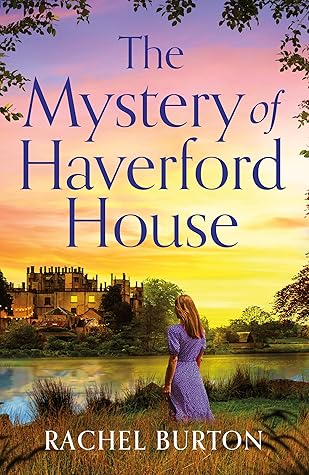
Viola, originally from Australia, has had to reinvent herself several times. She has finally found a place that feels like home—a huge estate in Yorkshire. Her job is to manage Haverford House as a tourist attraction, but it is difficult to maintain it as a viable establishment financially given its size, age, and tax status. The current earl and owner wants to sell it, but his mother, the dowager countess, is sentimentally attached to it.
There is a mystery and legend that Viola emphasizes in her house tours. Annie Bishop, a serving girl at Haverford, disappears in 1933. Was she murdered or did she travel to America to start a new life? As the story unfolds for the reader, much of the status of women during the period between the two World Wars is revealed. There is also a focus on the works of Shakespeare, particularly Twelfth Night, as there is a production of it in both timelines. The characters are fleshed out in both timelines with some villains and heroes in both. It is interesting to see that the Haverford residents in the 1930’s, even the “nice” ones, were disdainful of the servants that worked in the house. There were also those in the lower classes who felt they and their peers should “mind their place.”
My interest in both storylines never flagged. I no sooner finished a chapter with my interest peaked than the focus changed to equally compelling events in the other storyline. This seesaw continues all the way to the end of the book with a number of surprises along the way.
I received a complimentary copy of this book in exchange for an honest review. Opinions expressed in this review are completely my own.
Rating: 5/5
Category: Romance, Women’s Fiction, Mystery, Historical Fiction
Notes: clean in all aspects
Publication: March 14, 2024—Aria
Memorable Lines:
“I don’t know where you all find the time for reading,” Polly says regularly. In my opinion you make time for the things you love but she has no interest in fiction, or books in general. She hated dusting the library, but lucky for her I was always willing to do it.
I wonder if he knows why he is here—I wonder if he realizes how badly the estate needs his father’s money? And I wonder what it must be like for Prunella and Cecily, being duty-bound to marry somebody they might not even like, let alone love.
Viola wanted to run upstairs to her flat, get into bed and pull the duvet over her head. Alternatively if the ground would like to open up and swallow her that would be fine too.
The Berlin Letters–postwar intrigue
The Berlin Letters
By Katherine Reay

There are so many works of historical fiction that deal with World War II. Writers have explored the different countries engaged in the war and affected by the war. They have researched and examined the lives of the individuals caught up in the horrors of war from those at the top to the common citizen and from the despots and their minions to the heroes for freedom. The Berlin Letters creates a story that showcases the strange time in Germany after World War II when the West and the Soviet Union cavalierly divided the country into two power blocks and the city of Berlin into two entities. Suddenly, people who were associated with East Berlin could not cross the street into West Berlin to shop or visit with family without fear of arrest and torture.
As word spread that East Berlin was soon to be shut down, there was a mass exodus. Those remaining were subject to surveillance by the Stasi, a group that seemed to be everywhere and were admired by the KGB. They perfected “decomposition,” continuous torture and pressure from all directions that resulted in arrestees admitting to crimes they didn’t even commit.
Perhaps the worst part of living in East Berlin at that time was the presence of snitches. They could be anyone, from your friend to your neighbor or work colleague. Some monitored other citizens for money, but most to protect themselves and their families.
The Berlin Letters is a complicated web of ordinary citizens, spies, revolutionary young people who protested through their punk music and clothes, propaganda writers, and the underground. It begins with Monica passing her daughter Luisa across barbed wire to her parents, who later move to the United States. Monica’s husband Haris is a successful propaganda writer for the state newspaper and believes what he writes—at first. We meet Luisa again as an adult. She works in deciphering codes left over from World War II, a skill her grandfather taught her. Never one to pass up a puzzle, she discovers that her father and her grandfather communicated over the years even though she had been told that her parents had been killed in an automobile accident. The letters include secrets so she is obligated to involve her CIA bosses. Luisa gives up all of her and her grandmother’s savings and risks her own life to travel to East Berlin to rescue someone who is about to be transferred to one of the worst prisons in East Germany. Whom can Luisa trust? Is her CIA training from years ago enough to see her through? Will her impulsive actions cause her to lose her job and clearance?
I received a complimentary copy of this book in exchange for an honest review. Opinions expressed in this review are completely my own.
Rating: 5/5
Category: Historical Fiction
Notes: Clean historical fiction with a touch of romance
Publication: March 5,2024—Harper Muse
Memorable Lines:
Walther’s “I fought tooth and nail to stay, until the day I needed to leave” has become my rallying cry. I don’t want to leave. So I fight.
I’m surprised there are none of the neon signs or billboards so prevalent in West Berlin. Then I realize it’s a planned economy. There is no need for advertising.
Now I see when you grow up with little more than the necessities, you take care of them, and you don’t put your happiness into more.
A Love Discovered–Wild West
A Love Discovered
by Tracie Peterson

When Marybeth Kruger’s father dies in a wagon accident, he leaves Marybeth and her two year old stepsister without money. Marybeth is the only “mother” little Carrie has ever known and she refuses to part with her. She is offered a way out of her situation by Edward Vogel, her friend and the husband of her deceased friend Janey.
Cheyenne is a booming town in the Dakota Territory. Edward receives a job offer as a lawman there, but the preference is for a family man. Marybeth and Edward agree to a marriage of convenience. They will not be intimate as he feels responsible for the death of Janey during childbirth. Neither anticipates the feelings that blossom as they struggle together to adapt to life in Cheyenne.
Marybeth is a tough young lady, and if anyone can survive the cold and windy winters of Cheyenne in a tiny tent, she has the fortitude to do it. Any sacrifices are worth it to keep Carrie, a precious little girl who soon calls Edward “Papa.” He loves Carrie right back and is continually concerned about the dangers of the railroad town that is truly the wild west where murders are a frequent event and justice is meted out by vigilantes when it is clear that a hanging offense has occurred.
The historical aspects of life shortly after the Civil War as the country looks westward through railroad expansion are fascinating, but the real focus of the story is Marybeth and Edward’s relationship. Edward has to come to grips with his trust issues with God before he can move ahead with Marybeth. There were a few times that progress in the book seemed slow and the relationship issues repetitive, but I liked the characters especially little Carrie. Tracie Peterson is a prolific writer and was recommended to me by a friend as a good author of Christian historical fiction. I will return to read more of her books to evaluate her works more thoroughly.
I received a complimentary copy of this book in exchange for an honest review. Opinions expressed in this review are completely my own.
Rating: 4/5
Category: Historical Fiction, Christian, Romance
Notes: #1 in The Heart of Cheyenne series
Publication: March 5, 2024—Bethany House
Memorable Lines:
“Ah, ya’ve a wee daughter. A greater blessin’ can’t be had. Oh, a son is a fine thing, but a daughter is somethin’ special.” The man’s eyes seemed to twinkle in the the dim light.
I remember my parents sayin’ that folks need a Savior, but they also need a friend.” He smiled. “Pa also said we need to be careful and not try to be both.”
“Sometimes we do a thing out of obligation, and in time, we learn to take joy in it.”
The Covenant of Water–Indian multigenerational saga
The Covenant of Water
By Abraham Verghese
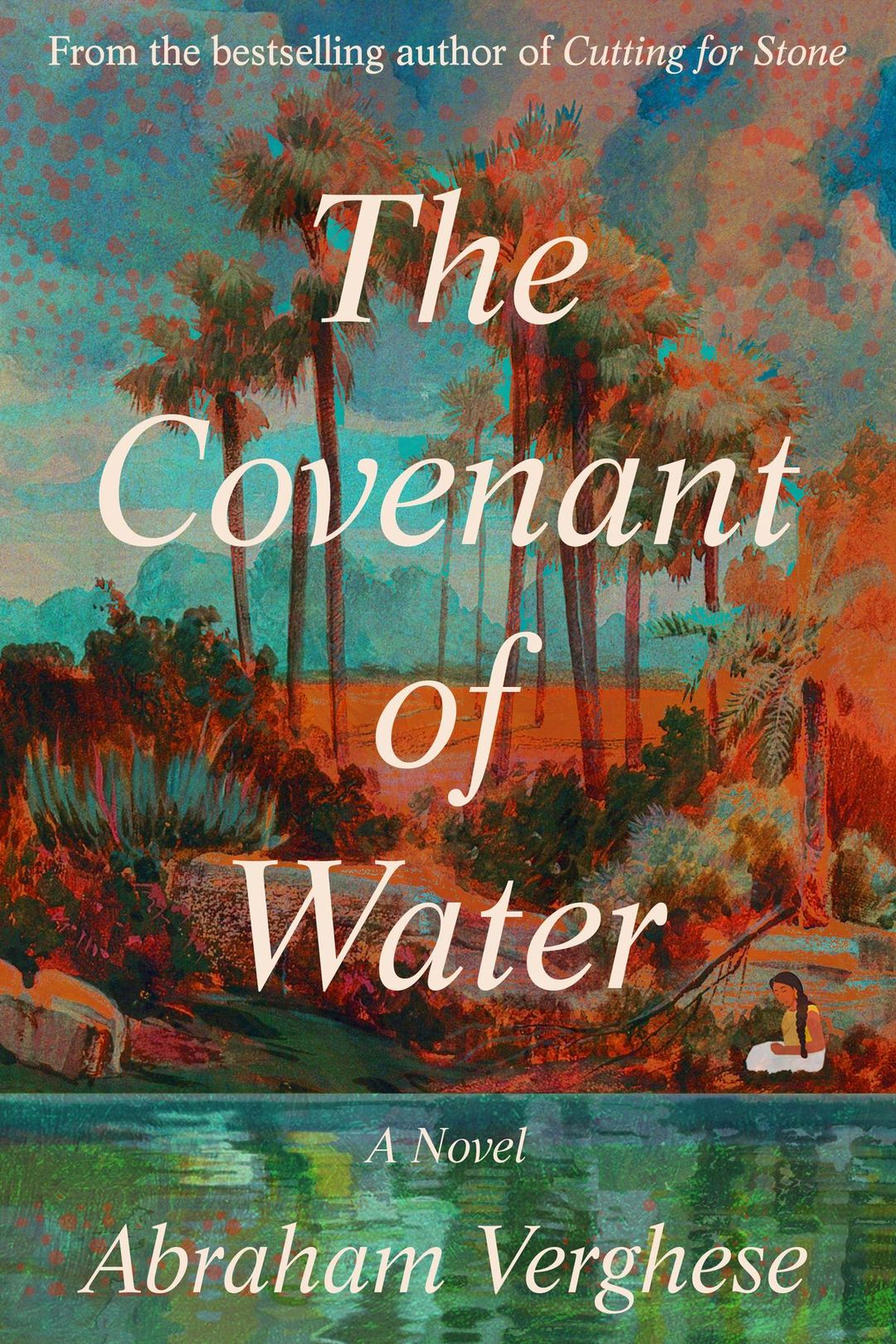
Fourteen years in the making, 724 pages long, this saga that mainly takes place in India will stay with readers long after they have finished reading it. This story spans the years 1900 to 1977 and begins with the arranged marriage of a twelve year old girl who is given years to mature and grow into her role before the marriage is consummated. She becomes the matriarch of the family and is known as Big Ammachi. The family has a secret, a curse they refer to as The Condition. At least one person, usually male, in each generation has died of drowning in a country where water is everywhere.
The reader takes a deep dive into the relationships that occur over the years in this area inhabited by St. Thomas Christians. The people in the community have a Christian faith, but it is interwoven with other cultural traditions. Big Ammachi’s husband Thamb’ran has the condition and was not allowed to travel by water to school. Therefore, he is an intelligent man, but has never learned to read. He also has a hearing loss.
Just when the reader has a grasp on these characters and the plot, the story jarringly transitions to Glasgow, Scotland, in 1919, where we meet Digby Kilgour, a surgeon, and become acquainted with the caste system. Although the transfer seems sudden, the plot soon moves back to Parambil in India where it is discovered that beloved Baby Mol suffers from a medical situation that will leave her childlike all of her life.
The Covenant of Water is too long for a reviewer to detail all of the events concerning the many characters. The plot is intricate and seemingly unconnected threads are eventually woven into other threads to create beautiful scenes full of emotion and love which cross many generations. There are tragedies and victories, happiness and great sadness. Heroic actions save lives and cause personal suffering. Writing and art are tools for healing. The World War brings death to many as Japan bombs Madras in India, but also inspires Indians to seek their freedom from Great Britain. There are births under primitive conditions, the arrival of electricity, and the release of Nehru after three years of imprisonment. Fire causes permanent damage as does leprosy, but with an undercurrent of faith, there is also healing and joy. Water is a powerful theme as the water flows through the land uniting all the characters with none of them having to stand alone because they are connected by the water—physically and emotionally. Story is important to this author and more important than themes and messages. As the story unfolds, however, Verghese reveals deep meanings and understandings of human nature in his beautiful writing. Although he labored over this saga for years, the telling seems to be effortless and replete with memorable lines and phrases. It is a masterpiece of fiction that readers will want to discuss and revisit for years to come.
Rating: 5/5
Category: Fiction
Notes: I am not normally a fan of celebrity book clubs, but I listened to Oprah Winfrey’s six part discussion (available on YouTube) of The Covenant of Water with author Abraham Verghese. It is a great interview and includes Verghese reading some passages from the book. It offers interesting insights into the writing process. I don’t usually listen to audio books because of hearing issues, but I could tell that Verghese’s reading of his book would be a positive addition to the enjoyment of The Covenant of Water.
It is a long book, but I think most people in my book club enjoyed it. One member shared a 5 page list of characters she found online. Because the book is so long, I would suggest readers explore that possibility or create their own list as they read.
Publication: May 2023—Grove Press
Memorable Lines:
The grandmother is certain of a few things: A tale that leaves its imprint on a listener tells the truth about how the world lives, and so, unavoidably, it is about families, their victories and wounds, and their departed, including the ghosts who linger; it must offer instructions for living in God’s realm, where joy never spares one from sorrow. A good story goes beyond what a forgiving God cares to do: it reconciles families and unburdens them of secrets whose bond is stronger than blood. But in their revealing, as in their keeping, secrets can tear a family apart.
“Are we not doing some good here, Honorine?” he asks gently. She looks at him kindly. “Aye, bonny lad, you are! Us all are! Our hospital, the railways and telegraphs. Plenty good things. But it’s their land, Digby, and we take and take us. We take tea, rubber, take their looms so they must buy our cotton at ten times the cost…”
“Half my life is spent on trains. Strangers of all religions, all castes getting on so well in a compartment. Why not same outside train? Why not simply all getting along?” Arjun looks out of the window and swallows hard.

