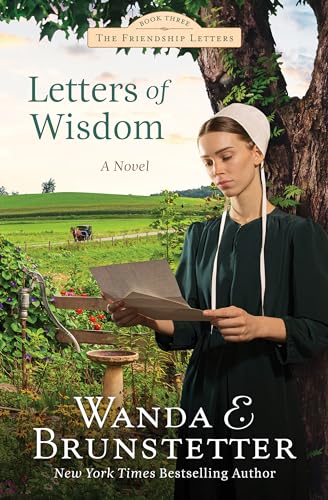
Letters of Wisdom
By Wanda E. Brunstetter
Long known as a writer of Amish themed novels, Wanda E. Brunstetter has recently turned her hand to writing some books with very serious themes. Although they still focus on the Amish and how characters face situations, the problems are consequential with multi-generational results. Sadly, the stories such as this one originate in Brunstetter’s personal experiences.
Irma Miller suffered traumatic physical and emotional abuse inflicted by her stepfather on her only, not on his biological children. She is reluctant to share these experiences until she sees herself morph into the monster her stepfather was. Her surprised husband insists she get help in the form of therapy with a Christian counselor. Her mother-in-law and the bishop’s wife also provide childcare for her children. Healing is not an instant process. Letters from her friends helped. She had not been able to deal with her three children rationally and a fourth is on the way. Irma finds she has to confront the trauma head-on, granting and accepting forgiveness. Her mother and step brothers and sisters needed to be a part of that process too.
The characters, other than the stepfather, are likable. They are all caught up in a web of pain. The extent of the abuse is not evident in the first part of Letters of Wisdom, but becomes apparent later. Prayer and forgiveness are essential parts of the healing process, but Irma’s path is a difficult one and hard to witness.
I received a complimentary copy of this book in exchange for an honest review. Opinions expressed in this review are completely my own.
Rating: 5/5
Category: Christian, Romance, Women’s Fiction
Notes: 1. #3 in the Friendship Letters Series, but can be read as a standalone.
2. This book has a frank and realistic view of abuse in the family. If that is a trigger for you, you might want to give it a pass.
Publication: March 1, 2024—Barbour
Memorable Lines:
She sensed the real emotions that remained in this house from Homer’s cruel treatment of Irma while she’d lived here, but none of the other children had ever talked about it.
She’d grown to hate him over the years. And even now, knowing he was dead, her soul filled with animosity thinking about all the terrible things he’d done to her.
“…it’s in the past and we must live in the now and do better in the future. We have all made mistakes that we can not erase. So, in order to live a happy, fulfilled life, we must confess our sins, turn our fears over to God, forgive our own shortcomings, and make every effort to behave in such a way that others will see Christ living in us. Only then will our hearts be filled with peace.”


 education pathways
I appreciate when authors like Wanda Brunstetter tackle some heavier themes. I always learn a lot from them. It is unfortunate that this story originates from her personal experience. Thanks for the review, I’m going to check this series out!
LikeLiked by 1 person
While I don’t really enjoy reading books with such difficult themes, I support the idea of addressing such issues in communities that you would like to think are immune to them–but of course they are not.
LikeLike
Amish fiction is one of my favorite genres.
LikeLiked by 1 person
You can count on them being clean.
LikeLiked by 1 person
I am reading more and more Amish fiction that deals with serious issues and shows us that no one, or no community is without problems. I like the sound of this one, Linda. Wonderful review.
LikeLiked by 1 person
Thanks, Carla. Tough, but important reading.
LikeLiked by 1 person