
Home » Posts tagged 'Jesus'
Tag Archives: Jesus
Reflections on the Savior–three books in one
Reflections on the Savior
By Max Lucado
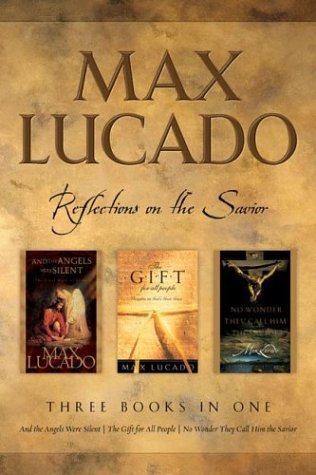
When I purchased Reflections on the Savior, I didn’t have a plan. I just wanted another book full of Biblical insights imparted in an engaging and sometimes anecdotal way by an excellent writer. As a bonus, I would actually be acquiring three books. I decided to read it over the course of three years, one Lent at a time. Lent is the forty days before Easter, a time of reflection and devotion for Christians as we anticipate Jesus’ death on a Roman cross followed three days later, as He predicted, by His resurrection.
And the Angels Were Silent: The Final Week of Jesus
Rating: 5/5
Category: Christian, Nonfiction
Notes: 1. Each chapter has a study guide.
2. Divided into sections by days of the week that correlate with the events in Jesus’ last week on Earth.
Publication: 1992—Multnomah
Memorable Lines:
The Pharisees were arrogant. They were arrogant because they were self-righteous. They were self-righteous because they were trying to make themselves righteous without God…They complicated the gospel with odd myths and superstition. They took pride when it came to tithing, but took naps when it came to serving.
The GIFT for All People: Thoughts on God’s Great Grace
Rating: 5/5
Category: Christian, Nonfiction
Notes: 1. The chapters are short, of devotional length. They get to the point quickly and with impact.
2. The book is divided into 4 sections:
The Gift of a Savior
Ransom for Sinners
Bounteous Grace
The Choice
Publication: 1999—Multnomah
Memorable Lines:
Jesus knows how you feel. You’re under the gun at work? Jesus knows how you feel. You’ve got more to do than is humanly possible? So did he. People take more from you than they give? Jesus understands. Your teenagers won’t listen? Your students won’t try? Jesus knows how you feel. You are precious to him. So precious that he became like you so that you would come to him.
Sometimes God is so touched by what he sees that he gives us what we need and not simply that for which we ask.
God is for you. Had he a calendar, your birthday would be circled. If he drove a car, your name would be on his bumper. If there’s a tree in heaven, he’s carved your name in the bark. We know he has a tattoo, and we know what it says. “I have written your name on my hand,” he declares (Isaiah 49:16).
No Wonder They Call Him the Savior: Chronicles of the Cross
Rating: 5/5
Category: Christian, Nonfiction
Notes: The book is divided into 3 sections:
The Cross: Its Words
The Cross: Its Witnesses
The Cross: Its Wisdom
Publication: 1986—Multnomah
Memorable Lines:
And, by the way, never were those arms opened so wide as they were on the Roman cross. One arm extending back into history and the other reaching into the future. An embrace of forgiveness offered for anyone who’ll come. A hen gathering her chicks. A father receiving his own. A redeemer redeeming the world. No wonder they call him the Savior.
It was easy for him [a farmer] to believe. I can see why. Someone who witnesses God’s daily display of majesty doesn’t find the secret of Easter absurd. Someone who depends upon the mysteries of nature for his livelihood doesn’t find it difficult to depend on an unseen God for his salvation.
So Into You–too many secrets
So Into You
by Kathleen Fuller

Britt is a talented artist and art teacher in her late twenties who makes a living creating YouTube tutorials for art. She has extreme social anxiety which she has addressed in various ways, but none of the treatments or recommendations have had long-term benefits. Although she supports herself financially, she still lives with her mom Amy, a high school math teacher. Britt’s parents divorced when she was young because her father Daniel had problems with alcohol and anger.
Hunter comes from a wealthy, successful family but got mixed up with alcohol and drugs as a pre-teen. Some tough love from his parents resulted in a stint in jail where he turned his life around with the help of a chaplain who introduced him to Jesus. After his release, Hunter got a job at a warehouse and worked on getting his life in order. He happens onto Britt’s YouTube channel and becomes interested in her tutorials. He also thinks she is very cute. Now he just has to meet her without coming across as a creepy stalker.
All of the major characters have secrets that they resist sharing; and, as might be expected, those secrets cause major problems. Hunter, who used to be a “player,” becomes a sensitive, respectful friend to Britt and wants to help her with her social anxiety issues. Other family members and friends are involved in the story as well. The author connects the characters in a way that the reader can see coming. I held my breath as I watched the relationships develop and anticipated how the secrets would be revealed and what blow-out would result.
I received a complimentary copy of this book in exchange for an honest review. Opinions expressed in this review are completely my own.
Rating: 4/5
Category: Romance, Women’s Fiction, Christian
Notes: Discussion Questions included.
Publication: December 3, 2024—Thomas Nelson
Memorable Lines:
A year ago when they signed the lease together, he’d made a pact with Sawyer that he would stay clean and sober, and he’d kept it. That was in the past, and it was a road he never wanted to travel again.
Immediately she was hit with a blast of heat, and it was a only May. The next few months would be brutal. Otherwise known as summer in Texas.
“We love each other more deeply now than we ever have. But love isn’t all you need to make a relationship work. You must have communication, patience, and empathy, along with understanding and honesty. Above all, you have to be willing to make it work. If you give up, the relationship is over.
The Joshua Code: 52 Scripture Verses Every Believer Should Know
The Joshua Code: 52 Scripture Verses Every Believer Should Know
by O. S. Hawkins
Have you ever felt like you should have more Bible verses committed to memory than you already have? That thought was the impetus for me to purchase and read this book. The goal is to memorize one verse each week. At first that seemed doable, but as life brought some ups and downs, I found myself unable to remember, over the long haul, all the Scripture references that went with each verse. So, about half way through the book, I switched to using it solely as a devotional and that worked well for me in that season.
My first reaction to The Joshua Code was to question the author’s choice of Scriptures. Many of my “favorites” were not included, and I wasn’t sure I saw the importance of those that were selected. As I stayed with it for a few weeks, I began to understand the process. With each verse there is a devotional, a short homily. As I read each chapter I could see why the verse was important. Since then, I have been surprised at how these verses come up in various contexts and provide an “Ah, ha” moment or a “God wink,” a term used by some for seeming “coincidences.”
According to the author, the title Joshua Code refers to Joshua 1:8 and is a “challenge to keep God’s Word in our mouths through memorization and keep it in our hearts through meditation ‘day and night.’ ” In the Introduction, Hawkins gives his practical method for committing verses to memory. He also explains what meditation is for Christians and how valuable meditation can be when applied to these verses.
I recommend this book for Christians and also for those seeking a relationship with Jesus. This book will show readers how to find Jesus in the Scriptures despite the chaos of daily life and digital content that constantly bombards us.
Rating: 5/5
Category: Christian, Nonfiction
Notes: 1. 52 Scriptures and devotionals to encourage memorization
2. A note at the end of the book states that all of the author’s royalties and any other proceeds from the book go to Mission Dignity which “enables thousands of retired ministers (and, in most cases, their widows) who are living below the poverty level, to live out their days with dignity and security.” Small churches are often unable to contribute to a pastor’s retirement, and Hawkins is using his book to financially fill that need.
Publication: 2012—Thomas Nelson
The Case for Christmas: A Journalist Investigates the Identity of the Child in the Manger
The Case for Christmas
By Lee Strobel
The author of the book The Case for Christmas is a former investigative journalist and atheist. His investigations into Christ have resulted in his becoming a Christian because of the proofs he uncovered. The Case for Christmas is part of a series of books Strobel has written delving into historical and scientific evidence concerning the Bible. In this case, he examines the virgin birth, the Gospel recounting of the Christmas story, December 25 as the date of the birth of Christ, the name Emmanuel, prophecy, and other pertinent topics. His research includes quotes from many authors in the field of Christian theology and from the Bible itself. I was not particularly comfortable with his use of other scholars’ opinions as a type of proof even when I agreed with them. When the author obtained actual historical data or sourced information from the Bible, I was more comfortable with his research. Overall, I found this book an interesting one for the Christmas season. I enjoyed the author’s reading of The Case for Christmas.
I received a complimentary copy of this audio book in exchange for an honest review. Opinions expressed in this review are completely my own.
Rating: 4/5
Category: Nonfiction, Christian, Religion and Spirituality
Notes: Audio version is narrated by the author
Publication: September 9, 2025—Zondervan
The Forgotten Names—forever a timely reminder
The Forgotten Names
by Mario Escobar
translated by Gretchen Abernathy
Many historical novels focus on one particular character and develop a story around that character. If it is a dual timeline, then the focus is on one character in each timeline. Escobar’s The Forgotten Names does, in the current timeline, focus on a nonfictional French historian and law student, Valérie Portheret. She spent 25 years identifying at least 90 of the 108 children whose identities were deliberately and necessarily abandoned in the rescue attempt from the Vénissieux internment camp near Lyon. Had their brave parents not signed release forms giving up their parental rights, the children would certainly have been killed by the Nazis who issued mandates for the number of Jews to be “processed.” The Vichy government was theoretically in control of France, but the reality was that they answered to the Nazis who disregarded both the legalities and moralities of the French.
A diverse coalition of Catholics, Protestants, and Jews, including social workers and Resistance organizations, found a loophole in the law. Orphaned minors could obtain an exemption from the roundup that sent the occupants of Vénissieux to their deaths. Escobar tells of the harrowing days and nights spent getting parents to agree, separating the children from their parents, arranging for new homes, transporting them to Lyon, and keeping them until the new parents arrived. All very secretive and all very dangerous for everyone involved in any way.
Escobar is a historian, but he also knows how to tell a story. The chapters are short, encouraging the reader to jump from the end of one into the beginning of the next chapter. The escape story of 1942 is framed by the research story which begins in 1992 when it was still difficult to find a sympathetic advisor. Sadly, the research was hampered by continuing anti-Semitism, rising fascism, and a reluctance to open up wounds of the past. Portheret persisted in locating the children for twenty-five years. The novel is personalized with the backgrounds and experiences of various children and families as imagined by Escobar. In this way, a sad part of history is brought to life with the goal of societies not repeating the horrific tragedies so many suffered through. Portheret originally planned her thesis to examine the life of the infamous Klaus Barbie, known as “the Butcher of Lyon.” As she began her work, however, she found herself drawn to the plan to “exterminate innocent children” and preferred to focus on the victims rather than the barbaric individuals who perpetrated the crimes.
There are so many books about World War II and the Nazis, but this is a new take on the crimes committed in that war. As hard as it is to read about the suffering of innocents whose only crime is to be Jewish, I am glad I read this book. Some of the Christian characters connect various events to Christian theology such as the birth of Jesus who was a Jew, God given Christian/human morality “which imposes duties and recognizes rights,” and the “demands of charity [love] made by Christ to be the distinctive mark of his disciples.” Above all is the emphasis that the human heart rebels against the cruel and painful measures enacted on Jews and certain groups of foreigners.
I received a complimentary copy of this book in exchange for an honest review. Opinions expressed in this review are completely my own.
Rating: 5/5
Category: Historical Fiction, Multicultural
Notes: The book contains references and something I always look for in historical fiction—a discussion of what is real and what is fictional. What follows is a World War II timeline beginning with the invasion of Poland by Germany in 1939 and continuing through the surrender of Nazi Germany to the Allies in 1945. The book concludes with Discussion Questions, information about the author who is Spanish and the translator.
Publication: June 11, 2024—Harper Muse
Memorable Lines:
“Have you noticed how the executioners often end up as celebrities? There are books and books about them. But so few write about their victims. The victims are mere numbers, faceless statistics, figures on the yellowed pages of history.”
The land of Mozart, Goethe, and Immanuel Kant had become a nation of barbarians, of heartless warriors whose driving desire was to control the human race and conquer the world.
“But now everybody—at least in the West—knows that it’s wrong to sacrifice humans. Maybe war will teach us a lesson we can’t learn any other way: the lesson that killing one another for our ideas, beliefs, or flags is absurd, because we all belong to the only human race there is, and we’re all brothers and sister of one another.”
Practicing the Way–becoming more like Jesus
Practicing the Way
By John Mark Comer

The founder of Practicing the Way, John Mark Comer, brings his skills as a pastor, writer, podcaster, and teacher to this nonprofit that “develops spiritual formation resources for churches and small groups learning how to become apprentices in the Way of Jesus.” These are free resources. I was not surprised to learn that this book is a teaching resource. Comer is a highly organized thinker who develops his materials around lists, lists, and more lists.
Learning about the teaching methods of the many rabbis during the time of Christ was eye opening to me. Disciples of a rabbi answered a call by the rabbi to follow him and learn by observation and doing. The emphasis of this book for followers of Jesus today is on being apprenticed to Jesus, learning to be like him, not following a bunch of rules.
In a section on finding peace in this digital age, I identified with the author’s response to the stress and frustration most people feel in our society. I think he nailed it with: “The most powerful companies in the history of the world are working around the clock with the most sophisticated algorithms ever devised to stoke your fear and feed your anger, by any means necessary.”
This book is not going to miraculously turn you into “Super Christian,” but will help you think through what being a follower of Jesus means. It is full of quotes by a variety of authors. The purpose of the quotes seems to be to show that others think the way Comer thinks or to expand on what he is saying.
The thesis of the book encourages the reader to:
Be with Jesus
Become like him
Do as he did
I received a complimentary copy of this book in exchange for an honest review. Opinions expressed in this review are completely my own.
Rating: 4/5
Category: Christianity, Religion and Spirituality
Notes: This book is appropriate for all—from individuals who are just beginning to think about possibly wanting to learn more about Jesus to those who have been following Him for years but realize that they need to continue a fellowship with God that will lead them to be more like Him.
Publication: January 16, 2024—Waterbrook
Memorable Lines:
Apprenticeship to Jesus—that is, following Jesus—is a whole-life process of being with Jesus for the purpose of becoming like him and carrying on his work in the world. It’s a lifelong journey in which we gradually learn to say and do the kinds of things Jesus said and did as we apprentice under him in every facet of our lives.
…the reward for following Jesus is, well, Jesus. It’s the sheer joy of friendship with him.
God has a part, and we have a part. Our part is to slow down, make space, and surrender to God; his part is to transform us—we simply do not have that power.
Easter: The Season of the Resurrection of Jesus
Easter: The Season of the Resurrection of Jesus
By Wesley Hill
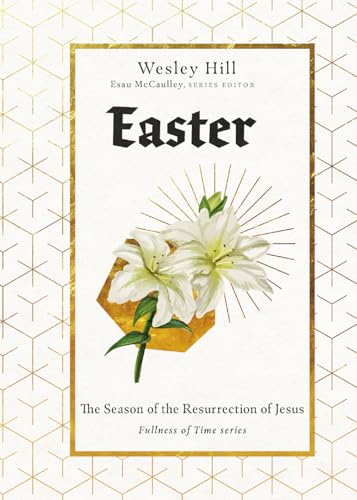
Continuing the Fullness of Time series, my book club very appropriately read Easter this month. It is a short book. Not a devotional, not an academic tome, Easter begins with a very engaging introduction describing a Great Vigil of Easter service Wesley Hill attended at a beautiful cathedral in England twenty years ago. He then moves into the story of the first Easter when Jesus Christ rose from the dead. He documents what he describes with Scripture references from all four Gospels weaving in important information about the context of the accounts.
Next, Hill discusses the liturgy used in Anglican and other churches relating baptism symbolically to the resurrection and the new life believers receive when they decide to follow Jesus. Easter is a movable feast, not occurring on the same calendar day each year. It is a complicated calculation, but Hill does share how to figure it out and the factors on which it is dependent. (Or, like me, you can just look the date up on the Internet or a calendar.)
Hill does not just leave us with a risen Lord. He moves on to how the church liturgy highlights the book of Acts which focuses on Jesus’ disciples. Their world has been turned upside down, but Jesus does not abandon them. When He ascends to be with God the Father in heaven, He leaves instructions for His followers to share the Good News and promises to send a helper, the Holy Spirit, to empower them.
Rating: 5/5
Category: Christian, Religion, Spirituality, Theology
Notes: The Fullness of Time series is edited by Esau McCaulley. It is composed of six stand alone books that can be read in any order: “Each volume in the Fullness of Time series invites readers to engage with the riches of the church year, exploring the traditions, prayers, Scriptures, and rituals of the seasons of the church calendar.” A seventh book is currently in process to complete the series.
Publication: 2025—InterVarsity Press
Memorable Lines:
Mercy for the undeserving is the overriding, hope-awakening theme of Easter.
Prayer, then, is our asking for what we need from the one who has triumphed over the world’s processes of decay and disorientation. We aren’t trapped by the limited options of life as we’ve always known it. Jesus is alive, and he exhales healing vitality, and wholeness into our world. His Spirit is with us.
The Lord is risen! The Lord is risen indeed! Alleluia!
What Happens Next: A Traveler’s Guide through the End of this Age
What Happens Next
by Max Lucado

Are you one of the many people tired of the chaos in our times? Are you wondering if we are about to experience the end of this age on Earth? Max Lucado has some answers as he provides a timeline in What Happens Next. His timeline is taken from Biblical prophecies and teachings. He is not going to give you a date for when the world as we know it is going to end because Jesus says in the Bible that only God the Father knows when that will be. Nevertheless, there are many Scriptures that spell out the events of the end times and their sequence. Max shares these to give you a hope, something to look forward to if you have accepted Jesus as your Savior.
Max literally uses a timeline graphic, however, to take you through the steps, clearly and one at a time. Futuristic prophecies are not just found in the book of Revelation where much of the end times is described, but are also in books such as Daniel and Isaiah. About this time last year, I did a study of the book of Revelation using several sources, but I did not come away with as clear an understanding as I did from reading What Happens Next.
Max Lucado has been in the ministry since 1978, and is a prolific author with a very relatable style. His goal is not to scare anyone into Heaven, but he doesn’t shy away from talking about Hell either. There are some controversies among scholars related to end time prophecies. Max explains the various viewpoints on the timing of the rapture, for example. Then he states which he believes is accurate and why. As is typical of Lucado’s writing, he includes anecdotes to tie into the spiritual point he is making, sometimes lightening the lessons and always clarifying them.
If you are a believer in Jesus, this book will give you a fresh appreciation of how much God loves you and certainty about your future. If you are not, you will find answers to questions you have about the end times, God, and how you can have a personal relationship with Him. I strongly recommend What Happens Next.
Rating: 5/5
Category: Nonfiction, Religion and Spirituality, Christian, Theology
Notes: 1. The book ends with “Questions for Reflection” for each chapter including the Big Idea, Application, and a prayer.
2. There is also a six-session Bible study on the end times, with the same title, that can be bought to accompany this book. It is appropriate for group or individual study. It has a workbook and streaming access to professionally created videos with talks presented by Max Lucado who is an excellent speaker. He is not speaking from a pulpit so it feels like a heart to heart conversation.
3. If you want a taste of Max Lucado and this book, I recommend going to YouTube where Max is currently posting on his channel a series called “Fresh Hope.” He has just added the third video.
Publication: 2024—Thomas Nelson (Harper Christian)
Memorable Lines:
God is the God of divine interruptions. Holy surprises. Who could have imagined God living on earth? But he came. Who could’ve imagined God hanging on a cross? But he died. Who could have imagined the empty tomb? But he rose from the dead. He intervenes in mighty and miraculous ways.
He has before.
He will again.
In the meantime keep an eye toward the sky. Live in such a way that Christ will find you faithfully looking for him.
That day is coming. God will put a crown on your head and a hand on your shoulder and bless you…Each child you hugged, he will praise you for it. Every time you forgave, he will praise you for it. Every penny you offered, truth you taught, prayer you prayed, he will praise you for it. He’ll praise you for the day you refused to give in and the season you refused to give up. But most of all, he’ll praise you for saying yes to Jesus.
Epiphany: The Season of Glory
Epiphany: The Season of Glory
by Fleming Rutledge
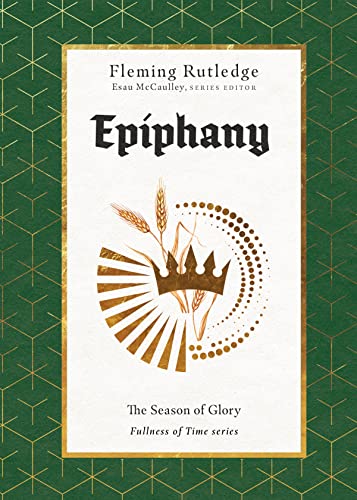
If you didn’t know anything about Fleming Rutledge before you began her tome on Epiphany, you would certainly quickly ascertain for yourself that she is a theological scholar. One of the first women to be ordained by the Episcopal church, she has spent her life studying the Bible and serving as a priest. As an author she has written many books and is known as an expert on the works of Tolkien. There is no fluff to be found in Epiphany: The Season of Glory.
Epiphany is celebrated on January 6 as the day the Magi brought their gifts to the Christ child, manifesting the glory of God and acknowledging the inclusion of Gentiles in the worship of Jesus. The day in many churches is extended into a season which celebrates other events in which the glory of God is preeminent: the baptism of Jesus by John the Baptist, the miracle of wine at Cana, and the transfiguration on the mountain top.
This book explains why we celebrate the day and season of Epiphany. It is a deep study which answers many questions for the reader and may well initiate many new questions. It is a work that requires time, careful reading, and thought. As other theological books, there are footnotes at the end. Many are reference sources for ideas and quotes in the book. Rutledge’s footnotes, however, include expansions on the various topics within and enlarge the experience for the reader. They are as interesting and thought provoking as the main body of the book.
Epiphany: The Season of Glory is part of the Fullness of Time Series which seeks to explain the liturgical calendar of many churches such as Anglican, Episcopal, and Lutheran. Many other churches are also finding renewal through experiencing the traditional seasons. As the editor of the series states “We want readers to understand how the church is forming them in the likeness of Christ through the church calendar.” The six books in the series are by different authors and can be read as standalones. This book is more intellectually challenging than the other books in the series, but they are all worthy reads.
Rating: 5/5
Category: Nonfiction, Christian, Religion
Notes: standalone, but part of the Fullness of Time Series
Publication: 2023—InterVarsity Press
Memorable Lines:
There will always be those who do not recognize him, but they will nevertheless be in his sight and have a part in his eternal plan (see Romans 11). The church, however, in its observance of Epiphany, is to take care of its calling, to point to Christ’s glory, and let his glory take care of itself.
Telling stories about Jesus, what he said and what he did, is an essential part of spreading the gospel. But without the doxa, the glory of the only Son from the Father, it is an incomplete gospel.
The season teaches us to value the entire fellowship of believers, because Jesus calls persons to himself without regard to their station, reputation, accreditation, or accomplishments—and we see how we can begin to be transformed by the action of his Hoy Spirit working through the unearned and undeserved gifts that he bestows.
Be of Good Cheer: A Christmas Devotional
Be of Good Cheer: A Christmas Devotional
by Susan Hill

The season of Advent has come and gone on the Christian calendar as we remembered the arrival of Jesus, the King of Kings, who was born, as predicted in the Old Testament, in the little town of Bethlehem. His humble birth was just the beginning of the earthly story of the long awaited Messiah who was both fully God and fully man. He experienced in his perfect body all the things that we experience—grief, joy, pain, love, hunger, disappointment. Then he sacrificed himself on the cross to redeem men from their sins.
Be of Good Cheer is a 40 day devotional that draws the reader to the character of Jesus and focuses on words that are elements of a Christ-filled life. In fact, if you are looking for your “word” for 2025, this could be a resource for inspiration for that project.
This small book is a visual delight with illustrations that are both photographs and paintings. It makes a nice coffee table book that can be read through as an Advent devotional according to each day or picked up by a casual guest to peruse at their leisure. The smooth, heavy weight paper adds touch to the pleasures of holding this book. Each chapter has a one word title followed by a relevant Scripture reference. For example, Chapter 1 is “Cheer” with the verse “Rejoice in the Lord always. I will say it again: Rejoice!” (Philippians 4:4). A short message ends with a suggestion on how to live out the word, how to apply it. This is followed by a brief prayer.
I enjoyed reading each passage. I think this book would make a nice gift for many in 2025.
Rating: 5/5
Category: Nonfiction, Christian, Devotional
Publication: October 1, 2024—Zondervan
Memorable Lines:
From Glory: To give glory to God doesn’t mean to give God something He lacks—it means to proclaim the magnificent glory He already possesses. God’s glory can be defined as all the things that make Him heavenly—His omniscience, omnipotence, and perfect love.
From Miracles: Christmastime is the ideal time to reflect on the reality that God is in the miracle business and routinely accomplishes the impossible. Is there a specific area in your life where you need God to work? Be encouraged that you serve a God who can do all things.
From Kindness: God, thank You for the countless ways You have lavished acts of kindness on me. Help me see the ways You are kind, and lead me to people who need my kindness.


 education pathways