
Home » Posts tagged 'Irish'
Tag Archives: Irish
A Moment’s Shadow–Danger in Ireland
A Moment’s Shadow
by Anna Lee Huber
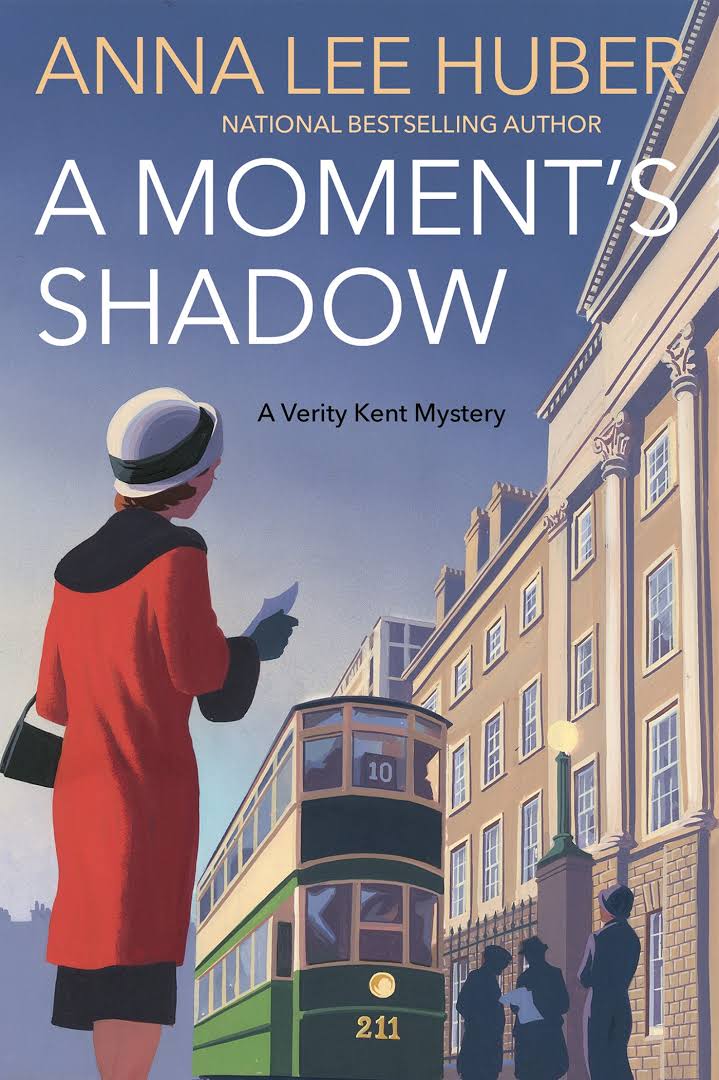
Having finished The Cold Light of Day, I was delighted to find that although I had missed getting A Moment’s Shadow as an ARC, my library had copies of this book in various formats. I grabbed the ebook to dive right in. It is even more interesting than the previous book which set the stage for Verity and Sidney Kent’s informal assignments in Ireland. They have several goals. Verity wants to find Alec, her former colleague during the Great War, who seems to have disappeared in Ireland. The pair has also been asked to investigate some missing phosgene cylinders, and they have determined that Verity’s nemesis, Lord Ardmore, who is always two steps ahead of them, is responsible. While they are in Ireland, a jewel thief visits one posh house after another. How he can accomplish these daring heists is baffling, but as Verity and Sidney already move in the social circles of the victims and have a reputation for solving mysteries, they are pulled into the investigation.
As the story progresses, it is difficult to know which side characters are on, and by the end the Kents are not sure which group they identify with. Both sides are committing heinous acts of murder, destruction, and torture. Both sides use deeply embedded spies to accomplish their goals. Verity disguises herself to pass as an Irish worker when needed and then as the socialite she is when that is appropriate to her sleuthing. Other than the social events they attend, nothing is glamorous about their lives in Dublin. Many of the wealthier class have escaped the turmoil by fleeing to their country homes, to England, and even abroad. Verity is “recalled” as some powerful person is unhappy with her inquiries. Since she is not working as a spy anymore, the government doesn’t really have the power or authority to demand her return. The people in charge, however, make it plain that they have been providing her with a measure of safety and can withdraw that protection if she does not return. A Moment’s Shadow has plot action that crescendos at the book’s conclusion with a hook that leaves the reader hanging and ready to devour the next book in the series.
Rating: 5/5
Category: Historical Fiction, Mystery
Notes: 1.#8 in the Verity Kent Mystery Series. The author reintroduces characters from #7 and previous books in the series but I think it would be hard to jump in with #8. If you really want to read just the ones dealing with the Irish Revolution, then start with #7 and plan on reading at least two more—#8 and #9.
2. A good plan for reading books #7-9 would be to list the characters and acronyms along with a basic note about each. There are a lot of characters, and you might find it helpful to comment on where you think their alliances lie.
3. The book ends with a teaser chapter from the next book in the series, The Bravest Hour, with a projected publication date of August 25, 2026!
Publication: 2025—Kensington
Memorable Lines:
These sights were always discomforting to me, for instinctively I wanted to cheer on our Tommies, and yet the Crown Forces’ behavior reminded me painfully of the Germans lording over the Belgians when they’d occupied their country during the war.
Everyone was trying to avoid the notice of the Black and Tans, to survive in a place where affordable housing was scarce, sanitation was abominable, and a stray bullet could end your life at any moment.
With all the dry and sunny weather we’d enjoyed in September, it was easy to forget how damp Ireland could be. October elected to remind us of this with a vengeance. It lashed, it bucketed, it showered, it drizzled, it misted—but at all times some sort of precipitation was falling from the sky.
The Cold Light of Day–the Irish Revolution
The Cold Light of Day
By Anna Lee Huber
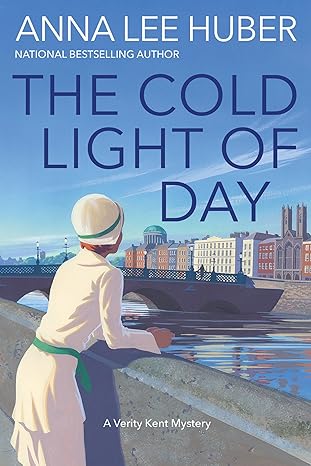
Told in the first person by Verity Kent, the reader is quickly informed that Verity had served as a spy during The Great War with dangerous assignments in Europe. Her husband also did undercover work, but he emerged as a well recognized hero. Despite needing to recover from their war experiences, including Verity’s belief that her husband Sidney had died, they quickly became a power couple invited to the very best homes in Britain. Money never seems to be a limitation for them.
The plot of The Cold Light of Day is tortuously twisted. Neither Verity nor Sidney knows which characters can be trusted as they work through unofficial assignments in Ireland where the two main branches of Irish rebels (Irish Republican Army and Sinn Féin) are resisting British rule. In talking about Irish resentment, she says “The Irish might be considered British citizens, but always second or third class.” The author researched the conflict well and is able to give the reader both sides of the revolution with Britain promising certain rights and then never fulfilling them. Both sides resorted to violence during this period.
The Kents live a double life in Ireland. They assume their natural role as socialites with their peers. Verity is a talented linguist so she also poses as an Irish house cleaner to be able to go places she can not visit as a glamorous Brit. Meanwhile, Sidney mixes with the males, some of whom were undercover or military during the war. They discuss current and past events after a few pints, and Sidney follows up on some of the things they divulge. They also bond over horse racing and riding.
The couple’s focus is on locating some missing phosgene cylinders so that this poisonous gas can not be used against either population. Also missing is Alec who formerly worked with Verity during her undercover years. In the middle of these searches, while trying to not trigger an enemy from either side, Verity is asked to solve the mystery of a young woman who has committed suicide. Even that effort becomes very complicated. When Verity confronts the British officials, she finds them very condescending; but when Nimble, her husband’s “batman” during the war and now his trusted valet, is brutalized and arrested, she stands up to those powerful men and makes them release him. She occasionally falls back on feminine wiles to manipulate men, using tricks she had to employ during the war.
The Cold Light of Day showed me how little I know about Irish history—especially the more recent Irish Revolution. Huber brings to light what people at that time experienced and how and why their loyalties were sometimes influenced by their humanity and often by their upbringing. The British in charge politically and militarily in Ireland were often motivated by greed, power, and career potential. There were many on both sides of the conflict who were willing to give up their lives for what they saw as the right thing to do.
I have read a few books in this well-written series, and I think it has just gotten better as it progressed. The author is skilled at creating believable characters from all classes—villains, heroes, and everyday workers. A thread that runs through the series is the character, actions, and motivations of Lord Ardmore. Almost everything bad can be traced back to his manipulations behind the scenes. I am not a fashionista, but I do like Huber’s descriptions of Verity’s clothes from the disguises as a “care woman” to her exquisite designs that attract both male and female attentions.
I received a complimentary copy of this book in exchange for an honest review. Opinions expressed in this review are completely my own.
Rating: 5/5
Category: Mystery
Notes: #7 in the Verity Kent Mystery series. I would not recommend it as a stand alone as there is so much critical background about the protagonists in the previous books.
Publication: October 24, 2024—Kensington
Memorable Lines:
But for every upstanding soldier there seemed to be another who took pleasure in the task of bullying and belittling those they were supposed to be protecting, not just policing.
Curse these men who had decided cutting women’s hair was a justified action. And curse the society who colluded in the weaponizing of shearing women’s hair by dint of the fact that somehow its length was an indication of virtue.
But while I’d failed to give chase, I had noted one particular thing about Collins’s bicycle. Its chain rattled like old Marley’s shackles from Dickens’s A Christmas Carol. That was something I was certain I would recognize if I heard it again.
A Whyte Christmas–a wintery tale
A Whyte Christmas
by Michele Brouder

Taking a little break from my Advance Reader Copies and my Book Club books, I got wild and crazy as February turned to March and read a Christmas book. I’m glad I did. A Whyte Christmas is clean; no need to worry about language or open bedroom doors. The main characters have lots of misunderstandings during their slow burn romance. Both of them work hard to NOT be attracted to the other, but as you might guess, that doesn’t work well. Kate O’Connor is an extremely likable protagonist. Originally a copywriter for an advertising firm, she is demoted to receptionist during a downturn for the company. Gavin Whyte is close to the top of his pharmaceutical company in Ireland and is sent to supervise the ad campaign for their latest drug.
Kate and Gavin are thrown together in multiple situations that always seem to end up with humorous to hilarious endings. Sometimes involving police authorities. Both had bad luck in their previous relationships and neither is particularly happy in their jobs. It does not seem inevitable that an American who gets herself into situations from falling off a ladder to being stuck in a snowstorm with no place to spend the night and an Irishman, unaware of his good looks and delicious Irish accent, will end up together. But can it happen?
Rating: 4/5
Category: Romance, Fiction
Notes: #1 in The Happy Holidays Series that is comprised of standalones.
Publication: September 30, 2021
Memorable Lines:
“Dieting is the only thing where losing is everything.”
Butterflies flew around like kamikaze pilots in her stomach and she still had no idea what she was going to say.
Jumping to conclusions was the only exercise she got.
A House Divided–historical tale by a Lincoln scholar
A House Divided
by Jonathan F. Putnam
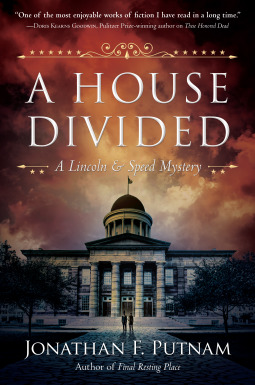 I was surprised to find myself trudging through A House Divided by Jonathan F. Putnam, an author with an outstanding legal and historical background. This is the fourth book in this series, but I did not feel that my not having read the previous books was a hindrance. There just seemed to be a disjoint between the history and fiction of the tale. None of the characters were fleshed out with emotion for me, and so I did not identify with any of them. I really wanted to like this book, but it was difficult when the characters’ motives were rarely disclosed. Lincoln and his friend Speed are competitors for the affections of Mary Todd, but even Mary’s character holds no depth.
The mystery was interesting and based somewhat on history, although the narrator Speed, a major actor in the story, was actually not a part of the real events of the crime and trial. Perhaps that alteration of the facts added to the difficulty of creating an interesting work of historical fiction. Perhaps the problem lies in timidity in assigning thoughts and feelings to major historical figures. Authors may find that easier to do when the main character is either a minor figure on the historical stage or the creation by the author of a composite character based on what a person in that role at that time of history would be like.
I did appreciate the author’s efforts to include the plight of Irish workers and their families. They were caught in the middle of a web of corruption and greed on the part of politicians and bankers. Another positive of the book is the writer’s style which is appropriate to the period.
I would like to extend my thanks to netgalley.com and to Crooked Lane Books for giving me the opportunity to read this book in exchange for an honest review.
Rating: 3/5
Category: Historical Fiction, Mystery
Notes: #4 in the Lincoln and Speed Mystery Series
Publication: July 9, 2019—Crooked Lane Books
Memorable Lines:
The Globe…As a feeding station for hungry village residents or residence for travelers, it was inferior in every respect to the sparkling new American House. Its only advantage at this point was familiarity, like a pair of shoes that slipped on easily despite worn-away soles.
Springfield…But citizens hoping to find entertainment that did not arrive in a bottle or cask were destined to be disappointed. Except when the circuit court was in session to adjudicate the county’s legal disputes. Then, the entire human condition, comedy and tragedy alike, was on display and free for all to watch.
Every turn in the road, every little rise of the prairie, might reveal a clutch of deadly and determined men, ready to hazard their own lives and reckless to mine.
Carnegie’s Maid–sacrificing for family
Carnegie’s Maid
by Marie Benedict
 Carnegie’s Maid, a work of historical fiction, attempts to explain what could have caused Andrew Carnegie, a ruthless businessman, to become a philanthropist and founder of the Carnegie Libraries. As a former impoverished Scottish immigrant, he fights his way to the top echelons of America’s monied, sometimes stepping on the backs of other immigrants to get there. Author Marie Benedict has created a lady’s maid from Ireland who is on a mission to support her Irish Catholic Fenian family. Her Clara is hard-working, smart, and focused. An opportunist, she takes the place of another Clara becoming a lady’s maid rather than a scullery maid making herself privy to the family’s secrets and business machinations.
As seen in Benedict’s other excellent work of historical fiction, The Other Einstein, the novel Carnegie’s Maid demonstrates the author’s intensive research and attention to detail. As I read I found myself wishing for a main character based on an actual person as in The Other Einstein. I assume the details and records of Carnegie’s life are just too sketchy to provide such a character. Benedict has taken the immigrant culture of the times, the certainty that Carnegie’s mother would have had a lady’s maid, the mystery of Carnegie’s altruism, and his delay in marriage as the basis for her fictional Clara. There is much more supposition in this book, but it is well written and not outside the realm of possibility.
I enjoyed the tale with its details about the difficult lives of the Irish both in Great Britain and in the United States. It paints a picture of the U.S. as a very difficult land of opportunity, with no handouts, and even fewer options for women. Gender, ethnic background, religion, money, family, and education all play a role in the highly stratified, unofficial class systems of the time.
I would like to extend my thanks to netgalley.com and to Sourcebooks Landmark for giving me the opportunity to read this book in exchange for an honest review.
Rating: 5/5
Category: Historical Fiction
Notes: by the author of The Other Einstein
Publication: January 16, 2018—Sourcebooks Landmark
Memorable Lines:
“These Catholic Irish running from the havoc wreaked by their famine and pouring onto American shores are not like the hard-working Protestant Irish who immigrated in earlier years. This new Catholic crop is rough and uneducated, and they’ll destroy the fabric of this country’s shaky democracy if we let them, especially in these days of Civil War unrest, just like they did back home in Scotland when they stole factory jobs away from Scottish men and women. An Irish Catholic servant might suffice as a scullery maid but not as my personal maid.”
For whom was I crying? for all the immigrants like the Lambs, who came to America seeking a better life but settled instead for a soot-infested home and dangerous work in the mills and gave thanks for it?
For the first time, I realized how alike my situation was to that of Mr. Carnegie. Although the scale was quite different, the stakes were not. The well-being of both our families rested on our success.
 education pathways