
Home » religion (Page 3)
Category Archives: religion
The Prodigal God: Recovering the Heart of the Christian Faith
The Prodigal God
by Timothy Keller
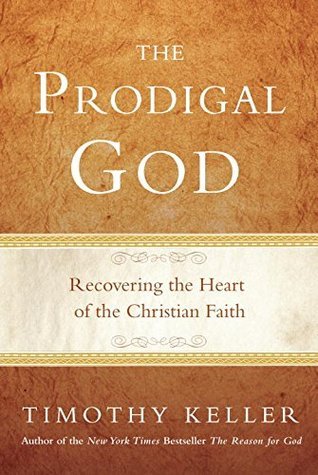
You may feel the urge to read that title twice. Wait, you say, the parable in the Bible is commonly referred to as “The Prodigal Son”! One of the meanings of prodigal, however, is “recklessly extravagant,” and that is the kind of love God has for us.
The Prodigal God is a fairly short book that uses Jesus’ parable about a spendthrift son who wastes his inheritance on immoral living to explain the good news of God’s love and salvation. If you are not familiar with the tale, it’s okay because Keller shares the story as told by Luke at the first of his book. As you read it you will be reminded that there are two brothers who both have bad attitudes. The younger brother engages in wild living, but the older brother who exemplifies the religious leaders listening to the parable has an attitude problem as well. These self-righteous scribes and Pharisees try to follow the letter of the law but not the spirit of the law. One of the chapter titles is “The Two Lost Sons.” Neither son shows the respect for the father that would be expected according to the customs of their culture.
This is a great book to read if you are seeking a personal relationship with God. It is also good for those who are already followers of Jesus. I particularly appreciated the examination of the characters’ actions in the light of the time and place where they lived. It made a story I have long been familiar with come alive. Keller compares the feast at the end of the parable with “the great festival of God at the end of history” and explains four ways in which salvation is like a feast. This book will challenge your mind and heart.
Rating: 5/5
Category: Christian, Nonfiction, Religion, Theology
Publication: 2008—Penguin Group
Memorable Lines:
…sin is not just breaking the rules, it is putting yourself in the place of God as Savior, Lord, and Judge just as each son sought to displace the authority of the father in his own life.
…the prerequisite for receiving the grace of God is to know you need it.
We must learn how to repent of the sin under all our other sins and under all our righteousness—the sin of seeking to be our own Savior and Lord. We must admit that we’ve put our ultimate hope and trust in things other than God, and that in both our wrongdoing and right doing we have been seeking to get around God or get control of God in order to get control of those things.
Reading for the Love of God–erudite and spiritual
Reading for the Love of God
by Jessica Hooten Wilson

I thought Reading for the Love of God would be the perfect book for me, channeling my reading choices in a way that points to God and shining a light on the spiritual connection of God and a reader. It did both of those things, but I have to admit that, as a whole, it was not the right book for me. Some of this well organized book was appropriate for the average reader, but much of it was clearly written by a professor with a strong background in both literature and theology. Perhaps it would be more appropriate for study in a college level course. Here is an example from the text that demonstrates the background knowledge needed to fully benefit from this book: “In Christian tradition, the anagogic sense refers to a text’s echo or reflection of the divine. Where do we see God here? Or we might equate the anagogical with the eschatological: Knowing that all will end in our death and Christ’s second coming, what matters in what we have read? It’s the cultivation of a sight that points our eyes ever upward toward heaven.”
On the other hand, Hooten presents a lot of interesting ideas about reading. She is quite knowledgeable and gathers information from and about many authors. The footnotes cover about twenty percent of the book. She extols the virtues of reading and rereading the classics, and she asserts that learning how to read various genres helps us learn to read Scripture. If we read other books than the Bible, even secular books, through the lens of Scripture, God can teach us. Even books that some Christians avoid reading (e.g. Harry Potter) can lead to examination and discussions of evil versus good, etc. We should both enjoy and use literature, but should not put the message above the story itself. She points out that there are many current and historical opinions about how to best read the Bible addressing issues such as meditation, interpretation, the role of allegory, the depths of word meanings, and symbolism.
The author carefully places essays in the book expounding on what we can learn from examining the writing and reading of St. Augustine, Julian of Norwich, Frederick Douglass, and Dorothy L. Sayers. After her Conclusion and Acknowledgments, she guides the reader through a practice session of analysis of Flannery O’Connor’s short story “The River.” O’Connor is a much referenced author in this book so this discussion seems quite appropriate. A section of Frequently Asked Questions is very practical and useful. It is followed by “Reading Lists of Great Books” which is grouped by ages. The next list is “Great Books: The Living Tradition” which contains classics sorted by time periods and followed by a list entitled “Writers Whose Works Touch the Sacred and the Profane.” I’m not sure what her criteria are for this list, but it includes authors such as Wendell Berry, Frederick Buechner, Willa Cather, G. K. Chesterton, and Dorothy Sayers.
I received a complimentary copy of this book in exchange for an honest review. Opinions expressed in this review are completely my own.
Rating: 4/5
Category: Christian, Religion & Spirituality
Notes: As I think back over Reading for the Love of God, I find I am viewing it in a more positive light than when I was working my way through it. I am not recommending it to my book club as I initially thought I would do. I will be mulling her theses over and referring to her suggestions for reading selections as I expand my personal reading choices.
Publication: March 28,2023—Brazos Press (Baker Publishing Group)
Memorable Lines:
If we are going to read—the Bible included—we should learn how to read well. We should become readers who do not read for our own gain but who read as a spiritual practice, always open to how the Lord is planting seeds in our heart, teaching us more about him, and showing us ways of living more like Christ in the world.
But we should not read Virgil’s Aeneid in order that we may check a box on a great books list. Rather, a book such as the Aeneid is to be used—for pleasure and edification temporarily—and ultimately enjoyed in how it points us to God.
We read because without books our world shrinks, our empathy thins, and our liberty wanes. We read for the same reason that people have read—and shared poems or stories—for thousands of years because our eyes are not enough by which to see. The time and place in which we live blinds us to other perspectives and ways of being that are not of our own experience. We read because we have been given the gift of imagination and intellect, and we exhibit our gratitude by using it.
Lent: The Season of Repentance and Renewal
Lent: The Season of Repentance and Renewal
by Esau McCaulley
Ash Wednesday is the “kick off” event of Lent for Christians. There are many of us who, like the author, did not grow up in a church that participated in Lenten practices. In fact, my first exposure was a coworker who fasted and upped her walking every year for Lent. Colleagues who had worked with her for years said smirkingly that although she made sure everyone knew she was fasting, the effort was not really aimed at a closer relationship with God, but at attaining the beach body she wanted for spring vacation. Her motivation is between her and God; discerning it is not my job.
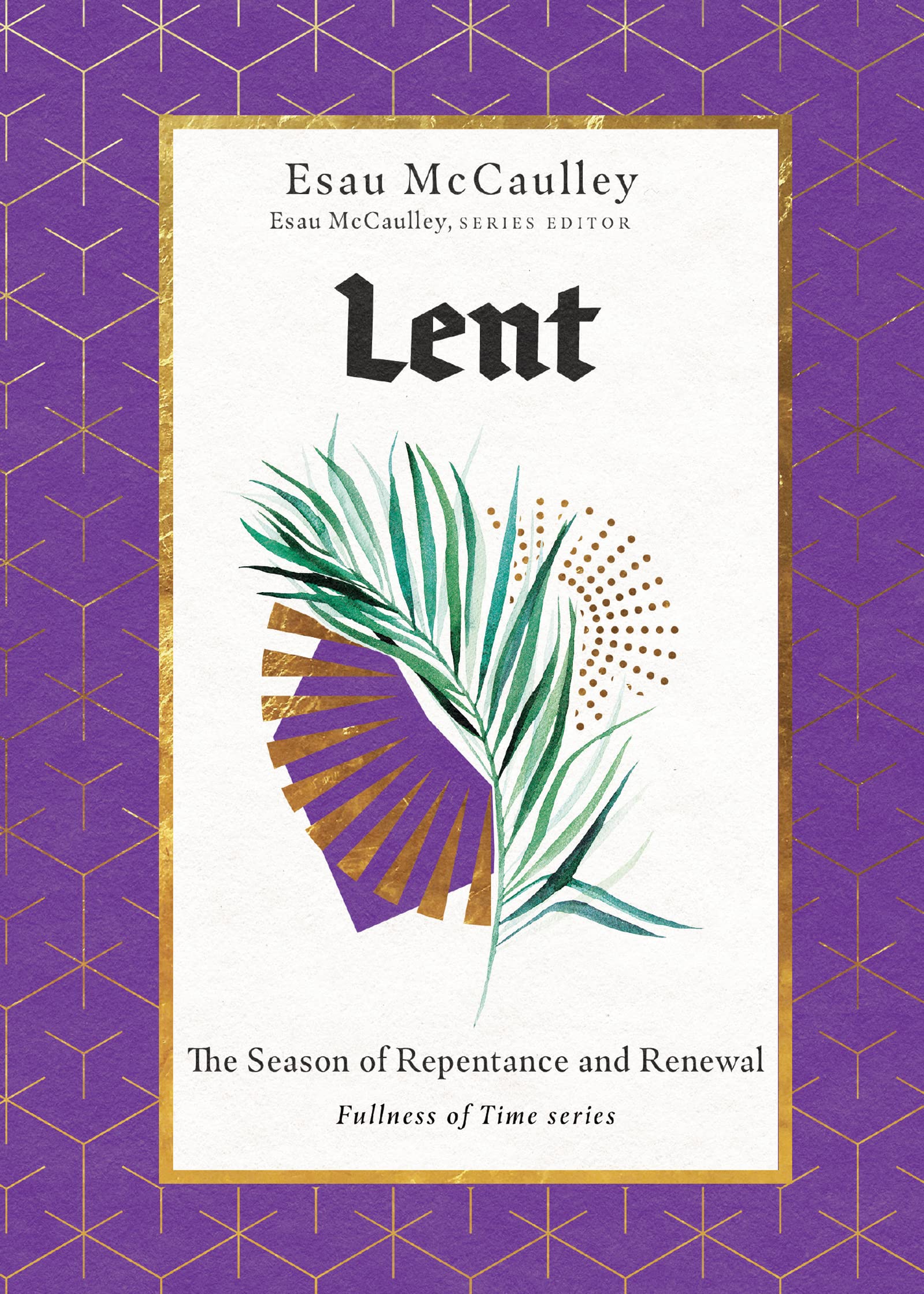
Over the years I have worshiped God in Baptist churches and independent mega-churches. Currently a part of the traditional liturgical movement, I am learning about Lent as practiced in the Book of Common Prayer. To that end, my book club has read Lent: The Season of Repentance and Renewal. It is part of the Fullness of Time series of which author McCaulley is the editor. The series is composed of short books written by various authors. They explain the various customs practiced by early Christians extending through our contemporary age. It is physically a beautiful series as the book covers are decorated with symbols and colors appropriate to each church season. The pages inside are incredibly smooth and slightly off-white. It is so elegantly designed that I can not bring myself to mark the many special passages or make notes in the margins.
Lent examines our need for repentance, the certainty of death, and the promise of eternal life in Jesus. McCaulley examines the rituals of Lent explaining how Christians can decide on a personal level what practices might be most useful with an emphasis on fasting. Fasting for food can be done in a variety of ways or not at all. Fasting might be giving up something else that is a distraction from devotion to God. Above all, I would say that the author’s approach is spiritual, not legalistic. There is no one right or wrong way to “do Lent.”
This little book also examines the collects (prayers) and the Scriptures associated with Lent in the Book of Common Prayer. It should be noted that McCaulley refers to the 1979 Book of Common Prayer. Most of the prayers found in my 1928 version and perhaps in other earlier or later editions are different from the ones he quotes. He chose that version because that is the one he was using when he began to practice Lent and therefore the one he is most comfortable providing discourse on. The differences don’t distract, but can provide more depth to the study of the season of Lent.
The last chapter deals with Holy Week, the last week in the life of Jesus Christ. This little tome details the various days such as Maundy Thursday, an important day because of the institution of the Lord’s Supper (Holy Communion or Eucharist). Less well known is the continuing practice of feet washing as set by the example of Jesus. Although Jesus’ message is clear and plain, “follow me and you will be saved,” there are many mysteries and much symbolism in the Bible. Perhaps McCaulley’s discussion of Lent will clarify for you the traditions that have emerged over the centuries.
Rating: 5/5
Category: Christian, Religion, Nonfiction
Notes: There are a few typos (probably generated by auto-correct) in this book which will hopefully be corrected in future printings. The other two books I read from this series did not have this problem.
Publication: 2022—InterVarsity Press
Memorable Lines:
Fasting then is not about us earning God’s forgiveness; it is about reminding ourselves through our fasting of our radical dependence on God.
Too often, Christians believe the lie that we have to dig down deep and discover in ourselves the strength and resolve to defeat our foes. Instead, we must realize that if we dig down to the bottom of ourselves, we’ll find a wounded soul in need of healing.
All these rituals, prayers, and ceremonies are simply doorways into the thing itself: God in all his splendor. May we find him afresh every year until we see him face-to-face.
Hopefully Ever After–struggling against a past
Hopefully Ever After
by Beth Wiseman

This novel has a lot going for it:
- So many important themes including: forgiveness, faith, love, security, family, abuse, goals, healing, independence, maturity, drugs, love of books, respect.
- Interplay of Amish and Englisch characters with several experiencing one culture and considering or actually changing to the other.
- Temptations for both Amish and Englisch characters.
- Contrast of Amish lifestyles with Englisch lifestyles.
- View of how technology, especially cell phones, has affected the Amish.
- A great plot centered around a 16 year old girl, Eden, with a difficult upbringing who stays for a month with her Amish cousin and her husband. She discovers what a real family could be like.
- Lots of characters with their own difficulties—Samuel, a 17 year old with overly strict parents; Yvonne and Abraham who take in Eden for a month; Emma, a much older cousin who is Eden’s guardian; and Eden’s mom, a currently imprisoned drug addict.
- Emotional tale as Eden and Samuel struggle with their attraction to each other. Eden, who is determined to not be like her mother, has a past to overcome. Samuel is unsure of God’s will and is anxious to see the world outside his home community as it must be so exciting.
- The setting is described so well. Without air conditioning, beautiful Indiana farmland can be very hot in July. It was easy to imagine the characters with sweat pouring off them, trying to rehydrate and get a little cooling from battery operated fans.
- There are lots of twists along the way, and as the book moves toward its conclusion, a happily ever after seems out of reach. Thanks to some surprises, although problems are not magically solved, the ending is quite satisfying.
I received a complimentary copy of this book in exchange for an honest review. Opinions expressed in this review are completely my own.
Rating: 5/5
Category: Christian, Romance, Religion, Fiction
Notes: #3 in the Amish Bookstore Novels, but the author fills in background quite well so it could be read as a standalone.
Publication: April 18, 2023—Zondervan
Memorable Lines:
Eden didn’t even try to make friends at school these days. What was the point? They’d eventually find out her mother was in prison—a fact that seemed to define Eden, whether it was fair or not.
She could either choose to be a victim—life surely hadn’t treated her fairly—or let go of the past and commit to being the best person she could be. Eden chose the latter, but it wasn’t without a struggle.
“I know that everything changed for me once I found a relationship with God. At first it was like having a new friend, someone I could talk to about anything. And the more I talked, the more I knew God was listening.” She didn’t verbalize the last thought in her mind, probably the biggest change in her life since she had found God: she was no longer alone.
Once Upon a Buggy–Amish Romeo and Juliet
Once Upon a Buggy
by Shelley Shepard Gray

May and Carl at ages 16 and 17 respectively sneak off to the feed barn for some innocent time away from the prying eyes and ears of siblings. When a lightening bolt strikes the wooden structure, their lives are changed forever, as are the lives of their families when a feud develops and the formerly close neighbors stop communicating altogether. As part of the Amish community in Apple Creek, Ohio, they should have been able to get past guilt and blame, but they haven’t, especially Carl’s family because he was injured so badly.
Six years later, Carl returns to Apple Creek for the first time to visit. Scarred mentally and physically, he has made a lonely life for himself as an Englischer. He is successful, however, as a project manager for a manufacturing company. Carl wants to leave the past behind and unite the two families. His sister and May’s brother find themselves in a Romeo and Juliet scenario as they are quite smitten with each other, but know neither family would approve. Carl finds that he still has feelings for May.
The author puts lots of obstacles in the way, and at times reconciliation for the two families seems impossible. The parents in this book are, of course, Amish, and the customs are for families to stay together with the father having ultimate authority. The adult children often have to walk a fine line between living out their lives and respecting their parents.
Once Upon a Buggy is well written with lots of character development. The conflicts are realistic. I am not Amish and am only aware of their societal structure through fiction, but I was surprised that their bishop in six years had not intervened in the feud. He was helpful, however, when called on by the younger members of the families who pushed a confrontation so they could move on with their lives.
There are two scenes that particularly caught my interest. A tornado moved through their county. Because Carl is Englisch, many people find out about the tornado watch and later the warning through Carl and his access to technology. That scenario made me wonder how the Amish normally find out about tornadoes moving through. In my county in Oklahoma, we have sirens as a warning system. The families’ preparations for the event, their time of sheltering, and the community’s working together in the aftermath particularly drew my attention.
May’s family owns alpacas, and the herd has an important role in the story. I enjoyed learning more about them.
I received a complimentary copy of this book in exchange for an honest review. Opinions expressed in this review are completely my own.
Rating: 5/5
Category: Christian, Romance
Notes: #2 in the Amish of Apple Creek Series, but works well as a standalone. I had not read #1 and didn’t feel like I had missed anything that would keep me from understanding or enjoying this book.
Publication: March 28, 2023—Kensington
Memorable Lines:
People started whispering. A low buzz surrounded her, sounding as if she was surrounded by a swarm of bees. Each one gossiping, talking, no doubt ready to sting her with an unkind comment.
It seemed that was how everyone handled his father now. They let Daed spout off rude things and didn’t correct him. Carl supposed that approach kept the peace, but he found it irritating.
“What I’m trying to say is that He did hear my prayers, but the solution wasn’t the one I thought I wanted. It was the one I needed. I didn’t need to have pain and sadness removed from my life…I just needed a way to manage them.”
Christmas: The Season of Life and Light
Christmas: The Season of Life and Light
by Emily Hunter McGowan
In reading the book Advent (reviewed here) by Trish Harrison Warren, I learned much about liturgical Protestant churches (typically Lutheran, Anglican, and Episcopalian) that follow a structured, participatory format with foundations in practices of the early Christian church. The church calendar begins with the season of Advent focusing on repentance and the anticipated coming of the Messiah, which is celebrated on December 25th at the commencement of the Twelve Days of Christmas.
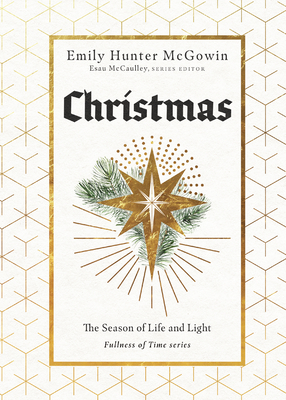
I decided to follow up my reading of Advent with the book entitled Christmas: The Season of Life and Lightwhich is also in the Fullness of Time series, but is written by a different author, Emily Hunter McGowin. I was pleased that Christmas held many of the same qualities that are found in Advent. Both are short books and very readable, but are packed with theological truths. McGowan did a lot of research, as witnessed by her footnotes, and she includes a brief list of books for further reading at the end of each chapter. After a fairly personal introduction, she very appropriately begins with the origins of the celebration focusing on the debates about when Christ was actually born. Much of the book discusses God in relationship to people. God’s gift of His Son can be related to the gifts we give at Christmas. Jesus was born in a poor family, and He was concerned about the poor all through his three year ministry. He leaves Christians with the mandate to give sacrificially to the poor. Decorations are an important part of our Christmas customs in the West, and her analysis of their role is found in the chapter “God of Creation and Re-Creation.” McGowan does not gloss over the tragedy of Herod’s slaying children in an attempt to ensure his throne from the threat of this newborn King. Singing and lighting candles are highlighted in her discussion of life and light.
Christmas ends with an appendix listing the “appointed Scriptures and collects” or prayers for Christmas found in the 1979 Lectionary and the Book of Common Prayer. I look forward to reading the other books in the series, all by different authors: Epiphany, Lent, Easter, and Pentecost.
Christmas permeates our society in cultural as well as religious ways. Therefore, this series has benefits of instruction and understanding for all—Christians who use the Book of Common Prayer and those who don’t, as well as those who aren’t followers of Jesus. I invite you to read this book to examine the truths behind our customs and the reasons Jesus Christ is the focus of this season named after Him.
Rating: 5/5
Category: Christian, Nonfiction, Religion, Theology
Notes: part of the Fullness of Time series which can be read in any order
Publication: 2023—InterVarsity Press
Memorable Lines:
Profligate shopping sprees and conspicuous consumption notwithstanding, the practice of gift-giving in itself remains evocative of the central mystery of Christmas: the incarnation of God in Christ. Christmas is about God’s great gift to us, which is God’s own self in the person of Jesus Christ.
In fact, children are among those people with whom Jesus so closely identifies that they become a sacramental sign. The hungry, the thirsty, the stranger, the unclothed, the sick, the imprisoned, children—Jesus says of all these that to welcome and serve them is to welcome and serve him (see Matthew 18:5; 25:40; Mark 9:37). So we separate ourselves from the poor, needy, and vulnerable at our collective peril.
Advent–Hope and Repentance
Advent: The Season of Hope
by Tish Harrison Warren

I have almost finished reading Advent by Tish Harrison Warren for the second time this season. It is a small book that packs a powerful punch and is worthy of a reread.
In the Protestant churches of my childhood and most of my adult years, “advent” was a word I rarely heard. The focus was on Christmas and making sure the cultural aspects of the celebration (e.g. decorations, gifts, and parties) did not take prominence over the spiritual foundation: “Jesus is the reason for the season.” In more recent years, I have worshiped in Protestant churches that follow the liturgy found in the Book of Common Prayer. Warren’s book has helped me unravel the church calendar year which begins with Advent and to understand Advent itself.
This tiny book explains the three comings or advents of Christ. We celebrate His birth in Bethlehem at Christmas and look forward to what we refer to as “His Second Coming” when He will reign as King of Kings. Warren says there is a third coming which we currently experience when He dwells in our hearts as we are filled with the Holy Spirit.
There are many themes of Advent discussed in this book, but the ones that impact my heart the most are “repentance and hope” and “darkness and light.” Warren refers to four prayers composed for the Advent season in the Book of Common Prayer. In addition to talking to God, these prayers or collects lead the reader to a deeper understanding of Christian theology and what we believe as Christians. She explains eight practices of Advent for those who want to use this season to meet with God and draw closer to Him during the course of the four weeks of Advent that lead up to Christmas.
Perhaps my favorite chapter in the book Advent is entitled “Crying Out: Two Prophets of Advent.” Who prophesied most about the advent or coming of Jesus? Isaiah in the Old Testament and John the Baptist in the New Testament. It is a good beginning place if you want to learn more about prophecies from the Old Testament that were fulfilled in the New Testament and prophecies that are yet to be fulfilled when Jesus comes again, not as a baby in a manger, but as the Messiah who returns to banish Satan and evil and rule on Earth for eternity with justice, peace, and love.
Rating: 5/5
Category: Christian, Theology
Notes: 1. “Each volume in the Fullness of Time series invites readers to engage with the riches of the church year, exploring the traditions, prayers, Scriptures, and rituals of the seasons of the church calendar.” These are standalone books, each written by a different author: Advent, Christmas, Epiphany, Lent, Easter, Pentecost.
2. This is a choice for my book club and lends itself well to group discussion, but it is also perfect for devotion, study, and meditation for individual readers.
Publication: 2023—InterVarsity Press
Memorable Lines:
Advent comes each year and quietly asks me to pause, to remember that we do not bring the kingdom of God to the world through our own effort or on our own timeline. We wait for one outside of us and outside of time. We wait for our coming king.
Advent is training in hope because this season tells us that when things lie fallow they do not lie in waste; things that seem dormant are not dead, and times of waiting are not without meaning, purpose, or design. God is working, sometimes almost imperceptibly, deep beneath the surface of time. Waiting is part of his redemption. It is part of his gift to us. It is part of his grace.
The love of God is the blazing fire that purifies us, remakes us, and sets right all that is broken in us and in the world. The love of God brings us to repentance. The love of God sets the oppressed free and makes all things new. The love of God insists on truth and justice. The love of God reveals every hidden thing. And it is this love that is coming for us.
Seeking Allah, Finding Jesus: A Devout Muslim Encounters Christianity
Seeking Allah, Finding Jesus
by Nabeel Qureshi
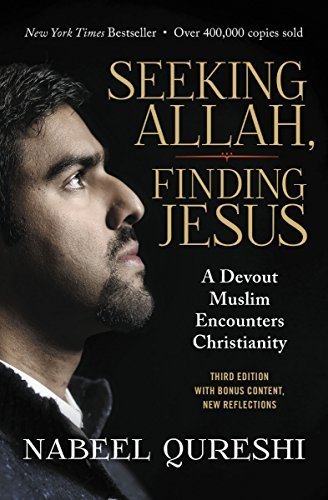
Nabeel Qureshi was an intellectual raised in a Muslim home who devoted years of study and fellowship with his best friend David, a Christian intellectual. They argued, researched, prayed, and maintained their friendship as Nabeel sought the Truth. Was he to find it in Jesus or in the teachings of Islam? This book is perfect for anyone who wants to:
—approach the Bible analytically
—prove or disprove the claims about Jesus Christ
—learn more about the beliefs of Muslims, their culture and how the two are related
—learn about the history of Islam
—understand the difference in approaches to Islam in the East and in the West
—learn some basic Islamic terminology
—witness a true Christian/Muslim friendship
—see how a Christian can share Jesus with others by example as he lives out his beliefs in Jesus through his actions
—learn how to disagree respectfully
—understand the Trinity
—gain an understanding of what a Muslim gives up when he converts to Christianity and the consequences of a conversion
—comprehend the claims and arguments against and for the crucifixion and resurrection of Jesus
—read truths about Muhammad and the Quran that imams don’t share with their followers.
The Foreword of Seeking Allah, Finding Jesus summarizes the book quite well: “This is the riveting story of one man’s quest to set aside his preconceptions and pursue answers to the most pressing issues of life and faith, despite enormous pressure to maintain the status quo.”
Rating: 5/5
Category: Memoir, Christian, Religion and Spiritual
Notes: The author describes the book as a “narrative biography,” and one of the contributors to the lengthy appendix which expands on the topics in the book calls it Qureshi’s “spiritual autobiography.”
Publication: August 21, 2018—Zondervan
Memorable Lines:
The culture clash of immigrant parents with their Western-born children is especially common during the emotionally stormy teenage years, and it serves to illustrate a vital fact: Muslim immigrants from the East are starkly different from their Muslim children born in the West.
Effective evangelism requires relationships. There are very few exceptions.
Because of hadith and tradition, Muslim religion, culture, heritage, and identity all find their core in the person of Muhammad. This is why Muslims see an attack on his character as equivalent to a personal attack on them and everything they stand for.
These are the costs Muslims must calculate when considering the gospel: losing the relationships they have built in this life, potentially losing this life itself, and if they are wrong, losing their afterlife in paradise. It is no understatement to say that Muslims often risk everything to embrace the cross.
The Rose and the Thistle–laird of the manor
The Rose and the Thistle
by Laura Frantz
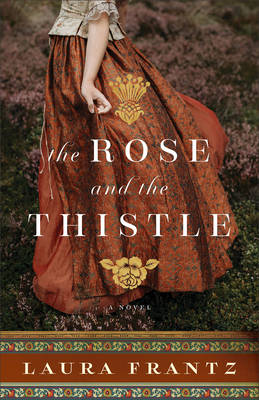
How many times have there been royal overthrows in England and other parts of the British Isles? More than I can keep straight. Therefore, the first part of The Rose and the Thistle was a little confusing to me as I took the author’s brief historical note and tried to integrate the facts into the story she told. The historical backdrop is the Rising or rebellion in 1715 when the Jacobites, supporters of the now exiled Stuart dynasty, tried to reclaim the throne from the German George I. Add in to that strife a generous serving of discord of a religious nature (Catholic Scots vs. Protestant English), and you have quite a mess.
Lady Blythe Hedley of Northumbria has been living in the French courts during some of this conflict. When events turn more dangerous, her father, the Duke of Northumbria, sends her to take refuge at her godfather’s house. He is the laird of Wedderburn Castle and father of many sons. The Hedleys are Jacobites so Lady Blythe’s presence must be kept secret to protect her and them.
Marriage is a critical issue for women to ensure their safety and position in society and to men to safeguard their family wealth, maintaining it and hopefully increasing it. Thus, courting, relationships, and marriage are critical social, political, and financial concerns.
A few chapters into the book, I began really enjoying the characters and plot. My lack of familiarity with the political intrigue worked itself out as the historical context found its place as a backdrop to several romances in the novel. The protagonists are Lady Blythe, a Countess; and Everard, Lord Fast, who inherits all of his father’s assets on becoming the Earl of Wedderburn. There are many reasons for the pair to have conflicts and watching how they are resolved is fascinating. They are both characters of faith who find more commonalities than differences in their faiths.
Orin is a favorite character, an eight year old who is much loved by his family but has grown up motherless. He is very intelligent and yet whimsical. Once Lady Blythe is given the freedom to roam the castle and grounds, she and Orin take to each other immediately. Blythe and Everard’s mutual love for Orin is a factor in their growing admiration for each other.
The plot is full of romance and social jousting. Royal court and military politics play an important role. The book also includes servants in the household, positions taken by women who find themselves unmarried and without any family wealth, and the tenants who work the estate’s coal mines.
Hawking, horseback riding, inns, and traveling in the early 1700’s are part of the story as is imprisonment in the tower, owning family jewels, and having staffed, but little used, residences scattered around the country. I enjoyed The Rose and the Thistle and recommend it for those who like clean historical fiction.
I received a complimentary copy of this book in exchange for an honest review. Opinions expressed in this review are completely my own.
Rating: 4/5
Category: Historical Fiction, Romance, Christian, Religion,
Notes: 1. A clean historical fiction; a romance that is a standalone.
2. Includes a Glossary of Scottish words.
Publication: January 3, 2023—Revell
Memorable Lines:
“What news have you of the king o’er the water?” Everard could not keep his mockery at bay. “That the French court is in a chaos similar to that in Genesis before the creation of the world.”
Nay, when all was said and done, Blythe would never forget the way the new laird tenderly bent down and lifted his little brother, whose tears streaked his pale face, into his strong arms and carried him all the way home.
She waved her fan about again with practiced ease. Women and fans were not unlike men with swords, he decided. Hers seemed a blatant tool for coquetry.
Liturgy of the Ordinary: sacred practices in everyday life
Liturgy of the Ordinary
by Tish Harrison Warren

Liturgy is the form or pattern that a church service follows. It may be a general and loose sequence or it may be highly structured as followed by Anglicans and other denominations that use The Book of Common Prayer. In Liturgy of the Ordinary, Tish Harrison Warren connects our daily routines to the rituals and patterns of the Christian life from our waking in the morning to our rest at the end of the day. Along the way she examines our search for lost objects and ties it into confession and repentance. She discusses quarrels within the family and how as Christians we are called to extend peace or shalom. Warren dissects how we look at time and at community. She suggests savoring the good gifts of God in our everyday life, but discourages overindulgence in pleasure lest it become an addiction, trapping us in the cycle of wanting more.
Liturgy of the Ordinary is a wonderful book for individual enjoyment and study or for sharing with a group. It is a book that takes simple concepts and invites a deeper dive. Warren is an excellent writer. The book is full of wisdom from both Warren and those she has studied. She invites the reader to look at everyday routines in a new way. The book is replete with anecdotes and quotes. Above all, Warren is open and honest; readers will see themselves in her struggles and her revelations. She makes the mystery of living out the Christian life in this broken world both real and accessible.
Rating: 5/5
Category: Christian, Nonfiction
Notes: Includes Discussion Questions, Practices, and a Bibliography
Publication: 2016—InterVarsity Press
Memorable Lines:
Waiting, therefore, is an act of faith in that it is oriented toward the future. Yet our assurance of hope is rooted in the past, in the person of Jesus of Nazareth and in his promises and resurrection. In this way, waiting, like time itself, centers on Christ—the fulcrum of time.
Christian friendships are call-and-response friendships. We tell each other over and over, back and forth, the truth of who we are and who God is…My best friendships are with people who are willing to get in the muck with me, who see me as I am, and who speak to me of our hope in Christ in the midst of it. These friends’ lives become a sermon to me.
The words of the liturgy felt like a mother rocking me, singing over me, speaking words of blessing again and again. I was relaxing into the church like an overtired child collapsing on her mom. When my husband and I would get into the car after church each week and talk about the service, I would say to him, “It feels like chamomile tea.”
 education pathways