
Home » religion (Page 4)
Category Archives: religion
Advent–Hope and Repentance
Advent: The Season of Hope
by Tish Harrison Warren

I have almost finished reading Advent by Tish Harrison Warren for the second time this season. It is a small book that packs a powerful punch and is worthy of a reread.
In the Protestant churches of my childhood and most of my adult years, “advent” was a word I rarely heard. The focus was on Christmas and making sure the cultural aspects of the celebration (e.g. decorations, gifts, and parties) did not take prominence over the spiritual foundation: “Jesus is the reason for the season.” In more recent years, I have worshiped in Protestant churches that follow the liturgy found in the Book of Common Prayer. Warren’s book has helped me unravel the church calendar year which begins with Advent and to understand Advent itself.
This tiny book explains the three comings or advents of Christ. We celebrate His birth in Bethlehem at Christmas and look forward to what we refer to as “His Second Coming” when He will reign as King of Kings. Warren says there is a third coming which we currently experience when He dwells in our hearts as we are filled with the Holy Spirit.
There are many themes of Advent discussed in this book, but the ones that impact my heart the most are “repentance and hope” and “darkness and light.” Warren refers to four prayers composed for the Advent season in the Book of Common Prayer. In addition to talking to God, these prayers or collects lead the reader to a deeper understanding of Christian theology and what we believe as Christians. She explains eight practices of Advent for those who want to use this season to meet with God and draw closer to Him during the course of the four weeks of Advent that lead up to Christmas.
Perhaps my favorite chapter in the book Advent is entitled “Crying Out: Two Prophets of Advent.” Who prophesied most about the advent or coming of Jesus? Isaiah in the Old Testament and John the Baptist in the New Testament. It is a good beginning place if you want to learn more about prophecies from the Old Testament that were fulfilled in the New Testament and prophecies that are yet to be fulfilled when Jesus comes again, not as a baby in a manger, but as the Messiah who returns to banish Satan and evil and rule on Earth for eternity with justice, peace, and love.
Rating: 5/5
Category: Christian, Theology
Notes: 1. “Each volume in the Fullness of Time series invites readers to engage with the riches of the church year, exploring the traditions, prayers, Scriptures, and rituals of the seasons of the church calendar.” These are standalone books, each written by a different author: Advent, Christmas, Epiphany, Lent, Easter, Pentecost.
2. This is a choice for my book club and lends itself well to group discussion, but it is also perfect for devotion, study, and meditation for individual readers.
Publication: 2023—InterVarsity Press
Memorable Lines:
Advent comes each year and quietly asks me to pause, to remember that we do not bring the kingdom of God to the world through our own effort or on our own timeline. We wait for one outside of us and outside of time. We wait for our coming king.
Advent is training in hope because this season tells us that when things lie fallow they do not lie in waste; things that seem dormant are not dead, and times of waiting are not without meaning, purpose, or design. God is working, sometimes almost imperceptibly, deep beneath the surface of time. Waiting is part of his redemption. It is part of his gift to us. It is part of his grace.
The love of God is the blazing fire that purifies us, remakes us, and sets right all that is broken in us and in the world. The love of God brings us to repentance. The love of God sets the oppressed free and makes all things new. The love of God insists on truth and justice. The love of God reveals every hidden thing. And it is this love that is coming for us.
Seeking Allah, Finding Jesus: A Devout Muslim Encounters Christianity
Seeking Allah, Finding Jesus
by Nabeel Qureshi
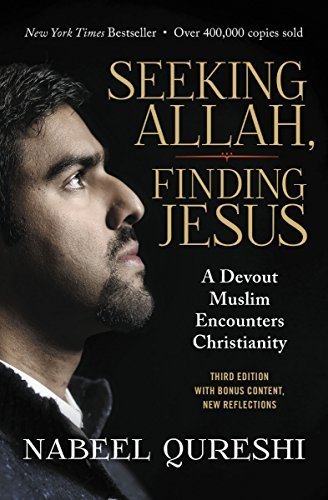
Nabeel Qureshi was an intellectual raised in a Muslim home who devoted years of study and fellowship with his best friend David, a Christian intellectual. They argued, researched, prayed, and maintained their friendship as Nabeel sought the Truth. Was he to find it in Jesus or in the teachings of Islam? This book is perfect for anyone who wants to:
—approach the Bible analytically
—prove or disprove the claims about Jesus Christ
—learn more about the beliefs of Muslims, their culture and how the two are related
—learn about the history of Islam
—understand the difference in approaches to Islam in the East and in the West
—learn some basic Islamic terminology
—witness a true Christian/Muslim friendship
—see how a Christian can share Jesus with others by example as he lives out his beliefs in Jesus through his actions
—learn how to disagree respectfully
—understand the Trinity
—gain an understanding of what a Muslim gives up when he converts to Christianity and the consequences of a conversion
—comprehend the claims and arguments against and for the crucifixion and resurrection of Jesus
—read truths about Muhammad and the Quran that imams don’t share with their followers.
The Foreword of Seeking Allah, Finding Jesus summarizes the book quite well: “This is the riveting story of one man’s quest to set aside his preconceptions and pursue answers to the most pressing issues of life and faith, despite enormous pressure to maintain the status quo.”
Rating: 5/5
Category: Memoir, Christian, Religion and Spiritual
Notes: The author describes the book as a “narrative biography,” and one of the contributors to the lengthy appendix which expands on the topics in the book calls it Qureshi’s “spiritual autobiography.”
Publication: August 21, 2018—Zondervan
Memorable Lines:
The culture clash of immigrant parents with their Western-born children is especially common during the emotionally stormy teenage years, and it serves to illustrate a vital fact: Muslim immigrants from the East are starkly different from their Muslim children born in the West.
Effective evangelism requires relationships. There are very few exceptions.
Because of hadith and tradition, Muslim religion, culture, heritage, and identity all find their core in the person of Muhammad. This is why Muslims see an attack on his character as equivalent to a personal attack on them and everything they stand for.
These are the costs Muslims must calculate when considering the gospel: losing the relationships they have built in this life, potentially losing this life itself, and if they are wrong, losing their afterlife in paradise. It is no understatement to say that Muslims often risk everything to embrace the cross.
The Rose and the Thistle–laird of the manor
The Rose and the Thistle
by Laura Frantz
How many times have there been royal overthrows in England and other parts of the British Isles? More than I can keep straight. Therefore, the first part of The Rose and the Thistle was a little confusing to me as I took the author’s brief historical note and tried to integrate the facts into the story she told. The historical backdrop is the Rising or rebellion in 1715 when the Jacobites, supporters of the now exiled Stuart dynasty, tried to reclaim the throne from the German George I. Add in to that strife a generous serving of discord of a religious nature (Catholic Scots vs. Protestant English), and you have quite a mess.
Lady Blythe Hedley of Northumbria has been living in the French courts during some of this conflict. When events turn more dangerous, her father, the Duke of Northumbria, sends her to take refuge at her godfather’s house. He is the laird of Wedderburn Castle and father of many sons. The Hedleys are Jacobites so Lady Blythe’s presence must be kept secret to protect her and them.
Marriage is a critical issue for women to ensure their safety and position in society and to men to safeguard their family wealth, maintaining it and hopefully increasing it. Thus, courting, relationships, and marriage are critical social, political, and financial concerns.
A few chapters into the book, I began really enjoying the characters and plot. My lack of familiarity with the political intrigue worked itself out as the historical context found its place as a backdrop to several romances in the novel. The protagonists are Lady Blythe, a Countess; and Everard, Lord Fast, who inherits all of his father’s assets on becoming the Earl of Wedderburn. There are many reasons for the pair to have conflicts and watching how they are resolved is fascinating. They are both characters of faith who find more commonalities than differences in their faiths.
Orin is a favorite character, an eight year old who is much loved by his family but has grown up motherless. He is very intelligent and yet whimsical. Once Lady Blythe is given the freedom to roam the castle and grounds, she and Orin take to each other immediately. Blythe and Everard’s mutual love for Orin is a factor in their growing admiration for each other.
The plot is full of romance and social jousting. Royal court and military politics play an important role. The book also includes servants in the household, positions taken by women who find themselves unmarried and without any family wealth, and the tenants who work the estate’s coal mines.
Hawking, horseback riding, inns, and traveling in the early 1700’s are part of the story as is imprisonment in the tower, owning family jewels, and having staffed, but little used, residences scattered around the country. I enjoyed The Rose and the Thistle and recommend it for those who like clean historical fiction.
I received a complimentary copy of this book in exchange for an honest review. Opinions expressed in this review are completely my own.
Rating: 4/5
Category: Historical Fiction, Romance, Christian, Religion,
Notes: 1. A clean historical fiction; a romance that is a standalone.
2. Includes a Glossary of Scottish words.
Publication: January 3, 2023—Revell
Memorable Lines:
“What news have you of the king o’er the water?” Everard could not keep his mockery at bay. “That the French court is in a chaos similar to that in Genesis before the creation of the world.”
Nay, when all was said and done, Blythe would never forget the way the new laird tenderly bent down and lifted his little brother, whose tears streaked his pale face, into his strong arms and carried him all the way home.
She waved her fan about again with practiced ease. Women and fans were not unlike men with swords, he decided. Hers seemed a blatant tool for coquetry.
Liturgy of the Ordinary: sacred practices in everyday life
Liturgy of the Ordinary
by Tish Harrison Warren

Liturgy is the form or pattern that a church service follows. It may be a general and loose sequence or it may be highly structured as followed by Anglicans and other denominations that use The Book of Common Prayer. In Liturgy of the Ordinary, Tish Harrison Warren connects our daily routines to the rituals and patterns of the Christian life from our waking in the morning to our rest at the end of the day. Along the way she examines our search for lost objects and ties it into confession and repentance. She discusses quarrels within the family and how as Christians we are called to extend peace or shalom. Warren dissects how we look at time and at community. She suggests savoring the good gifts of God in our everyday life, but discourages overindulgence in pleasure lest it become an addiction, trapping us in the cycle of wanting more.
Liturgy of the Ordinary is a wonderful book for individual enjoyment and study or for sharing with a group. It is a book that takes simple concepts and invites a deeper dive. Warren is an excellent writer. The book is full of wisdom from both Warren and those she has studied. She invites the reader to look at everyday routines in a new way. The book is replete with anecdotes and quotes. Above all, Warren is open and honest; readers will see themselves in her struggles and her revelations. She makes the mystery of living out the Christian life in this broken world both real and accessible.
Rating: 5/5
Category: Christian, Nonfiction
Notes: Includes Discussion Questions, Practices, and a Bibliography
Publication: 2016—InterVarsity Press
Memorable Lines:
Waiting, therefore, is an act of faith in that it is oriented toward the future. Yet our assurance of hope is rooted in the past, in the person of Jesus of Nazareth and in his promises and resurrection. In this way, waiting, like time itself, centers on Christ—the fulcrum of time.
Christian friendships are call-and-response friendships. We tell each other over and over, back and forth, the truth of who we are and who God is…My best friendships are with people who are willing to get in the muck with me, who see me as I am, and who speak to me of our hope in Christ in the midst of it. These friends’ lives become a sermon to me.
The words of the liturgy felt like a mother rocking me, singing over me, speaking words of blessing again and again. I was relaxing into the church like an overtired child collapsing on her mom. When my husband and I would get into the car after church each week and talk about the service, I would say to him, “It feels like chamomile tea.”
Saint Patrick the Forgiver–The History and Legends of Ireland’s Bishop
Saint Patrick the Forgiver
retold and illustrated by Ned Bustard
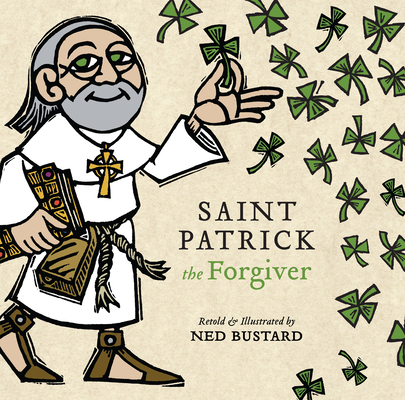
Is Saint Patrick’s Day just a great time of celebrating Irish heritage with parades, green beer, and shamrocks? Ned Bustard shares the real story of St. Patrick along with some of the tall tales that have surrounded his legacy. In his book Saint Patrick the Forgiver, Ned Bustard retells the ancient story in poem format that is suitable for young and old.
Patrick was born in 385 in England. He was kidnapped and sold as a slave in Ireland where he worked as a shepherd. He had an encounter with God and became a follower of Christ. Later God spoke to him in a vision, provided a boat, and led him safely on the long journey back to his family.
After this escape he had another vision that he was to return to the land and people who had enslaved him. He was able to forgive them because God had forgiven him.
This book is a treasure of spiritual truths, beautiful poetry, and fitting illustrations. Saint Patrick the Forgiver would be a wonderful addition to your St. Patrick’s Day celebration. It shares history and legend differentiating between the two. Most importantly it teaches the lesson of forgiveness.
I received a complimentary copy of this book in exchange for an honest review. Opinions expressed in this review are completely my own.
Rating: 5/5
Category: Children’s Fiction, Christian, Religion and Spirituality
Notes: 1. The author’s note at the end summarizes the book in prose and has two discussion questions, a verse from Ephesians on forgiveness, and two resources for further reading.
2. Intended Ages—4-8, but it would make great family reading for all ages.
3. Currently Amazon has a special pre-order price for this hardback that is almost 50% off. (I have no financial connection with Amazon; I just noticed the price when I looked for the age range.)
Publication: 2/21/2023—InterVarsity Press (IVP Kids)
Memorable Lines:
Hello, my name is Patrick—
you may have heard my story.
I walked the span of Ireland
to tell of God’s great glory.
To the Irish I returned
to preach of love and grace.
I spoke first to the High King’s son
—our Lord he did embrace.
I saw the Spirit moving
all across the Emerald Isle.
It wasn’t luck—it was God’s grace,
and that always makes me smile!
Three Sisters–survival in the midst of death
Three Sisters
by Heather Morris

I present to you a review for a book that will transport you unwillingly from Slovakia into the death camps of Auschwitz and Birkenau. The horrors are especially difficult to read about because this novel was so well researched including interviews with primary sources, two of the three sisters who are protagonists in Heather Morris’ Three Sisters. The third sister had passed away before the author began this project. Unlike some survivors of the concentration camps, these sisters talked about their experiences to people who wanted to hear, especially their family members. These relatives were a treasure trove of information about the camps, the Nazi selections of individuals, hiding from the SS, and the kindness and treachery of nonJews.
Family, of course, is very important to Cibi, Magda, and Livi, the three sisters. Their father makes them promise to always stay together and support each other. Their grandfather gives them the mantra of “hope and strength” which they carry with them through the worst of times. Later they can joke about bad conditions by comparing them to the deprivation they experienced in the camps.
Three Sisters is a hard book to read, but another worthwhile reminder to not allow this history to repeat itself. Ironically, the last part of the book which was about happier times brought the strongest emotional response from me. This reaction is a tribute to Heather Morris as a storyteller who, despite the tragic subject matter, brings her characters to life in such a way that you feel like you really know them and you understand them as much as is possible as an outside observer.
I recommend this book. I know these characters will stay with me for a long time.
I received a complimentary copy of this book in exchange for an honest review. Opinions expressed in this review are completely my own.
Rating: 5/5
Category: Historical Fiction, Literary Fiction, Women’s Fiction
Notes: by the author of The Tattooist of Auschwitz
Publication: October 5, 2021—St. Martin’s Press
Memorable Lines:
As the plaintive cries of their families fade, new voices—angry, hate-filled voices—greet them as they make their passage through the town. Their former friends and neighbors are hurling rotten fruit and stale bread at their heads, yelling their joy that the Jews are finally leaving. Cibi and Livi are stunned by the taunts, the full-throated bile being dispensed from snarling mouths.
…they will never forget their desperation to put something, anything, in their stomachs. These days they savor every mouthful, but, more than that, they cherish the freedom to move around the city as they choose, no longer under the watchful and penetrating gaze of a kapo or worse, an SS officer.
Cibi thinks about the space in her heart where God used to live and wonders, for a second, if the peace she feels in her sisters’ arms is a sign that maybe He never really left.
Christmas at the Amish Market–finding the right mate
Christmas at the Amish Market
by Shelley Shepard Gray

Sometimes we forget how stressful being a shopkeeper in the month of December can be. There is no exception for Amish merchants as many customers seek out their wares for unique, special gifts. Wesley Raber has been working at his family’s large Amish market since he was a boy. As a young man he gradually took over most of the operation, but he had never tried to handle it alone until his father had a heart attack.
Jenny, who has a month-long break from her job as a nanny, is called in to help at the market. She stays with Liesl who is actually her niece although they are close to the same age. Wesley has been courting a frustrated Liesl for many years but has never proposed. Liesl is an expert seamstress and through her work has met the widower Roland and his four year old daughter Lilly.
Since Christmas at the Amish Market is a Hallmark book, you can guess where the plot is headed, but as always it is fun to learn more about the characters and their struggles, experience the ups and downs of their lives, and watch as romance develops in a very proper Amish way. The Pinery is a Christmas event center that plays an important role in the story. It attracts tourists and locals to view the magical light displays, sample delicious food and drinks, and get lost in a tree maze.
“For sure and for certain,” Christmas at the Amish Market is a fun holiday read with a quiet Amish background showing people trusting God and seeking his guidance.
I received a complimentary copy of this book in exchange for an honest review. Opinions expressed in this review are completely my own.
Rating: 4/5
Category: Romance, Religion, Christian
Notes: The book includes a recipe for Cincinnati-style chili. It is served in an unexpected way, and the reason it is a Christmas Eve tradition for Liesl’s family is shared in the story.
Publication: November 8, 2022—Hallmark Publishing
Memorable Lines:
…while Wesley was kind and sweet to her, he didn’t exactly have as much passion for life—or for her—as she might have imagined. He was more the steady, plow horse type of man. He clip-clopped along at a steady pace but never exactly did anything flashy.
He was currently in between a rock and a hard place with a side of torrential rain added into the mix. It was the holiday season, and he had a slew of customers needing to be served and two parents who were depending on him to not let them down.
“You know as well as I do that our Lord is in charge. Everything happens in His own way and in the right time. Doesn’t do any good to second-guess accidents and whatnots.”
The Remarkable Ordinary: How to Stop, Look, and Listen to Life
The Remarkable Ordinary
by Frederick Buechner

Art and music as gateways to God—an interesting thought Frederick Buechner uses as the basis of his first chapter in The Remarkable Ordinary. That beginning was a little slow to take hold on me, and it didn’t really continue on as a predominant theme in the book. In fact, the book continues forward in three parts with a total of eight chapters. As I read, I felt like I was examining Buechner’s mind, his thought processes, his memories, and most importantly his search for God in the ordinary things of life. When he began a relationship with Christ, he was “all in.” Not content to read the Bible through as a first step, he wanted to jump right into seminary. He eventually decided that his training in the ministry and his skills would be best used as a writer rather than as a pastor. He never used the term philosopher, but that is what I see him as. The Remarkable Ordinary is part philosophical treatise and part memoir. He delves into therapy sessions, dreams, and family history that helped form his character and beliefs.
Buechner is honest and introspective, and the book is a product of his soul searching. Each chapter is a collection of his thoughts on various themes. He reflects on holiness, our personal journeys, our efforts at controlling others, and the wars we wage with ourselves and those around us. He shows facets of God to us as he examines the arts, other people, the ordinary things around us, and our stories, dreams and memories. He ties all of these parts of the “remarkable ordinary” into our need to “stop, look, and listen to life.”
I actually read much of the book twice in an effort to understand Buechner’s views. It is different from other books I have read by religious leaders. Buechner is very open about his beliefs and his past and yet, probably rightly, he did not reveal all as he continued to clarify his thoughts. Some things are too personal to share with the world. Frederick Buechner passed away on August 15. 2022, leaving behind a legacy of 39 works of fiction and nonfiction in several genres written over a span of 60 years.
Rating: 4/5
Category: Nonfiction, Christian
Publication: October 3, 2017—Zondervan
Memorable Lines:
It seems to me almost before the Bible says anything else, it is saying that—how important it is to be alive and to pay attention to being alive, pay attention to each other, pay attention to God as he moves and as he speaks. Pay attention to where life or God has tried to take you.
We’ve all had saints in our lives, by which I mean not plaster saints, not moral exemplars, not people setting for us a sort of suffocating good example, but I mean saints in the sense of life-givers, people through knowing whom we become more alive.
I was so motivated because I was at that point so on fire with, I can only say, Christ. I was to the point where when I would see his name on a page, it was like seeing the face of somebody you loved, and my heart would beat faster. I had to find out more about him.
I certainly am always at war one way or another with myself, and some of them are wars I must fight to try to slay the demons, to kill the dragon, to lay the ghost to rest. But there are other wars you fight with yourself that are really not worth fighting at all. The war to make yourself be more, do more than you have it in you really to do or to be.
Some Golden Daybreak–the Second Coming of Christ
Some Golden Daybreak
by Lee Roberson, D.D.
Having worked through two different current Bible studies on the book of Revelation, I came away with more questions than answers. I learned that there are three major perspectives that scholars adopt to address this New Testament book of prophecy. I remember clear teachings when I was a child at Highland Park Baptist Church in Chattanooga, Tennessee, so I searched online for a book by the pastor at that time. On a used book site, I found Some Golden Daybreak, a collection of 17 sermons on the Second Coming of Christ written by Dr. Roberson. Since then, I discovered that Amazon has both paperback and a Kindle version so this book has clearly passed the test of time.
I highly recommend Some Golden Daybreak. Its teachings are based on Scriptures found in both the New and Old Testaments and address such topics as the mark of the beast, Armageddon, and the much debated Great Tribulation. It answered many questions for me satisfactorily. If you have wondered about eternal life and salvation, this book will provide hope, inspiration, and answers.
Rating: 5/5
Category: Christian, Religion
Publication: 1957—Sword of the Lord Publishers
Memorable Lines:
He invites all sinners to come and to drink of the water of life. No one is excluded. All are invited. What is the water of life? It is salvation through faith in Christ. How do we take it? Freely, without money and without price. It is for everyone.
He is coming again. He is coming in power and great glory. The Christ who was prophesied to come as Saviour hundreds of years before He was born; the Christ who walked upon the earth and died upon a cross; the Christ who arose triumphant from the grave; the Christ who ascended back into Glory; the Christ who gave His promise before leaving this earth that He would come again—this Christ is coming.
The more we study the truth of His coming and the more we observe the trends of the times, the more we feel like fervently praying, “Even so, come Lord Jesus.”
Through Gates of Splendor–a call from God
Through Gates of Splendor
by Elizabeth Elliot

Five young men felt God’s call to share the good news of Jesus with an Ecuadoran Indian tribe that had never had positive encounters with outsiders. Their bad experiences date back to the ruthless rubber traders of the 1870’s—“civilized savages against unbaptized savages.” They had Stone Age technology, were feared by other Indians for their unprovoked ambushes, and had a language known only to themselves. The missionaries and their wives had a daunting task. They started by evangelizing more friendly local tribes and establishing bases, many refurbished from areas abandoned by Shell Oil Co. From these bases they did flyovers of the Auca land, first to find where in the jungle the Aucas were living and later to communicate with them by dropping gifts to demonstrate their friendly intentions.
When they felt the time was right, they finalized plans to land and meet with the Aucas in person. The book becomes very intense at that point. After an initial positive meeting, there is literally radio silence instead of the expected call back to the wives. A search and rescue team went in consisting of Ecuadorian military, volunteer missionaries and Indians, and U.S military. It was a dangerous mission.
Although the preparation and action are the basis of the story, the core of the book is faith in God. Elizabeth Elliot, the author of Through Gates of Splendor, was the wife of Jim Elliot, the first missionary of the group to respond to God’s call to contact this people group who had never heard of Him. Jim Elliot was willing to die if need be to share the good news of salvation to the Aucas. He said, “He is no fool who gives what he cannot keep to gain what he cannot lose.” The story of the lives of these young men and their dedication to God is inspiring and many of their notes and thoughts are recorded in this book. In its pages you will see a vivd picture of what God’s call can look like as well as how these missionaries and their wives responded.
Rating: 5/5
Category: History, Christian, Memoir
Notes: The 40th anniversary edition which I read included:
1. Maps
2. Photographs, many taken at great peril by a Life magazine reporter who chose to stay with the search party when he could have returned to the base and safety.
3. Two Epilogues. One was written in 1958 explaining the immediate aftermath of the first contact and one written in 1996 relating the lives of the families as they evolved over the next 40 years.
Publication: Originally 1956
40th anniversary edition in 1996—Living Books (Tyndale)
Memorable Lines:
“If that old engine had quit up there, God alone could have saved me. I might just as well admit it frankly right here; I don’t like to fly over stuff like that and I have to have a pretty good reason to be over it without a good position-check and a good river to identify my position by. But these are people for whom Christ died, and you have to find them before you can take the Gospel to them, so I was happy to have stumbled on them.”
Pete Fleming was one of those who could not be content while the Aucas remained in darkness. In his diary he wrote: “It is a grave and solemn problem; an unreachable people who murder and kill with extreme hatred. It comes to me strongly that God is leading me to do something about it, and a strong idea and impression comes into my mind that I ought to devote the majority of my time to collecting linguistic data on the tribe and making some intensive air surveys to look for Auca houses….I know that this may be the most important decision of my life, but I have a quiet peace about it.
September, 1955, was the month in which Operation Auca really started, the month in which the Lord began to weave five separate threads into a single glowing fabric for His own Glory. Five men with widely differing personalities had come to Ecuador from the eastern United States, the West Coast, and the Midwestern States. Representing three different “faith-missions,” these men and their wives were one in their common belief in the Bible as the literal and supernatural and perfect word from God to man. Christ said “Go ye”; their answer was “Lord, send me.”

