Home » reading (Page 3)
Category Archives: reading
Little Chickies/Los Pollitos–a great bilingual book for preschoolers
Little Chickies/Los Pollitos
by Susie Jaramillo
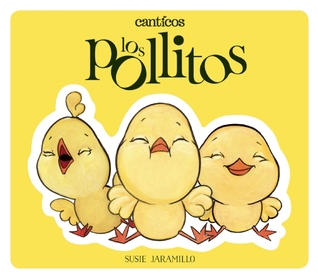 Susie Jaramillo is a bilingual mother and artist who grew up in Venezuela and in the United States. In working with her own young children, she found a need for bilingual books to share traditional Latin American nursery rhymes in Spanish with a translation into English which maintains the original meaning without sacrificing the beauty of language. To this end she founded Canticos and has published the first book, Little Chickies/Los Pollitos. She has written and illustrated two more bilingual books which are available for preorder.
The art work in Little Chickies/Los Pollitos is very appealing. The simple storyline is that of a mother hen taking care of her babies. It is the kind of book children would love to read and sing over and over again.
One thing that makes Little Chickies/Los Pollitos valuable in working with preschoolers, in presenting an alternate language, is the accordion fold format. You read the story all the way through in one language and then from the back you can go forward again reading in the other language with no disruption of the story or words that don’t match up with the voice. Jaramillo added other features that make it special as well. The rhymes are put to music so children can sing the book. They are interactive with spinning wheels and flaps that lift. An app can be purchased as an extension of the book. There are free videos of it on Vimeo and more information is available at canticosworld.com.
I would like to extend my thanks to netgalley.com and to the publisher Encantos for giving me the opportunity to read this book in exchange for an honest review.
Escaping the Nazis on the Kindertransport–introduction to the Holocaust for younger students
Escaping the Nazis on the Kindertransport
by Emma Carlson Berne
 Many books have been written for middle school students about the Jews in Nazi Germany. In Escaping the Nazis on the Kindertransport, Emma Carlson Berne shares a piece of their story with children aged 8-12. As a teacher I could certainly see this book also being used as a resource for older students who are reading below grade level as it has an interest level appropriate to them as well.
The physical book is designed with the look and feel of an aging family picture album. There are seven chapters that focus on individual children who were part of the 10,000 children rescued from Nazi controlled areas and relocated to the United Kingdom prior to the beginning of World War II. Their story is told in the third person but from the child’s perspective.
The first chapter begins with a poem “The Leather Suitcase” written by Tom Berman who was saved as a 5 year old child by a Kindertransport. Some background is given as it describes what it must have been like for such a young boy to be separated from his parents for a long trip to an unfamiliar country with a different language, not knowing if he would ever see them again. This chapter captures the reader’s interest immediately.
The next chapter, “From Kristallnacht to Kindertransport,” gives more historical details about the increasing persecution of the Jews and their limited options for survival. Then the book returns to the stories of individual children, ending with a chapter that briefly recounts what happened to each child after the Kindertransport. It might be specifics of their time living with another family, further emigration, or an ultimate career, depending on their circumstances and the source documents available. There is also general statistical information about the 10,000 children of the Kindertransport.
There are study resources at the end of the book. The “Timeline” integrates important historical dates of the war with major events related to the Kindertransport and the seven children whose rescues are detailed in the book. The “Glossary,” of course, defines unfamiliar terms such as “haftarah” and “pogrom” which are used in the book. Next is a page which explains The Kindertransport Association (KTA), whose president was a consultant for the book. The KTA is comprised of the rescued Kinders, as they call themselves, and their descendants. “Read More” lists three more books on the topic for young readers. There is a page of discussion questions to evoke higher level thinking and several pages devoted to bibliography, source notes, and an index.
Escaping the Nazis on the Kindertransport is a valuable teaching resource, drawing from original sources. The length of the chapters is appropriate for this age level as well as for typical time periods in the school day. It could be used for independent reading or group study, but because of the difficult nature of the subject matter and the age of the intended reader, I definitely suggest adult support. The author handles the ugly reality of Nazi Germany with restraint without hiding the brutal truths of beatings, interments, and death. Being drawn into their stories will be troubling for some youngsters, especially those for whom this is their introduction to Holocaust studies.
I highly recommend Escaping the Nazis on the Kindertransport as an integrative teaching tool combining reading with social studies, especially history and geography. It abounds with possibilities for discussions to stretch young thinkers to make make new connections and offers opportunities for deep enrichment of vocabulary. Even as an adult, I found the book well written, interesting, and a source of new learning.
This book is scheduled for publication on February 1, 2017.
I would like to extend my thanks to netgalley.com and to Capstone Press for giving me the opportunity to read this book in exchange for an honest review.
Perilous Judgment–can a federal judge stay within the law and still save those closest to him?
Perilous Judgment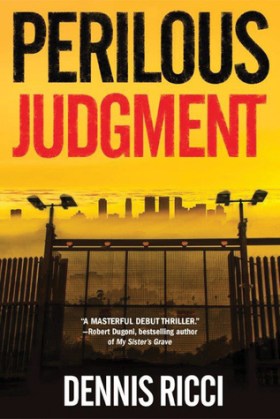
A Real Justice Thriller Series, Book 1
by Dennis Ricci
Perilous Judgment is the first book in Dennis Ricci’s Real Justice Thriller Series. I don’t know what Mr. Ricci’s plans for future books in this series are. I can envision his successfully either creating more tales revolving around his main character, Judge Edward Lamport, or departing from the characters in his first book to write more thrillers continuing to focus on the theme of real justice. Is justice achieved only through the law or can individuals define it as something found in a higher good, a morality above and beyond human created systems of rules?
Perilous Judgment is a story of federal laws, political struggles for power and money, and international narcotics cartels. The main characters have made mistakes in their pasts for which there are consequences. They have decisions to make which affect others and through prayer they try to decipher the will of God in their unique situations. Following the “real justice” theme, many tough but ethical people have to decide at what point there is a higher law to follow.
As a current resident of Mexico, I find reading about the violence of drug cartels difficult because their actions are at such odds with the individuals I have met in the general population. They are kind, friendly and eager to help others. They too dislike corruption in the government and fear the kidnapping and cruelty of gangs. Then as I look back to my home country, I wonder if we are so very different. The political corruption north of the border is more sophisticated and subtle, but is widespread. Large cities are racked with high violent crime rates. I look forward to Mr. Ricci’s next thriller and wonder if his search for real justice will have its focal point solely in the U.S. or if he will once again cross international borders.
I would like to extend my thanks to netgalley.com and to the publisher Waterfall Press for allowing me to read Perilous Judgment in exchange for an unbiased review.
Ghost of Africa– don’t miss this medical action suspense
The Ghost of Africa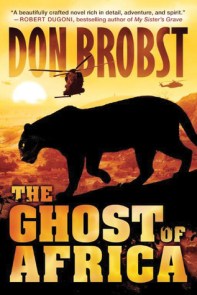
by Don Brobst
Don Brobst has created a fast paced adventure set in Africa. Although The Ghost of Africa is fiction, Don Brobst’s background lends a definite authenticity to the story. Like his protagonist, Dr. Paul Branson, the author is a medical doctor who travels to Africa frequently to provide medical assistance. The reader can assume the comparison ends there as the fictional doctor becomes entangled in a deadly struggle over oil between local forces in North Sudan and South Sudan.
Although Waterfall Press publishes Christian fiction, this novel does not fall anywhere near the category of historical romantic fiction that can be so typical of fictional works from a Christian publishing house. The author has obviously thoroughly researched special forces and military equipment. The result is a very detailed and physical fight for survival with a ruthless antagonist. There is a Christian theme as Dr. Branson is viewed by the natives as The Chosen One, a label he struggles with and tries to put into perspective for the native population.
I strongly recommend The Ghost of Africa. It does have a strong element of violence, but it is not gratuitous. This book stands up well with other action adventures. It also provides a realistic look at life in Africa for the innocents who are caught up in others’ struggles for wealth and power.
I want to extend thanks to netgalley.com and Waterfall Press for the opportunity to read this book in exchange for an unbiased review.
Riveting Memoir of a Romanian Lawyer– Could be Used in Christian High School?
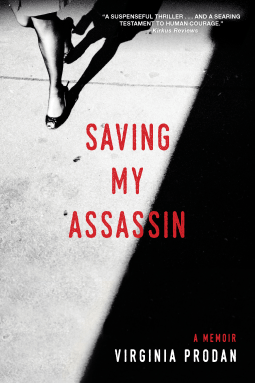 Saving My Assassin
by Virginia Prodan
Virginia Prodan has written a riveting memoir Saving My Assassin. It was difficult to read many parts of this book because of its troubling, torturous content, but the triumphant spirit of this tiny powerhouse of a woman kept me returning to discover how God could possibly use the evil that surrounded her for His greater purpose.
Virginia Prodan was formerly a lawyer during the cruel Communist dictatorship of Romanian leader Nicolae Ceausescu. Currently she is an international lawyer residing in the U.S. where she continues her work representing Christians who find themselves in legal difficulties because of their stand for Christ.
Saving My Assassin begins with a brief glimpse at a pivotal moment in Prodan’s life. That part of the story ends abruptly, but is repeated and continued later in the appropriate time sequence. This is a technique which could be annoying, but is used here to skillfully draw the reader into the critical nature of the happenings in Prodan’s life. Next we learn of mysteries and events in her younger years which help us understand how she became such a determined adult. She endured a cruel childhood which left her determined to discover the truth on all levels. Why was she so mistreated by her own family? Why did she look so different from them? Why were people in Romania not allowed to worship God when their laws said they could? What motivated the cold violence of the Securitate, the Communist government agents who stalked her, interrogated her, and threatened the lives of her and her children? Why were they so willing to torture and kill their own citizens, innocent of crimes, many of whom apparently disappeared into the night?
Although this book is written for adults, I think mature high school students would appreciate it as well. I taught high school English in a Christian school before I became an elementary public school teacher. This is the kind of book I would have used with my seniors. It would be particularly appropriate for reading in conjunction with a history or civics class as it deals with a Communist dictatorship during the Reagan era and shows the power and influence the U.S. can choose to wield in supporting Christians around the world. Because Saving My Assassin has a strong Biblical message, I assume it could not be assigned for reading in a public school setting, but I would be interested in feedback from teachers with more recent public high school experience than I have.
Saving My Assassin has a proposed publication date of June 7, 2016. I would like to extend my thanks to netgalley.com and to the publisher Tyndale House for allowing me to read and review this book in exchange for an unbiased review.
Perfect Chapter Book for Beginning Readers
 As a teacher of early learners, K-2 in particular, I was always on the lookout for useful books for the classroom. I have found one that is great for students to read at home and at school. I am not a fan of the “guided reading” programs currently pushed in many school districts. A large number of the book selections are frankly boring. Reading should be fun! Pedro, First Grade Hero is a book young readers will enjoy. Its anticipated release date by Capstone Press is September 1, 2016, and I highly recommend it! I personally would use it in reading groups and then send it home for kids to enjoy there as well.
Pedro, First Grade Hero
by Fran Manuskin
Pedro, First Grade Hero, is a delightful “chapter book” for early readers. Children usually want to read chapter books like their teacher models for them. Unfortunately most chapter books are just too difficult for them to read independently. Pedro, First Grade Hero, however, comes to the rescue for the beginning reader. It is actually a collection of four stories, all about Pedro. The readability level, length of the stories, and interest level is perfect for first graders as is the focus of each story.
Pedro is a very likable little boy. In the first story, “Pedro Goes Buggy,” Pedro has to find a bug to write about in school. Discussions about the best bug ensue in the classroom and at home. Even his little brother Paco gets involved in the fun. The story has a nice resolution and ends on a humorous note. For the teacher who likes to integrate learning strands, language arts, math and science provide easy tie-ins.
“Pedro’s Big Goal” draws in boys and girls who love soccer. This chapter has “bigger is not always better” as well as “keep trying” as its themes. Children will enjoy the ending and teachers can help them appreciate the play on words.
Most people love a good mystery as do Pedro and his friends who form a mystery club in the third story, trying to find a missing locket and cell phone. Good vocabulary words include sparkle, locket, and chirping.
The final story, “Pedro for President,” teaches Pedro and his friend Katie Woo what is involved in being class president. As they ponder what they have to offer the class, little brother Paco “helps” with the election poster and Pedro creatively turns that effort into a positive. Pedro, who always encourages his classmates and promotes fairness in the election, is the obvious favorite for president.
The illustrations by Tammie Lyon are colorful, appealing, and depict well the characters’ emotions and reactions. Teachers interested in promoting multi-cultural cohesiveness in their classrooms will appreciate the inclusion of children of various backgrounds. At the end of this book are four pages of jokes in the riddle format that will delight first graders.
I would like to thank netgalley.com and the publisher, Capstone Press, for the opportunity to read this book in exchange for an unbiased review.
I Am That Teacher Too (Letter 5)–Reading is a Passion, Not a Learning Objective
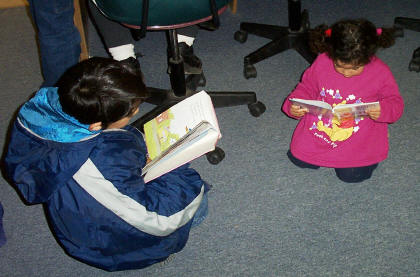
Dear Former Students,
What do I hope you remember about me?
Reading, of course! Together we fell in love with the books we read. If you were in my recent classes, you will remember the magical repetitions of Pete the Cat books. For a more sophisticated enchantment, we devoured several books in the Magic Tree House series, sneaking social studies and science into our day. Who could forget the adventures of Jamie and Tom at Dinosaur Cove or Dorothy and her friends in the Wizard of Oz? Some students may be reminiscing about the aliens in The Sand Witch and the mystery and history found in Help! I’m a Prisoner in the Library. Bunnicula, a great children’s mystery, was a favorite with some classes.
As a young teacher, I had experts tell me that first graders are not ready to sit and listen to chapter books. Not true! Storytellers have been recounting their tales without benefit of visuals since before the written word. Perhaps you were in the class that listened at story time to several picture books, at least one chapter in a longer book, and then BEGGED for more. I usually introduced classes to chapter books with Judy Blume’s short chapter book Freckle Juice followed by Chocolate Touch and Chocolate Fever.
We had many special literacy activities related to stories we read. For example, we discussed the meaning of Bill Martin Jr.’s Knots on a Counting Rope and made our own counting rope. In the 1st/2nd grade multiage class, we read the original version of 101 Dalmatians learning the meaning and use of many British words and enjoying playing with the unfamiliar words. We made a huge mural containing 101 Dalmatians just in time for the 100th day of school. Drama, dancing, art, music, and writing were all pulled into the process of learning to read and learning through reading. Activities did not begin and end because of the clock on the wall or the threat of an administrator’s possible walk-through. We had reading buddies once a week from the upper grades, working on social skills as well as reading skills and giving you the opportunity to read your favorite books as many times as you liked and have a positive emotional connection to reading. Our buddies benefited in similar ways with the addition of an opportunity to practice leadership and demonstrate maturity.
You amazed your parents with your beautiful poetry recitations—poems that move the soul like “Stopping by Woods on a Snowy Evening” and poems that giggle the spirit like “The Purple Cow.” You recited the poems by yourself before the whole class exploring the sounds of language and gaining self-confidence. You learned to appreciate language by playing with rhymes, patterns, meter, and figures of speech. Often whole families memorized the poems, and some can still recite their favorites. Reader’s Theatre and musical Reader’s Theatre provided fun opportunities to practice reading with fluency and expression.
My philosophy was “I teach reading all day long.” It worked. I had parents tell me that their child loved reading because of me. I hope you were one of them.
Detective Gordon, The First Case
Move over Holmes and Watson! Move over Poirot and Hastings! Another Detective duo is in town: Detective Gordon, the aging police chief toad, and his sidekick Buffy, a very young, energetic mouse. Use Ulf Nilsson’s book, Detective Gordon, The First Case, with readers who are ready for chapter books or to introduce mysteries as a read aloud. The story is a kinder, gentler type of mystery with easily understood messages. It also contains some word fun that students will enjoy exploring and repeating. For those who love drama, the characters are unique and lend themselves to creative expression. The illustrations are sweet, appealing, and as soft as the snow covered landscape of the book’s origins in Sweden.
Will Great Scores on a High Stakes Test Land You a Job at Goodreads?
Goodreads is a website that has created a huge community of readers, and their goal is to hook up readers with books they will love. In browsing today, I came across their Jobs page. I’m not looking to come out of retirement, but I was interested in their values:
- Ownership

- Create Fun
- Be Humble
- Think Big
- Customer Obsession
- Be Passionate
- Help Each Other
- Always Be Learning, Always Be Teaching.

Goodreads says they want people that are creative and care about the customer. Reread their list of values. Are any of those items on a standardized test? Are any of those values part of the Common Core State Standards? Would they be integral to a private school education where neither the CCSS nor standardized testing is required? Then WHY are we not including them in a public school education? All of our kids deserve a first class education.
If you want to see the source, go to:
Interested in World War II ? Dobryd is a good read!
 The period known as the Holocaust is a frequent topic of books for both adults and young adults. The book Dobryd is different in that it does not focus on characters who are arrested or imprisoned. In fact most of the story occurs in the years following the war. Told in the first person, this story details the struggles of a five year old girl as she emerges from over two years of hiding in a space too small for a standing adult. Most of her family is dead, but she still has her mother and an aunt. The reader is soon absorbed by their relationships as they begin to integrate into a Poland that is very different from the one they hid from. Their rescuer is Yuri, a Russian soldier who plays a pivotal role in helping young Ann relate to her new world and provides stability for her. Dobryd shows us the best and the worst of people and how they have a long lasting impact on Ann and her family.
Dobryd is classified as an autobiographical novel as the author was very young when the story begins and much is retold from the memories of others. It reads like fiction, but has the authenticity of history. Dobryd would be an excellent addition to a unit on the Holocaust or World War II. It invites comparisons to books such as The Diary of a Young Girl by Anne Frank that are typically enjoyed by students in learning about this period. Dobryd offers opportunities to feel with Ann the discrimination she experienced based on religion and her family’s former social standing. We get to learn of her rapidly disappearing Polish heritage and of the geographical struggles Poland underwent as a nation being divided by its neighbors as one of the spoils of war.
 education pathways