Home » reading (Page 4)
Category Archives: reading
Interested in World War II ? Dobryd is a good read!
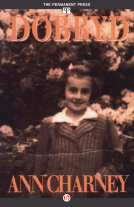 The period known as the Holocaust is a frequent topic of books for both adults and young adults. The book Dobryd is different in that it does not focus on characters who are arrested or imprisoned. In fact most of the story occurs in the years following the war. Told in the first person, this story details the struggles of a five year old girl as she emerges from over two years of hiding in a space too small for a standing adult. Most of her family is dead, but she still has her mother and an aunt. The reader is soon absorbed by their relationships as they begin to integrate into a Poland that is very different from the one they hid from. Their rescuer is Yuri, a Russian soldier who plays a pivotal role in helping young Ann relate to her new world and provides stability for her. Dobryd shows us the best and the worst of people and how they have a long lasting impact on Ann and her family.
Dobryd is classified as an autobiographical novel as the author was very young when the story begins and much is retold from the memories of others. It reads like fiction, but has the authenticity of history. Dobryd would be an excellent addition to a unit on the Holocaust or World War II. It invites comparisons to books such as The Diary of a Young Girl by Anne Frank that are typically enjoyed by students in learning about this period. Dobryd offers opportunities to feel with Ann the discrimination she experienced based on religion and her family’s former social standing. We get to learn of her rapidly disappearing Polish heritage and of the geographical struggles Poland underwent as a nation being divided by its neighbors as one of the spoils of war.
I Am That Teacher Too (Letter 3) Thematic Learning—Where the Pieces Work Together
Dear Former Students,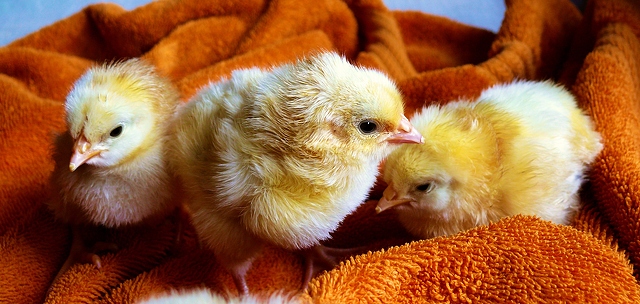
What do I hope you remember about me?
Reading, Math, and Science, Oh My!
Social Studies, Art, and Music, Oh My!
I hope you remember the special activities and projects that made learning so much fun—different activities for different years. Some of you raised calves and others hatched baby chicks or silkworms. We grew plants. Lots of you will remember our parakeet and our gerbils. You took turns letting Little Bird sit on your shoulder. You cleaned out cages and pens and learned a lot about life and a little about death. Some first grade classes researched dinosaurs and created individual reports on their work producing the most fantastic books.
Our whole day was about learning how to read, but you didn’t know it. Reading was in everything we did. I cocooned you with the look, sounds, and feel of language. When you emerged from that cocoon at the end of first grade, I had succeeded if you loved to read and to learn. I had succeeded if you had found a passion in some of the many things we explored: math, science, social studies, art, music, and of course language itself. We sprinkled in movement, drama, and dance. Was there anything you couldn’t do? I remember one of you telling me, “I am UNSTOPPABLE!” When the year began, your behavior was unstoppable, but when the year ended, your desire to learn was unstoppable. That was success for both of us.
Fiction Becomes Reality in the Classroom: “If you are having fun, you are not learning.”

Schedule Required
Time Blocks Required
Details Required
Creativity Optional
Flexibility Discouraged
Matilda, a book by Roald Dahl, then a movie. Somehow I missed both in my earlier, busy life as a teacher. Now as a retired educator, I can indulge in so many things I missed. By day, when the Mexican light is good, I pursue my pleasant goal of reading all of Agatha Christie’s eighty-eight plus works. By night, I explore Mexican Netflix which is limited compared to availability in the U.S. Last night I watched Matilda, and I was caught up at once in the fictional tale of the precocious preschooler who taught herself to read and then went daily by herself to the public library to devour its contents.
Innocent Matilda has her dream come true as she is finally enrolled in school. The principal is terrifying, but her teacher is the sweetest you can imagine, seeing potential in children and valuing their dreams. At this point the movie becomes a horror story for me. I gasp as I see the motto in large letters at the top of the chalkboard: “If you are having fun, you are not learning.” Then as the principal arrives for a visit, the teacher and children spring into action as a team. Shades are quickly pulled down and charts flipped over to cover the meaningful and colorful projects that are the result of engaged learning. I could feel the stress of my last years as a teacher return. I could hear the sucking sound of laughter being withdrawn from the classroom.
The evening over and the lights out, I lay awake with memories of real charts that had to be in place on the walls in my classroom. Curriculum and Instruction let them drift down at intervals all year from the ivory tower with specifications as to their importance. The principal directed that they needed to be displayed; to do otherwise would mean a label of “ineffective” on the teacher’s evaluation. Every new workshop that administrators attended resulted in new mandates with accompanying visuals. We were to implement post haste this hodgepodge of procedures received third hand from experts who didn’t have a clue who our students were or what they needed.
For me, the nightmare is over, but I can not and will not forget those brave teachers still fighting the good fight and struggling to do what is right and best for their students. As a teacher I took unpopular stances and now I continue the battle against the forces of educational destruction which are directed by politicians, funded by big business, and implemented by misguided administrators.

