
Home » Nonfiction (Page 2)
Category Archives: Nonfiction
Being Elisabeth Elliot: Elisabeth’s Later Years
Being Elisabeth Elliot: Elisabeth’s Later Years
By Ellen Vaughn
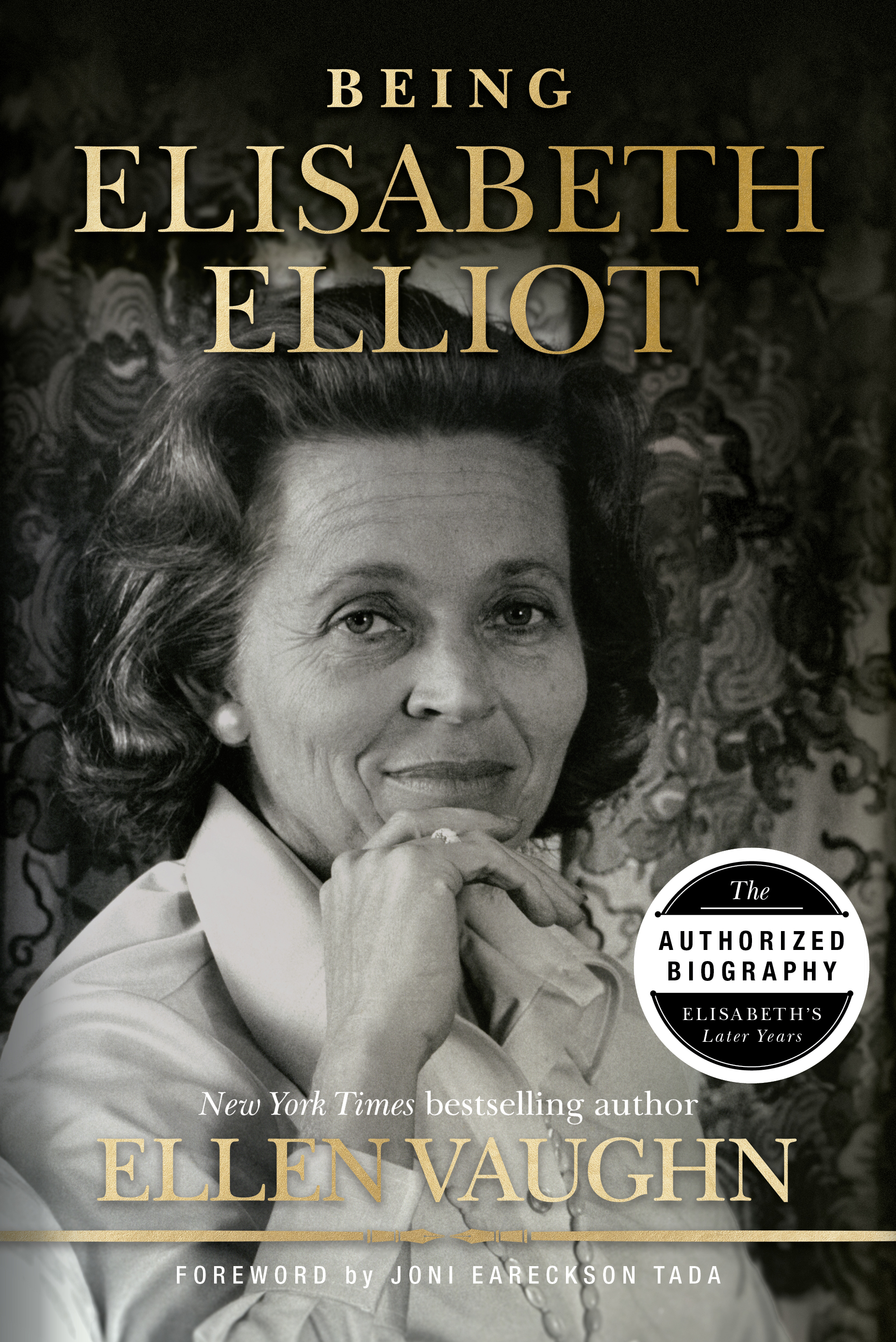
Because Elisabeth Elliot was among many things a writer at heart, she left behind a lot of correspondence and journals along with the many articles and books she authored. Her biographer, Ellen Vaughn, had a treasure trove of resources available to her as she documented the life of Elisabeth Elliot. This book follows up on the earlier years of Elliot’s life which Vaughn also wrote about in Becoming Elisabeth Elliot. In this book the reader not only learns the rest of Elliot’s story, but also takes a deep dive into the challenges of being a biographer as experienced by both Elliot and Vaughn. In that role, as in all of her writings for a Christian audience, Elliot faced pressures from her readers, her editors, and her publishers to end each book with a happy ending in which someone came to salvation in Jesus. Her struggle as a missionary and then as a writer is that not every situation will end in such a way. She felt an imperative to share the truth even if it went against the wishes of her readers.
Elisabeth had a number of crossroad moments because she desired so passionately to make choices that aligned with the will of God and at the same time she wanted to be loved and cared for by a man, a husband. She wanted to “matter to someone.” Although she didn’t see herself as a very social person, she actually had a number of friends. The selection of male friends in her circle was limited—by age, availability, and suitability. Yet she continued to make decisions as she kept her eyes open for the man who could make her feel loved. Meanwhile, she traveled a lot as a speaker, continued to write, moved a few times, raised her daughter, took in boarders, and even considered returning to Ecuador as a missionary.
If you don’t know about her two marriages after she returned to the U.S., I won’t include spoilers except to say that she experienced the “best of times and the worst of times.” There is not a lot of documentation about her third marriage because that husband burned her journals from those years. Perhaps it is just as well. Elisabeth gradually lost her “voice” to Alzheimer’s passing away in 2015, but her message continues to impact new generations via her writing, recordings of her speeches, and through the Elisabeth Elliot Foundation.
Rating: 4/5
Category: Biography, Nonfiction, Christian
Notes: Authorized Biography
Publication: 2023—B&H Publishing
Memorable Lines:
Few loved the Bible more than Elisabeth Elliot. But she was appalled when Christians used it as a weapon to clobber or distance themselves from people who were different from them. Or to distance themselves from suffering, mysteries, and difficult questions.
“My observations, it turned out, were ‘controversial,’ not because I had taken sides but because I had not taken sides.”… Again, as so many times in the past, she felt squelched by religious and commercial institutions that wanted her voice, but only if she parroted the party line.
Here in the core of her hideous loss, Elisabeth looked back again to the fundamental losses of her life. It was not hard—they were always, it seems, present in her mind, part of that which shaped her experience and her understanding of the mystery of faith in an inscrutable God.
Who was she? I would say she was a woman who lived imperfectly, as we all do, loved God and sought to serve Him with everything she had.
What Happens Next: A Traveler’s Guide through the End of this Age
What Happens Next
by Max Lucado

Are you one of the many people tired of the chaos in our times? Are you wondering if we are about to experience the end of this age on Earth? Max Lucado has some answers as he provides a timeline in What Happens Next. His timeline is taken from Biblical prophecies and teachings. He is not going to give you a date for when the world as we know it is going to end because Jesus says in the Bible that only God the Father knows when that will be. Nevertheless, there are many Scriptures that spell out the events of the end times and their sequence. Max shares these to give you a hope, something to look forward to if you have accepted Jesus as your Savior.
Max literally uses a timeline graphic, however, to take you through the steps, clearly and one at a time. Futuristic prophecies are not just found in the book of Revelation where much of the end times is described, but are also in books such as Daniel and Isaiah. About this time last year, I did a study of the book of Revelation using several sources, but I did not come away with as clear an understanding as I did from reading What Happens Next.
Max Lucado has been in the ministry since 1978, and is a prolific author with a very relatable style. His goal is not to scare anyone into Heaven, but he doesn’t shy away from talking about Hell either. There are some controversies among scholars related to end time prophecies. Max explains the various viewpoints on the timing of the rapture, for example. Then he states which he believes is accurate and why. As is typical of Lucado’s writing, he includes anecdotes to tie into the spiritual point he is making, sometimes lightening the lessons and always clarifying them.
If you are a believer in Jesus, this book will give you a fresh appreciation of how much God loves you and certainty about your future. If you are not, you will find answers to questions you have about the end times, God, and how you can have a personal relationship with Him. I strongly recommend What Happens Next.
Rating: 5/5
Category: Nonfiction, Religion and Spirituality, Christian, Theology
Notes: 1. The book ends with “Questions for Reflection” for each chapter including the Big Idea, Application, and a prayer.
2. There is also a six-session Bible study on the end times, with the same title, that can be bought to accompany this book. It is appropriate for group or individual study. It has a workbook and streaming access to professionally created videos with talks presented by Max Lucado who is an excellent speaker. He is not speaking from a pulpit so it feels like a heart to heart conversation.
3. If you want a taste of Max Lucado and this book, I recommend going to YouTube where Max is currently posting on his channel a series called “Fresh Hope.” He has just added the third video.
Publication: 2024—Thomas Nelson (Harper Christian)
Memorable Lines:
God is the God of divine interruptions. Holy surprises. Who could have imagined God living on earth? But he came. Who could’ve imagined God hanging on a cross? But he died. Who could have imagined the empty tomb? But he rose from the dead. He intervenes in mighty and miraculous ways.
He has before.
He will again.
In the meantime keep an eye toward the sky. Live in such a way that Christ will find you faithfully looking for him.
That day is coming. God will put a crown on your head and a hand on your shoulder and bless you…Each child you hugged, he will praise you for it. Every time you forgave, he will praise you for it. Every penny you offered, truth you taught, prayer you prayed, he will praise you for it. He’ll praise you for the day you refused to give in and the season you refused to give up. But most of all, he’ll praise you for saying yes to Jesus.
Epiphany: The Season of Glory
Epiphany: The Season of Glory
by Fleming Rutledge
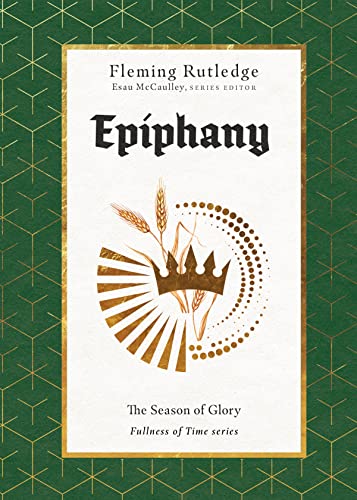
If you didn’t know anything about Fleming Rutledge before you began her tome on Epiphany, you would certainly quickly ascertain for yourself that she is a theological scholar. One of the first women to be ordained by the Episcopal church, she has spent her life studying the Bible and serving as a priest. As an author she has written many books and is known as an expert on the works of Tolkien. There is no fluff to be found in Epiphany: The Season of Glory.
Epiphany is celebrated on January 6 as the day the Magi brought their gifts to the Christ child, manifesting the glory of God and acknowledging the inclusion of Gentiles in the worship of Jesus. The day in many churches is extended into a season which celebrates other events in which the glory of God is preeminent: the baptism of Jesus by John the Baptist, the miracle of wine at Cana, and the transfiguration on the mountain top.
This book explains why we celebrate the day and season of Epiphany. It is a deep study which answers many questions for the reader and may well initiate many new questions. It is a work that requires time, careful reading, and thought. As other theological books, there are footnotes at the end. Many are reference sources for ideas and quotes in the book. Rutledge’s footnotes, however, include expansions on the various topics within and enlarge the experience for the reader. They are as interesting and thought provoking as the main body of the book.
Epiphany: The Season of Glory is part of the Fullness of Time Series which seeks to explain the liturgical calendar of many churches such as Anglican, Episcopal, and Lutheran. Many other churches are also finding renewal through experiencing the traditional seasons. As the editor of the series states “We want readers to understand how the church is forming them in the likeness of Christ through the church calendar.” The six books in the series are by different authors and can be read as standalones. This book is more intellectually challenging than the other books in the series, but they are all worthy reads.
Rating: 5/5
Category: Nonfiction, Christian, Religion
Notes: standalone, but part of the Fullness of Time Series
Publication: 2023—InterVarsity Press
Memorable Lines:
There will always be those who do not recognize him, but they will nevertheless be in his sight and have a part in his eternal plan (see Romans 11). The church, however, in its observance of Epiphany, is to take care of its calling, to point to Christ’s glory, and let his glory take care of itself.
Telling stories about Jesus, what he said and what he did, is an essential part of spreading the gospel. But without the doxa, the glory of the only Son from the Father, it is an incomplete gospel.
The season teaches us to value the entire fellowship of believers, because Jesus calls persons to himself without regard to their station, reputation, accreditation, or accomplishments—and we see how we can begin to be transformed by the action of his Hoy Spirit working through the unearned and undeserved gifts that he bestows.
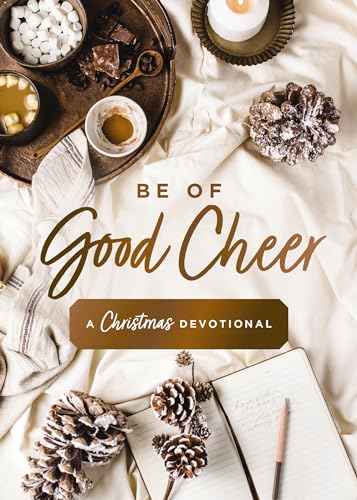
Be of Good Cheer: A Christmas Devotional
Be of Good Cheer: A Christmas Devotional
by Susan Hill
The season of Advent has come and gone on the Christian calendar as we remembered the arrival of Jesus, the King of Kings, who was born, as predicted in the Old Testament, in the little town of Bethlehem. His humble birth was just the beginning of the earthly story of the long awaited Messiah who was both fully God and fully man. He experienced in his perfect body all the things that we experience—grief, joy, pain, love, hunger, disappointment. Then he sacrificed himself on the cross to redeem men from their sins.
Be of Good Cheer is a 40 day devotional that draws the reader to the character of Jesus and focuses on words that are elements of a Christ-filled life. In fact, if you are looking for your “word” for 2025, this could be a resource for inspiration for that project.
This small book is a visual delight with illustrations that are both photographs and paintings. It makes a nice coffee table book that can be read through as an Advent devotional according to each day or picked up by a casual guest to peruse at their leisure. The smooth, heavy weight paper adds touch to the pleasures of holding this book. Each chapter has a one word title followed by a relevant Scripture reference. For example, Chapter 1 is “Cheer” with the verse “Rejoice in the Lord always. I will say it again: Rejoice!” (Philippians 4:4). A short message ends with a suggestion on how to live out the word, how to apply it. This is followed by a brief prayer.
I enjoyed reading each passage. I think this book would make a nice gift for many in 2025.
Rating: 5/5
Category: Nonfiction, Christian, Devotional
Publication: October 1, 2024—Zondervan
Memorable Lines:
From Glory: To give glory to God doesn’t mean to give God something He lacks—it means to proclaim the magnificent glory He already possesses. God’s glory can be defined as all the things that make Him heavenly—His omniscience, omnipotence, and perfect love.
From Miracles: Christmastime is the ideal time to reflect on the reality that God is in the miracle business and routinely accomplishes the impossible. Is there a specific area in your life where you need God to work? Be encouraged that you serve a God who can do all things.
From Kindness: God, thank You for the countless ways You have lavished acts of kindness on me. Help me see the ways You are kind, and lead me to people who need my kindness.


My Family and Other Animals–adventures of a young naturalist
My Family and Other Animals
by Gerald Durrell
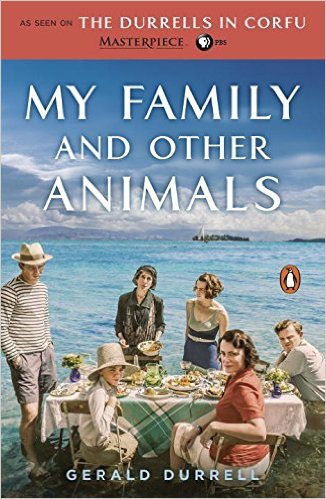
Ready for a boring book about animals? You won’t find it in My Family and Other Animals. Since the author Gerald Durrell (Gerry) was a naturalist from the age of two, there are plenty of animals in this book. He observes them and collects them when his family (Mother, brothers Larry and Leslie, and sister Margo) move from England to the Greek island of Corfu. Both the family and Gerry’s collection of animals are a continual source of humor for the reader with responses ranging from smiles to raucous laughter. Each of the family members is a unique character, but they argue and discuss issues until they arrive at a group “family” decision and act on it.
The story is told by Gerald as an adult looking back on Gerry’s adventures of which there were many. Ten year old Gerry was allowed to roam the island with his dog Roger exploring flora and fauna at his leisure. Occasionally, to Gerry’s dismay, the family would decide to rein him in by providing a tutor. They procured several knowledgeable men at various times, but it was apparent that Gerry’s passion for animals would dominate any efforts at education. When they arrive, Spiro, a local taxi driver and fixer, adopts them and helps them during their stay with any needs they might have. Gerry meets a lot of the locals during his roamings and they always welcome him and offer him refreshment as they chat.
Durrell is a wonderful author whether he is describing natural beauty, the mating of turtles, the parties hosted by the Durrells, the quirks of his siblings, or his observations of small, black scorpions living in the crumbling garden wall. As they are want to do, there were often animal escapes resulting in family meetings to decide what they were going to do about that particular animal’s housing. Occasionally animals were banned from the house, but at no time did the family try to stop Gerry’s proclivity for cultivating interactions with nature. They seemed to understand that it was as much a part of his nature as writing was to Larry, shooting to Leslie, romance to Margo, or cooking to Mother. Their adventures and interactions will keep you turning pages to see what they will do next.
Rating: 5/5
Category: Memoir, Humor
Notes: #1 in the Corfu Trilogy.A 4 season TV series, The Durrells in Corfu, was made by Masterpiece Theatre.
Publication: 1956—Penguin Books
Memorable Lines:
The cypress trees were whipped like dark pendulums against the sky, and the olives (so fossilized all summer, so still and witchlike) were infected with the madness of the wind and swayed creaking on their misshapen, sinewy trunks, their leaves hissing as they turned, like mother of pearl, from green to silver. This is what the dead leaves had whispered about, this is what they had practiced for; exultantly they rose in the air and danced, whirligiging about, dipping, swooping, falling exhausted when the wind tired of them and passed on.
By the time a certain amount of order had been restored, all the baby scorpions had hidden themselves under various plates and bits of cutlery. Eventually, after impassioned pleas on my part, backed up by Mother, Leslie’s suggestion that the whole lot be slaughtered was quashed…Roger and I went and spent the afternoon on the hillside, for I felt it would be prudent to allow the family to have a siesta before seeing them again.
The hill-top seemed to have its own breeze, albeit a baby one, for no matter how hot it was below in the valley, up in the three olive groves the tiny wind played constantly, the leaves whispered, and the drooping cyclamen flowers bowed to each other in endless greeting. It was an ideal spot in which to rest after a hectic lizard hunt, when your head was pounding with the heat, your clothes limp and discolored with perspiration, and the three dogs hung out their pink tongues and panted like ancient miniature railway engines.
Fight Back with Joy–seeking “a life radiant with joy”
and Fight Back with Joy Bible Study
by Margaret Feinberg

Margaret Feinberg was already an author and speaker when she had the rug pulled out from under her with a cancer diagnosis. With painfully candid honesty, Feinberg shares her journey through the medical and emotional roller coaster that her life became. She and her husband Leif struggled together to find joy in a very difficult situation. They always found God to be faithful as they pursued good health for Margaret and a closer relationship to Him.
Fight Back with Joy chronicles their struggles and recounts how they found joy in the little things. At no point does she exaggerate or minimize her spiritual, physical, or emotional battles. She includes practical advice and examples of their pursuit of joy which was often difficult. Feinberg shows how the things she learned can be applied to the many struggles that her readers undergo, not just physical illness.
The workbook is intended to be used by groups or individuals in corporation with a video series of Margaret’s teachings on joy. I did not have the videos, but that did not hinder my use of either book. The study helps the reader to dive deeper into what the Bible has to say about the struggles of life and our response to them. The book would be valuable even without the workbook, but I certainly would not advise trying to use the workbook without the teachings in the book.
Rating: 5/5
Category: Religion, Christian Life, Personal Growth
Publication: 2015—Worthy Publishing
Memorable Lines:
When we fight back with joy, we no longer size the character of God according to our circumstances, but we size our circumstances according to the character of God and his great affection for us.
When everything goes awry, we are tempted to rush past, stuff, deny, or file the situation under “unmentionables.” We will do anything to make the chaos subside. Something inside us lunges to grieve, but we stiff-arm the impulse, forcing ourselves to keep it together.
…one of the fastest ways to receive joy is to give it away. One of the best ways to be lifted up is to lift up others.
No matter what adversity we face, we can turn our eyes from what’s before us and refocus on the God who fills us with joy. Instead of only seeing adversity, we become alert to Christ, who has overcome all things and for whom nothing is impossible.
The Watchmaker’s Daughter: the true story of World War II heroine Corrie Ten Boom
The Watchmaker’s Daughter
by Larry Loftis

The Hiding Place, the original popular story of Corrie ten Boom, written with John and Elizabeth Sherrill, was released in 1971 and made into a movie in 1975. Corrie, skilled in watch repairs, and the rest of the ten Boom family saved many Dutch—both Jews and non-Jews—from being sent to prison, concentration camps, and labor camps by German Nazis in World War II.
Although The Hiding Place was a landmark book in telling the story of this remarkable Christian lady, Larry Loftis has gone even further in writing The Watchmaker’s Daughter. His research into the background of the World War II setting of the book sets the reader up to better understand the times culturally and politically and the invasion of Holland. His research includes examining photos and original small books by Corrie ten Boom along with memorabilia that are archived in the Billy Graham Center Archives at Wheaton College. Corrie ten Boom did not keep a diary, but Loftis sought out many other primary sources including journals and letters from survivors who had been hidden in the ten Boom home.
Corrie and her older sister Betsie were interned in Ravensbrück Concentration Camp for their crimes of hiding Jews. There these Christian sisters had a ministry within the barracks, holding secret Bible studies and encouraging the other women to hold strong despite the horrible conditions and continuous threat of execution. Upon release, Corrie began a ministry of traveling internationally with a message of forgiveness and established 3 different centers, one in a transformed concentration camp, to meet the physical and emotional needs of survivors. Betsie had a vision of the centers while they were still in the camp at a time when the fulfillment of her vision seemed impossible. Corrie’s story is an amazing one showcasing the love of God and the power of forgiveness.
Rating: 5/5
Category: Biography, Nonfiction, Christian, History
Notes: Even if you think you know the story of Corrie ten Boom, I encourage you to read this book. Corrie’s story is unforgettable, and her courageous life of dependence on God extended way past the events in Ravensbrück. Loftis’ research and writing along with Corrie’s life and faith make this book remarkable.
Publication: 2023—HarperCollins
Memorable Lines:
This was the hardest part—the hatred. Over ensuing days Corrie tried to be nice to the woman, but to no avail. “She seemed to be entirely devoid of human feeling,” Corrie recalled, “and altogether hard, hostile, and wicked…Why should they always snap and snarl at us? I always greeted them with a pleasant ‘Good morning,’ but everything seemed to glance off their impenetrable armor of hate.”
“My sister died here,” she told Tiny. “She suffered so much. I, too, have suffered. But Jesus is always with us. He did a miracle in taking away all my hatred and bitterness for my enemies.”
For more than fifty years the Beje had been her own hiding place, her refuge. But Ravensbrück had taught her that this magnificent home—with all of its memories—was but a shadow; her true hiding place was Christ.
Surprised by Oxford–an intellectual’s search for meaning
Surprised by Oxford
by Carolyn Weber

Carolyn Weber had quite a culture shock when, as a scholarship student, she transported herself from Western Ontario into the revered halls of Oxford University. In that first year of working on her Master of Philosophy degree, she was introduced to a different system of learning and classes. She was expected to learn for the sake of learning and to pursue academic interests through tutorials—meetings of small groups of students with a professor. Along with tea or sherry, the groups dove into intellectual pursuits that exhilarated this future professor of literature.
Along the way, Weber discovered a diverse group of friends from a variety of backgrounds who challenged each other in the friendly way comrades can have in the pub over a pint at the end of a long day of studying. She discovered a diversity of spiritual beliefs from atheist to Eastern religions, but none kindled in her the desire to investigate like the Christian faith did. The Christian students and professors were not what she expected. No one was standing on street corners thumping a Bible. Instead, when they found she was interested, they encouraged her to actually read the Bible and to attend groups where the writings of C.S. Lewis were discussed.
Through Surprised by Oxford, I learned a lot about the University of Oxford that contradicted the stereotypes that are generally shared in media. It was interesting to watch her personal and intellectual growth, to see her search within herself for spiritual meaning and communication with God. Obviously a lover of literature, Weber begins each chapter with poetry and sprinkles other lines of poetry throughout the book, especially as she and her friends quote poetry to each other in the context of their discussions.
Rating: 5/5
Category: Memoir, Christian
Publication: 2011—Thomas Nelson
Memorable Lines:
I had no real need of believing in men, God incarnate or otherwise. Fathers especially were not to be trusted. They did not even seem relevant really. That much I had learned. That much I brought with me.
“Despair is the greatest sin,” Dr. Nuttham finally responded slowly. “It involves forgetting that God is there. Forgetting that He is good and that all He is and does extends from and works toward this perfect goodness. That doesn’t mean that He allows evil, or creates it, or perpetuates it. That’s our entwinement. Rather, He uses even our evil toward His good. We all need forms of remembering this first great love…writing, reading, creating, being.”
“Jesus brings the most radical message there is into any society at any time: you are beloved; you are worth a price that only the God of the universe could pay.”
Pentecost: A Day of Power for All People
Pentecost
by Emilio Alvarez
Pentecost is celebrated by Christians as the day when the Holy Spirit came to the early Christian church empowering Jesus’ followers to evangelize the world with the good news of salvation to all who believe that Jesus Christ died for their sins and was resurrected on the third day as He foretold. The writer Luke in Acts 2:1 sets the stage for the narrative with “when the day of Pentecost was fully come.” Jesus’ followers had been waiting for the prophecy to be fulfilled but were not told exactly when that would be. Pentecost is celebrated 50 days after the Jewish Passover. The author of Pentecost, Emilio Alvarez, writes that this season of waiting is a time to prepare our hearts. Fittingly, this book is part of the Fullness of Time series.
This little book begins with a discussion of the concepts of power and of pilgrimage. Next Alvarez devotes a chapter to various Jewish feasts that are the roots of the Pentecost celebration. Then a chapter is devoted to the speaking in other tongues as the Holy Spirit on that day of Pentecost enabled the Jews gathered from many nations to speak in each others’ languages. He relates this phenomenon to a reunion of peoples and a reversal of what happened at the Tower of Babel.
A large part of the book Pentecost is devoted to the rituals and liturgy related to the celebration of Pentecost ranging from the dates of remembrance to the custom of specific colors used for decorations and clothing and on to practices of kneeling or standing. Within the unity of Christian worshipers, there is a diversity of groups who celebrate in many different ways. Alvarez chooses to discuss the Christian tradition found in these five churches: Eastern Orthodox, Roman Catholic, Syrian Orthodox, Anglican, and Pentecostal. From this discussion you can extrapolate that there are a number of ways to celebrate Pentecost. They vary by culture, tradition, and understanding of Scriptures. The hymns, prayers, and Scriptures of these five traditions are just samples of the many available to Christians, and this theological scholar invites Christians to draw from other groups’ practices to enrich, not dilute their own. He ends this section with an interesting testimony of his own spiritual background as a Pentecostal Christian which differs greatly from the liturgies in the other church groups examined in this book. It is a personal spiritual journey which neither discredits nor confirms the formal liturgies found in the other churches mentioned. There are truths and blessings to be found in all of these traditions.
Upon a first reading of the Conclusion, I found it to be beautifully written, helping the reader to imagine the first Pentecost. Upon a second reading I realized I was in disagreement with the author. While I, also, want all people to overcome the “differences in race, culture, and religion,” I do not connect that as a necessity upon which the coming of the Holy Spirit depends. In Acts 1:4-8, Jesus told his followers that they should wait in Jerusalem until they received baptism of the Holy Spirit which would empower them as witnesses. Jesus had said that he would send the Holy Spirit. Just like salvation, this empowerment is a gift of God, not something we can earn.
Overall, I profited from reading this book. It gave me much to think about, and I had my view of the practices within many Christian churches widened.
Rating: 4/5
Category: Religion, Christianity, Theology, Nonfiction
Notes: 1. This is probably not an appropriate book for someone new to Christianity, but might be helpful to someone looking to understand formal liturgical church services.
2. I have read three other books in the Fullness of Time series, and this is my least favorite. I personally battle between it being highly edifying and overly pedantic.
3. I read this for my book club, and it was full of topics for discussion. My understanding of the book profited from hearing other viewpoints.
Publication: 2023—InterVarsity Press
Memorable Lines:
…no matter where we are in the world, and no matter what Christian tradition we belong to, at Pentecost all those who believe in the coming of the Holy Spirit sing and glorify the Most Holy Spirit, and God hears it as if it was coming from one voice.
At Pentecost we are awakened from the delusion that only our race, ethnicity, culture, political party, or language matters, is important, or is even truly Christian. This is one of the great errors of postmodernity, this division through delusion. In remembering Pentecost, however, we once again call on the Spirit to illuminate the dark areas of our lives and confront our delusion with godly wisdom and truth.
There is nothing we can successfully rationalize or theologize about Pentecost that would cause all Christian parties to nod with complete approval, yet there is nothing we can do or say against it that discredits its success in evangelizing the nations.
The Boys in the Boat: Nine Americans and Their Epic Quest for Gold at the 1936 Berlin Olympics
The Boys in the Boat
by Daniel James Brown
Are you a big sports fan? Do you love rowing competitions? Do you know what makes a good coxswain? If your answers, like mine, are “no,” I guarantee that you will love The Boys in the Boat anyway!
Daniel James Brown is a masterful writer. His research is the backbone of the story, but that is just the beginning. He focuses his story of nine young Americans and their coaches on one amazing young man, Joe Rantz. In the process of rolling out this tale, Brown gives the reader a deep look at Joe, who despite terrible odds survived desperate times and the abandonment of his family. With sacrifices and persistence, he struggled through the Depression to earn his way through college and a place on the University of Washington eight-oar crew.
Holding down several jobs and living in tiny, dank quarters, Joe was bullied by his teammates for always wearing the one ragged sweater he owned and for being perpetually hungry. Despite World Wars, the collapse of Wall Street, the Great Depression, flooding, the Dust Bowl, and record unemployment, there were still students who were of a “privileged” class. Many students in the West were from tougher, more humble circumstances, but few of Joe’s teammates had backgrounds comparable to Joe’s. The rowers in the East generally went to elite schools and reflected British roots in their rowing.
Although the book focuses on Joe, partly because of Joe’s unique story and partly because the author was able to interview Joe himself and Joe’s daughter, Brown also includes the backgrounds and activities of each of the other boys in the boat.
The descriptions of the qualifying race in Poughkeepsie and the Olympic competition in Berlin will immerse you in the races to the point of feeling like you are there. There are so many factors that play important roles in rowing. The coaches are key in bringing the boys along, eliminating those who do not have extreme desire and persistence. They have to motivate them to work as a team, teach them how to row, and strategize which students will work best in each position on the boat.
Each chapter starts with a philosophical rowing quote by boat builder George Yeoman Pocock. He hailed from a line of boat builders and prided himself on the quality of his boats. He also had a talent for both seeing how a rower could improve and effectively sharing that with the young man.
Leading into the Olympic competition is fascinating information about Hitler’s motivations with the Olympics and what he did to achieve world-wide acclaim. His public relations efforts portraying Nazis as accepting and culturally sensitive were quite successful internationally.
The Boys in the Boat is one of those books that will stay with me for a long time. Joe’s strength of character and physical endurance are inspirational. I am thankful that the author included an epilogue that shares what happened to each of the rowers in their adult lives. There are also a few pages that give insight into how Brown learned so much about this “epic quest.” The crew endured practices in cold and rain, in heat and rough waves. The success of the nine was well-deserved and merited recording in this outstanding book.
Rating: 5/5
Category: Nonfiction, History, Sports
Publication: 2013—Penguin
Memorable Lines:
To defeat an adversary who was your equal, maybe even your superior, it wasn’t necessarily enough just to give your all from start to finish. You had to master your opponent mentally. when the critical moment in a close race was upon you, you had to know something he did not—that down in your core you still had something in reserve, something you had not yet shown something that once revealed would make him doubt himself, make him falter just when it counted the most. Like so much in life, crew was partly about confidence, partly about knowing your own heart.
“It takes energy to get angry. It eats you up inside. I can’t waste my energy like that and expect to get ahead. When they left, it took everything I had in me just to survive. Now I have to stay focused. I’ve just gotta take care of it myself.”
The wood, Pocock murmured, taught us about survival, about overcoming difficulty, about prevailing over adversity, but it also taught us something about the underlying reason for surviving in the first place. Something about infinite beauty, about undying grace, about things larger and greater than ourselves, About the reasons we were all here. “Sure, I can make a boat,” he said, and then added quoting poet Joyce Kilmer, “ ‘But only God can make a tree.’ “
As the observation train drew back upriver again for the start of the varsity race, the atmosphere grew electric, the dusky sky crackling with static. The crowd began to buzz. Boat whistles shrilled. Alumni draped arms over one another’s shoulders and sang fight songs. Somebody was about to win big; somebody was about to lose big.
 education pathways