
Home » Nonfiction
Category Archives: Nonfiction
Seven Men and Seven Women and the Secret of Their Greatness–people of faith
Seven Men and Seven Women and the Secret of Their Greatness
by Eric Metaxas
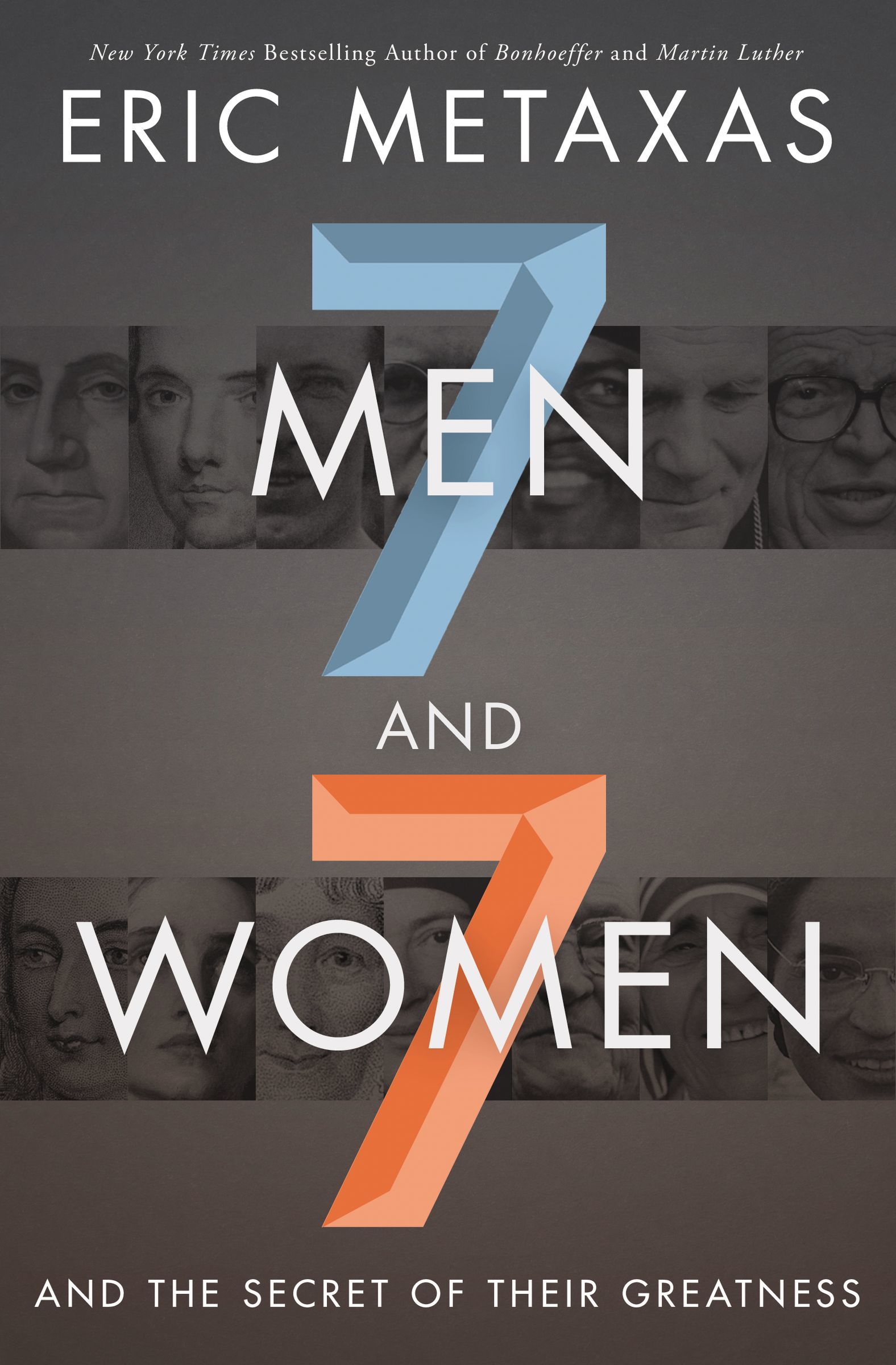
What is “greatness” and what qualifies a person to the claim of greatness?To his credit, Metaxas is able to answer those questions well in his Introduction without sounding pedantic or boring the reader. In fact, after reading his introduction, I couldn’t wait to dive into the first chapter.
Of course, not everyone would choose for inclusion the same individuals as Metaxas, but by the time I got to the end of each chapter, I could certainly understand his choice and agree that the person was worthy of the attribution. I was familiar with some of the subjects of this book, but not all of them. As in the case of Eric Liddell, I knew him for his athletic ability and his refusal to compete on the Sabbath, but there is a second part to his story that is just as important to know about.
This book is actually a combination of two books originally published separately, one on men and one on women. Each one of those is a compilation of short biographies. The seven men are George Washington, William Wilberforce, Eric Liddell, Dietrich Bonhoeffer, Jackie Robinson, Pope John Paul II, and Charles W. Colson. The seven women are Joan of Arc, Susanna Wesley, Hannah More, Saint Maria of Paris, Corrie ten Boom, Rosa Parks, and Mother Teresa. As you can see, there is a variety in those chosen in regard to their profession, their religious background, and the area of life they impacted. A large part of their greatness, however, is that they were people of faith, and they lived out their faith without wavering.
Rating: 5/5
Category: Biography, Nonfiction
Notes: 1. I read this with my book club this summer at a pace of two biographies per week. This book was perfect for summer, as compared to longer books, because members were out of town at a variety of times. Everyone was able to drop in and participate as their schedules allowed.
2. Includes footnotes at the end of each book.
Publication: 2018—Zondervan
Memorable Lines:
More than two hundred years after Washington’s death, his willingness to relinquish power—twice—is the most remarkable thing that we remember about him. These refusals to seize power for himself were the greatest acts of one of history’s greatest men.
God had a far greater plan for Eric Liddell’s life than a gold medal that would eventually be forgotten, along with the athlete who won it. And he has great plans for each of us. Those plans may include the need to give up something we value highly. But those who give up what we may most desire—if God has demanded it—the Lord will truly honor.
Just as Dietrich Bonhoeffer prophetically challenged the Lutheran Church of Germany in his time, so Mother Maria challenged the Orthodox Church of hers. Both understood that to serve Jesus Christ with all one’s heart, soul, mind, and body—that is to be the church of Jesus Christ, to be the Bride for which he will one day return. Even so, come Lord Jesus.
Roberts Ridge: A Story of Courage and Sacrifice on Takur Ghar Mountain, Afghanistan
Roberts Ridge
by Malcolm MacPherson
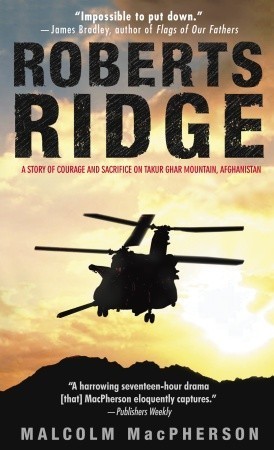
War stories are not part of my regular reading choices. In fact, this may be the first battle account I have ever read. Sure, I have read about various wars, but those narratives tend toward general descriptions and the impact of conflict on citizens. Roberts Ridge, however, describes in detail seventeen hours of hostilities involving multiple branches of the military, with SEALS, Rangers, and other special forces struggling at 10,240 feet to take a strategic position. Intel had not advised the warriors that Takur Ghar was already occupied by the enemy. Al-Qaeda had two established and camouflaged bunkers with equipment and food.
Communication problems and technology issues compounded the difficulties, highlighting in retrospect the need for backup skills and equipment like “map-reading,…, basic rifle marksmanship, and fire and maneuver.” Sometimes, orders were delayed or conflicting. Frustration occurred when the commanders did not seem to understand what the men on the ground were seeing and needed. The author gives his personal analysis in the Afterword: “The fog and friction of war will continue to be ubiquitous. One must understand that fog, friction, and chance dictate limitations. To survive on future battlefields, U.S. military commanders should understand war for what it is—a complex and unpredictable endeavor that requires warriors, educated and prepared to encounter uncertainty. Such warriors must understand not only the capabilities of the latest technologies, but also their limitations.”
Roberts Ridge did not set out to “bash” anyone. MacPherson, although not helped in his research by official military sources, persisted in telling a story he felt needed to be told. He made some contacts who connected him with others who could provide first-hand information. He conducted a lot of interviews and extended his research to books and articles. He follows his account of events with an Executive Summary, a ten page version of the events at Takur Ghar provided by the Department of Defense.
Roberts Ridge is a page turner, but between the tension the soldiers experienced and the emotional impact of soldiers dying, watching their friends die, and enduring pain for hours on end, I sometimes needed a break. I was frustrated along with the leaders on site when they were not given all the information they needed to make good decisions in what turned out to be a very complicated assault and rescue situation.
The inclusion of maps and photos was a great help, but even more photos would have been better. As a non-military reader, I did not know most of the military acronyms that were used frequently in the book. Some were explained; others were not. With the Internet’s help, I got most of them defined. A glossary of these terms would have been very helpful for quick reference. Similarly, there were a lot of people involved in this mission. Although they were generally well-introduced, a listing of these individuals with a brief descriptor and grouping by the part of the mission they participated in would be beneficial for the reader. There is a handy index.
Although outside my usual genre, Roberts Ridge is a book I am glad I read. It not only told about a battle and some heroes I needed to know about, but it broadened my understanding of the Afghan war.
Rating: 5/5
Category: Nonfiction, War
Notes: As this is a nonfiction account of tough, courageous men engaged in life-threatening conflict, expect swearing.
Publication: 2005—Dell
Memorable Lines:
The guy out in the snow could be anybody, Mack was thinking. Friendly Afghans roamed these mountains, some of them allies of the coalition forces. Christ, they lived here; this was their patch. Neither Mack nor anybody else knew at any given time exactly where to expect them to appear. And whether they were enemy or friendly, they all looked the same.
For special operators…leaving a teammate in the lurch and not returning was far more serious than breaking any social vow, in a fundamental, even atavistic way, because it entailed death, and the dead man easily could be you. Returning for a lost brother required no thought, no decision. It was an ingrained reaction, not an idea.
The Rangers’ movement up the hill was a physically demanding 2-hour effort under heavy mortar fire and in thin mountain air. They climbed the 45-70 degree slope, most of it covered in three feet of snow, weighted down by their weapons, body armor and equipment.
Doc Susie: The True Story of a Country Physician in the Colorado Rockies
Doc Susie
By Virginia Cornell

Life was hard, very hard, for the residents of Fraser, Colorado, according to Virginia Cornell’s biography of Doc Susie. Most of the year was extremely cold, and some peoples’ bodies never adjusted to the high altitude. Men were employed in low paying, dangerous lumber jobs or in higher paying, but even more dangerous work, digging out and constructing a tunnel to make faster passage west out of Denver on Moffat Road and across the Continental Divide. When finished, it replaced a treacherous railway route that connected Tolland to Fraser. Lives were lost through accidents and illnesses resulting from bad working conditions. The owners of the railroad and tunnel project were anxious to achieve success along with accompanying fame, prestige, and money, without regard for the people who did all the hard work and took the risks.
Doctors were needed in Fraser, but few wanted to stay long. Doc Susie moved there in 1907 as a cure for her own tuberculosis and to escape an unhappy home life. A petite lady, she had graduated from the University of Michigan. Despite being a woman doctor, she gradually earned the respect of the residents. She made a lot of “house calls,” often to the scene of an accident—deep woods or remote, snowy roads. Frequently, she answered pleas for help for sick patients in isolated areas of Grand County. When she arrived, she examined the patient and took charge, giving orders to the family members. She had a “no drug, no alcohol” policy which meant some painful treatments, but she did use ether for surgery. Going to the patient’s home gave Doc Susie the opportunity to teach the families, by word and by example, the importance of cleanliness so that a wound would not become infected or a disease spread. This spunky lady was not afraid to stand up to railroad bosses or any other man who challenged her personally or professionally.
Doc Susie would have enjoyed being a wife and mother, but those roles never worked out as possibilities for her. This book gives a good picture of what life was like in the Rockies during the first half of the 1900’s for both men and women. The information in the book is well-researched. The author brings Doc Susie’s tale to life in a well-written narrative style. She also includes reproductions of many period photos, including some of Doc Susie. The courageous Doc Susie and her friends are historical figures that I cared about as I envisioned their place in the development of Colorado and of the United States.
Rating: 5/5
Category: Biography, Nonfiction
Publication: 1991—Manifest Publications
Memorable Lines:
Doc Susie looked into a sea of sincere blue eyes. She knew these men, knew their word was as good as money in the First National Bank in Denver, knew that trying to change their minds—well, some said it would have been easier for the Captain to turn the Titanic around before it hit the iceberg than to change a Swede’s mind. If these men said they were going to move a building, you might as well stand back because you might get hurt if you stood in the way.
Mountain life was so harsh; a woman’s waking hours had to be spent keeping the family fed, warm and clean. The same drudgeries awaited them week after week: boil the clothes on Monday and hang them on the line to be showered by cinders raining from the sky each time a train passed, iron on Tuesday, bake on Wednesday, mend on Thursday, split kindling, split kindling, split kindling. The only recognitions these drudges got for their efforts was to be yelled at if things didn’t get done.
Sometimes it seemed there were handsome, strong, beautiful men behind every tree. Unfortunately, the pastoral illusion vanished the moment these he-mountains opened their mouths. After an evening of trying to make conversation with some muscle-brain she found herself yearning for the stimulation of a good book. Sometimes she found herself attracted to raw masculinity; usually the man in question vanished from the scene very quickly, intimidated by her authoritative ways and superior education.
Propaganda Girls–lies to win the war
Propaganda Girls
By Lisa Rogak

Writing a biography about a small group of women must be quite challenging. Lisa Rogak divided her task into four main parts. First, she gives background separately on each of the four ladies: Betty MacDonald, a journalist who was living in Oahu when Pearl Harbor was bombed; Zuzka Lauwers, a bored, multilingual lawyer from the Czech Republic; Jane Smith-Hutton, wife of a naval attaché in Tokyo; and Marlene Dietrich, German-born actress and singer.
In the next section of the book, Rogak describes individually their early introduction to the Office of Strategic Services (OSS)—recruitment, training, and assignments. Then, in the section titled “Believable Lies,” the author describes the actual work the women did. They put in long, hard days, sometimes in less than ideal living and working conditions, but they loved the independence they had in accomplishing their tasks. Their branch was Morale Operations (MO) where they produced “black propaganda.” Always based on at least a kernel of truth, they created media with the goal of demoralizing enemy soldiers and also citizens in occupied areas. They learned as much as they could about the affected country to make it appear that the flyer, broadcast, or whatever media was chosen originated in the enemy country. In “Back to Reality,” Rogak discusses the difficulties each woman had in finding her place in the world when the war ended.
Propaganda Girls was extremely well researched with an extensive bibliography and footnotes. There are many quotes from those who knew the four women and from written resources. These references give authenticity to the biography. The format Rogak chose for this book is fairly rigid resulting in characters who are well-defined in each progression. They are, however, never infused with personality. If you like your nonfiction to be so exciting that it could be mistaken for fiction or be a page turner, then this will not be a good match for you. If you want to learn about women making a difference in World War II, probably saving lives, and working for less pay and respect than their male counterparts, then you’ll be satisfied with this glimpse into a portion of World War II history that has not been well-publicized.
I received a complimentary copy of this book in exchange for an honest review. Opinions expressed in this review are completely my own.
Rating: 4/5
Category: Biography, Nonfiction, History
Publication: March 4, 2025—St. Martin’s Press
Memorable Lines:
Marlene loved the job, and between the cross-country bond tours, working at the canteen, and making an occasional movie, she was exhausted all the time, but here was a way that she could directly affect the lives of thousands of young men who were about to put their lives on the line. She had found her calling.
Betty had crammed a lot of living into her century of life. But like Zuzka, Jane, and Marlene, her war service was the highlight of her life. “There was a real reason for what we were doing in those days,” she said. “A lot of the things we tried didn’t work, but it was war, and it was important.”
But after more than five years of war, Paris wasn’t in much better shape than Tokyo. The city was impassable in many places; apartment buildings and homes were in disrepair and often uninhabitable. Most buildings in the city had gone unheated for the length of the war, except for those that had been occupied by the Germans.
Ordinary Time: The Season of Growth
Ordinary Time: The Season of Growth
By Amy Peeler

The Fullness of Time series discusses the “riches of the church year, exploring the traditions, prayers, Scriptures, and rituals of the seasons of the church calendar”: Advent, Christmas, Epiphany, Lent, Easter, and Pentecost. Outside of these specials seasons are more days—a period between Epiphany and Ash Wednesday and another between Pentecost and Advent. This season is called Ordinary Time and is a season of growth. How do these days fit into the life of a Christian? According to Amy Peeler, an Episcopal priest and professor at Wheaton College, “Being grateful for what God has done—previewed in Genesis and accomplished in Christ—is a necessary step toward daily faithfulness. That daily faithfulness is when trust, even in the face of death, becomes our new ordinary.”
The first half of the book deals with many of the common practices of worship in traditional liturgical churches. Especially meaningful is her in-depth discussion of the Lord’s Supper. The Book of Common Prayer holds many declarations and prayers used to proclaim God’s grace and our unworthiness as we join together as children of God to remember his sacrifice with the bread (His body) and the wine (His blood) as he instructed his followers to do when they gathered.
The second half of the book starts at the beginning of Genesis with the story of Abraham and Sarah and how they grow in faith by seeing God and acknowledging that God sees them, which leads them to trust God. Next is the story of Hagar, a slave, and her son by Abraham who was named Ishmael. There are many lessons about trust, which leads to gratitude, in their story. During Ordinary Time, as in the other seasons, the Scripture readings, prayers, and hymns are all chosen to reflect the theme and, of course, to point to the Trinity: God, the Father; Jesus, the Son; and the Holy Spirit.
Although short, Ordinary Time is not a book you will want to rush through. Its topics are practical, but the discussion reaches deeply into areas that could become perfunctory, but shouldn’t. I appreciated its accessibility while, at the same time, it went deeper, theologically speaking, than is normally expected from a brief book.
Rating: 5/5
Category: Christian, Religion, Spirituality, Theology
Notes: The Fullness of Time series is edited by Esau McCaulley. It is composed of seven stand alone books that can be read in any order: “Each volume in the Fullness of Time series invites readers to engage with the riches of the church year, exploring the traditions, prayers, Scriptures, and rituals of the seasons of the church calendar.” Ordinary Time completes the series.
Publication: 2026—InterVarsity Press
Memorable Lines:
The Holy Spirit does not choose the worthy but the willing.
The shattering of the wafer recalls this defeat of death through death.
We might, as Hebrews instructs, meet a stranger who is actually an angel (Hebrews 13:2), but even if that surprising event does not occur, we can rest assured that every person we meet bears the image of God and should be treated as such. Jesus too instructs his followers to treat others as we would treat him (Matthew 25:34-46).
God Bless This Child: Bedtime Prayers and Praises for Little Ones
by Max and Denalyn Lucado

Illustrated by Lisa Alderson
Max Lucado and his wife Denalyn have written a rhyming book of prayer for little ones. Each prayer in this board book also has a short blessing parents can pray over their children and a Scripture verse (with reference) to accompany the prayer. This sweet book has lovely, colorful illustrations that little ones will enjoy looking at.
I received a complimentary copy of this book in exchange for an honest review. Opinions expressed in this review are completely my own.
Rating: 5/5
Category: Children, Nonfiction, Devotional
Notes: For Baby-5 years old
Publication: March 4, 2025—Tommy Nelson
Memorable Lines:
I saw a puppy, furry and small.
I saw a tree, so strong and tall.
I saw the sun and thought of Your light.
I saw the moon shine bright at night….
Thank You for making everything I see.
Most of all, God, thanks for making me!
Reflections on the Savior–three books in one
Reflections on the Savior
By Max Lucado
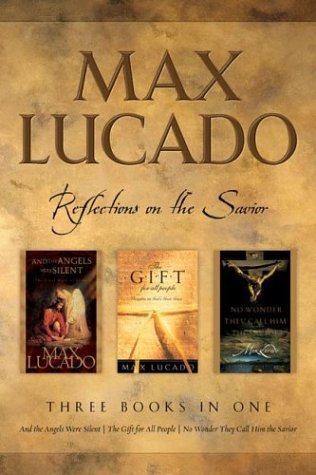
When I purchased Reflections on the Savior, I didn’t have a plan. I just wanted another book full of Biblical insights imparted in an engaging and sometimes anecdotal way by an excellent writer. As a bonus, I would actually be acquiring three books. I decided to read it over the course of three years, one Lent at a time. Lent is the forty days before Easter, a time of reflection and devotion for Christians as we anticipate Jesus’ death on a Roman cross followed three days later, as He predicted, by His resurrection.
And the Angels Were Silent: The Final Week of Jesus
Rating: 5/5
Category: Christian, Nonfiction
Notes: 1. Each chapter has a study guide.
2. Divided into sections by days of the week that correlate with the events in Jesus’ last week on Earth.
Publication: 1992—Multnomah
Memorable Lines:
The Pharisees were arrogant. They were arrogant because they were self-righteous. They were self-righteous because they were trying to make themselves righteous without God…They complicated the gospel with odd myths and superstition. They took pride when it came to tithing, but took naps when it came to serving.
The GIFT for All People: Thoughts on God’s Great Grace
Rating: 5/5
Category: Christian, Nonfiction
Notes: 1. The chapters are short, of devotional length. They get to the point quickly and with impact.
2. The book is divided into 4 sections:
The Gift of a Savior
Ransom for Sinners
Bounteous Grace
The Choice
Publication: 1999—Multnomah
Memorable Lines:
Jesus knows how you feel. You’re under the gun at work? Jesus knows how you feel. You’ve got more to do than is humanly possible? So did he. People take more from you than they give? Jesus understands. Your teenagers won’t listen? Your students won’t try? Jesus knows how you feel. You are precious to him. So precious that he became like you so that you would come to him.
Sometimes God is so touched by what he sees that he gives us what we need and not simply that for which we ask.
God is for you. Had he a calendar, your birthday would be circled. If he drove a car, your name would be on his bumper. If there’s a tree in heaven, he’s carved your name in the bark. We know he has a tattoo, and we know what it says. “I have written your name on my hand,” he declares (Isaiah 49:16).
No Wonder They Call Him the Savior: Chronicles of the Cross
Rating: 5/5
Category: Christian, Nonfiction
Notes: The book is divided into 3 sections:
The Cross: Its Words
The Cross: Its Witnesses
The Cross: Its Wisdom
Publication: 1986—Multnomah
Memorable Lines:
And, by the way, never were those arms opened so wide as they were on the Roman cross. One arm extending back into history and the other reaching into the future. An embrace of forgiveness offered for anyone who’ll come. A hen gathering her chicks. A father receiving his own. A redeemer redeeming the world. No wonder they call him the Savior.
It was easy for him [a farmer] to believe. I can see why. Someone who witnesses God’s daily display of majesty doesn’t find the secret of Easter absurd. Someone who depends upon the mysteries of nature for his livelihood doesn’t find it difficult to depend on an unseen God for his salvation.
Sergeant Rex: The Unbreakable Bond Between a Marine and His Military Working Dog
Sergeant Rex
by Mike Dowling
with Damien Lewis

Meet Rex, a very smart, well-trained German Shepherd. He has a highly sensitive sense of smell and can communicate what he finds to his handler who has trained him so well that that he can trust the dog to lead the way. The result saves a lot of lives, both Iraqi and American. Rex and his handler Mike, a young Marine, are among the first K9 teams to go to Iraq, and they have never been tested in actual battle conditions. They learn a lot which they can then share to help other teams in training. When a Marine team is not scheduled to go out, Mike and Rex rotate through guard duty at the gate. Rex can also bring down a “bad guy.” Neither of these activities meet their goals in Iraq, however, and Mike had to initially persuade commanders to allow them to go into the field on missions. After the soldiers saw what they could do, their bravery, courage, and skills, they begged to have them accompany them.
It’s extremely hot in Iraq and Rex, of course, is wearing a coat. When working he has to be watched carefully for dehydration. The pair go out with regular Marines on missions. Typically, marines clear a building of possible terrorists. Then Mike and Rex enter to search for armaments and materials that can be used to build IED’s. Rex can also do the very dangerous job of sweeping for mines. There are so many points in the process where explosions or enemy attacks could occur. Both Mike and Rex have bullet proof vests, but Mike reserves their use for the times they are most needed because they hold the heat in and increase the possibility of dehydration. Mike always puts Rex’s needs first—from choosing “housing” appropriate for Rex to covering Rex with his own body when they are suddenly under fire. They are truly a dynamic duo and have a special relationship.
Despite the fact that I don’t know much about the various kinds of weapons, I found Sergeant Rex to be both interesting and informative. I learned a lot about the use of dogs in the military and the training involved in preparing a handler/dog team to be successful in the field.
Rating: 5/5
Category: Memoir, Nonfiction
Notes: Contains lots of salty language coming from the mouths of tough marines living on the edge, constantly in danger, and frequently in the midst of explosions and gunfire. Given the circumstances, it wasn’t a problem for me. I just considered the context and moved on.
Publication: 2011—Atria
Memorable Lines:
One thing is crystal clear. K9 handlers and their dogs are at the top of the insurgents’ hit list, along with the EOD guys. We always presumed it would be the enemy’s priority to kill Rex and me, because we’re always at the front of patrols sniffing out the bombs. The more effective we get at finding their arms and explosives, the more they’ll want to hit us.
At times like these Rex becomes a therapy and a morale dog. Seeing Rex and talking about their dogs remind the guys of life back home. It reminds them that there is a world outside the madness of Fallujah and Mahmoudiyah, and in part we’re all here fighting for the right to survive this hell and get back to the world that we know so well and love.
The life-and-death existence that we’ve been living here has put it all into perspective and shown me what truly matters in this world.
Lessons from Madam Chic–humorous look at living well
Lessons from Madam Chic
by Jennifer L. Scott

This nonfiction tome is part advice and part memoir. This delightful book draws on Scott’s experiences as a college student living with a family in Paris for six months. I first encountered Jennifer L. Scott in a YouTube video series The Daily Connoisseur. She has written several books that mesh with the stories on her channel. A proponent of the ten-item wardrobe and gracious living, many of her writings and videos center around how to “be classy.”
Jennifer shares some of her many ideas on how to live a passionate life “filled with love, art, and music” where “no moment was wasted.” She dispenses her advice with her trademark, sometimes self-deprecating, gentle humor. She lived with two families, each with their own variety of a fulfilled life. Madame Chic ran a sophisticated, orderly household with a minimalist style that displayed an appreciation for the simple, finer things in life. Madame Bohemienne had a more free flowing joi de vivre approach to life. Both women were role models to Jennifer.
This book is divided into three parts: Diet and Exercise, Style and Beauty, and How to Live Well. One of my favorite chapters is “Snacking Is So Not Chic.” It tells the story of newly arrived Jennifer trying to sneak down to the kitchen for a snack. She soon learned that French people don’t snack or eat on the go. Another of Jennifer’s memorable chapters is “Look Presentable Always” that goes against what many of us in the United States revert to, seeking the comfort of sweats and ragged tees. “Practice the Art of Entertaining” is a chapter this introvert found quite interesting. I’ve focused on three standout portions of the book, but I enjoyed the entire read, and I highly recommend it.
Rating: 5/5
Category: Nonfiction, Humor, Travel
Notes: subtitled: 20 Stylish Secrets I Learned While Living in Paris
Publication: 2011—Simon & Schuster
Memorable Lines:
And when you’re not doing housework…Dance! I love to put on music in the morning and dance with my children. They find it quite amusing, I get a good workout in, and we all laugh. It’s a mood booster.
Famille Chic had impeccable manners and used them on a daily basis. They applied the “use your best” philosophy to their behavior toward their guests, of course, but also to their behavior toward each other every day.
There are few things better, in my opinion, than attending a proper dinner party—with apéritifs, hors d’oeuvres, music, a properly set table, interesting guests, excellent cuisine, dessert, cheese course, coffee, and digestif. The experience can be divine. Throwing a dinner party, on the other hand, can be very daunting.
The Joshua Code: 52 Scripture Verses Every Believer Should Know
The Joshua Code: 52 Scripture Verses Every Believer Should Know
by O. S. Hawkins
Have you ever felt like you should have more Bible verses committed to memory than you already have? That thought was the impetus for me to purchase and read this book. The goal is to memorize one verse each week. At first that seemed doable, but as life brought some ups and downs, I found myself unable to remember, over the long haul, all the Scripture references that went with each verse. So, about half way through the book, I switched to using it solely as a devotional and that worked well for me in that season.
My first reaction to The Joshua Code was to question the author’s choice of Scriptures. Many of my “favorites” were not included, and I wasn’t sure I saw the importance of those that were selected. As I stayed with it for a few weeks, I began to understand the process. With each verse there is a devotional, a short homily. As I read each chapter I could see why the verse was important. Since then, I have been surprised at how these verses come up in various contexts and provide an “Ah, ha” moment or a “God wink,” a term used by some for seeming “coincidences.”
According to the author, the title Joshua Code refers to Joshua 1:8 and is a “challenge to keep God’s Word in our mouths through memorization and keep it in our hearts through meditation ‘day and night.’ ” In the Introduction, Hawkins gives his practical method for committing verses to memory. He also explains what meditation is for Christians and how valuable meditation can be when applied to these verses.
I recommend this book for Christians and also for those seeking a relationship with Jesus. This book will show readers how to find Jesus in the Scriptures despite the chaos of daily life and digital content that constantly bombards us.
Rating: 5/5
Category: Christian, Nonfiction
Notes: 1. 52 Scriptures and devotionals to encourage memorization
2. A note at the end of the book states that all of the author’s royalties and any other proceeds from the book go to Mission Dignity which “enables thousands of retired ministers (and, in most cases, their widows) who are living below the poverty level, to live out their days with dignity and security.” Small churches are often unable to contribute to a pastor’s retirement, and Hawkins is using his book to financially fill that need.
Publication: 2012—Thomas Nelson

