
Home » History (Page 5)
Category Archives: History
Riveting Memoir of a Romanian Lawyer– Could be Used in Christian High School?
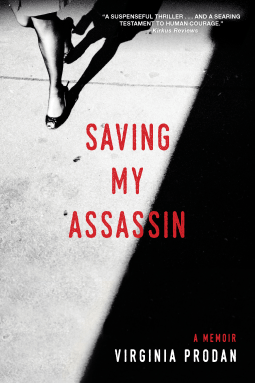 Saving My Assassin
by Virginia Prodan
Virginia Prodan has written a riveting memoir Saving My Assassin. It was difficult to read many parts of this book because of its troubling, torturous content, but the triumphant spirit of this tiny powerhouse of a woman kept me returning to discover how God could possibly use the evil that surrounded her for His greater purpose.
Virginia Prodan was formerly a lawyer during the cruel Communist dictatorship of Romanian leader Nicolae Ceausescu. Currently she is an international lawyer residing in the U.S. where she continues her work representing Christians who find themselves in legal difficulties because of their stand for Christ.
Saving My Assassin begins with a brief glimpse at a pivotal moment in Prodan’s life. That part of the story ends abruptly, but is repeated and continued later in the appropriate time sequence. This is a technique which could be annoying, but is used here to skillfully draw the reader into the critical nature of the happenings in Prodan’s life. Next we learn of mysteries and events in her younger years which help us understand how she became such a determined adult. She endured a cruel childhood which left her determined to discover the truth on all levels. Why was she so mistreated by her own family? Why did she look so different from them? Why were people in Romania not allowed to worship God when their laws said they could? What motivated the cold violence of the Securitate, the Communist government agents who stalked her, interrogated her, and threatened the lives of her and her children? Why were they so willing to torture and kill their own citizens, innocent of crimes, many of whom apparently disappeared into the night?
Although this book is written for adults, I think mature high school students would appreciate it as well. I taught high school English in a Christian school before I became an elementary public school teacher. This is the kind of book I would have used with my seniors. It would be particularly appropriate for reading in conjunction with a history or civics class as it deals with a Communist dictatorship during the Reagan era and shows the power and influence the U.S. can choose to wield in supporting Christians around the world. Because Saving My Assassin has a strong Biblical message, I assume it could not be assigned for reading in a public school setting, but I would be interested in feedback from teachers with more recent public high school experience than I have.
Saving My Assassin has a proposed publication date of June 7, 2016. I would like to extend my thanks to netgalley.com and to the publisher Tyndale House for allowing me to read and review this book in exchange for an unbiased review.
Interested in World War II ? Dobryd is a good read!
 The period known as the Holocaust is a frequent topic of books for both adults and young adults. The book Dobryd is different in that it does not focus on characters who are arrested or imprisoned. In fact most of the story occurs in the years following the war. Told in the first person, this story details the struggles of a five year old girl as she emerges from over two years of hiding in a space too small for a standing adult. Most of her family is dead, but she still has her mother and an aunt. The reader is soon absorbed by their relationships as they begin to integrate into a Poland that is very different from the one they hid from. Their rescuer is Yuri, a Russian soldier who plays a pivotal role in helping young Ann relate to her new world and provides stability for her. Dobryd shows us the best and the worst of people and how they have a long lasting impact on Ann and her family.
Dobryd is classified as an autobiographical novel as the author was very young when the story begins and much is retold from the memories of others. It reads like fiction, but has the authenticity of history. Dobryd would be an excellent addition to a unit on the Holocaust or World War II. It invites comparisons to books such as The Diary of a Young Girl by Anne Frank that are typically enjoyed by students in learning about this period. Dobryd offers opportunities to feel with Ann the discrimination she experienced based on religion and her family’s former social standing. We get to learn of her rapidly disappearing Polish heritage and of the geographical struggles Poland underwent as a nation being divided by its neighbors as one of the spoils of war.
 education pathways