
Home » Historical Fiction (Page 10)
Category Archives: Historical Fiction
How to Stop Time–historical fiction with a science fiction twist
How to Stop Time
by Matt Haig
 The typical work of historical fiction takes a character from a specific time and place and imagines, hopefully based on some research, what life would have been like for that person. How to Stop Time is not a “typical work of historical fiction.” Author Matt Haig dares to explore what would happen if certain people were naturally genetically designed to age slowly, to live hundreds of years. What would life be like for that person? What would the response of others be to them? How do you form a relationship with someone who will certainly age at a different rate? What if one of these “albatrosses” becomes powerful enough to use various means to control the others?
How to Stop Time follows Tom Hazard as he negotiates life in the twenty-first century and reflects on events in his past spanning multiple centuries, locations, careers and aliases. He is musically inclined and along the way discovers an aptitude for teaching history.
Tom is a likable character whose situation is in some ways different from the circumstances of “normal” human beings. In many aspects, however, his struggles are the same as he tries to fit in, decides how open to be with those he meets, and battles with opening his heart. We all on occasion want to stop time to savor the moment, to revisit past decisions, and to look ahead into the future.
How to Stop Time is an excellent work of fiction, well-written and interesting. It introduces historical characters such as Shakespeare and Captain Cook, but there are equally fascinating fictional characters who convincingly embody the everyday men and women of past generations. With its fast-moving storyline, this book is one I recommend you add to your To Be Read list.
I would like to extend my thanks to netgalley.com and to the Penguin Group (Viking) for giving me the opportunity to read this book in exchange for an honest review.
Rating: 5/5
Category: Historical Fiction
Publication: February 6, 2018—Penguin Group (Viking)
Memorable Lines:
I had no idea I had been looking for her, but now I had found her, I had no idea what would happen. I felt like I was spinning fast and out of control, like the seed of a sycamore, traveling on a changing wind.
I kept going cross the desert and over dry hills and mountains and past a large quarry that seemed to my delirious mind like the blackness of death itself calling me towards it like the River Styx.
I can’t right now think of a better purpose in life than to be a teacher. To teach feels like you are a guardian of time itself, protecting the future happiness of the world via the minds that are yet to shape it.
Murder on a Midsummer Night–no sparkle to this mystery
Murder on a Midsummer Night
by Kerry Greenwood
 In Murder on a Midsummer Night, there are two major non-connected mysteries and one minor mystery. A man with no apparent reason to commit suicide is found drowned, and Phryne Fisher is hired to discover what really happened to him. Simultaneously she takes on a case to find a person who was given up for adoption many years prior. A mother has died and her will indicates that this person should be included in receiving monetary benefits. At the end of each chapter is a brief part of yet another tale. It appears very disconnected from the main plot lines until the very end of the book at which time it is tied into one of the threads. Rather than being clever, I found it distracting.
This is the first Phryne Fisher mystery that I have not totally enjoyed. In addition to the dangling mini-mystery, the characters did not have the pizazz that they normally have. The author relates the actions the characters take rather than allowing the reader to watch the action, participating vicariously. I regretted that Phryne’s family members as well as other regulars in the series are present but not very active. The result is a flat feeling to the story. In addition there are a number of truly distasteful characters in this book. Phryne doesn’t like them, and the reader has no reason to like them.
I am a big fan of the Phryne Fisher Mystery Series, but this mystery was disappointing. If this were my first experience with the series, it would probably be my last. Knowing the usual quality of the books in this series, however, I will be back.
I would like to extend my thanks to netgalley.com and to Poisoned Pen Press for giving me the opportunity to read this book in exchange for an honest review.
Rating: 3/5
Category: Historical Fiction, Mystery
Notes: #17 in the Phryne Fisher Mystery Series
Publication: February 6, 2018—Poisoned Pen Press
Memorable Lines:
There was never any point being cross about weather, it was like politicians: to be born patiently, because it was compulsory.
She didn’t care what anyone said about the association of Phryne and Lin Chung, especially James, who was leaning against the white-painted wall, looking exquisite and drinking his third glass of the revolting port. That appeared to be the sum total of his social skills but Phryne supposed that he might have hidden depths.
But then, every country has its mistral, its meltemi, its own terrible wind.
The Tattooist of Auschwitz–tribute to human resilience and the power of love
The Tattooist of Auschwitz
by Heather Morris
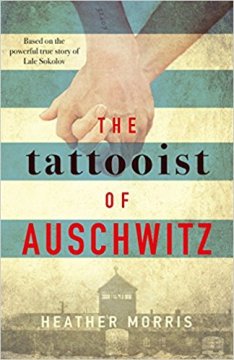
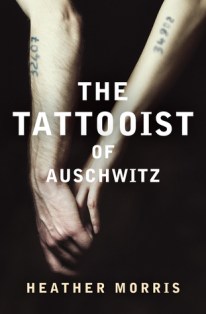 When a book reads like fiction but is a union of memories and history, it is literary work that is destined to engage and move the reader. The Tattooist of Auschwitz is such a tale, related by Lale Sokolov to Heather Morris over a three year period. It is a horrific story of desperation in the worst of circumstances and of Lale’s confidence that he would survive and marry his beloved fellow sufferer Gita.
The Tattooist of Auschwitz displays the best and worst of mankind. It shows the incredible resilience of the human spirit. Throughout, the reader witnesses people doing whatever it takes to survive as does Lale who is innovative, multilingual, charming, and determined that in the end his tormentors would not get the best of him. There are many books written about the Holocaust. Each addresses the events from a different perspective. This is another valuable contribution, adding to our understanding and reinforcing the sentiment of “never again.”
 I would like to extend my thanks to netgalley.com and to Bonnier Zaffire for giving me the opportunity to read this book in exchange for an honest review.
Rating: 5/5
Category: General Fiction (Adult), Historical Fiction
Notes: Despite the nature of the events being retold, the writing has a respectful tone without graphic descriptions of violence or swearing. I highly recommend this book.
Publication: January 11, 2018—Bonnier Zaffire
Memorable Lines:
Lale has witnessed an unimaginable act. He staggers to his feet, standing on the threshold of hell, an inferno of feelings raging inside him.
How can a race spread out across multiple countries be considered a threat?
“I know it’s a strange thing for me to say, but you will honor them by staying alive, surviving this place and telling the world what happened here.”
He knows they will never grow to be the women they were meant to be. Their futures have been derailed and there will be no getting back on the same track. The visions they once had of themselves, as daughters, sisters, wives and mothers, workers, travelers, and lovers, will forever be tainted by what they’ve witnessed and endured.
Carnegie’s Maid–sacrificing for family
Carnegie’s Maid
by Marie Benedict
 Carnegie’s Maid, a work of historical fiction, attempts to explain what could have caused Andrew Carnegie, a ruthless businessman, to become a philanthropist and founder of the Carnegie Libraries. As a former impoverished Scottish immigrant, he fights his way to the top echelons of America’s monied, sometimes stepping on the backs of other immigrants to get there. Author Marie Benedict has created a lady’s maid from Ireland who is on a mission to support her Irish Catholic Fenian family. Her Clara is hard-working, smart, and focused. An opportunist, she takes the place of another Clara becoming a lady’s maid rather than a scullery maid making herself privy to the family’s secrets and business machinations.
As seen in Benedict’s other excellent work of historical fiction, The Other Einstein, the novel Carnegie’s Maid demonstrates the author’s intensive research and attention to detail. As I read I found myself wishing for a main character based on an actual person as in The Other Einstein. I assume the details and records of Carnegie’s life are just too sketchy to provide such a character. Benedict has taken the immigrant culture of the times, the certainty that Carnegie’s mother would have had a lady’s maid, the mystery of Carnegie’s altruism, and his delay in marriage as the basis for her fictional Clara. There is much more supposition in this book, but it is well written and not outside the realm of possibility.
I enjoyed the tale with its details about the difficult lives of the Irish both in Great Britain and in the United States. It paints a picture of the U.S. as a very difficult land of opportunity, with no handouts, and even fewer options for women. Gender, ethnic background, religion, money, family, and education all play a role in the highly stratified, unofficial class systems of the time.
I would like to extend my thanks to netgalley.com and to Sourcebooks Landmark for giving me the opportunity to read this book in exchange for an honest review.
Rating: 5/5
Category: Historical Fiction
Notes: by the author of The Other Einstein
Publication: January 16, 2018—Sourcebooks Landmark
Memorable Lines:
“These Catholic Irish running from the havoc wreaked by their famine and pouring onto American shores are not like the hard-working Protestant Irish who immigrated in earlier years. This new Catholic crop is rough and uneducated, and they’ll destroy the fabric of this country’s shaky democracy if we let them, especially in these days of Civil War unrest, just like they did back home in Scotland when they stole factory jobs away from Scottish men and women. An Irish Catholic servant might suffice as a scullery maid but not as my personal maid.”
For whom was I crying? for all the immigrants like the Lambs, who came to America seeking a better life but settled instead for a soot-infested home and dangerous work in the mills and gave thanks for it?
For the first time, I realized how alike my situation was to that of Mr. Carnegie. Although the scale was quite different, the stakes were not. The well-being of both our families rested on our success.
Dead Man’s Chest–beach holiday turns dangerous
Dead Man’s Chest
by Kerry Greenwood
 Dead Man’s Chest deviates in a delightfully surprising way from the typical Phryne Fisher mystery with a change of setting. Most occur in St. Kilda near Melbourne, Australia, but in this work of historical fiction, detective Phryne Fisher takes her family to Queenscliff for a holiday while her home in St. Kilda is undergoing renovation. The vacation turns into work as they arrive at the home an acquaintance has loaned her only to find the Johnsons, who serve as butler and cook, have disappeared and the house has been emptied. Along with this mystery is a tale of a “pigtail snipper” who cuts off the braids of local young girls.
Ruth gets to try out her culinary skills, Jane delves into ancient bones and movie making, and Dot gets to spend some time with the strong and handsome Constable Hugh Collins. A young ne’er-do-well, Tinker, becomes a devout follower of his mentor, Miss Fisher, whom the whole family holds in high regard. Throw in some smuggling, tales of pirate treasure, a snoopy neighbor, insight into the impoverished lives of the serving classes and fishermen, and a taste of Surrealism, and you have a lively story beckoning the reader to discover the answers to some fascinating Australian mysteries.
I would like to extend my thanks to netgalley.com and to Poisoned Pen Press for giving me the opportunity to read this book in exchange for an honest review.
Rating: 5/5
Category: Historical Fiction, Mystery
Notes: #18 in the Phryne Fisher’s Murder Mysteries; adequate as a standalone but more interesting with some background on the main characters
Publication: December 5, 2017—Poisoned Pen Press
Memorable Lines:
Phryne was getting out of the car. Dot closed her eyes. Miss Fisher was about to happen to someone again.
Dot had been training her in Suitable Topics for a Lady’s Dinner Table, which did not include Rat Dissection for Beginners or Beastly Customs of the Heathen, which was a pity because Jane knew a lot about both of these.
“We’re on a case again, aren’t we?” asked Dot gloomily. “Well, yes, but this time it really isn’t my fault, Dot dear. I was dropped right into this one.”
He was terrified. Not of the task, but that he might let the guv’nor down. She had trusted him. No one had ever trusted Tinker before.
Queen of Flowers–so many elements
Queen of Flowers
by Kerry Greenwood
 Queen of Flowers opens with Phryne Fisher’s extensive fitting for a dress to be worn in a Melbourne parade as the chosen Queen of Flowers based on her charitable support. The whole household is turned on end for the fitting, an elephant makes an appearance in her yard, and that day turns out to be the most tranquil in the book.
Queen of Flowers is a masterpiece of complex plot. The carnival and circus are in town along with a violin player from Phryne’s past. Adopted daughter Ruth begins to wonder about her parents. Phryne takes her four flower girls (young ladies) in hand and discovers interesting aspects of their backgrounds. As usual, Phryne shows herself as a force to be reckoned with in dealing with some of St. Kilda’s shadiest characters. My one problem with the book was that when one of her daughters goes missing, Phryne is much calmer than one would expect.
All of Phryne’s “minions” are called in to help with the various mysteries that are amazingly connected. I felt like standing up and clapping with a loud “Well done!” as Greenwood tied up the plot threads successfully and delivered justice as deserved.
I would like to extend my thanks to netgalley.com and to Poisoned Pen Press for giving me the opportunity to read this book in exchange for an honest review.
Rating: 5/5
Category: Historical Fiction, Mystery
Notes: #14 of the Miss Fisher’s Murder Mysteries; could be a standalone but better if you have some background on the characters
Publication: November 7, 2017—Poisoned Pen Press
Memorable Lines:
Phryne, the fiddler remembered, always existed as a still, self-possessed point in a maelstrom. Usually she had created the maelstrom herself.
Phryne…climbed the stairs in search of copious hot water to wash the Weston house off her skin. She had been in houses which ran black with fleas. She had been in rural cottages where the soot gloved the beams and the vulcanized grease on the kitchen walls had been classified by the National Trust. But she had never felt quite this grimy, and she didn’t like it.
He was a slick, hard-faced man with a chin on which one could break rocks, and thin red lips. His eyes were as compassionate and kind as chips of flint.
Smoke and Mirrors–P.T. Barnum’s American Museum
Smoke and Mirrors
by Casey Daniels
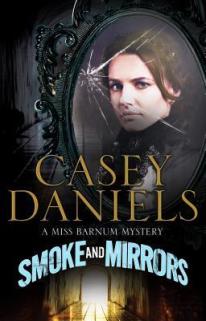 P.T. Barnum’s American Museum, stocked with the odd, unusual, and exotic from around the world, is the setting for the mystery Smoke and Mirrors by Casey Daniels. It’s the fall of 1842 in New York City when we are introduced to the fictional heroine Evangeline Barnum, a sister of Phineas T. Barnum.
Although Evangeline lives in a time of severe restrictions on women in the United States, thanks to her forward thinking brother, she works at the museum with many responsibilities. She has more freedom to pursue her investigations than most women would have. Problems begin with the appearance of an old family friend, Andrew Emerson, soliciting her help. Evangeline turns him away because his presence could cause the discovery of secrets she has worked hard to hide. The plot becomes ever more complex as Evangeline becomes involved in a murder, attempts on her life, and the disappearance of young ladies in New York City.
This was a fascinating book of historical fiction. It is well researched, has interesting characters, and provides a different perspective on the lives of the “human oddities” in live exhibits. These are the kinds of people, like the bearded lady, that one used to commonly find in fair exhibits, but are hopefully not exhibited as freaks anymore.
I would like to extend my thanks to netgalley.com and to Severn House for giving me the opportunity to read this book in exchange for an honest review.
Rating: 5/5
Category: Historical Fiction, Mystery
Notes: #1 in the Miss Barnum Mystery Series
Publication: November 1, 2017—Severn House
Memorable Lines:
Her words were not light and airy, more like a cloud that foretells a coming rain; not so threatening in and of itself—not at that moment—but simply a reminder that there is a chance there are darker things to come.
It was difficult to explain how such groups of people made me feel. In the museum, whether I was talking to one or one hundred, I was at ease. Yet in such social situations, when I was expected to talk of nothing more interesting than the weather or the latest fashions from Paris, I often felt awkward and tongue-tied.
The more mysterious a thing, the more likely it is that people will pay money for it.
Miss Kopp’s Midnight Confessions–moral turpitude in 1916?
Miss Kopp”s Midnight Confessions
by Amy Stewart
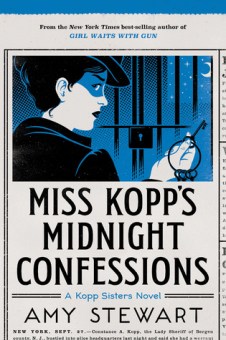 Amy Stewart has taken the real story of three sisters in the U.S. in 1916 and fleshed it out as a fictional tale based on her research. The rights of women are so limited in this book that is it hard to conceive of it in the twenty-first century.
Constance Kopp is the first female deputy sheriff in New Jersey and one of the first in the U.S. Many of the problems she deals with involve moral issues which can result in very stiff penalties, especially for women. As the U.S. prepares to enter World War I (1917), girls and women are starting to be employed outside the home working long hours under difficult conditions in factories where they are paid much less than men for the same work. One indicator of the status of women’s rights is that the nineteenth amendment to the Constitution giving women the right to vote was ratified on August 18, 1920.
With this setting in mind, know that there is nothing pedantic about Miss Kopp’s Midnight Confessions. It is composed of very short chapters that make you want to turn the page and keep reading. It deals with cultural and social issues of the time and demonstrates that there can be flexibility, based on reasonableness and sensitivity, within the law. Deputy Sheriff Constance Kopp encounters young women with various problems; she must view them through the prism of the potential for similar issues in her own family.
I would like to extend my thanks to netgalley.com and to Houghton Mifflin Harcourt for giving me the opportunity to read this book in exchange for an honest review.
Rating: 5/5
Category: Historical Fiction
Notes: #3 in the Kopp Sister Novel Series, but can be read as a standalone
Publication: September 5, 2017—Houghton Mifflin Harcourt
Memorable Lines:
Whatever discomforts she might endure, they couldn’t compare to the hardships of a trench in the Argonne. The idea stayed with her, as she grew more accustomed to the tedium of a factory job, the long hours on her feet, her red and swollen fingers, and the dull ache behind her eyes from staring at those spinning threads all day. Her brothers were eager to go overseas and endure far worse. Surely she could bear it for their sake.
She was such a slight, mousy girl, with so little to say, but a steel cable of resolve ran through her. The notions of duty and service and country came as naturally to her as breathing.
Edna had an endless reservoir of determination, and all the high ideals in the world, but she didn’t know how to bluff, or play a trick, or talk her way into a room where she wasn’t invited. She was constitutionally unable to lie or cheat or hide anything—money, jewels, the truth. Minnie could do all of that, and while she didn’t know much about war, she was fairly certain that something in that line might be called for.
Murder in Montparnasse–an astounding plot
Murder in Montparnasse
by Kerry Greenwood
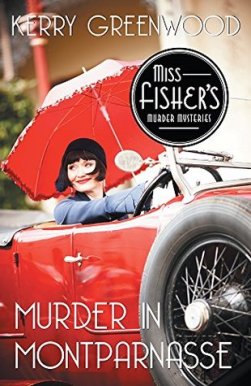 It is said that one should order soup in a fine restaurant as it is a predictor of the quality of the meal to come. The first chapter of Murder in Montparnasse was my “soup.” I knew upon sampling the book, that the descriptive language was worth savoring on the tongue. The introduction of three major plot threads provided delicious flavors evocative of a mystery worth reading.
Phryne Fisher has her hands full in this fast-paced mystery which focuses on a group of Bert and Cec’s friends from the war who seem to be targeted for death, the disappearance of a young lady, and strange occurrences at a delightful French restaurant. Along the way, various other puzzling circumstances need to be examined. Phryne’s past also becomes important as her time spent in Paris in an art community returns to haunt her. Domestic issues involve the marriage of her Chinese lover and the employment termination of her beloved Mr. Butler. Phryne’s daughters, Jane and Ruth, are pleased to take on detective roles, and Constable Hugh Collins shows his skills in some independent police work. Murder in Montparnasse is an altogether satisfying mystery.
I would like to extend my thanks to netgalley.com and to Poisoned Pen Press for giving me the opportunity to read this book in exchange for an honest review.
Rating: 5/5
Category: Historical Fiction, Mystery
Notes: #12 in the Phryne Fisher Mystery Series
Publication: September 5, 2017—Poisoned Pen Press
Memorable Lines:
The remedy for anything short of an outbreak of cholera in a French kitchen was “Add more cream!”
The waiter, who had clearly graduated magna cum laude from Cheeky French Waiter School, made a face which suggested that a chef who had dinners to cook ought not to be slugging down cognac at lunch, but he slapped down another glass and the bottle of cognac. He then flounced away, turning an ostentatious back.
Dot always worried about Phryne. There had been raised male voices in the refined parlour, and Dot didn’t like it one bit. Raised male voices, in Dot’s experience, preceded raised male fists. And then Miss Phryne might have to hurt someone.
Murder in Disguise–murder in the golden age of movies
Murder in Disguise
by Mary Miley
 Murder in Disguise opens with a murder set in Hollywood in the golden theater/movie days of Charlie Chaplin, Mary Pickford, and Douglas Fairbanks. During the course of the murder investigation, we learn about movie production, vaudeville, prohibition, corrupt law enforcement, gangsters, and the plight of orphans and women workers.
Jessie Beckett, working as an assistant script girl, has a knack for noticing things that others don’t, a talent which she attributes to her vaudeville background. This ability enables her to solve crimes, and she solves this one with the help of one of the few honest cops in L.A., Detective Carl Delaney, who is interested in getting to know Jessie better.
Jessie comes from a difficult background, but wants to leave mistakes of the past behind. Will her boyfriend David stick with his promise to do the same? Can the murderer stop with one crime? How does Jessie relate to a deaf and dumb girl left with one of Jessie’s roommates? The action keeps the plot moving; the characters and setting maintain a high interest level. The time period is well researched and the author includes words such as “copacetic” from the period adding to the authenticity. She follows up the novel with an “Acknowledgments” section that adds notes about the era and several interesting YouTube links.
I would like to extend my thanks to netgalley.com and to Severn House for giving me the opportunity to read this book in exchange for an honest review.
Rating: 5/5
Category: Historical Fiction, Mystery
Notes: #4 in the Roaring Twenties Mystery Series, but good as a standalone
Publication: August 1, 2017—Severn House
Memorable Lines:
Rumors were passed around like Christmas candy and devoured with the same enthusiasm.
La Grande was one of the largest depots of the Atchison, Topeka, and Santa Fe line, a great cavern of a place where the footsteps and shouts of a thousand rushing people echoed from the polished floor to the ceiling before being drowned out by the snakelike hiss of steam and the earsplitting squeal of brakes as the monstrous engines pulled into their tracks.
“There’s always another job on the horizon,” my mother used to say. I looked up the street toward home. Unfortunately, I couldn’t see the horizon from where I stood.
 education pathways