Home » Children (Page 3)
Category Archives: Children
The Horse and His Boy–excellent storytelling
The Horse and His Boy
by C. S. Lewis
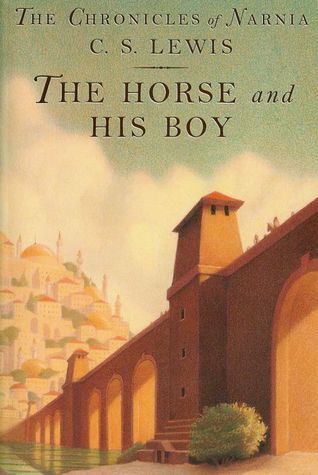
Herein lies the tale of Shasta, abused son sold as a slave. He joins forces with Aravis who is trying to avoid marriage to a much older, ugly, powerful, rich man. Shasta and Aravis devise a plan of escape that includes their Narnian horses who can, of course, talk.
There are many complications on their adventure including mistaken identity for Shasta and recognition of Aravis by an old friend. Lucy and Edmund, characters from The Lion, the Witch, and the Wardrobe, play minor roles in this book as does their big sister Susan. Her rebuff of a suitor, Prince Rabadash, could cause a war.
Aslan, the Lion, appears and disappears, always a part of events as they occur. The characters learn that there is more to happenings than luck or chance. Even those who don’t already know about Aslan immediately feel there is something special about Him when they first encounter Him.
The Horse and His Boy includes characters who are noble and heroic and also those who are traitors. Aslan gives the despicable Prince Rabadash a second chance, and the outcome is perfectly constructed. It is fitting, but I certainly couldn’t have predicted it.
The Horse and His Boy is another storytelling triumph by C.S. Lewis who again has written a book that can be enjoyed on two levels. It is a fascinating fantasy, but it can also be read with religious themes in mind. Regardless of your reading goals, you will enjoy this entertaining fantasy without the intricate world building of current fantasies.
I would like to extend my thanks to NetGalley and to HarperCollins Publishers for giving me the opportunity to read this book in exchange for an honest review.
Rating: 5/5
Category: Children’s Fiction, Christian
Notes: This book is #3 in The Chronicles of Narnia. This series is often listed as Children’s Fiction, but is really appropriate for all ages with adults reading it on a different level from children. The series begins with the highly popular The Lion, the Witch and the Wardrobe, but many readers find each one of the books in the series to be their “favorite” as they encounter it.
Publication: 1954—HarperCollins Publishers
Memorable Lines:
Aravis immediately began, sitting quite still and using a rather different tone and style from her usual one. For in Calormen, story-telling (whether the stories are true or made up) is a thing you’re taught, just as English boys and girls are taught essay writing. The difference is that people want to hear the stories, whereas I never heard of anyone who wanted to read the essays.
“I must have come through the pass in the night. What luck that I hit it!—at least it wasn’t luck at all really, it was Him, and now I’m in Narnia.”
“Child,” said the Lion, “I am telling you your story, not hers. No one is told any story but their own.”
The Gingerbread House–Christmasy picture book
The Gingerbread House
by Laura Gia West

Do you like gingerbread? Laura Gia West has cooked up a sweet treat with her rhyming tale of The Gingerbread House. You’ll want to read it aloud to enjoy the rhymes. There were a few places that seemed a little forced and not as predictable as I would like to see in a children’s book. It also had a font feature at the beginning of some lines that made reading difficult for me, so I’m sure it would give trouble to a younger reader. The illustrations are bright, colorful, and fun, and I think children would enjoy reading this picture book with their favorite grown-up, especially during the Christmas season.
I would like to extend my thanks to NetGalley and to Victory Editing NetGalley Co-op for giving me the opportunity to read this book in exchange for an honest review.
Rating: 3/5
Category: Children’s Fiction
Publication: November 1, 2020—Victory Editing NetGalley Coop
The Silver Chair–the rescue of a prince
The Silver Chair
by C. S. Lewis

Eustace, who became a changed person for the better in C. S. Lewis’ The Voyage of the Dawn Treader, is given another opportunity to visit Narnia. He and Jill, a school friend, escape bullies by slipping through an unlocked gate at the school. Aslan, the Lion, has orchestrated the adventure to send them on a mission to locate the missing Prince Rilian who has been under the spell of a witch for ten years.
They are accompanied by Puddleglum, a Marsh-Wiggle, a delightfully morose character who can always find the potential bad in any situation. Despite his melancholy disposition, he proves to be a loyal, trustworthy, and brave companion. He also provides some levity for the reader during the perilous adventures.
Aslan gives the children four signs to follow. Their intentions are good, but they are not entirely successful. They escape from deceptive, hungry giants and are captured by Earthmen who take them to the Deep Realm in the Underland. When they find Prince Rilian, they have to decide on following his instructions or relying on the signs Aslan has given them.
As in all of The Chronicles of Narnia, The Silver Chair can be enjoyed as a fantasy or with little effort as a tome replete with symbolism. In this allegory, Aslan represents Jesus who is both the Lion and the sacrificial Lamb in the Bible, and the children are his followers. He provides direction and guidance, but his followers still have choices. One outstanding example of the Biblical parallel is when Prince Rilian declare to the children that “Aslan will be our good lord, whether he means us to live or die.” This same sentiment is uttered by Shadrach, Meshach, and Abednego in the Old Testament when they are threatened by King Nebuchadnezzar with being thrown into a furnace. They respond “our God whom we serve is able to deliver us from the burning fiery furnace, and he will deliver us out of your hand, O king. But if not, be it known to you, O king, that we will not serve your gods or worship the golden image that you have set up.” (Daniel 3: 17 & 18 ESV).
The Silver Chair is the fourth book in The Chronicles of Narnia for me. I expected that I would not like any as much as the first, The Lion, the Witch, and the Wardrobe. To my surprise, I have enjoyed all of them almost equally. Each one is fresh and engaging. The setting and characters overlap, but each adventure has the addition of new characters and stands on its own merits.
Rating: 5/5
Category: Children’s Fiction, Christian
Publication: 1953—Harper Collins
Memorable Lines:
“The bright side of it is,” said Puddleglum, “that if we break our necks getting down the cliff, then we’re safe from being drowned in the river.”
And though you might have expected that the idea of having a good time at Harfang would have made them more cheerful, it really made them more sorry for themselves and more grumpy and snappy with each other and with Puddleglum.
“And the lesson of it all is, your Highness,” said the oldest Dwarf, “that those Northern Witches always mean the same thing, but in every age they have a different plan for getting it.”
Out, Mouse!–cute Irish tale
Out, Mouse!
written by Valerie L. Egar
audio narration by Paul Collins

Finn, an elderly Irish man, has unwelcome visitors as a mice family makes themselves at home in his cottage. Finn takes advice from Professor Dunderbutt’s book and writes a series of kind letters to Mr. and Mrs. Mouse making suggestions of places they would probably prefer to live. Unfortunately for Finn, they always find something unsuitable about the places he suggests. I won’t spoil the ending, but I’ll say that it did make me smile.
I was referred to this book by blogging book reviewer Carla at Carla Loves to Read. She mentions in her review that she listened to the audio version while reading the printed text. I have been wanting to dip into the many audio versions of books currently offered. With an actor reading this with an Irish accent, this book seemed like the perfect one to begin my listening adventure. Although I will probably continue to prefer the written word, I did enjoy listening to this narration which was very well performed.
I would like to extend my thanks to NetGalley and to Whistle Oak for giving me the opportunity to read this book in exchange for an honest review.
Rating: 4/5
Category: Children’s Fiction, Humor, Multicultural
Notes: 1. Publisher Recommended Ages: 6-9 years
2. Includes a section that encourages students to create pictures of what they imagined as they read the story.
Publication: April 6, 2021—Whistle Oak
Memorable Lines:
Finn knew something was wrong as soon as he opened the door to his cottage. Something or someone, had made a mess of the breakfast he’d placed on the table before taking his morning walk.
If the mice don’t like your first idea, keep writing letters. Sooner or later, one of your letters will work and they will move. This method NEVER fails.
He found a scrap of red cloth and tied it around his neck. A tiny brass nail became a make-believe sword. He held it tightly in his hand, waving it back and forth.
Prince Caspian–the return to Narnia
Prince Caspian
by C. S. Lewis
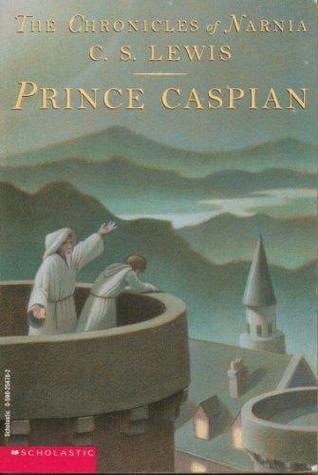
A year after the events of The Lion, the Witch and the Wardrobe, C. S. Lewis returns Peter, Susan, Edmund, and Lucy to Narnia. In Prince Caspian, pulled there by a magical force as they are waiting for their trains to take them to boarding school, they suddenly find themselves in the ruins of their old castle Cair Paravel, hundreds of years later in Narnian time.
Through many adventures, the children meet Prince Caspian, the rightful king of Narnia, and enthrone him, replacing his usurper, his Uncle Miraz. There is a wonderful cast of characters in this novel. Prince Caspian’s tutor, Dr. Cornelius, is instrumental in helping him escape certain death. The creatures of Narnia range from mythical, such as Bacchus, Dryads, Dwarfs, and Centaurs, to talking animals of a larger size than normal. Reepicheep is a valiant and honorable leader of mice. Trufflehunter is a kind and friendly badger. The mighty lion Aslan appears to Lucy first and the other children don’t believe her. What follows is each one of them coming to believe in Aslan in their own way and a great battle between the Narnians and the Telmarines.
As the fantasy continues, so do the fun and adventure. I am excited to read another tale by the master storyteller C. S. Lewis. He excels in creation of characters, setting, and plot, and most especially in weaving adventure and theology seamlessly leaving the reader with much to contemplate.
Rating: 5/5
Category: Children’s Fiction, Christian
Notes: This book is a part of The Chronicles of Narnia. There is debate even today over the order one should read these books in as the series contains a prequel and a book that relates to Narnia but does not include the children as major characters. Having not read the whole series yet, I can not chime in on that debate, but I do strongly encourage the reading of The Lion, the Witch and the Wardrobe, which I suspect will be my favorite, prior to reading Prince Caspian.
This series is often listed as Children’s Fiction, but is really appropriate for all ages with adults reading it on a different level from children.
Publication: 1951—Harper Collins
Memorable Lines:
“Where do you think you saw him?” asked Susan. “Don’t talk like a grown-up,” said Lucy, stamping her foot. “I didn’t think I saw him. I saw him.”
“Aslan,” said Lucy, “you’re bigger.” “That is because you are older, little one,” answered he. “Not because you are?” “I am not. But every year you grow, you will find me bigger.”
The sort of “History” that was taught in Narnia under Miraz’s rule was duller than the truest history you ever read and less true than the most exciting adventure story.
The Lion, the Witch, and the Wardrobe–a classic
The Lion, the Witch, and the Wardrobe
by C.S. Lewis

The Lion, the Witch, and the Wardrobe is the book most people think of when there is mention of C. S. Lewis’ The Chronicles of Narnia. It is, in fact, the first book he wrote in this popular series, although later he wrote a prequel. I had read the fantasy many years ago. Reading it again was an absolute delight. The erudite medieval literature professor (at Oxford and later at Cambridge) and Christian theologian was a premier storyteller. He engages the reader regardless of age, in the plot, characters, and setting from the first page where he explains that air-raids during the war send four children out of London to live with an old Professor. While playing hide-and-seek, the youngest discovers a magical world accessed through a wardrobe.
From there proceeds an enjoyable story centered around the forces of good and evil. The White Witch is the epitome of evil—beautiful, but cold and cruel. She is a mistress of trickery ensnaring Edmund, the next to the youngest, in a web of deceit, captivating him with delicious Turkish Delight. Aslan is a lion, and he stands for good, rescuing those turned into statues by the White Witch and sacrificing himself.
Part of the beauty of this masterpiece is that it can be read on several levels. C.S. Lewis says in his dedication of the book that “some day you will be old enough to start reading fairy tales again.” That is where I found myself during this reading, but I also read it for its theological underpinnings. Whatever your purpose in reading, you will find The Lion, the Witch, and the Wardrobe both entertaining and fulfilling.
Rating: 5/5
Category: Fantasy, Christian
Notes: I read the 50th anniversary edition of the book. The backline illustrations were by Pauline Baynes who was the first illustrator for The Chronicles of Narnia, and the cover art was by Chris Van Allsburg.
Publication: 1950—Harper Collins
Memorable Lines:
“And she has made a magic so that it is always winter in Narnia—always winter, but it never gets to Christmas.”
“…if, I say, she had got into another world, I should not be at all surprised to find that the other world had a separate time of its own; so that however long you stayed there it would never take up any of our time.”
I hope no one who reads this book has been quite as miserable as Susan and Lucy were that night; but if you have been—if you’ve been up all night and cried till you have no more tears left in you—you will know that there comes in the end a sort of quietness. You feel as if nothing was ever going to happen again.
No Vacancy–struggle with religious identity
No Vacancy
by Tziporah Cohen
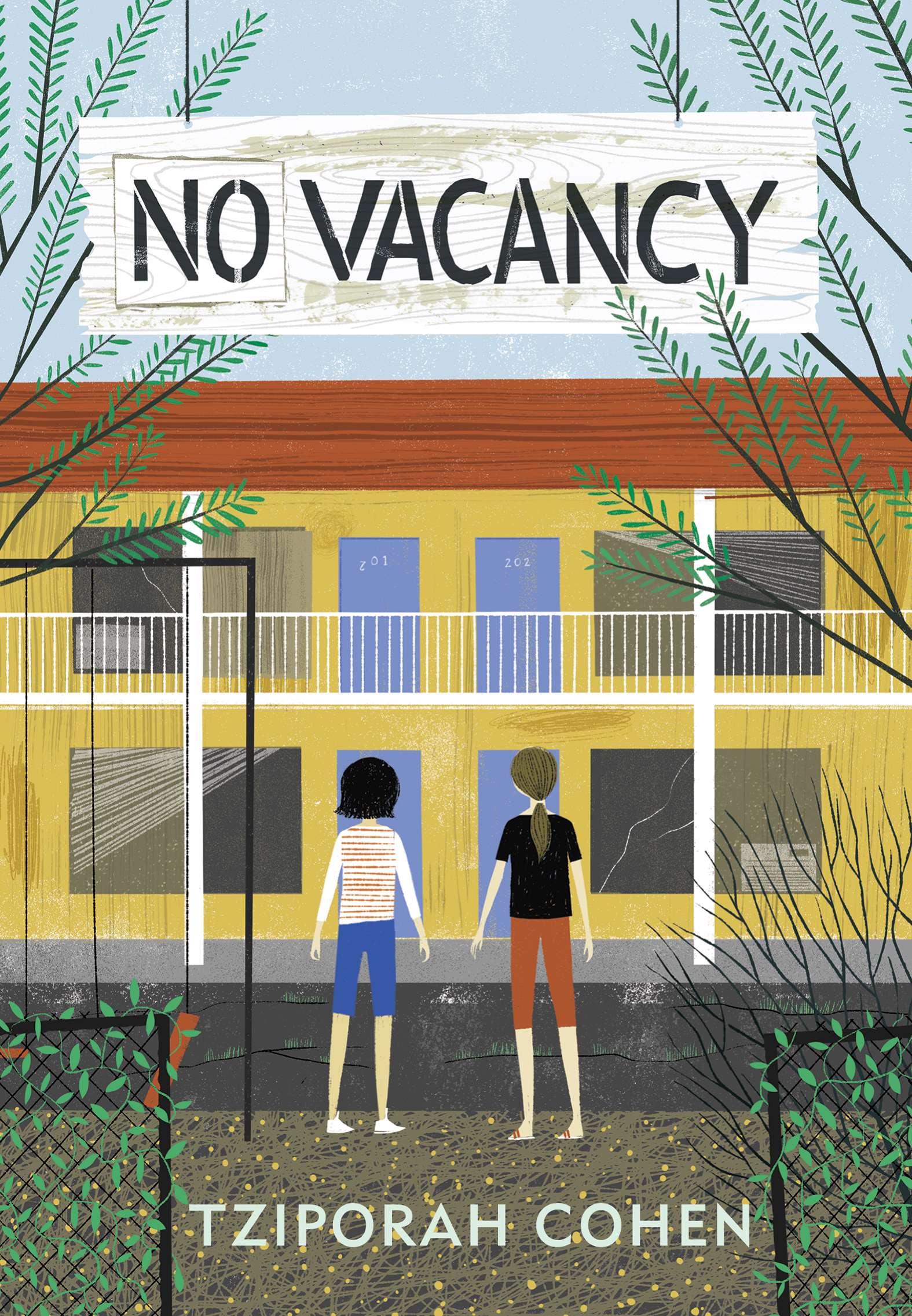
Life is not always easy as Miriam, an eleven year old, discovers. As her family faces financial distress, she is uprooted and transplanted to a motel in upstate New York. She leaves behind her close friends and spends her summer days helping her family revive the failing motel. Success for the motel would also mean better times for the Whitleys, a generous and kindly couple next door whose granddaughter Kate becomes Miriam’s best friend. When Miriam’s Uncle Mordy suggests it might take a miracle to keep the businesses afloat, Kate and Miriam decide to provide one!
As she is dealing with challenges at the motel, Miriam is trying to understand what it means to be Jewish and why she is different from others in her new community. She also wrestles with a fear of swimming.
Tziporah Cohen’s No Vacancy is a gentle, but thoughtful look at religion, ethics, and community. This work of fiction is aimed at middle schoolers, but I enjoyed reading it. I like Miriam and find that her interactions with other characters as she struggles with being open about being a Jew and about her aquaphobia gives the book more depth. Uncle Mordy shares differences that exist among Jews in practicing their faith. The Catholic priest acts as a counselor without being intrusive or preachy. The interactions between Miriam and Kate demonstrate that differences in faith don’t preclude a happy and healthy friendship.
I would like to extend my thanks to NetGalley and to Groundwood Books for giving me the opportunity to read this book in exchange for an honest review.
Rating: 4/5
Category: Children’s Fiction, Middle Grades
Notes: As an adult, I enjoyed this book, so just use this information as the publisher’s intended audience:
Grades: 4-7
Ages: 9-12
Publication: August 4, 2020—Groundwood Books
Memorable Lines:
Miriam starts to ask herself some prickly questions. Is a lie always a bad thing, even if what comes out of it is good? Does our faith make us so different from one another? And when bad things happen, do we really all have a shared responsibility for the hate in the world?
“It’s not that we can’t get along. We just believe in different things. And while I can be friends with someone who believes in different things than I do, it’s a lot harder to be married to, and raise a family with, someone who is different in these big ways. Not everyone feels that way, and that’s okay. but I do.”
“When someone is different from us,” he says, “sometimes we jump to conclusions instead of taking the time to understand.”
The Wind in the Willows–endearing children’s classic for all ages
The Wind in the Willows
by Kenneth Grahame

My book club decided to read The Wind in the Willows by Kenneth Grahame, a children’s classic written in the early 1900’s by a British author. As a retired educator, I felt like this is one of those books I should have read. I downloaded a free copy from Project Gutenberg. It has some illustrations, but I found I would have liked more. The other readers in my group had various ways of reading this classic tale. One had a particularly beautifully illustrated version that I adore. Another friend listened to an audio version recorded on YouTube. At least one group member expressed disappointment that her version was an adaptation. Regardless of the version, however, we all enjoyed reading it.
The Wind in the Willows is a charming tale of a water rat, mole, badger, otter, and toad. With its exquisite language and intricate descriptions, this book is perfect for reading as a family. It was a staple in A.A. Milne’s family which I consider high praise indeed. The pace moves back and forth between quiet reflection and raucous adventure. The tale has themes of home, friendship and satisfaction. The characters move through life together with commonalities and differences that serve to make the story even more interesting.
Toad is a favorite character with moods ranging from manic to subdued and intentions to reform that often seem genuine, but sometimes are quite insincere. He has a passion for the latest and greatest “toys” and is always on the lookout for a new adventure. Fortunately, he has supportive friends who will do anything for him. He is a source of humor for the reader.
If you have never read The Wind in the Willows, I strongly recommend it, especially if you enjoy beautiful word pictures. I like researching unfamiliar words, but those who don’t will have no problems as the general meaning of words of a botanic nature, Britishisms, and words no longer in common usage are certainly easily understood from context. The Wind in the Willows is a great read, and I am so glad to have added it as part my literary heritage.
Rating: 4/5
Category: Children’s Fiction
Notes: Ages 7-14
Publication: 1908 & 1913—Charles Scribner’s Sons
Memorable Lines:
Toad talked big about all he was going to do in the days to come, while stars grew fuller and larger all around them, and a yellow moon, appearing suddenly and silently from nowhere in particular, came to keep them company and listen to their talk.
He increased his pace, and as the car devoured the street and leapt forth on the high road through the open country, he was only conscious that he was Toad once more, Toad at his best and highest, Toad the terror, the traffic-queller, the Lord of the lone trail, before whom all must give way or be smitten into nothingness and everlasting night.
Toad sat up slowly and dried his eyes. Secrets had an immense attraction for him, because he never could keep one, and he enjoyed the sort of unhallowed thrill he experienced when he went and told another animal, after having faithfully promised not to.
The Best Christmas Pageant Ever–a Christmas favorite
The Best Christmas Pageant Ever
by Barbara Robinson
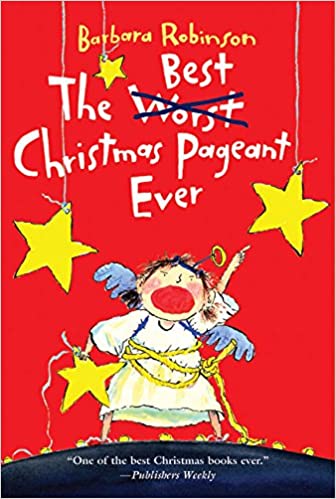
Most people enjoy a good Christmas story. For example, Charles Dickens’ A Christmas Carol is emblematic for many of the Christmas spirit of generosity that we would like to see year round. Barbara Robinson’s The Best Christmas Pageant Ever is another story that has captured the imagination of readers of all ages. A humorous children’s chapter book, the story tells of the year the Herdmans, “absolutely the worst kids in the history of the world,” decide they want to be a part of a church’s annual Christmas pageant.
The narrator’s mother directs the pageant for the first time, and we experience her determination, kindness, and patience as she explains the story of Jesus to the unchurched Herdmans. We are also treated to a new, unsanitized view of the nativity story. One of the Herdman clan indignantly wants to know why Joseph didn’t tell the innkeeper who Jesus is. Another finds it strange that they tie the baby up in wadded up clothes and put him in a food trough. The Herdmans plot revenge on the wicked Herod; the Angel of the Lord, as played by Gladys, the youngest Herdman, comes down from above like a superhero from a comic book.
Appealing to children and adults alike, The Best Christmas Pageant Ever might well become a Christmas tradition in your family. Parts of it are laugh out loud funny, and other parts will give you pause. It has been made into a movie and a play, but I can’t imagine anything better than cozying up with the family and sharing the book together.
Rating: 5/5
Category: Children’s Fiction
Notes: Interest Level—all ages
Intended Reading Level—Grades 3-7; Ages 8-12 years
Publication: 1972—Scholastic Inc. (Harper Collins)
Memorable Lines:
Most of us spent all week in school being pounded and poked and pushed around by Herdmans, and we looked forward to Sunday as a real day of rest.
Mother said…“Why, it’s going to be the best Christmas pageant we’ve ever had!” Of all the lies she’d told so far, that was the biggest, but you had to admire her. It was like General Custer saying, “Bring on the Indians!”
“I don’t know what’s going to happen. It may be the first Christmas pageant in history where Joseph and the Wise Men get in a fight, and Mary runs away with the baby.”
A Long Walk to Water–impactful
A Long Walk to Water
by Linda Sue Park
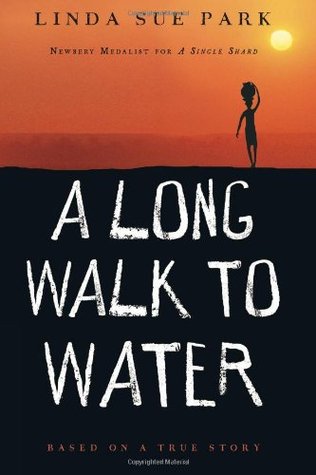
You have probably heard of the Lost Boys of Sudan. In A Long Walk to Water, Linda Sue Park tells the story of one of those lost boys, Salva Dut, who even as a refugee himself, took on a leadership role for 1500 boys in their very long, dangerous, and seemingly hopeless journey for survival. Salva, as a young adult, was chosen out of a refugee camp to emigrate to the United States. This book tells how he transformed his desperate situation into a life giving project for the people of Sudan based on hope, faith, and most especially perseverance.
Told in two timelines with apparently disparate plots, this book moves back and forth with both stories progressing forward in each chapter. It begins slowly, but soon picks up the pace and the reader’s interest. The book starts with the tale of Nya, an eleven year old girl in southern Sudan in 2008 who spends her day traveling from her village to a pond to collect dirty water in a jug which she then carries home on her head. She does this twice a day in extreme heat, traversing with bare feet a thorny path to bring home enough water for her family to survive.
Salva’s story also begins in southern Sudan, but much earlier, in 1985, when his village and school are attacked by armed men during an ongoing confrontation between the Muslim government in the north and the rebels of the south. Thus begins Salva’s separation from his family and his struggle for survival.
Although this book is aimed at a younger audience, as an adult I am so glad I read this story which is based on the lives of real people, Salva and Nya and their families. It reads quickly and lays out the need for clean, accessible water for South Sudan, pointing out the many rippling effects of pure water on a community. It also shows how diverse tribes can work together for a common good. The website noted at the end of the book provides more information and gives a practical way for those of us blessed with plenty to help those without the basic necessities.
Rating: 5/5
Category: Children’s Historical Fiction
Notes: 1. The suggested ages and grade levels vary according to printed reports, but in general: Grades 5-9 and Ages 10-14. The book does a good job of recording hardships and violence without graphic details. Because of the subject matter, I would not recommend it for younger children.
2. The reader will find links to lots of videos about Salva and his project at www.waterforsouthsudan.org.
Publication: October 4, 2011—HMH Books for Young Readers
Memorable Lines:
No one in the group had eaten anything for two days. Their water was nearly gone. Only the vision of leaving the desert kept them moving through the heat and the dust.
It did not seem as if the camp could possibly hold any more, but still they kept coming: long lines of people, some emaciated, some hurt or sick, all exhausted.
He felt as though he were standing on the edge of a giant hole—a hole filled with the black despair of nothingness. I am alone now.
It was hard to keep hope alive when there was so little to feed it.
 education pathways