Home » Children
Category Archives: Children
The Teacher of Nomad Land–a child’s survival
The Teacher of Nomad Land: A World War II Story
by Daniel Nayeri
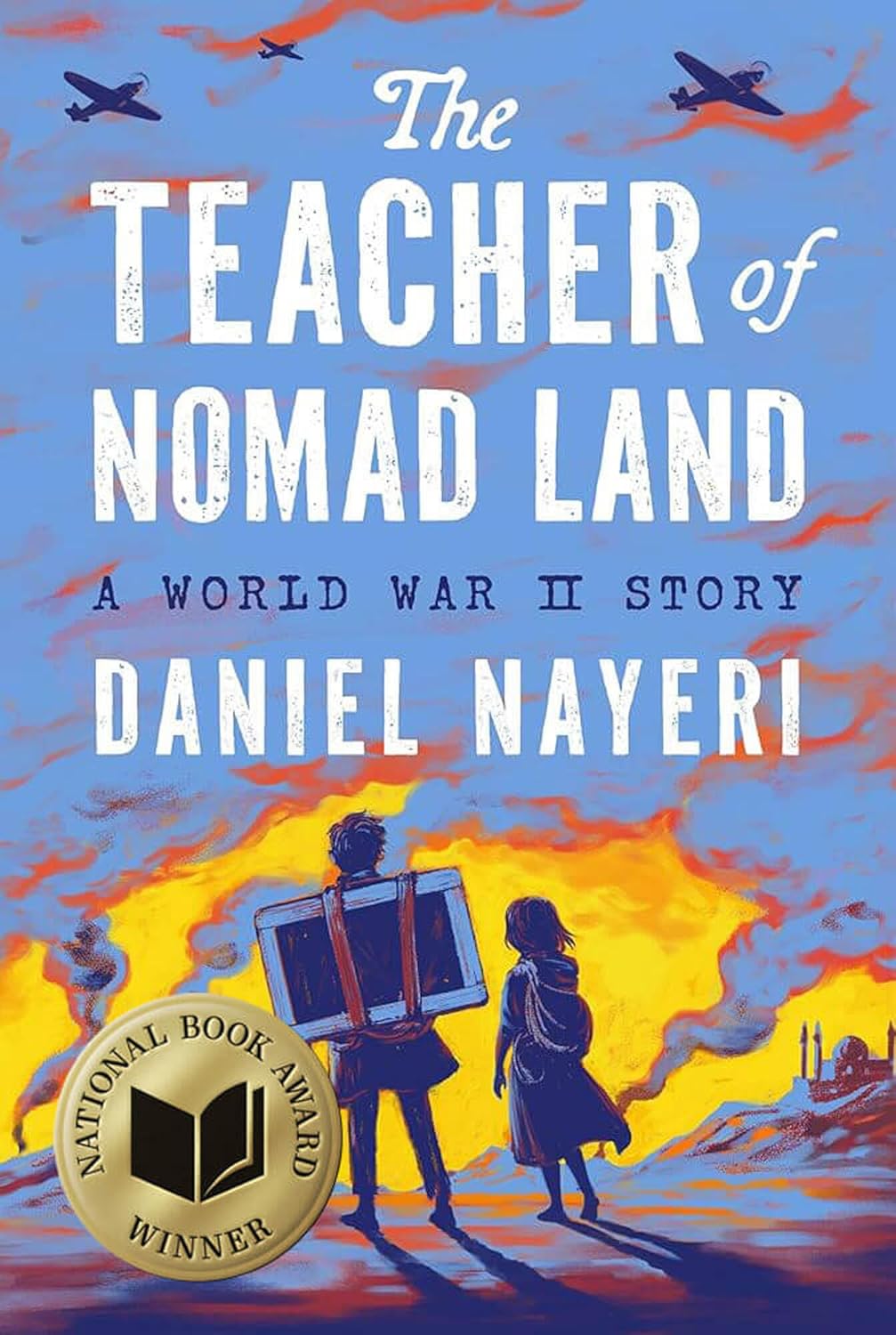
This is the story of two Iranian siblings, thirteen year old Babak and eight year old Sana, orphaned and separated during a time when their neutral country is being invaded by forces competing for Iranian oil—British, Soviet, and German. Add to that mix the Poles, the Jews, and the native nomads who don’t recognize any country as delineated on a map. Their various languages play an important role in this story. Babak has two goals—to become a teacher like his father and to take care of and stay with his sister.
Written for children, this is a fast read for adults. Instead of the horrors of concentration camps, The Teacher of Nomad Land focuses on the lives of the children as they to try to find “family” and dig within themselves to find what it takes to survive. In the Traveler, a friend of their father, they discover a kind man who tries to help. There is also a British soldier they bond with. Their lives are complicated by a mysterious man who is seeking a Jewish boy. All three children are put in danger by this situation. Babak’s resourcefulness is successful in dealing with the Soviets who halt the progress of the nomads in transitioning their herds to their winter home thus demonstrating his value to the nomads.
This is an age appropriate book that does not go into detail about concentration camps and home invasions. On the other hand, it does not shy away from the hunger the children suffer and the danger they face from other people. It highlights the communication problems when there are so many languages; and it shows how, despite being part of an army, individual soldiers can be nice to the local population. While Babak, as the older child, has much of the spotlight in this book, Sana also shines in certain situations with her creativity and ability to step up when things go bad. I was impressed by both characters at their positive attitudes, not allowing themselves to be overpowered by a victim mentality even when cold, hungry, tired or aching from long walks or sleeping on the hard ground.
Rating: 4/5
Category: Historical Fiction, Middle Grades
Notes: 1. Written for children Ages 8-12. Even though the reading level is for that age group, it may be too advanced in terms of understanding the political, geographical, linguistic, and social backgrounds. Discussion with an adult would be helpful for some children.
2. Included some helpful additions: a map, author’s notes about the political setting and the language barrier, and information on the Persian alphabet.
3. The book ends with “Further Reading” which lists nonfiction books for various ages.
Publication: 2025—Levine Querido
Memorable Lines:
“It might have been fair, but it wasn’t right.”
Everything is all at once. Our lives, these moments that change our lives, they all happen so fast.
Teaching is like sitting with a young person and encouraging them to only listen to the good angels in their mind and not the evil ones. But you can’t force them.
Just in Case You Ever Feel Alone–the nearness of God
Just in Case You Ever Feel Alone
by Max Lucado
Illustrated by Eve Tharlet
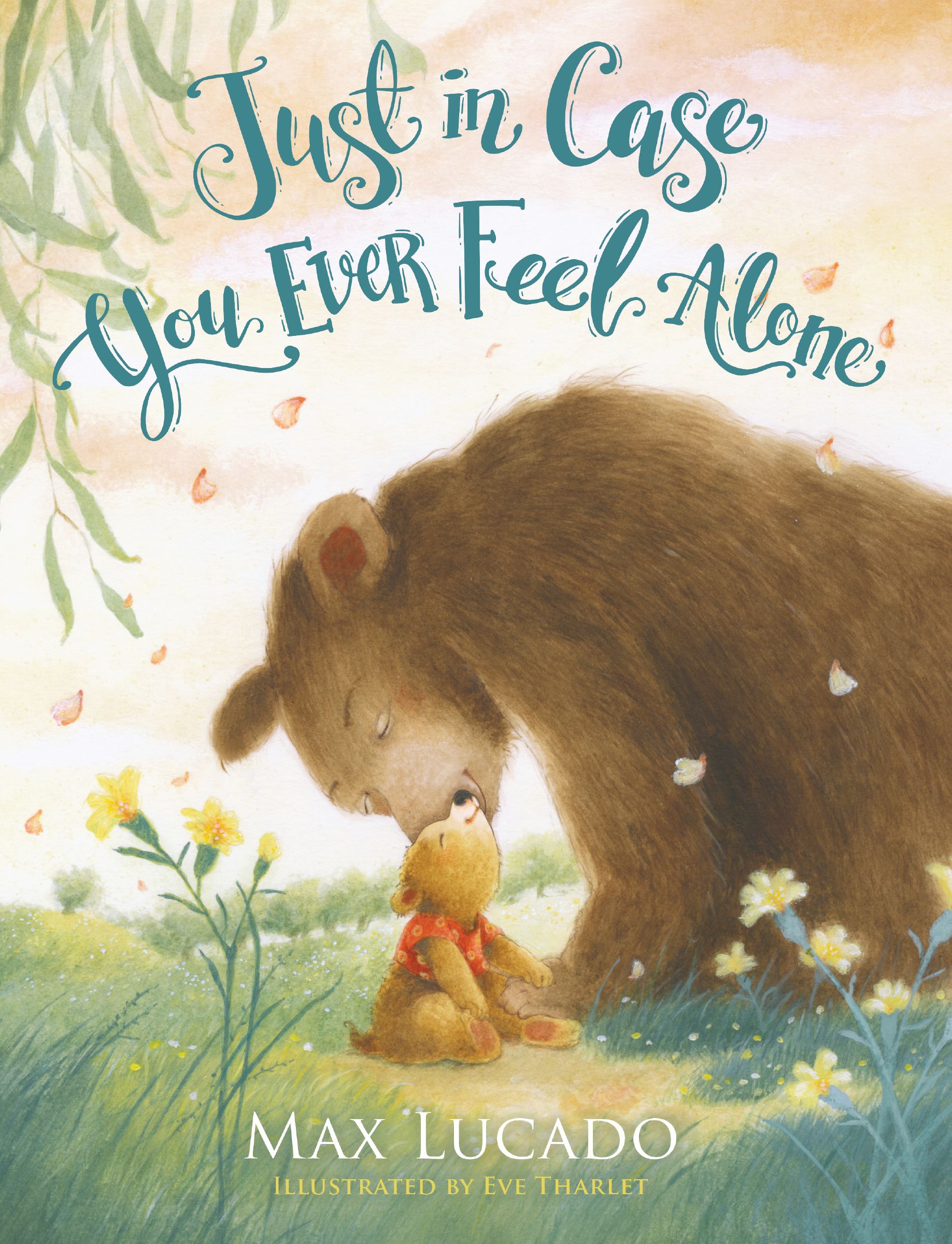
Max Lucado has created a very sweet book to help children through the low times in their lives, to reassure them that parents and God are there to support them when that is what they need. The parent uses rhymes to tell the child all the things they love about them from giggles to humming. He or she—you really can’t tell if it’s a mom or dad from the pictures—reassures the child that when he feels alone, he’s not. When it seems she is alone because she can’t accomplish a goal, she isn’t and everything will be alright. When emotions are tough or time is tight, the child can know that the parent is still there. Then the author relates the same things to God’s care. “He’s just a prayer away.”
This book would be a fun picture book to read with a child and would make an awesome present. It might even become a bedtime favorite, so be prepared for multiple readings. The illustrations are cute, delicate, and fun. Max Lucado has a gentle “voice” for adults and children, reaching out with understanding and the love of God. The calming touch of God is there on every page.
I received a complimentary copy of this book in exchange for an honest review. Opinions expressed in this review are completely my own.
Rating: 5/5
Category: Christian, Children’s Nonfiction
Notes: Ages 2-5
Publication: February 27, 2024—Thomas Nelson
The Beatryce Prophecy–finding home
The Beatryce Prophecy
By Kate DiCamillo
Illustrated by Sophie Blackall
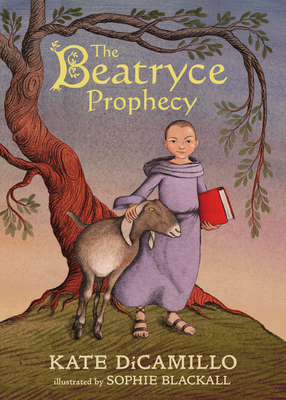
I read The Beatryce Prophecy and then listened to the audio version; I found both delightful. A hard-headed, fearsome goat Answelica and Beatryce, a girl whose family is targeted for destruction by a king, share the protagonist role in this medieval fantasy. Strong supporting roles are found in Jack Dory, a young man who was orphaned as a child, and Brother Edik, an outcast of sorts within his own monastery. They befriend Beatryce and help her find her “voice.”
In the society of this book, women and peasants are not legally allowed to learn to read and write. Since Beatryce can do both, while she is recovering from illness and trauma in the refuge of the monastery, she is urged to disguise herself as a mute member of the order with a shaved head.
The plot of The Beatryce Prophecy centers on a prophecy received by Brother Edik and recorded by him in the Chronicles of Sorrowing. In addition to sharing the prophecies that come to him as he works, Edik’s main job is to illuminate the first letter of each page of that book. For him it is an opportunity for his creative, often fanciful, side to be displayed. Throughout this novel, name is very important as part of a person’s identity. Because the Order of the Chronicles of Sorrowing have the task of recording events of war and violence, there is a dark side to the book, but there are sprinklings of humor, especially through the goat, and there is a lot of positivity in many of the other characters.
The importance of various kinds of love is a strong theme throughout the book. Trust is also discussed and prized by the characters. The evils of war and of greedy rulers are apparent as is the determination of certain classes to control others by withholding literacy. These are themes that middle schoolers can understand and adults can also appreciate. Although no one can restore dead family members to Bernyce and Jack, the ending of the book shows how society can change and individuals can make good choices.
The book is well written and quite lyrical, especially when read aloud. It has beautiful descriptions and philosophical thoughts. As a storyteller, Bernyce contrives fanciful tales within her own story. The black and white illustrations are perfect to accompany this book which also starts each chapter with an illuminated letter.
Rating: 5/5
Category: Children’s Fantasy, Adventure
Notes: 1. Recommended by the publisher for ages 8 and up. Recommended by Amazon customers for ages 9-12. Amazon lists it as appropriate for grades 3-7.
2. Audio version: Finty Williams (Narrator), Listening Library (Publisher)
Publication: September 28, 2021—Candlewick Press
Memorable Lines:
They had walked through a door hewn into the side of a massive tree, and they were inside it now. For the rest of his life, Jack Dory would remember the wonder of it: what it was like to open a door and enter another world, a world hidden inside of the world he already knew—the impossibility of it, the rightness of it.
“Kings,” said Cannoc, “do not know what they want. Except for one thing, of course: they want to keep being kings.”
We shall all, in the end, be led to where we belong. We shall all, in the end, find our way home.
An Amish Mother for His Child–family love
An Amish Mother for His Child
by Patricia Johns

What a difficult situation! Adam’s wife passed away. He has been raising his daughter Amanda Rebecca on his own, but now feels he needs a mother for his daughter and a “proper wife” for himself. Verna is an Amish woman of thirty. The community matchmaker decides they could fulfill each other’s needs and perhaps come to love each other in time. Without much more than meeting each other, the two are united. Adam promises to move from Oregon to Pennsylvania, and they set up housekeeping in a rented house. Amanda Rebecca is a sweet almost five year old, and Verna is so happy to be her new mamm. Likewise, Amanda Rebecca takes to Verna quickly as Verna makes the child feel comfortable with the new relationship.
The couple starts out with separate bedrooms and both work to please the other, but it is hard to get communication going. Adam and his first wife had difficulties with that too, and Adam had several traumas in his childhood that hold him back. Verna is fairly independent for an Amish woman, and she insists as part of their agreement that she will continue to teach court ordered knitting lessons to teenagers. The young people have tattoos, piercings, and good hearts in spite of some bad choices. On most things, however, Verna submits to Adam’s leadership in the family as she wants to please him and have a good marriage.
An Amish Mother for His Child details the struggles and successes they have along the way and one big family crisis that occurs. Will they come to a compromise or have to separate? Will they ever be united by love? This is a good story, and I enjoyed it.
I received a complimentary copy of this book in exchange for an honest review. Opinions expressed in this review are completely my own.
Rating: 4/5
Category: Christian, Romance
Notes: #4 in the Amish Country Matches Series, but although I have not read any of the others in the series, they don’t seem to have character overlaps and so this worked well as a standalone.
Publication: December 26, 2023—Harlequin
Memorable Lines:
As an Amish woman, I stand out all the time when I go into the city. People stare at me. It might not be a tattoo, but my clothing shows that I’m different, and I won’t change it to blend in.
If there was one thing she’d learned from teaching that class, it was that she couldn’t change anyone. She couldn’t even make them into decent knitters. All she could do was love them as she found them.
“And you think this is a wise choice?” Adel’s tone said that she thought it was dumber than a bag of rocks.
Hans Brinker, or The Silver Skates–historical look at Holland
Hans Brinker, or The Silver Skates
by Mary Mapes Dodge
illustrated by Edna Cooke

This children’s novel depicts life in Holland in the early 19th century and according to the author “aims to combine the instructive features of a book of travels with the interest of a domestic tale.” Dodge has done of lot of research so much of the book focuses on Dutch history and customs. Although Hans Brinker is the protagonist, he is not even a character in a large part of the book that describes a skating trip a small group of boys undertake traveling on frozen canals and rivers to various cities.
Hans and his family live in deep poverty because the father Raff had a work accident ten years prior that affected his brain. His wife also can not work because she has to stay home to look after her unpredictable husband. Hans and his sister Gretel are not always treated well because of their social standing. The author states that the circumstances of Raff’s situation were true.
Hans and Gretel have only inefficient wooden skates that Hans carved for them, but both are good skaters. Surprisingly, not much of the story deals with the race for silver skates. Hans is an honorable young man as is shown many times in the story.
The fictional part of Hans Brinker is interesting, even exciting, but the historical portions are less interesting. The boys visit museums on their trip and the history bounces from one item to another just as it would if you were visiting a museum. There are a lot of events referenced that students today do not have the historical background for (e.g. Prince William of Orange who freed Holland from Spain and became King of England). For further personal education on Dutch history or if working with homeschool students, Hans Brinker or the Silver Skates could be a valuable resource. Unless I were teaching a unit on Holland in a classroom, I doubt I would read this to or with Middle Grade students. I found the Preface to be a valuable introduction to what was to follow. I also liked the satisfying Conclusion which shared what happened to the characters as life moved on for them.
Rating: 4/5
Category: Children’s fiction, Historical fiction
Notes: 1. Intended for children 8-12 years old
2. I found this to be a slow read, but there were others in my book club who found the historical references very interesting.
Publication: 1865—George W. Jacobs & Co.
I obtained my copy from Gutenberg Press.
Memorable Lines:
“…the father and I saved and saved that we might have something laid by. ‘Little and often soon fills the pouch.’ ”
“We cannot say what we might have become under other circumstances. We have been bolstered up from evil, since the hour we were born. A happy home and good parents might have made that man a fine fellow instead of what he is. God grant that the law may cure and not crush him!”
Ten years dropped from a man’s life are no small loss; ten years of manhood, of household happiness and care; ten years of honest labor, of conscious enjoyment of sunshine and outdoor beauty, ten years of grateful life—One day looking forward to all this; the next, waking to find them passed, and a blank. What wonder the scalding tears dropped one by one upon your cheek!
Pax, Journey Home–repercussions of war
Pax, Journey Home
by Sara Pennypacker
illustrated by Jon Klassen
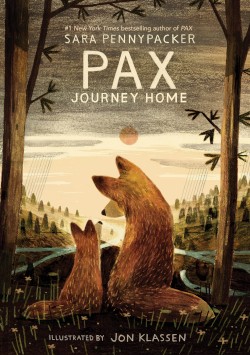
When you read Pax by Sara Pennypacker, you will probably want to have closure on several fronts. What happens to Peter? What happens to Pax? Will they ever unite? Will Peter ever return to live with Vola or will he return to his old home?
In Pax, Journey Home the focus is no longer the war, but the aftermath of the war—deserted towns, water poisoned with heavy metals, and animals who have died or fled. Peter joins the Water Warriors in a junior capacity and is able to help some of the adults with his survival skills. Peter’s story turns more tender here as he finally deals with grief and guilt.
Like the first book, Pax, this book provides many opportunities for discussion about war and its impact on families. It adds to that framework environmental topics related to war.
Rating: 5/5
Category: Children’s Fiction
Notes: 1. Ages 9-11
Grades 3-7
2. I liked this book better than the first. Although this book shows Peter confronting issues from his past, in Pax, Journey Home, he overcomes them. He learns how to be strong and brave in his decisions. There is more positivity and gentleness in this book. I do advise reading Pax first.
Publication: January 31, 2023—Balzer + Bray
Memorable Lines:
Memories were so treacherous. Always lurking under the surface, ready to bushwhack you with a blade to the heart when you weren’t careful.
“Well, that is not what I believe.” Vola said it in a completely neutral voice. No challenge, no judgement on someone who believed something else. Peter had come to appreciate Vola’s technique. It defused things, let the other person hold a different side without asking for a fight.
When they’d pulled into the outpost, she’d advised him again. “Fill your cup whenever you can,” and this time he’d understood that she wasn’t talking about water and his eyes had stung.
Pax–a boy and his fox
Pax
by Sara Pennypacker
illustrated by Jon Klassen
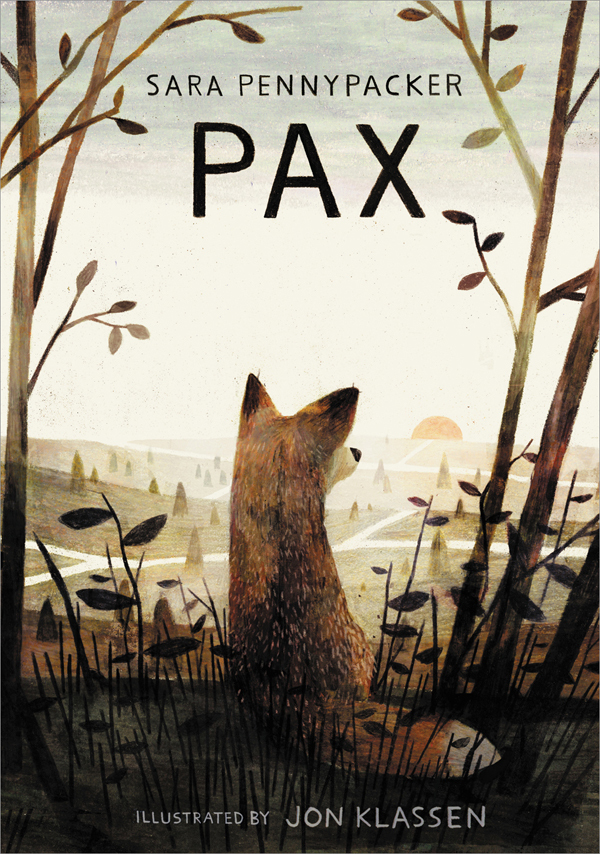
Pax is supposed to be a middle grade book, but its themes require more maturity than most young people of that age can muster. The costs of war are central to the book as the characters have to deal with its emotional effects on individuals and families. Trust and treachery, anger and emotional abuse, and love, promises, guilt and truthfulness are all issues that come into play in this book.
With a purposely vague setting in terms of location and time, the author uses two points of view to tell this story—that of Peter, a twelve year old boy whose mother has recently passed away and of Pax, the fox Peter rescued when Pax was just an orphaned kit. Peter’s father goes away to war leaving him with his grandfather, but making him desert his pet. That is so much grief for a boy!
Wracked with guilt and worry, Peter sets out to find Pax while Pax waits and then searches for Peter. The reader follows both characters through adventures and misadventures. Another interesting character is Vola, a wounded veteran who has difficulty recovering from the physical and emotional traumas of war, but tries to help Peter. Several characters in the book suffer from what we would call PTSD or shell shock. There are also generational issues as Peter’s father has difficulty with anger and Peter doesn’t want to follow in his footsteps.
The writing is excellent, and Pax is ripe with topics for discussion. Our book group debated various issues related to the book and reread passages to clarify our understanding of some underlying meanings. When it was time to close down our meeting, we still had concerns we could have pursued.
Rating: 4/5
Category: Children’s Fiction
Notes: 1. Ages 9-11
Grades 3-7
In looking at reviews in Amazon after I finished writing my review, I found that readers were mixed on the appropriate reading level for the subject matter. Whereas my book club of adults found it to be emotionally challenging, many readers in online statements thought it was appropriate. This is not the kind of book you want to hand to a child to read on their own. Instead, it needs to be read with an adult at home or in a classroom and include lots of discussion.
2. I was unhappy that some of the storylines seemed incomplete, but the author published a sequel: Pax, Journey Home in 2023 which I have checked out from my library to read.
Publication: 2016—HarperCollins (Balzer + Bray)
Memorable Lines:
“I have more than everything I need.” Vola sat. “I have peace here.” “Because it’s so quiet?” “No. Because I am exactly where I should be, doing exactly what I should be doing. That is peace.”
“So which is it? You going back for your home or for your pet?” “They’re the same thing,” Peter said, the answer sudden and sure, although a surprise to him. “And you’re going to do this no matter who tries to stop you? Because it’s the right thing for you, at your core?” Vola made a fist and thumped her chest. “Your core. Is that true?”
Peter remembered Vola asking him which side his father was fighting on. Peter had answered her, stunned that she would even have to ask. “The right side,” he’d added, indignantly. “Boy,” Vola had said, and then “Boy!” again, to make sure she had his attention. “Do you think anyone in the history of this world ever set out to fight for the wrong side?”
Zeus: Water Rescue
Zeus: Water Rescue
by W. Bruce Cameron

Do you know a kid who loves dogs? They just might be interested in Zeus: Water Rescue. Written for Middle Grade children, this book shares the story of Zeus, a puppy who watches his littermates find new homes while he is left desperately wanting a person of his own. It is charmingly told from Zeus’ point of view as the puppy tries to understand what the people are doing and to please them.
In Hawaii, Marco pieces a living together between jobs focusing on Search and Rescue and as an Emergency Responder. He especially needs the income he receives when he trains a dog in water rescue and sells it in Europe. Not many dogs are right for the job especially when they are given the final test—jumping from a helicopter.
Kimo lives with his dad Marco and his grandmother and wants a puppy of his own as much as Zeus wants a boy of his own. Because of the financial need to sell a trained dog, even if Kimo can train the rambunctious Zeus, there doesn’t seem to be a way forward for the pair to stay together. Kimo’s cousin Giana is smart and not intimidated by adults. She helps Kimo in his efforts to keep Zeus. Their banter is fun and lightens the sadness that naturally occurs as the impending separation looms on the horizon.
I received a complimentary copy of this book in exchange for an honest review. Opinions expressed in this review are completely my own.
Rating: 4/5
Category: Children’s Fiction
Notes: #1 in the series Dogs with a Purpose
Publication: September 26, 2023—Tor Publishing Group
Memorable Lines:
“Giana’s the only person in history to be kicked off the debate team for arguing,” Kimo informed me.
I could feel some of the fear leaving her as I lay there, so I didn’t try to change position. Having a dog nearby always makes things better.
I did not know why he had shouted Bear’s name. Bear obviously wasn’t here. Anyone could smell that.
Two Stories for Children
The Quilt Story—love across generations
by Tony Johnston
illustrated by Tomie dePaola
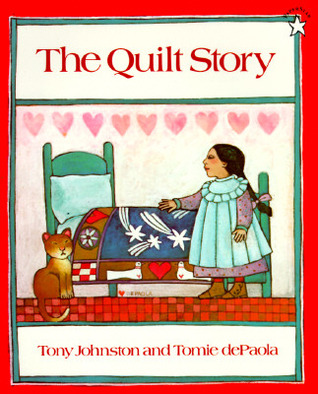
Over the years I have enjoyed sharing legends as presented by Tomie dePaola with my Kindergarten and First Grade classes. Today I reread The Quilt Story written by children’s author Tony Johnston. Tomie dePaola illustrated this book as beautifully and as appropriately as he does his own texts.
The Quilt Story begins in the days of covered wagons as Abigail’s mother makes her a quilt that Abigail uses and enjoys in many ways. It becomes a special comfort to Abigail when her family leaves their old life behind to begin a new one in the woods where her father builds a log cabin. Many years later a descendent of Abigail discovers the quilt, having suffered varmint attacks and natural aging, in the attic. She takes it to her mother and asks her to fix it.
The story is sweet and touching. Ms. Johnston and Mr. dePaola share so much contextually. Abigail’s sadness is apparent and understandable when the rest of the family is happy. The passage of time is indicated by the types of transportation, the clothing, and the homes, but both mothers are kind and comforting. The Quilt Story is reassuring to children in our minimalist and disposable age indicating that some objects do hold emotional memories of times and people of the past.
Rating: 5/5
Category: Children’s Literature, Historical Fiction
Publication: 1985—Putnam Publishing Group
October 1990—Scholastic
Memorable Lines:
So her mother rocked her
as mothers do.
Then tucked her in.
And Abigail felt at home again
under the quilt.
The Cowboy and the Black-Eyed Pea
by Tony Johnston
illustrated by Warren Ludwig
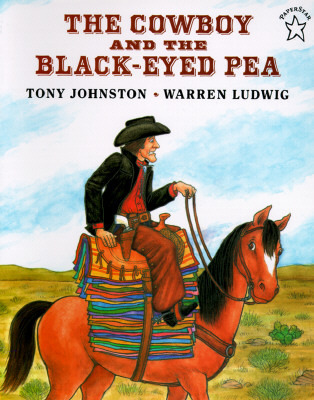
What a delightful reimagining of “The Princess and the Pea!” Set on the “biggest spread in the great state of Texas,” there is humor all the way through. The main character, who is also the heroine of this tale, is Farethee Well, “a young woman of bodacious beauty.” She is also clever and devises a plan to execute her father’s final wishes to “Find a real cowboy who’ll love you for yourself, not just for your longhorn herd.”
Her plan involves hiding a black-eyed pea under a saddle blanket because only a real cowboy would be “sorely troubled” by it. Watching the various suitors as they ride out to unknowingly perform the test is very funny—both in text and in the illustrations. Harkening back to the original fairy tale, a young cowboy arrives in the rain without knowing about the contest for the young cowgirl’s hand. One stampede and a pile of saddle blankets later, the real cowboy is discovered.
Rating: 5/5
Category: Children’s Fiction, Humor
Notes: 1.Don’t look for realism in the cowgirl’s test. If she put a black-eyed pea under the saddle blanket, it would be the horse that felt it, not the cowboy. Just remember it is a remake of a fairy tale and have yourself a Texas-sized good time!
2. Contains humor on both an adult and children’s level so all readers will enjoy this!
Publication: 1992—Putnam & Grosset
Memorable Lines:
Sure enough, quick as you can say “set another place at table,” cowboys from hither and yon came seeking Farethee Well’s hand.
The Secret Garden–delightful classic
The Secret Garden
by Frances Hodgson Burnett
Illustrated by Tasha Tudor
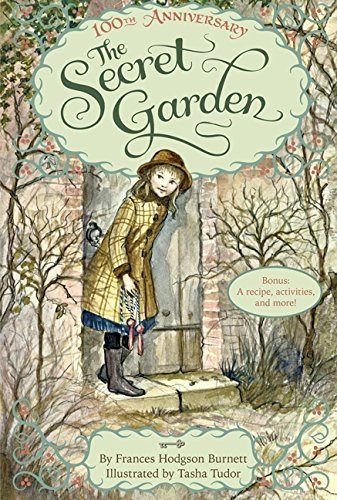
An avid reader as a child, I am surprised that I somehow missed out on the classic children’s tale The Secret Garden written by Frances Hodgson Burnett. For this reading with my book club, I chose an edition with delightful illustrations added to this 1911 book by Tasha Tudor in 1962. The Secret Garden is recommended by the publisher for ages nine and up, but I strongly recommend it for all readers. Please don’t relegate it to the “kiddie lit” genre.
The Secret Garden is the kind of book that instructs the reader in positivity without being preachy. Ten year old Mistress Mary (as in “quite contrary”) is a child who is both spoiled and neglected in her upbringing in India where she does not experience love. Things are not much better for her when her parents die, and she is shipped to Yorkshire to be under the care of her uncle. There she is still not loved as her uncle, Mr. Craven, has not dealt well with the death of his wife ten years prior and the illness of his son Colin who is physically cared for but also is not loved.
When Mary discovers that the mysterious crier in the night is Colin, she gradually creates a bond with her cousin. She is a curious girl who is given little freedom in the house, but almost total freedom in the gardens. She discovers the benefits of fresh air, sunshine, and natural exercise, and she explores the grounds looking for a secret garden that has been hidden away since Colin’s mother died.
Mary and Colin meet so many interesting people during the spring and summer. Dickon is a twelve year old who can converse with animals and plants. His older sister Martha is a sweet young lady who works at Misselthwaite Manor as a housemaid and helps take care of Mary. She has one day a month off, and she travels home by foot to help her kindly mother with laundry and baking. She gladly gives her mother her earnings to help support her large family of twelve happy siblings. Ben Weatherstaff is an elderly gardener who knew Colin’s mother and is eager to help restore the secret garden. While this tale is not full of goody two-shoes, it does have characters the reader will enjoy getting to know and in the cases of Mary and Colin watching their physical and emotional growth.
The Secret Garden is a pleasant read that begins with difficulties for the characters but progresses to a magical time in their lives. The author’s descriptions are wonderful to read as spring approaches in the garden. It is a book I would reread for the pleasure of the story and the language of the author.
Rating: 5/5
Category: Children, Fiction, Classics
Publication: 1911—Harper Collins
Memorable Lines:
The rainstorm had ended and the gray mist and clouds had been swept away in the night by the wind. The wind itself had ceased and a brilliant, deep blue sky arched high over the moorland. Never, never had Mary dreamed of a sky so blue. In India skies were hot and blazing; this was of a deep cool blue which almost seemed to sparkle like the waters of some lovely bottomless lake, and here and there, high, high in the arched blueness floated small clouds of snow-white fleece. The far-reaching world of the moor itself looked softly blue instead of gloomy purple-black or awful dreary gray.
“Half-witted!” said Colin angrily. “Who thought that?” “Lots o’ fools,” said Ben. “Th’ world’s full o’ jackasses brayin’ an’ they never bray nowt but lies.”
He had made himself believe that he was going to get well, which was really more than half the battle, if he had been aware of it.
 education pathways