Home » 2021 (Page 4)
Yearly Archives: 2021
God Will Help You–overcoming the hard times
God Will Help You
by Max Lucado

Even in the best of times, we all have troubles, difficulties to face. In this pandemic, many are overwhelmed by the chaos, the darkness, the isolation of lockdowns. For some, the depths of despair have led to suicide, but Max Lucado has a better answer for this “winter of our discontent”….God. In God Will Help You, Lucado says “No matter the challenge or the question, by God’s grace you can face it. He is up to the task. And he will help you.”
Lucado is, by nature, a storyteller, and he uses stories, both from the Bible and from encounters he has had with others, to demonstrate some of the ways God can intervene in our stories. In each chapter, he addresses a different issue and then provides questions for reflection and Bible verses to remind you of God’s help. He closes each chapter with a prayer that you can pray in those circumstances, because sometimes we are so overwhelmed that we just don’t even know how to frame our petitions. Lucado has a way with words. In talking, for example, about God’s grace, he says we have been “doused” with it. What a perfect description!
So, if you’re feeling anxious, fearful, stuck in your circumstances, lonely, sick, or filled with grief, Max Lucado can’t fix those problems, but he can direct you to Jesus. You see, God already knows about your unsolved problems and your struggles to negotiate everyday life. He sees your heart and understands your needs. He is there to give you guidance. In his book God Will Help You, Lucado shows how God will come alongside you each and every day.
I received a complimentary copy of this book. Opinions expressed in this review are completely my own.
Rating: 5/5
Category: Christian, Self-Help, Inspirational
Notes: Having gone through a lot of changes in my life, especially in the last twelve years, I found this statement particularly meaningful: “So make friends with whatever’s next. Embrace it. Accept it. Don’t resist it. Change is not only a part of life; change is a necessary part of God’s strategy. To use us to change the world, he alters our assignments.”
Publication: December 29, 2020—Thomas Nelson
Memorable Lines:
The presence of anxiety is unavoidable, but the prison of anxiety is optional. Anxiety is not a sin; it is an emotion. (So don’t be anxious about feeling anxious.)
…celebrate his goodness, faithfulness, and forgiveness. These characteristics of God remain true no matter what you are going through.
But if you see your troubles as opportunities to trust God and his ability to multiply what you give him, then even the smallest incidents take on significance.
Had Jesus chosen to do so, he could have proclaimed a cloud of healing blessings to fall upon the crowd. But he is not a one size-fits-all Savior. He placed his hands on each one, individually, personally. Perceiving unique needs, he issued unique blessings.
Autumn Skies–sweet romance with action included
Autumn Skies
by Denise Hunter
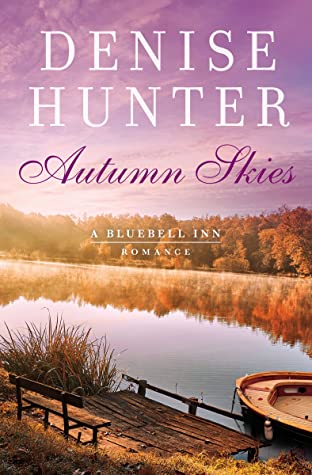
Survivor’s guilt is a difficult subject, but it is a theme in Denise Hunter’s Autumn Skies, a touching romance. When Molly finds a buyer for the family business and home, it turns everyone’s world upside down at the Bluebell Inn, but that is nothing compared to the effect of her sister Gracie’s attraction to the mysterious guest, Wyatt. Both have secrets and neither wants to let the other get close.
Gracie and Wyatt are likable characters. Gracie is young, independent, and determined to show her brother and sister that she is an adult. Wyatt, a Secret Service agent, was shot in the line of duty. If he wants to prove he has psychologically recovered from the event, he has to reach back into his past and recover from an even worse childhood trauma. He comes to Bluebell Inn for that sole purpose. I recommend this excellent read. It’s a clean page-turner with some adventure and action. The characters are trying so hard that you will want things to work out for them despite what seems like insurmountable problems.
I received a complimentary copy of this book. Opinions expressed in this review are completely my own.
Rating: 5/5
Category: Romance, Christian
Notes: This is the final book in the Bluebell Inn Novels, a trilogy. It is perfect as a standalone, but you will find yourself wanting to read the other novels in the series.
Publication: October 20, 2020—Thomas Nelson
Memorable Lines:
Molly loved this about her man. While her first thought was worry, his was prayer. He offered a quiet, fervent prayer that hit all the points she was fretting over.
For a man with a poker face, he was wearing regret this morning like a neon suit.
Whereas Grace was like a balmy summer evening, her sister was like a whirlwind. And her brother a sudden storm front.
A Dream Called Home–search for happiness
A Dream Called Home
by Reyna Grande

Torn between two countries, immigrant Reyna Grande seeks to find herself. Is she Mexican or American? Will she ever fit into either culture? Is she destined to metaphorically straddle the border for a lifetime? When her first book was published in 2006, one of her dreams had come true and she had begun “a lifelong quest to advocate for the Mexican immigrant community by sharing our stories with the world.” What she found in the aftermath of its publication, however, is that her story resonates with other immigrant communities as well and even with Native Americans who feel the same struggles to maintain a dual identity, language, and culture.
Reyna’s difficult, abusive childhood is discussed at various points in her memoir A Dream Called Home as it plays a strong and recurrent role in her efforts to work through the emotions of her turbulent past through her writing. She makes mistakes along the way as a college student and as a young adult, but she learns from them and decides to experience them as a part of the growth that shaped her into “a unique individual with a unique voice.”
The memoir is filled with stories of her personal relationships. She realizes that she is subconsciously seeking out the love of her father that she never felt under his roof or when he left his family in poverty to earn money in the United States. Reyna and her siblings wrestle with so many decisions in the U.S., and Reyna has to accept that the pathway to healing and success for her is not the right one for them. Fortunately, she has Chicana professors that become lifelong mentors. Even though Reyna is a talented writer, she also has to learn the difficult business end of publication.
Her stint as an untrained middle school teacher in Los Angeles is both sad and predictable for those familiar with teaching in that climate. She experiences unsupportive parents, disrespectful students, and ever changing assignments and curriculum. A bright light for Reyna is her introduction to folklórico. It revives her own interest in her Mexican heritage and renews an enthusiasm in Mexican culture for her students, many of whom, like Reyna, feel displaced and unsettled.
Reyna’s story can not be summarized in a review. My job is to tell you that A Dream Called Home is a book you should read; it should be a part of your mental catalogue. Regardless of your position on the influx of immigrants currently overwhelming the U.S. and its broken political system, you will find Reyna Grande’s perspective both informative and enlightening if you want to understand the struggles of people desperate to emerge from poverty who are clinging to the hope of the American dream.
Rating: 5/5
Category: Memoir
Notes: Includes pictures that personalize Grande and her experiences
Publication: 2018—Atria
Memorable Lines:
My biggest virtue and my biggest flaw was the tenacity with which I clung to my dreams, no matter how futile they might seem to others. The dream of having a true relationship with my parents was the one I had clung to the most because it was the first dream I’d had, and the farthest from my reach.
“Being in a new country, learning a new language, a new culture, takes time. You will learn. It doesn’t feel that way now, but one day you will be just as comfortable speaking English as you are speaking Spanish. But no matter what, don’t ever forget where you came from, and don’t ever be ashamed of who you are.”
I was finally beginning to understand that it takes as much courage to leave as it does to stay, and that being a parent was way more complicated than I had ever imagined.
Christmas Card Murder–three novellas
Christmas Card Murder
by Leslie Meier, Lee Hollis, and Peggy Ehrhart

The book Christmas Card Murder is a compilation of three novellas. The first one is also called Christmas Card Murder, and it’s written by Leslie Meier. It is an acceptable cozy mystery about a writer for a small town Maine newspaper who discovers a Christmas card with a hateful, mysterious message during a remodeling project. When a snowstorm brings more than snow, the main character Lucy finds herself in danger. With themes regarding the effectiveness of our criminal justice system, DNA evidence, and reasonable doubt, this mystery’s last few chapters have a very serious tone and the conclusion provides mixed outcomes for the characters. This story is more thought provoking than fun.
Death of a Christmas Carol
As I began the second novella, I sensed a theme. Also set in Maine, Death of a Christmas Carol’s plot is centered around a Christmas card. This card is addressed to three friends and includes a threat. The sender of the card is a flirtatious woman who has had conflicts with all the ladies. Is the card a joke or is someone’s husband unfaithful? Lee Hollis’ tale is about female bonding, marital happiness, and murder. Embedded are some short stories by the main character who is a writer for the local newspaper and some of her favorite seasonal recipes.
Death of a Christmas Card Crafter
Karma Karling was Penny’s favorite teacher in high school. A talented artist, she created a new card each Christmas season based on the “12 Days of Christmas.” Clearly the last in the series, this year’s card features 12 drummer boys—but there are thirteen depicted. Could that be a clue to Karma’s untimely death? Bettina and Pamela, both knitters, make it their business to discover the murderer while absolving a fellow knitter.
All of the novellas in this trio appear to be part of each author’s series. I enjoyed this novella the most—partly because, of the three, this is the only series that I have been following. I credit this one as having the best descriptive passages, the most interesting plot, and a surprise ending that was truly unexpected.
All of these novellas work as a stand-alone, but the author of Death of a Christmas Card Crafter excels in pulling the reader into the story while giving back information that makes the characters more appealing. Peggy Ehrhart’s book includes directions for knitting doll clothes using only the knit stitch and recipes for an intensely chocolate cake and a quick bread featuring dried fruits.
I would like to extend my thanks to NetGalley and to Kensington Books for giving me the opportunity to read this book in exchange for an honest review.
Rating: 4/5
Category: Mystery
Publication: October 27, 2020—Kensington
Memorable Lines:
Christmas Card Murder—She knew that kids frequently didn’t realize that their actions had consequences; this was something most people learned the hard way.
Death of a Christmas Carol—“I got him to talk by threatening not to make him dinner. He’d make a terrible spy. He’d give up the nation’s secrets for a box of Hamburger Helper.”
Death of a Christmas Card Crafter—The spicy pine scent carried all the way to the sidewalk, and its evocation of a season that should be happy seemed an incongruous contradiction to the crime-scene tape and the uniformed officer.
Candy Cane Crime–sweet cozy mystery
Candy Cane Crime
by Amanda Flower

I just love that Amanda Flower has contributed Candy Cane Crime to the growing list of Christmas themed cozy mysteries. Why? Because it has a real Christmas flavor to it, not just a background setting. More importantly, because there is no murder! The mystery revolves around the Candy Cane Exchange, a fundraiser for new costumes for the town’s Christmas parade and pageant. Even without a murder, there is a villain to be rooted out in the little town of Harvest.
Charlotte, a young Amish woman who works in the candy shop, volunteers to be coordinator for the project. At age twenty-two, Charlotte is considered “old” to have not yet decided on whether to join the Amish church or to become Englisch. She becomes obsessed with who her secret admirer might be with several candidates under consideration and observation. The story is told from Charlotte’s point of view since, for most of the story, the usual main character of the series, Bailey, is in New York. This change in POV works perfectly for Candy Cane Crime.
The word “sweetest” is used many times and has a special significance in this story. It is a fast read, and I was sorry to come to the end. This is the sweetest cozy mystery! If you are searching for something gentle, Christmasy, and guaranteed to make you smile, seek out Candy Cane Crime.
I would like to extend my thanks to NetGalley and to Kensington Books for giving me the opportunity to read this book in exchange for an honest review.
Rating: 5/5
Category: Mystery
Notes: 1. #6 in the Amish Candy Shop Mystery Series, but is perfect as a standalone.
2. A recipe for Peppermint Popcorn is included that sounds delicious.
Publication: October 6, 2020—Kensington Books
Memorable Lines:
“Other than the bishop’s wife, Ruth Yoder, Margot is the most determined woman I’ve ever known. If the two of them joined together, none of us would have any peace. It’s for the best the pair of them are rarely in agreement.”
Since I had left my conservative home district, I had heard little from my siblings and parents. I knew that I had made the right decision, but I’d be lying if I didn’t admit that I missed them and wished they would at least speak to me from time to time.
But that wasn’t how I was. It was why I had never fit well in my old conservative district. I had this need to know and ask why and how.
The Voyage of the Dawn Treader–magical sea voyage
The Voyage of the Dawn Treader
by C.S. Lewis

I absolutely love C.S. Lewis’ The Voyage of the Dawn Treader. It is full of fantastically magical creatures and exciting adventures for Lucy, Edmund, and their cousin Eustace. Although this is not the first book in The Chronicles of Narnia, the reader, whether returning or new to the series, is immediately drawn into the story by the first three paragraphs which describe Eustace, a new and quite unlikable character. As I read, I gradually realized the strong influence of classical literature in this book. The sailing from one unforgettable place to another, sometimes with an escape necessary, is reminiscent of Homer’s The Odyssey, although these interesting characters are clearly Lewis’ own ingenious creations. Royal mermaids and mermen hold a hunt for fish like one might hunt small game in England, but with a trained hawk. The Dawn Treader, belonging to King Caspian and carrying the children and a full crew, is attacked by a sea serpent capable of crushing the ship. There are invisible creatures, the Dufflepuds, who move by jumping wildly from one place to another. With another nod to classical literature, there is a Chief Voice among the Invisibles; his followers echo and affirm him just like a Greek chorus. C.S. Lewis’ literary background and expertise shine brightly in this book.
Woven into the recounting of their escapades, the book has serious themes that are addressed in a distinctly unpreachy way. A major one is greed as Eustace becomes like a dragon hoarding his treasure. Later the group finds pond with water that turns everything it contacts into gold. It also brings out bad character traits, and in the end they all disassociate themselves from the location which they name Deathwater Island. Not surprisingly, greed is also an important theme in The Odyssey.
Although there is not one to one symbolism comparisons between people and ideas found in Christianity and characters and concepts in The Chronicles of Narnia, there are certainly important similar themes. When the travelers need to make important choices, they often find that Aslan has appeared and is staring at them just as Jesus gives his followers wisdom when needed. Chapter 12, “The Dark Island,” is a metaphor for God rescuing us when we are going through dark times. In the last chapter, there is a depiction of going to Aslan’s country (i.e. heaven) and references to the Lion and the Lamb, important symbols in Christianity. These passages are so beautiful; I don’t want to spoil the experience with my own words. You need to read it for yourself as only C.S. Lewis, the inimitable storyteller, can convey the meaning and the feeling with his exquisite word pictures.
Rating: 5/5
Category: Christian, Fantasy
Notes: I read the 50th anniversary edition of the book. The backline illustrations were by Pauline Baynes who was the first illustrator for The Chronicles of Narnia, and the cover art was by Chris Van Allsburg.
Publication: 1952—Harper Trophy (Harper Collins)
Memorable Lines:
Up went the ring, flashing in the sunlight, and caught, and hung, as neatly as a well-thrown quoit, on a little projection on the rock. No one could climb up to get it from below and no one could climb down to get it from above. And there, for all I know, it is hanging still and may hang till that world ends.
“Use, Captain? If by use you mean filling our bellies or our purses, I confess it will be no use at all. So far as I know we did not set sail to look for things useful but to seek honor and adventure. And here is as great an adventure as ever I heard of, and here, if we turn back, no little impeachment of all our honors.”
“I might as well have behaved decently for all the good I did with my temper and swagger.”
A Pretty Deceit–the pursuit of Ardmore continues
A Pretty Deceit
by Anna Lee Huber
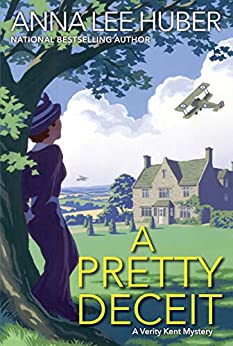
In the aftermath of The Great War, there are many “walking wounded.” This category refers to soldiers with physical wounds, of course. Also included are those psychologically affected, unable to relate to others, even those they love most. Waking or sleeping, the horrors of the war remain with them. Their families have suffered as well. Many have lost sons, fathers, brothers, and husbands either through death or trauma. Women are living in limbo or trying to raise children on their own. All of these injured are touched on as we witness the struggles of the characters in A Pretty Deceit. The protagonist, Verity Kent, is a high society woman married to a war hero. You would think the couple would be happily “living the life” after the war. They harbor secrets, however, as each individually worked for intelligence services, and their past efforts continue to disrupt their current lives.
Verity has a penchant for solving mysteries, and in this historical novel by Anna Lee Huber, Verity is called on by her family to investigate her aunt’s missing possessions as well as the disappearance of a maid. Her husband’s influence is solicited to encourage the government to provide reparations to Verity’s aunt for damages that occurred when Air Force officers were billeted in her home. As the couple tries to help, a murder is discovered on the estate, and Verity is called on to clear the murder victim’s wife. In the middle of these investigations, the couple is asked, unofficially, to investigate a wealthy businessman with connections that rise high in the government. He rarely dirties his own hands but has many minions willing to do his bidding.
I have read two more books in this series, and A Pretty Deceit is my favorite so far. Well written, as all of the books in this series are, this novel is outstanding in background, pace, and character development. We meet Reg, Verity’s cousin who was blinded in the war. We also see her current interactions with two men who had a romantic interest in Verity during the war. Verity is well aware of her attractiveness and is not afraid to subtly use it to achieve her ends. The position and influence of a woman in this time period is well demonstrated by the reactions of characters to women in accordance with class status and race. This historical fiction is a piece worth reading.
I would like to extend my thanks to NetGalley and to Kensington Books for giving me the opportunity to read this book in exchange for an honest review.
Rating: 5/5
Category: Historical Fiction, Mystery
Notes: #4 in the Verity Kent Series, but works well as a standalone
Publication: September 29, 2020—Kensington Books
Memorable Lines:
For all that Aunt Ernestine would be horrified at such conduct in others, she was remarkably oblivious to the fault in herself.
Compassion need not be a restricted commodity, especially not during a time when everyone was still struggling to right themselves after the topsy-turvy years of the war.
He was a cunning manipulator, making people question even those things they knew beyond a shadow of a doubt to be true, and exploiting people’s best and worst natures to convince them to do things they would never have dreamed themselves capable of.
Little Heathens–Hard Times and High Spirits on an Iowa Farm During the Great Depression
Little Heathens
by Mildred Armstrong Kalish
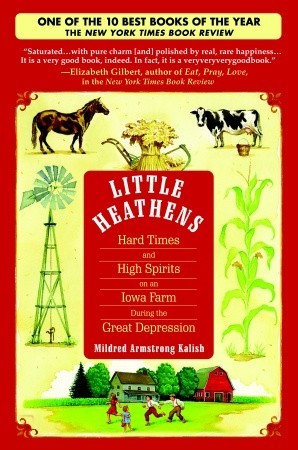
There are a variety of tales and anecdotes about life during the Great Depression, yet many who survived don’t want to talk about it. The experiences of those in the cities were quite different from those living in the country. Regardless of location, however, all but the very wealthy suffered and their lives and perspectives were formed or altered by their experiences.
In Little Heathens, Mildred Armstrong Kalish shares what life was like for herself and her extended family. It is somewhat difficult to distinguish between the normal trials of endless farm work and the efforts needed to reuse and repurpose items because of deprivation of money and resources. “Thrown away” was a foreign concept during this time and thrift was the champion of the day. Kalish shares the many saving and “make-do” tricks that were common during the Depression and some that were uncommon. Many of those have fallen out of use, but are still handy to know and good examples of the resourcefulness of our predecessors.
Kalish lays her memories out forthrightly, not concealing or varnishing the stories. Many are humorous and several are gasp-worth. Children worked alongside adults learning by example and experience. Farm life required the whole family to pitch in. Chores were divided by age and gender, but not strictly. For example, Monday Wash Day was a very physical, all-day task for which preparations began on Sunday night. Children and adults wore the same set of clothes all week, and everyone participated in wash day. The need for everyone to work together is apparent in the book over and over again.
Kalish addresses the many aspects of life at that time as seen through the eyes of a child who was an active participant. She has an incredible memory for detail right down to how to catch, kill, and prepare a snapping turtle for consumption. She also discusses the social aspects of community inside and outside the family unit. Her life was unique in that she lived in town during the winter and on a farm during the growing season because of her family situation. Her life was very different in each place, but the expectations of a good work ethic and attitude never changed.
The author viewed the hardships of her childhood as instrumental in her many achievements later in life. From success as a “hired girl” to working her way through college to her happy marriage and career as a professor, Kalish gives credit to her family, especially her mother: “Mama’s ability to meet challenges head-on and with a positive attitude created in us kids a sense of confidence that there was a way to solve every problem—just find it.” Although her life was hard, it was not unhappy and she prizes the memories of her past. I enjoyed her writing style, learned from the information she shared, and relived some of my past as I have memories of my Depression-era parents handing down wise sayings and thrifty values. Well done, Mildred Armstrong Kalish!
Rating: 5/5
Category: Memoir
Publication: May 29, 2007—Random House (Bantam)
Memorable Lines:
Mama, Aunt Hazel, Uncle Ernest, Grandma, and Grandpa had a real gift for integrating us children into farm life. Working alongside us, they taught us how to perform the chores and execute the obligations that make a family and a farm work.
An Old Maid (that’s what we called unmarried women in those days) was asked why she didn’t try to find a husband. Her reply was, “I have a dog that growls, a chimney that smokes, a parrot that swears, and a cat that stays out all night. Why do I need a husband?”
After our chores and household duties were done we were given “permission” to read. In other words, our elders positioned reading as a privilege—a much sought-after prize, granted only to those goodhardworkers who earned it. How clever of them.
She kept all of her needles stuck into a red felt pincushion which she had owned since just before God.
Death, Dismay and Rosé–opportune timing
Death, Dismay and Rosé
by J. C. Eaton
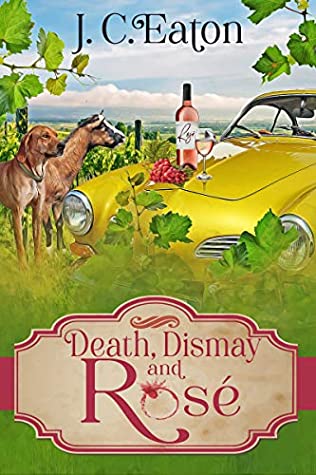
Norrie is a screenwriter and part owner of Two Witches Winery on the Seneca Lake Wine Trail. She is counting the days until her sister returns from Costa Rica to take over the winery again and she can return to her lawyer boyfriend Bradley and her urban life.
Unfortunately, Norrie finds herself, yet again, in the middle of a murder she needs to solve to get a friend released from jail. The situation is not simple, however. Although Norrie is not superstitious, one of her staff members and lots of tourists are. Now Norrie has to deal with a local, two hundred year old curse that supposedly takes effect when a full moon and the summer solstice occur on the same night. The results could be deadly.
Neighboring winery owners Don and Theo and entomologist Godfrey are Norrie’s friends and are dragged reluctantly into her investigations which are not always legal and are sometimes dangerous. The clock is ticking as time draws near for the solstice to occur and for the local police to give up on their murder investigation. Will Norrie be able to solve the crime before another death occurs, Alex is convicted of a crime he didn’t commit, some thieves get away with a stolen Porsche engine, or Norrie and Godfrey are arrested? So much is riding on her investigation. Fortunately, Norrie is both spunky and determined.
I would like to extend my thanks to NetGalley and to Beyond the Page Publishing for giving me the opportunity to read this book in exchange for an honest review.
Rating: 5/5
Category: Mystery
Notes: #6 in the Wine Trail Mystery Series, but OK as a standalone
Publication: September 29, 2020—Beyond the Page Publishing
Memorable Lines:
It’s never good when someone says they hope something doesn’t upset you, because inevitably, it will upset you. I held my breath and waited for her to continue.
“Do you have any idea what kind of danger you’re putting yourself in? And I don’t mean the skunk. The mess you’re getting into won’t be solved by a can of tomato juice and a hose!”
Funny how food can make people forget whatever else is on their minds, because for a brief respite, I found myself immersed in a whole other world…
Out, Mouse!–cute Irish tale
Out, Mouse!
written by Valerie L. Egar
audio narration by Paul Collins

Finn, an elderly Irish man, has unwelcome visitors as a mice family makes themselves at home in his cottage. Finn takes advice from Professor Dunderbutt’s book and writes a series of kind letters to Mr. and Mrs. Mouse making suggestions of places they would probably prefer to live. Unfortunately for Finn, they always find something unsuitable about the places he suggests. I won’t spoil the ending, but I’ll say that it did make me smile.
I was referred to this book by blogging book reviewer Carla at Carla Loves to Read. She mentions in her review that she listened to the audio version while reading the printed text. I have been wanting to dip into the many audio versions of books currently offered. With an actor reading this with an Irish accent, this book seemed like the perfect one to begin my listening adventure. Although I will probably continue to prefer the written word, I did enjoy listening to this narration which was very well performed.
I would like to extend my thanks to NetGalley and to Whistle Oak for giving me the opportunity to read this book in exchange for an honest review.
Rating: 4/5
Category: Children’s Fiction, Humor, Multicultural
Notes: 1. Publisher Recommended Ages: 6-9 years
2. Includes a section that encourages students to create pictures of what they imagined as they read the story.
Publication: April 6, 2021—Whistle Oak
Memorable Lines:
Finn knew something was wrong as soon as he opened the door to his cottage. Something or someone, had made a mess of the breakfast he’d placed on the table before taking his morning walk.
If the mice don’t like your first idea, keep writing letters. Sooner or later, one of your letters will work and they will move. This method NEVER fails.
He found a scrap of red cloth and tied it around his neck. A tiny brass nail became a make-believe sword. He held it tightly in his hand, waving it back and forth.
 education pathways