Home » Posts tagged 'writer'
Tag Archives: writer
The Covenant of Water–Indian multigenerational saga
The Covenant of Water
By Abraham Verghese
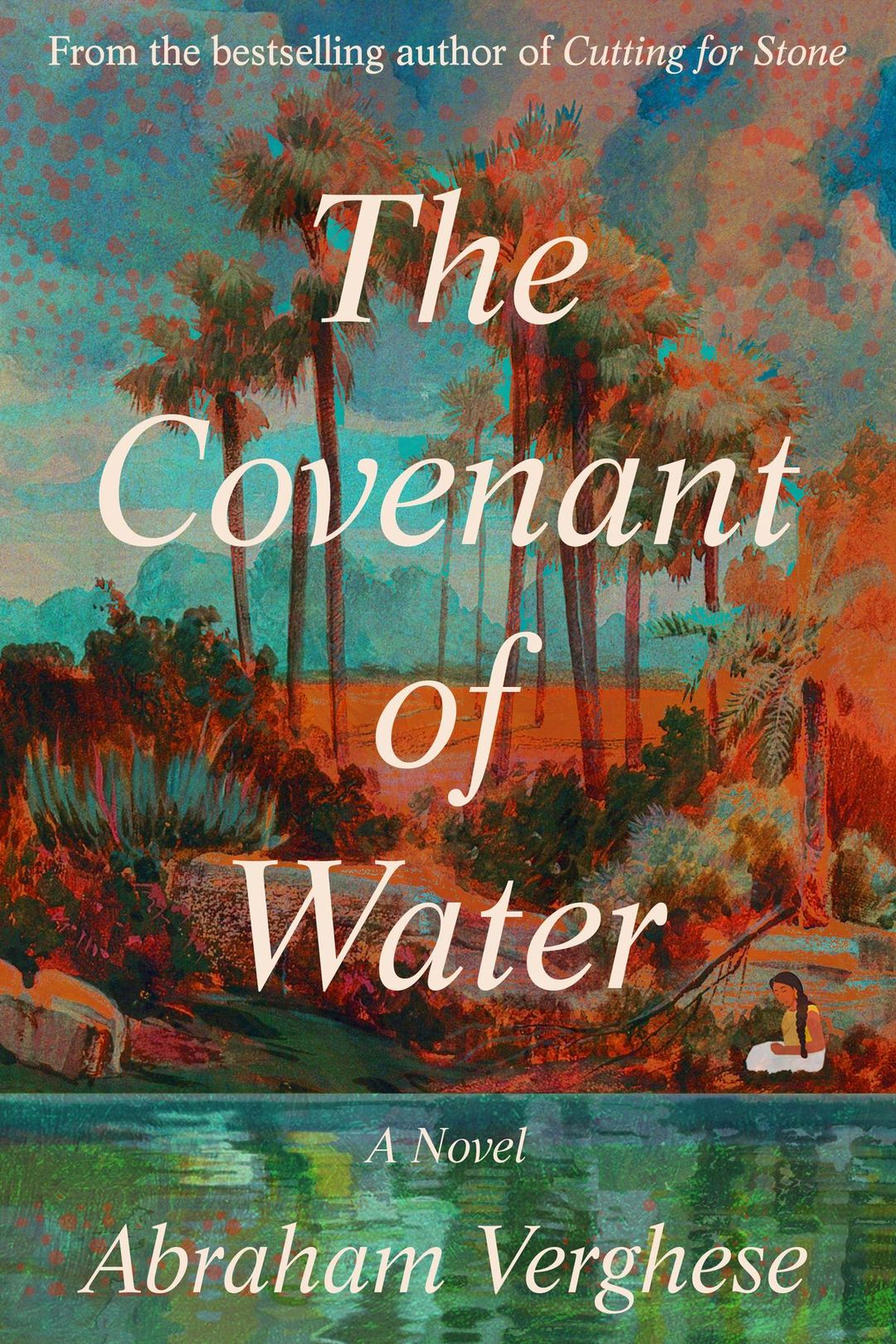
Fourteen years in the making, 724 pages long, this saga that mainly takes place in India will stay with readers long after they have finished reading it. This story spans the years 1900 to 1977 and begins with the arranged marriage of a twelve year old girl who is given years to mature and grow into her role before the marriage is consummated. She becomes the matriarch of the family and is known as Big Ammachi. The family has a secret, a curse they refer to as The Condition. At least one person, usually male, in each generation has died of drowning in a country where water is everywhere.
The reader takes a deep dive into the relationships that occur over the years in this area inhabited by St. Thomas Christians. The people in the community have a Christian faith, but it is interwoven with other cultural traditions. Big Ammachi’s husband Thamb’ran has the condition and was not allowed to travel by water to school. Therefore, he is an intelligent man, but has never learned to read. He also has a hearing loss.
Just when the reader has a grasp on these characters and the plot, the story jarringly transitions to Glasgow, Scotland, in 1919, where we meet Digby Kilgour, a surgeon, and become acquainted with the caste system. Although the transfer seems sudden, the plot soon moves back to Parambil in India where it is discovered that beloved Baby Mol suffers from a medical situation that will leave her childlike all of her life.
The Covenant of Water is too long for a reviewer to detail all of the events concerning the many characters. The plot is intricate and seemingly unconnected threads are eventually woven into other threads to create beautiful scenes full of emotion and love which cross many generations. There are tragedies and victories, happiness and great sadness. Heroic actions save lives and cause personal suffering. Writing and art are tools for healing. The World War brings death to many as Japan bombs Madras in India, but also inspires Indians to seek their freedom from Great Britain. There are births under primitive conditions, the arrival of electricity, and the release of Nehru after three years of imprisonment. Fire causes permanent damage as does leprosy, but with an undercurrent of faith, there is also healing and joy. Water is a powerful theme as the water flows through the land uniting all the characters with none of them having to stand alone because they are connected by the water—physically and emotionally. Story is important to this author and more important than themes and messages. As the story unfolds, however, Verghese reveals deep meanings and understandings of human nature in his beautiful writing. Although he labored over this saga for years, the telling seems to be effortless and replete with memorable lines and phrases. It is a masterpiece of fiction that readers will want to discuss and revisit for years to come.
Rating: 5/5
Category: Fiction
Notes: I am not normally a fan of celebrity book clubs, but I listened to Oprah Winfrey’s six part discussion (available on YouTube) of The Covenant of Water with author Abraham Verghese. It is a great interview and includes Verghese reading some passages from the book. It offers interesting insights into the writing process. I don’t usually listen to audio books because of hearing issues, but I could tell that Verghese’s reading of his book would be a positive addition to the enjoyment of The Covenant of Water.
It is a long book, but I think most people in my book club enjoyed it. One member shared a 5 page list of characters she found online. Because the book is so long, I would suggest readers explore that possibility or create their own list as they read.
Publication: May 2023—Grove Press
Memorable Lines:
The grandmother is certain of a few things: A tale that leaves its imprint on a listener tells the truth about how the world lives, and so, unavoidably, it is about families, their victories and wounds, and their departed, including the ghosts who linger; it must offer instructions for living in God’s realm, where joy never spares one from sorrow. A good story goes beyond what a forgiving God cares to do: it reconciles families and unburdens them of secrets whose bond is stronger than blood. But in their revealing, as in their keeping, secrets can tear a family apart.
“Are we not doing some good here, Honorine?” he asks gently. She looks at him kindly. “Aye, bonny lad, you are! Us all are! Our hospital, the railways and telegraphs. Plenty good things. But it’s their land, Digby, and we take and take us. We take tea, rubber, take their looms so they must buy our cotton at ten times the cost…”
“Half my life is spent on trains. Strangers of all religions, all castes getting on so well in a compartment. Why not same outside train? Why not simply all getting along?” Arjun looks out of the window and swallows hard.
Being Elisabeth Elliot: Elisabeth’s Later Years
Being Elisabeth Elliot: Elisabeth’s Later Years
By Ellen Vaughn
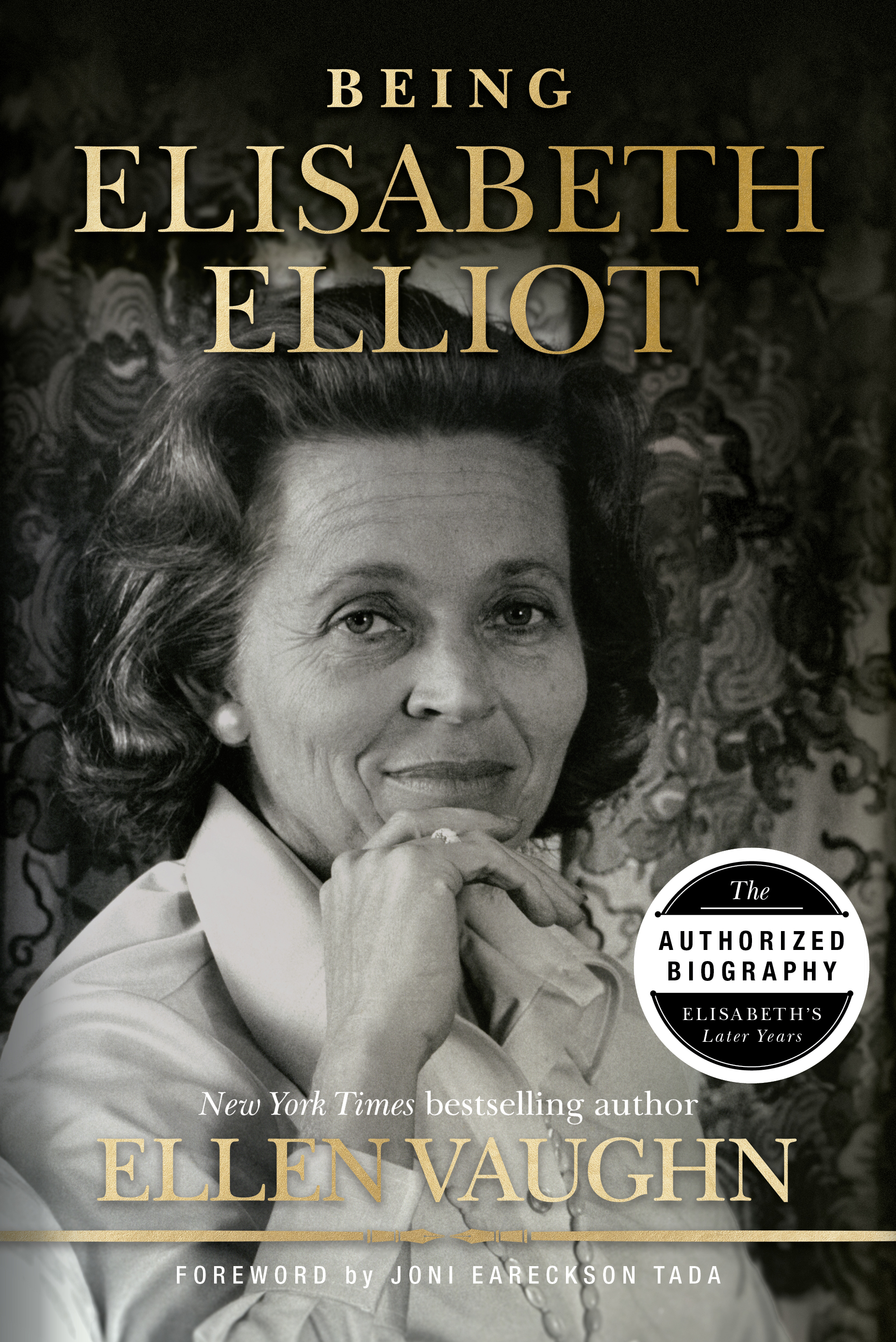
Because Elisabeth Elliot was among many things a writer at heart, she left behind a lot of correspondence and journals along with the many articles and books she authored. Her biographer, Ellen Vaughn, had a treasure trove of resources available to her as she documented the life of Elisabeth Elliot. This book follows up on the earlier years of Elliot’s life which Vaughn also wrote about in Becoming Elisabeth Elliot. In this book the reader not only learns the rest of Elliot’s story, but also takes a deep dive into the challenges of being a biographer as experienced by both Elliot and Vaughn. In that role, as in all of her writings for a Christian audience, Elliot faced pressures from her readers, her editors, and her publishers to end each book with a happy ending in which someone came to salvation in Jesus. Her struggle as a missionary and then as a writer is that not every situation will end in such a way. She felt an imperative to share the truth even if it went against the wishes of her readers.
Elisabeth had a number of crossroad moments because she desired so passionately to make choices that aligned with the will of God and at the same time she wanted to be loved and cared for by a man, a husband. She wanted to “matter to someone.” Although she didn’t see herself as a very social person, she actually had a number of friends. The selection of male friends in her circle was limited—by age, availability, and suitability. Yet she continued to make decisions as she kept her eyes open for the man who could make her feel loved. Meanwhile, she traveled a lot as a speaker, continued to write, moved a few times, raised her daughter, took in boarders, and even considered returning to Ecuador as a missionary.
If you don’t know about her two marriages after she returned to the U.S., I won’t include spoilers except to say that she experienced the “best of times and the worst of times.” There is not a lot of documentation about her third marriage because that husband burned her journals from those years. Perhaps it is just as well. Elisabeth gradually lost her “voice” to Alzheimer’s passing away in 2015, but her message continues to impact new generations via her writing, recordings of her speeches, and through the Elisabeth Elliot Foundation.
Rating: 4/5
Category: Biography, Nonfiction, Christian
Notes: Authorized Biography
Publication: 2023—B&H Publishing
Memorable Lines:
Few loved the Bible more than Elisabeth Elliot. But she was appalled when Christians used it as a weapon to clobber or distance themselves from people who were different from them. Or to distance themselves from suffering, mysteries, and difficult questions.
“My observations, it turned out, were ‘controversial,’ not because I had taken sides but because I had not taken sides.”… Again, as so many times in the past, she felt squelched by religious and commercial institutions that wanted her voice, but only if she parroted the party line.
Here in the core of her hideous loss, Elisabeth looked back again to the fundamental losses of her life. It was not hard—they were always, it seems, present in her mind, part of that which shaped her experience and her understanding of the mystery of faith in an inscrutable God.
Who was she? I would say she was a woman who lived imperfectly, as we all do, loved God and sought to serve Him with everything she had.
Finlay Donovan is Killing It–dark, comedic mystery
Finlay Donovan is Killing It
by Elle Cosimano

Normally a cozy mystery/Agatha Christie reader, I decided to see what all the buzz is about with Finlay Donovan is Killing It and the other books Elle Cosimano has written in this series. The author has created a protagonist that many women can related to. Finlay finds herself in a morally shaky and sticky situation. Her happily ever after has disintegrated under her feet. She is divorced from her ex-husband who is a philanderer and a manipulator. She is deeply in debt to so many people including her ex who has become her landlord.
When a private conversation at Panera is overheard and misunderstood, Finlay becomes entangled in a scheme to murder a serial date-rapist who drugs and then blackmails his victims. He also works for the mob.
I don’t want to give away more of the plot. I can share that despite the dark nature of the predicaments, the author includes many humorous situations and twists and turns that are truly unpredictable. Characters are a big part of this book. Finlay is motivated to keep her two preschool age children safe and retain custody of them. To do that she needs reliable childcare and financial independence from her ex-husband. She is a writer and her profession plays a large role as fiction and non-fiction intertwine. There are two romantic interests, a detective and a law student. She is supported in many ways by her sister Georgia, a cop, and by Vero, her babysitter and partner in crime.
I did enjoy this book. It has lots of women-focused themes and ethical issues. It addresses practical concerns—nosy neighbors, malfunctioning alternators, and inoperative garage doors—and issues that we hope we will never encounter like hitmen, affairs, and date rape drugs.
I received a complimentary copy of this book in exchange for an honest review. Opinions expressed in this review are completely my own.
Rating: 4/5
Category: Mystery
Notes: 1. very insightful discussion questions
2. a fair amount of swearing
Publication: February 2, 2021—St. Martin’s Press (Minotaur Books)
Memorable Lines:
If you’ve never had to wrestle a two-year-old slathered in maple syrup into a diaper while your four-year-old decides to give herself a haircut in time for preschool, all while trying to track down the whereabouts of your missing nanny as you sop up coffee grounds from an overflowing pot because in your sleep-deprived fog you forgot to put in the filter, let me spell it out for you.
Patricia withered, clearly mistaking my mom face for something else…some callous expression worn by contract killers and hit men. Maybe they’re similar. I wouldn’t know.
Theresa was all about social cachet and prestige. If there was a chance to flaunt a high-profile client like Feliks by sticking her head out of the roof of his slick black limousine and shouting it to the moon, she wouldn’t miss a chance to do it.
The Start of Something Wonderful–Lake District of north west England
The Start of Something Wonderful
by Jessica Redland
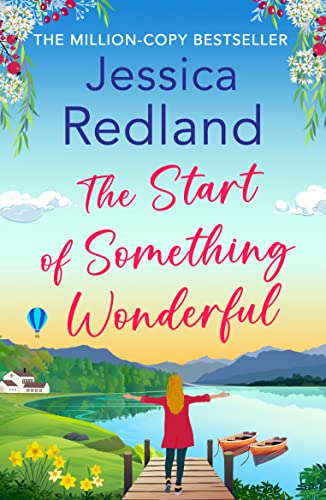
Sometimes people have to go through some hard times before they are ready to make changes in their lives. At some point they also begin to appreciate what they already have. Such is the case for Dane whose divorce is pending and for Autumn who loses her job as a greeting card illustrator while she is grieving for her grandfather and coming to grips with a past failed romance.
The Start of Something Wonderful is about Dane and Autumn as they literally bump into each other. In the process of their meeting, we learn so much about their pasts and their hopes and dreams. They do not start out looking for romance, but in their efforts to begin again with their lives, they discover a friendship and a kinship that draws them close together.
The setting is one the author is quite familiar with—Derwent Water in the Lake District National Park in north west England near Keswick. The beauty of the area and the feel of community in the small towns nearby are inspiring to Autumn as are her visits to Hill Top Farm and the legacy of her personal heroine, Beatrix Potter. She wants to take her inspiration from Potter and the area without copying her.
Rosie is an important character in that she was Autumn’s penpal from age eleven. Neither had a lot of friends in school and family needs kept each close to home. Thus they became confidants through the rest of their lives. When Autumn goes to meet and visit Rosie for a fortnight in the Lake District where Rosie manages a stable and teaches riding skills, a new stage of life begins for both women.
The main characters are quite likable along with several others who contribute to the plot. There are also a few who are despicable, especially Autumn’s ex-boyfriend. The romance is gentle and slow and suited to the story and the needs of the characters. Several events were quite touching, and I enjoyed the whole book. Redland is a good writer. I have enjoyed everything I have read by her, and I am excited for this new series.
I received a complimentary copy of this book in exchange for an honest review. Opinions expressed in this review are completely my own.
Rating: 5/5
Category: Fiction, Romance
Notes: #1 in Escape to the Lakes
Publication: July 17, 2023—Boldwood Books
Memorable Lines:
“You really think certain people are meant to be in your life?” “Of course! I think they appear when you need them and we’re the living proof of that.”
We really were kindred spirits, neither one us willing to travel far from home because we had a loved one to look out for, and neither of us having a friend who we could pour our hearts out to in person. It was no wonder we’d become so close as penpals. There’d been nobody else to turn to.
It was my grandparents’ home and I needed my own space. It was full of memories, but selling it wouldn’t take them away. They were in my heart and my head and would remain with me wherever life took me. I didn’t need to own their house to remember them.
Under the Tulip Tree–must-read book about slavery
Under the Tulip Tree
by Michelle Shocklee
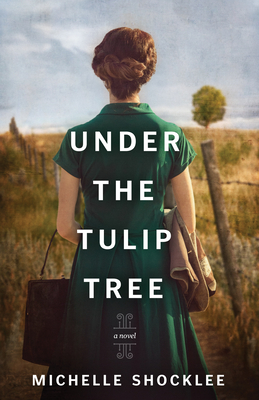
We have all heard it: it is important for us to know history so we don’t repeat the mistakes of the past. Michelle Shocklee does that in her novel Under the Tulip Tree. We get a view of slavery through the eyes of Lorena (Rena), an aspiring writer, who struggles to pursue her career in a male dominated society. She is sixteen when the stock market crashes and her privileged life changes forever. Seven years later she accepts a job with the Federal Writer’s Project (FWP) and meets Frankie who at 101 years old has a horrendous story to tell about what life was like for her and for others who were slaves.
The impact of someone being owned by another person is a concept that is hard for Rena to get her head around. The atrocities that Frankie shares are heartbreaking—even more so when you realize these things are drawn from actual events as told to FWP workers who were employed by the government to interview former slaves and record their stories for posterity.
What makes this story especially impactful is that Rena is telling this story from the viewpoint of a young White woman during the Great Depression. Although slaves had been freed, Blacks still did not enjoy equal rights. From sitting at the back of the bus, to lower pay, to being treated as dirty and ignorant, Blacks suffered from discrimination. Some Whites treated Blacks that way just because they could—acts of control and power. Some Whites treated Blacks that way because they were raised with that mindset, a deep cultural fear and hatred of someone who was different or because their own families had been mistreated by the Feds during and after the Civil War.
Rena’s father was a banker who fell apart after the crash. With her grandmother’s help, her family stayed afloat with both Rena and her mother getting jobs. Employment outside the home was something that was not acceptable for “their kind.” Rena’s mother was especially class conscious and worried about what her gossiping neighbors and former friends would say about Rena consorting with Blacks in Hell’s Half Acre where Frankie lived in a well-kept, small home boasting a beautiful floral garden and an outhouse.
As Frankie tells her story to Rena, the reader is quickly tied into the cruelty of the drama taking place in the book, and it becomes a page turner. It is harder to connect with Rena, but she grows as a person and becomes someone with the potential to do good. You can’t tell a story like this without pondering how a good God can allow bad things to happen. Frankie understandably harbors a lot of hate in her heart, but God works gently on her by bringing Illa, a Quaker woman, and Sam, a former slave, into her life, each encouraging, challenging and helping her.
Shocklee is a masterful storyteller, evoking empathy for 7 year old Frankie and embedding her into the heart of the reader. She shares the difficulties Frankie endured throughout her life without bearing down on graphic details. The author also dives into the “contraband” camp where Frankie lived for three years, still nominally a slave but under the protection of the Federal soldiers. Then she paints a picture of the horrors of war and its aftermath. As we learn about this part of history, we also see how citizens, both Black and White, were faring during the Great Depression. There are several surprising events at the end of this tale that help to bring closure for the characters and the reader.
There is a strong spiritual theme in Under the Tulip Tree. Frankie’s mother, Mammy, is a Christian believer, and although separated from each other early in Frankie’s life, Frankie never forgets her mother’s faith. Another important theme is literacy. Slaves were not allowed to learn to read. It was clear to the masters that slaves who could read could not be controlled as easily. Therefore books were forbidden. Frankie initially wanted very much to read, but the consequences were too great, robbing her of that desire. Standing up for what is right, for the downtrodden, for yourself against the power of the group in control is also a recurrent theme. All of these and many others remain ideas we wrestle with in our current society. On the positive side, we see the strength to be found in literacy, in trusting in God despite the circumstances, in the power in the Word of God, and in love for others—even our enemies.
Rating: 5/5
Category: Historical Fiction, Christian
Notes: 1. My personal thoughts in response to Under the Tulip Tree:
—The problem is not addressed in this book; but, sadly, slavery/human trafficking is widespread all over the world today. It is a major problem in the U.S.
—We make quick assumptions every day about other people based on where they come from, how they look and talk, and so many other factors. People, Black and White, did that in the book, and we still do it today.
- Original stories collected by WPA are available online from several sources. One is sponsored by Rice University: https://libguides.rice.edu/c.php?g=1231494&p=9012494
- Discussion questions are included in the back of the book.
Publication: 2020—Tyndale
Memorable Lines:
[Rena]: “People like me, like my family, we don’t know much about what slaves experienced. I’ve never heard of children being beaten with no one held accountable, or being forced into labor at the age of seven. Even though slavery isn’t legal anymore, I believe it’s important to remember the past as it truly was, not as we wish it to be.”
[Frankie]: “Helplessness washed over me, and I hated myself for it. Ever since the day I was sold away from Mammy, I’d despised helplessness. When overseers beat me and chased me down like an animal, I’d been helpless. When men used my body for their own pleasure and babies died, I’d been helpless to prevent it from happening. But the one thing I’d fought to maintain control over was my emotions. No one could force me to love or hate. They were mine to decide. I wasn’t about to allow this white woman to steal that away from me, no matter her attentive ministrations.”
[Sam]: “Don’t you see, Frankie? The day I landed on Miz Annabelle’s doorstep changed my life. I thought I found freedom when I ran away from my master, but it weren’t mine. Not yet. Freedom comes in knowing the truth of God. He loves each of us the same. He loves you, Frankie.”
Earth’s the Right Place for Love–young love and friendship
Earth’s the Right Place for Love
by Elizabeth Berg

I have read several novels by Elizabeth Berg. She excels at writing character driven novels. The first book I read by her was The Story of Arthur Truluv. I was enchanted by the character of Arthur, a kind, nonjudgemental, gentle, elderly man. In Earth’s the Right Place for Love, Berg returns to the character of Arthur as a sixteen year old. We learn that Arthur was the kind of person you could trust even as a teenager. He was always different from his peers. Never interested in sports, Arthur loved nature, especially plants. Most of the book follows his love for Nola who was cute, popular, and enjoyed Arthur’s friendship. Arthur wanted more, but never pushed for more from Nola who was very interested in Arthur’s older brother Frank.
I almost stopped reading the book during the first part because of physical abuse that happened when Arthur’s father was drunk. Those passages are not graphic but recognizing the occurrences is unavoidable. They ended about one-third of the way into the book. I was glad I just pushed on through as the rest of the book was so good. There is sadness to the book, but is is also a hopeful book with the main character mostly optimistic and patient.
Besides Arthur and Nola, Frank is another likable main character. He is bold, good at sports, and appeals to women. A sounding board and mentor for Arthur, Frank’s goal is to become a writer. The brothers’ relationship and Frank’s story are important parts of this novel. Their mother models love based on commitment. At times her actions make her seem weak, but actually she is strong and determined to keep her family together.
I received a complimentary copy of this book in exchange for an honest review. Opinions expressed in this review are completely my own.
Rating: 4/5
Category: General Fiction, Literary Fiction, Women’s Fiction
Notes: 1. Although the protagonist, Arthur Moses, is the same Arthur as found in The Story of Arthur Truluv, this novel is about Arthur as a boy and young man. The stories are not dependent on each other.
2. The setting of the story is the small town of Mason where Berg has set three other novels.
3. Warning of potential trigger for some readers: references to physical abuse.
Publication: March 21, 2023—Random House
Memorable Lines:
If nothing else, Arthur had learned this: love came in without knocking and stayed without your permission. And when hard times came between you and the one you loved, you didn’t run away. You stayed. His mother had told him that. His mother had demonstrated that.
“Remember, Pop was an orphan. And he didn’t get adopted until he was ten.” “Yeah, so?” “So it makes a difference, Arthur. Pop’s got a hole we won’t ever fill.”
The natural world was better than anything. He couldn’t say in words what it gave him, but he could feel it the minute he stepped outside: a kind of expansiveness and peace.
A Novel Proposal–one more chapter!
A Novel Proposal
by Denise Hunter
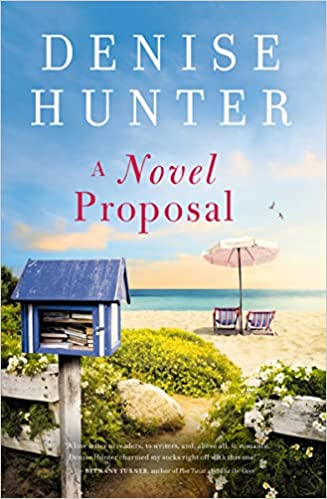
I have read other books by Denise Hunter. I have read other clean romances. A Novel Proposal, however, is one of my favorites from both perspectives. The format of the book appeals to me so much. The author tickles my writing and reading sensibilities with her plot dilemma in which the protagonist Sadie, a budding author, has written several good western novels at a time when no one is buying westerns. Her contract is cancelled, and she will owe the advance money she received. Her publisher likes her writing, however, and gives her a chance to redeem her career with a romance. Romances are totally out of the comfortable range for Sadie, both in her personal life and in her writing experiences and goals. So, what makes A Novel Proposal unique? Each chapter begins with a quote from Romance Writing 101. These quotes summarize the steps in romance writing and reflect what is happening in each chapter. For example, Chapter 2 begins with “A meetcute is a charming encounter between two characters that leads to the development of a romantic relationship.” In this chapter Sadie meets the handsome, apparently broody Sam who shares half of a beach duplex with her when she travels from NYC to South Carolina to write a romance. She is gifted a stay there by her best friend’s mom. Sam is staying there to escape from a romantic disaster while continuing his job working for the family landscaping business. Supporting characters that you will enjoy include Caroline, Sadie’s best friend, and Rio, Sadie’s Maltipoo and constant companion. Hayley, Sam’s teenage sister, and the rest of his extended family add depth to the novel.
Sadie and Sam both have trust issues that hinder their relationship. Sadie is fun loving and blossoms in South Carolina where she starts a Free Library on the property and discovers something valuable in one of the books. She exchanges time as a “plus one” with Sam for his help in tracking down the owner. With publishing deadlines pressing, Sadie begins to write her novel based on her developing relationship with Sam using the old adage “write what you know.” Sadie and Sam are both characters with reader appeal. The reader knows that, as a romance, there will be a happily ever after, but how will the characters arrive at that end? Going along on the journey and watching the characters develop is such a fun reading experience. I had trouble putting the book down as each chapter led into the next in such a way that my mind kept say “One more chapter, one more chapter…”
I received a complimentary copy of this book in exchange for an honest review. Opinions expressed in this review are completely my own.
Rating: 5/5
Category: Romance
Notes: standalone, clean
Publication: March 21, 2023—Thomas Nelson
Memorable Lines:
A jet went streaking over their heads, reminding her of her noisy apartment, just a stone’s throw from LaGuardia with thin walls and thinner windows. Not to mention the construction project that had been going on next door since the Revolutionary War.
She was using a saw. A circular saw if his ears hadn’t failed him. What in the world was she doing? The ear-shattering noise stopped as she finished the cut—or sliced off a finger. He had a hard time believing a woman who couldn’t navigate porch steps might be handy with tools.
Maybe he needed space to figure things out. Just because her day had lasted eight decades didn’t mean his had too.
A Tree Grows in Brooklyn–a no-nonsense coming of age story
A Tree Grows in Brooklyn
by Betty Smith
Sometimes publishers and reviewers have the audacity to promote a newly published book as a “classic.” In my opinion a classic is a book of excellence that has stood the test of time and is judged to be worthy of reading and rereading by future generations. First published in 1943, A Tree Grows in Brooklyn is such a book. Written by Betty Smith, it is fiction but it has its basis in Betty Smith’s own coming of age in Brooklyn.
The protagonist is Francie, a girl who grows up in difficult circumstances of poverty with an alcoholic father who is nonetheless likable. Her mother favors her younger brother over Francie knowing she will be able to succeed in spite of her background. Francie, like Betty Smith herself, from a young age is a reader and a writer. Francie’s mother, Katie, works cleaning houses and believes with all of her being that education is the route to success for her children. She insists that her children read a page from Shakespeare and the Bible each night. She evens barters piano lessons for herself and Francie, with little brother Neeley, who inherited his father’s musical aptitude, watching. Their father Johnny worked as a singing waiter when he could get employment.
There is not a plot per se in A Tree Grows in Brooklyn; it is a recounting of a family’s struggle to survive. The reader is immersed in the setting, the culture, and the characters. Despite the lack of twists, cliff hangers, climax, and denouement, this novel is a page turner of a gentle sort. Ripe with symbolism, this book is perfect for discussion and introspection. It opens the door to an era gone by and good hearted, imperfect people who want to keep their dysfunctional families intact and give their children a better life than they had. It is the fight for the American Dream set down on paper.
Rating: 5/5
Category: Classic, Literary Fiction
Publication: 1943—Harper Collins
Memorable Lines:
Mama explained: “Francie is entitled to one cup each meal like the rest. If it makes her feel better to throw it away rather than to drink it, all right. I think it’s good that people like us can waste something once in a while and get the feeling of how it would be to have lots of money and not have to worry about scrounging.”
“Who wants to die? Everything struggles to live. Look at that tree growing up there out of that grating. It gets no sun, and water only when it rains. It’s growing out of sour earth. And it’s strong because its hard struggle to live is making it strong. My children will be strong that way.”
Oh, the last time how clearly you see everything; as though a magnifying light had been turned on it. And you grieve because you hadn’t held it tighter when you had it every day.
A Small Town Romance–writer of hurtful satire
A Small Town Romance
by Melinda Curtis
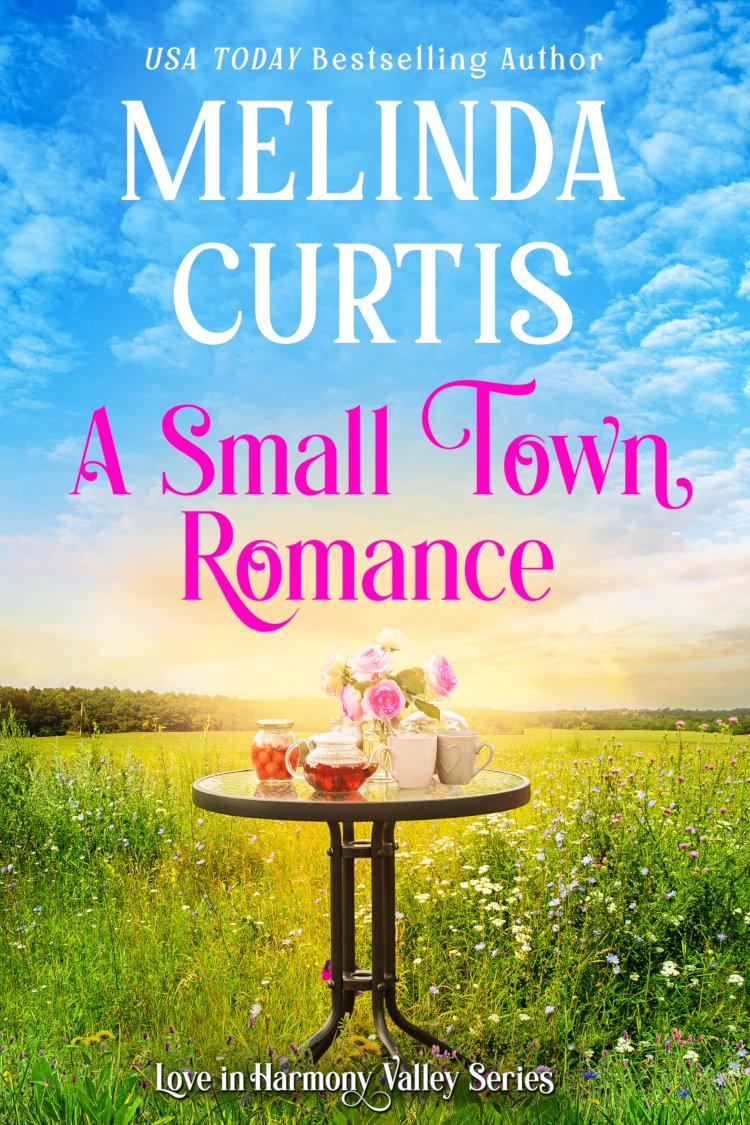
As the Love in Harmony Valley series continues, I have been looking forward to hearing more of Tracy’s story. We met her in the first book of the series, Dandelion Wishes. She had been Emma’s best friend and is Will’s sister. She has expressive (speech) aphasia as the result of an accident where Emma was driving. Her speech difficulty is hard enough in daily life, but imagine what it does to a marketing executive. She is currently working as a barista in the local coffee shop.
When Chad is fired from his position as a travel writer and head of company at the Bostwick Lampoon, he heads out to write his own caustic satire on the web starting with little Harmony Valley. The elderly residents are delighted that he is going to draw attention to their town bringing in tourists and new residents but are unaware of his satirical motives.
Tracy is attracted to the real Chad hidden inside the charming but deceptive exterior. He does have a kind heart and helps her with her speech. Unfortunately for their relationship, Tracy has done her research and is aware of the devastation he can bring to the little town and the people she loves in Harmony Valley.
A Small Town Romance provides a great look at these two characters. It shows the importance of self-confidence and helping others, putting their needs above your own.
I received a complimentary copy of this book in exchange for an honest review. Opinions expressed in this review are completely my own.
Rating: 5/5
Category: Women’s Fiction, Romance
Notes: 1. #7 in the Love in Harmony Valley Series. It could be a standalone but so many of the previously introduced citizens of Harmony Valley show up in this book that I think the enjoyment is enhanced by reading other books in the series.
2. This book is Tracy and Chad’s story.
Publication: July 18, 2023—Franny Beth Books
Memorable Lines:
Tracy used to love to flirt. She used to be the Queen of the One-Liners, the Princess of Comebacks, the Junior Miss of Verbal Jousting.
“It’s quite round.” Chad swirled the glass again and watched the wine drip slowly down the side. “And it has good legs.” Now he was speaking French. Liquid, people. It’s just liquid.
Mildred was no longer going to seize the day. She was going to walk in Martin’s and survive the day. Because that’s what one did after embarrassment in a small town. You held your head up and carried on.
A Bookshop Christmas–recovering from grief
A Bookshop Christmas
by Rachel Burton
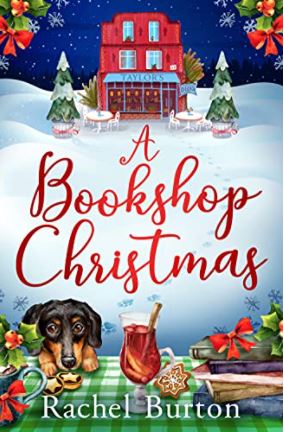
Although Christmas is an important part of the setting for A Bookshop Christmas, the story focuses on Megan, a young widow. When she loses her husband Joe to cancer, she retreats back to the bookshop where she grew up. She’s been hanging on emotionally for over three years with support from her mom and two friends, but the bookshop is floundering and her heart is just not in it. Is it time to reenter the world of publishing, to leave behind the security of York and her bookshop?
Xander, a swoon-worthy author, as emotionally damaged as Megan, is scheduled to introduce his newest book at her bookshop. He is rude and arrogant, but maybe those characteristics are just a coverup for his pain and shyness.
One of my favorite characters is Philomena Bloom, Xander’s agent. She is bigger than life and seems to have connections with everyone in the publishing world. My other favorite character is Gus, a dachshund, whose sweetness is woven all through the book.
Megan and Xander have deep, painful secrets that make it difficult for them to open up to others. All is not sweetness and light in this romance. Although you will want a happily ever after for these two, the road is rocky and there is sadness and misunderstanding as they struggle to get over the past and find a hopeful future.
I enjoyed A Bookshop Christmas for the way the characters support each other. They make mistakes but learn to recognize and admit their mistakes and apologize for them. There is humor sprinkled in the book that helps lighten the tough times Megan and Xander go through. It is a thought provoking book and I recommend it.
I received a complimentary copy of this book in exchange for an honest review. Opinions expressed in this review are completely my own.
Rating: 5/5
Category: Romance, Women’s Fiction
Publication: September 2, 2021—Aria
Memorable Lines:
“Reading is completely subjective and most readers read all kinds of different books. Being a snob about genre is like pretending that reading on e-readers or listening to audiobooks is somehow not proper reading. It’s ridiculous.”
Philomena Bloom burst into the bookshop at exactly three o’clock the next afternoon, leaving a wave of expensive perfume in her wake. The handful of customers browsing the shelves all looked up at the same time like meerkats.
The five stages of grief aren’t linear either—they all seem to exist together in one fiery hell ball of emotion that feels as though it will last forever. People will tell you that time heals but, in my experience, time just takes away the intensity.
 education pathways