Home » Posts tagged 'women'
Tag Archives: women
The Funeral Ladies of Ellerie County
The Funeral Ladies of Ellerie County
By Claire Swinarski
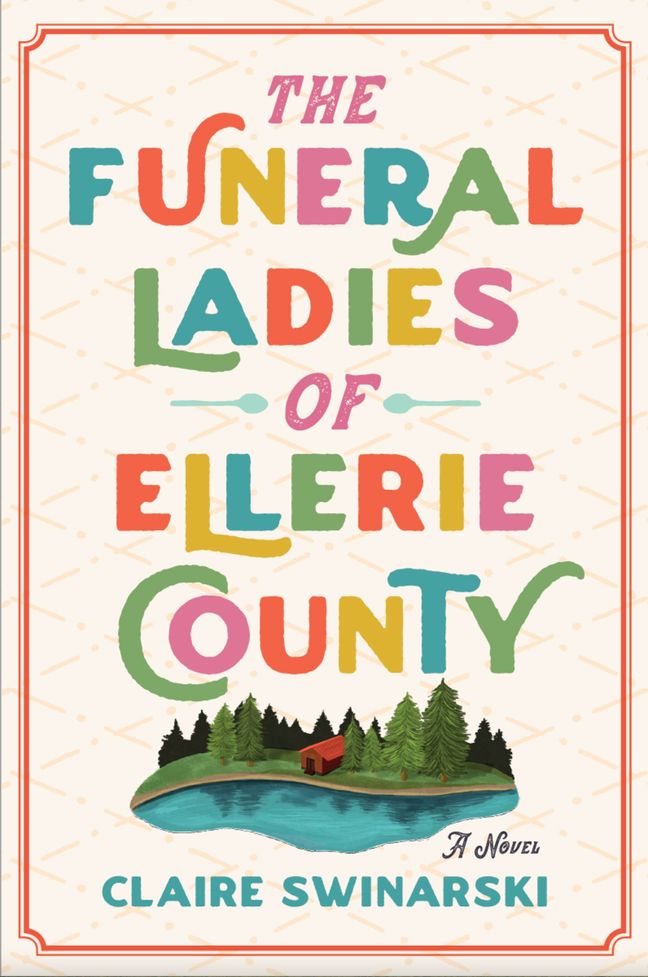
What an odd title for a novel! But as soon as you start reading, you will realize that it is very appropriate. Some of the main characters in the book are members of the funeral committee at St. Anne’s Catholic Church. When there is a death, they quickly move into action to provide the expected luncheon for attendees at the funeral “knowing they couldn’t fix broken hearts but might as well feed them.” Any food left over is packaged up and sent home with the bereaved so they don’t have to worry about food for the following difficult days.
As you get to know Esther, you will also meet her family and witness their love for each other. Esther is one of the kindest people you will ever meet. She is a widow, and she is frustrated with the process of growing old. Her generosity and empathy for Hazel, a young single pregnant woman she befriends on a Catholic website leads her into financial danger, but Esther’s family and friends gather round to support her. Unfortunately, Esther’s background and community stress the importance of pulling yourself up by your own bootstraps. The situation she is in is shameful to Esther, but it would also be shameful to accept help.
Esther’s granddaughter Iris comes to the rescue in a different way when Annabelle, a childhood resident of Ellerie County, passes away. Her family arrives for the funeral but find their reservations are a problem. Iris has a house almost ready for use as an Airbnb and lets them stay there. The grateful family includes a celebrity chef and his daughter. Cooper, his son from a previous marriage, is part of the dysfunctional family group. Cooper’s own mother is less a mother to him than Annabelle had been. A former EMT, he also suffers from PTSD.
The characters and their situations drive the plot and engage the reader. I felt immersed in the friends and family groups in the small town and could even feel the cold during the winter. The author of The Funeral Ladies of Ellerie County excelled in physical and emotional descriptions. Without a Hallmark kind of ending, she still manages to provide a hopeful conclusion to her story.
I received a complimentary copy of this book in exchange for an honest review. Opinions expressed in this review are completely my own.
Rating: 5/5
Category: Fiction, Women’s Fiction, New Adult
Publication: March 12, 2024—Harper Collins
Memorable Lines:
Esther was from an age where loving your neighbor meant loving your actual neighbor, not just adding an emoji to your Twitter name in times of crisis. She helped people just because they were standing in front of her.
…why couldn’t she just lie? It was the Catholic in her. The guilt clung to you like powdered sugar. You’d find the stuff in your hair days later.
They all thought you had to be in love to commit. They didn’t realize it was the other way around: that love came from commitment. Nobody ever tells you when you get married how many days you’ll wake up in the morning and want to strangle the other person. No, to them it was all Pinterest boards and buttercream flowers.
The Heart’s Bidding–Amish special education students
The Heart’s Bidding
by Kelly Irvin
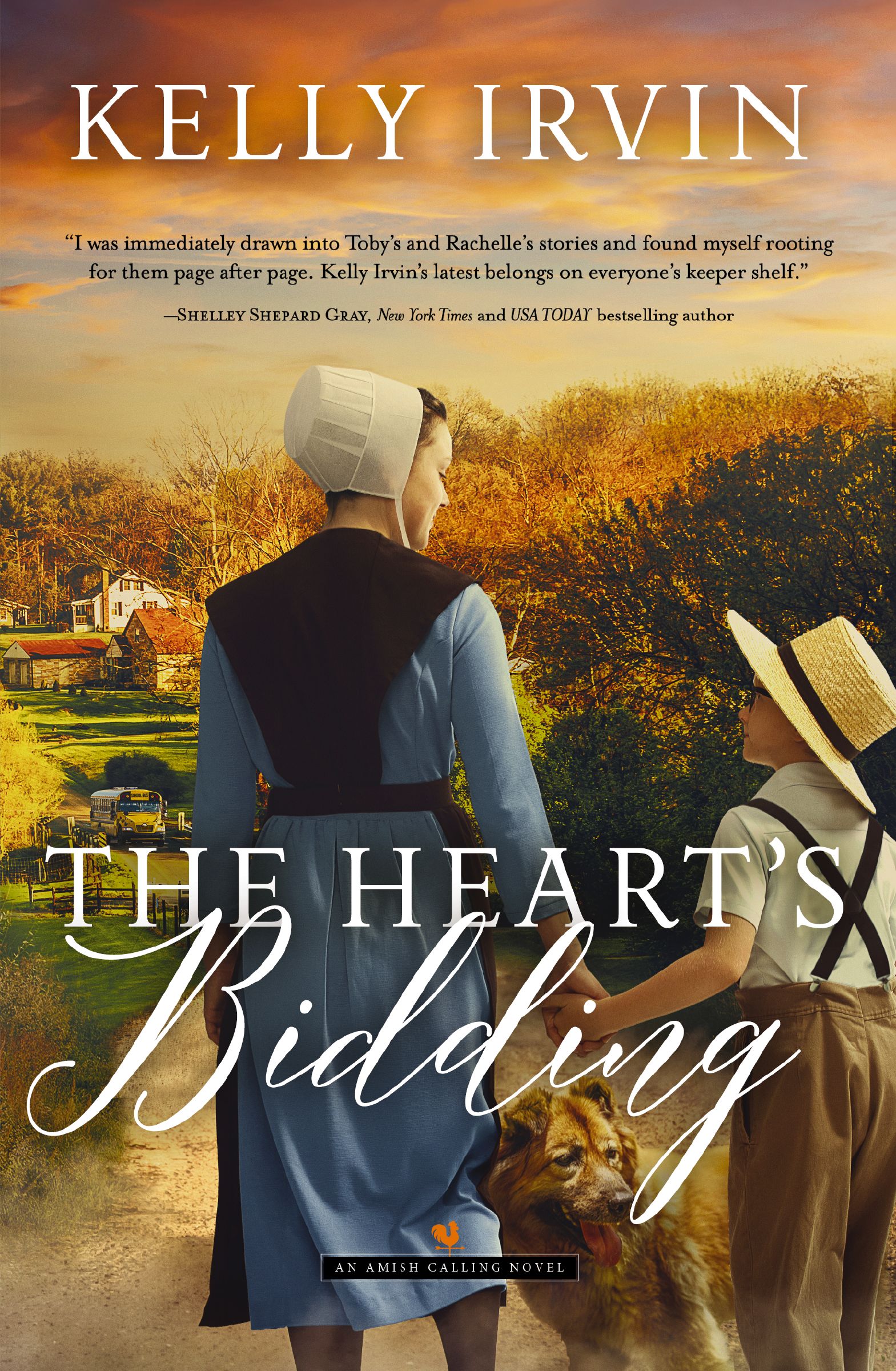
Although this book is an Amish romance, its strongest theme is the acceptance and education of children who are labelled as different, educationally challenged, developmentally delayed, disabled, mentally or physically handicapped, or as the Amish prefer to call them “special.” They see these children as gifts from God. In The Heart’s Bidding, Rachelle is a dedicated teacher, but as a Plain (Amish) woman she knows that although she loves teaching and has a talent in that area, her future will be to get married and have children. When the governing educational committee in her community decide that the special children should be transported daily to a town that offers more specialized services than the little community has available and at no cost to the Amish, Rachelle finds her last day of teaching coming more quickly than she could have imagined or desired.
Toby is a handsome bachelor who has been hurt in a past experience in courting and is haunted by the thought that no woman would want to be married to an auctioneer who spends many days and months on the road crisscrossing 5 states. Could an attraction between Toby and Rachelle come to anything? Both of their mothers would like to see it happen and have to be reminded to rein in their matchmaking. Both Toby and Rachelle have special siblings and common love and understanding for them.
There are other plot threads within this book about the large Amish families, the head of a family business stepping down, and an adult with dyslexia that has never been addressed. If you are interested in the Amish way of life and how both education and technology are addressed on an everyday level, this would be a good book to read. It gives the reader a different point of view from an author who is sensitive to both Amish and English cultures. The many children in the book provide both humor and excitement. In particular Jonah, Rachelle’s little brother, and Sadie, Toby’s little sister, both of whom will need lifelong support, will make you smile and tug on your heartstrings.
I received a complimentary copy of this book in exchange for an honest review. Opinions expressed in this review are completely my own.
Rating: 5/5
Category: Religion, Romance,
Notes: 1. The author includes a listing of characters by family and a glossary of Amish/Pennsylvania Dutch words at the beginning. She ends with author’s notes and discussion questions.
2. This is #1 in the series The Amish Calling. There are two in the series available now and one more that will be published in January 2025. All have characters who deal with disabilities of various types.
Publication: August 1, 2023—Zondervan Publishing
Memorable Lines:
Plain women liked their appliances the way some English women loved their jewelry or a roomy SUV for carting around their children—all two of them.
Their education was intended to help them be successful in their Plain communities, to be hard workers and good people, with the skills they would need to sustain to work with their families, to thrive, but to do so in a godly way.
“Sadie’s soul is innocent. It always will be.” Rachelle sought out the little girl. She found her on a swing, her legs pumping, her head thrown back, laughter spilling from her lips. “She knows what is gut and right and fair. Nothing will change that.” “Do you really believe that?” “Gott made her special. I believe His plan is for us to learn as much from her as she learns from us—more really.”
The Wind in My Hair–compulsory hijab
The Wind in My Hair
by Masih Alinejad with Kambiz Foroohar

In her memoir The Wind in My Hair, Masih Alinejad, in exile first in Great Britain and later in America, tells the struggles she had and all Iranian women still endure with laws in Iran that make wearing the hijab compulsory from age seven. The “morality police” in that country take this law over what women wear to the extreme. Women can be beaten, flogged, and jailed if even a strand of hair escapes the hijab. Women who have resisted this compulsory law have had acid splashed in their faces and have been incarcerated, tortured, and sometimes raped.
Masih tells her personal story of an impoverished, but mostly happy, rural childhood with conservative parents. Always a bit of a rebel, Masih was expelled from high school in her final semester and jailed for belonging to a small anti-government secret society. Later as a parliament reporter, she was banned from the parliament building for asking the wrong questions.
In exile Masih worked tirelessly and sometimes under threats of violence for the rights of women in Iran. There are more issues involved than compulsory hijab, but that is a visible sign of the control men have over women in Iran. Masih used the tools of social media, especially Facebook and Twitter, to broadcast her positions in Iran where the government controls television and newspapers. The movements she started were given exposure internationally via the Internet.
Masih is highly critical of female politicians and government employees who visit Iran but are unwilling to bring up women’s rights in official discussions and wear some version of head covering during their visit. Masih made recordings of Iranian families’ stories about their dead or missing loved ones called The Victims of 88. Brave women flooded her social media accounts with pictures of themselves without the hijab in the interest of freedom. The Wind in My Hair is well-written by a journalist-storyteller who has lived the story she tells. It will grip you and not release you as you ponder the freedoms you currently enjoy in your own country.
Rating: 5/5
Category: History, Memoir
Notes: Perhaps because she was not raised American, perhaps because she is a journalist, Masih’s perception of current politics and reporting in the U.S. seem somewhat skewed. She clearly understands that you can’t trust reports in Iran, but does not seem to realize that there is censorship in the U.S. by big business, politicians, and the media working in concert. That viewpoint does not change the importance of her analysis of the Iranian government’s control over its people following the deposition of the Shah.
Publication: May 29, 2018—Little, Brown, & Co.
Memorable Lines:
“The Americans are coming to steal Iran away. They’ll kill us all.” I really thought we’d face another war immediately. It was not rational, but, like millions of Iranians, I had been brainwashed by the daily propaganda on the national television and radio stations. I thought it was only Khomeini who was strong enough to stand up to the greedy U.S. capitalists. Many years later, I discovered that Khomeini was a coldhearted dictator who ordered the execution of thousands of Iranians.
I didn’t even know what charges I faced. No one had read the complaint against me. I had no lawyer to defend me. I was forced into giving a confession, and now all that remained was for this judge to pass a sentence. It didn’t sound very just. Later in life, I discovered that there is not much justice in the Islamic Republic.
There is a predictable cycle in Iranian politics, as predictable as the weather. Every year, for a few months, the government relaxes its grip and some actions are tolerated—women can show a few inches of hair under their head scarves, or men and women can actually walk together without being married, or the newspapers can publish mildly critical articles. Then, just like the dark clouds that gather in late autumn, the freedoms are taken away and transgressors are punished.
This Road We Traveled–“Mother of Oregon”
This Road We Traveled
by Jane Kirkpatrick
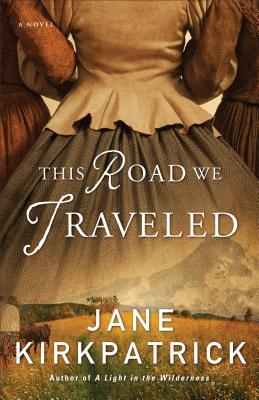 The wilds of the western United States were conquered by the strengths, sacrifices, and sometimes deaths of women as well as men who left the security of their homes for adventure and, for some, a better life. Women often made the dangerous journey solely because their husbands made that decision for them. Women of that day had no vote and no right to apply for the free land being apportioned in Oregon. Oftentimes heart wrenching decisions were made for them, leaving them to trust in God for the consequences.
Jane Kirkpatrick researched the history of Tabitha Brown carefully and then brought her story to life in a fictional account of her actual travels from Missouri to Oregon in 1846. Never wanting to be dependent on her grown children, or perhaps because her independent nature carved from early widowhood drew wedges between her and her sons, Tabitha (Tabby) took responsibility for her decision to accompany part of her family on a harrowing journey and also care for her elderly brother-in-law on this long and dangerous trip.
This Road We Traveled gives insight into the physical, emotional, and spiritual struggles the various characters endure as seen through the eyes of Tabby, her daughter Pherne, and Pherne’s daughter Virgilia. These three generations of women are united in their love for God, family, and each other. Each struggles with different challenges and their characters are formed in the forge of the many tests they endure.
Kirkpatrick is a skilled storyteller cycling through the main characters’ points of view revealing the events occurring in each life without getting bogged down in any one character’s difficulties. None of the issues are simple, varying from choosing the correct fork in the road to discovering God’s will for the future. One woman dealt with reining in her tongue so that her words matched the kindness in her heart. Another struggled with the importance of possessions, and the third had difficulties with friendships.
The pacing of the plot is good and the characters are well developed. Although there are many Christian themes emphasizing moral choices, the book is not about a cookie cutter religion; the characters have various attitudes about their relationship with God and how they should live out their faith. The author describes the desert landscape, the treacherous mountain passes, and the homes, both humble and more luxurious with equal skill. Slavery, an issue that is being stiltedly worked out during that time period, crops up several times. The various Indian tribes are not stereotyped. Some are quite generous to the travelers who are in the throes of desperation and others are violent and aggressive. Politics also play a role as the U.S. is afraid the British will cut off routes in the west.
This Road We Traveled brings to life an important part of history. Tabitha was a real person who actually made this journey at the age of 66. She had hardships on the journey and went on to help many in the state of Oregon which publicly acknowledges her contributions with the title “Mother of Oregon.” I learned a lot about her life, travels in the 1840’s to the west, and the difficulties of settling into a new community. Tabby’s story is an inspiration, and I am grateful to Kirkpatrick for sharing it.
Rating: 5/5
Category: Christian, Historical Fiction
Notes: 1.Questions for discussion are included.
2. I read this book as the first book chosen for a book club newly formed by friends at church and held via Zoom meetings. I think the consensus was that we all enjoyed the book. There was plenty of depth for discussion on a variety of topics.
Publication: September 6, 2016—Revell
Memorable Lines:
“Your sadness, your anger at Orus, at me, those are losses reaching out like the gnarled hands of Shakespeare’s witches. They seek something to hold on to, but there is only air.”
Oh, she’d prayed and asked for guidance but didn’t see the clarity she would have liked. Some choices were like that. God left her to step into uncertainty. She guessed that’s where faith grew strongest.
“In the end, things don’t really matter. We think they do, but they don’t. What matters is keeping those we love alive.”
The Tattooist of Auschwitz–tribute to human resilience and the power of love
The Tattooist of Auschwitz
by Heather Morris
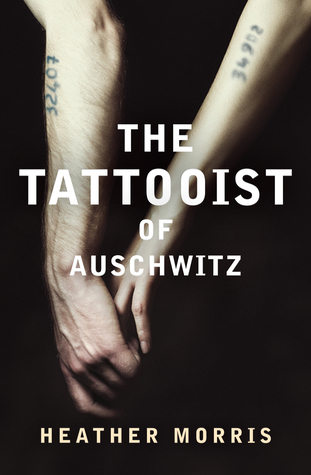 When a book reads like fiction but is a union of memories and history, it is literary work that is destined to engage and move the reader. The Tattooist of Auschwitz is such a tale, related by Lale Sokolov to Heather Morris over a three year period. It is a horrific story of desperation in the worst of circumstances and of Lale’s confidence that he would survive and marry his beloved fellow sufferer Gita.
The Tattooist of Auschwitz displays the best and worst of mankind. It shows the incredible resilience of the human spirit. Throughout, the reader witnesses people doing whatever it takes to survive as does Lale who is innovative, multilingual, charming, and determined that in the end his tormentors would not get the best of him. There are many books written about the Holocaust. Each addresses the events from a different perspective. This is another valuable contribution, adding to our understanding and reinforcing the sentiment of “never again.”
 I would like to extend my thanks to netgalley.com and to Bonnier Zaffire for giving me the opportunity to read this book in exchange for an honest review.
Rating: 5/5
Category: General Fiction (Adult), Historical Fiction
Notes: Despite the nature of the events being retold, the writing has a respectful tone without graphic descriptions of violence or swearing. I highly recommend this book.
Publication: January 11, 2018—Bonnier Zaffire
Memorable Lines:
Lale has witnessed an unimaginable act. He staggers to his feet, standing on the threshold of hell, an inferno of feelings raging inside him.
How can a race spread out across multiple countries be considered a threat?
“I know it’s a strange thing for me to say, but you will honor them by staying alive, surviving this place and telling the world what happened here.”
He knows they will never grow to be the women they were meant to be. Their futures have been derailed and there will be no getting back on the same track. The visions they once had of themselves, as daughters, sisters, wives and mothers, workers, travelers, and lovers, will forever be tainted by what they’ve witnessed and endured.
 education pathways