
Home » Posts tagged 'wisdom'
Tag Archives: wisdom
The Alchemist: A Modern Classic Fable of Spiritual Healing, Self-Discovery, and the Power of Dreams
The Alchemist
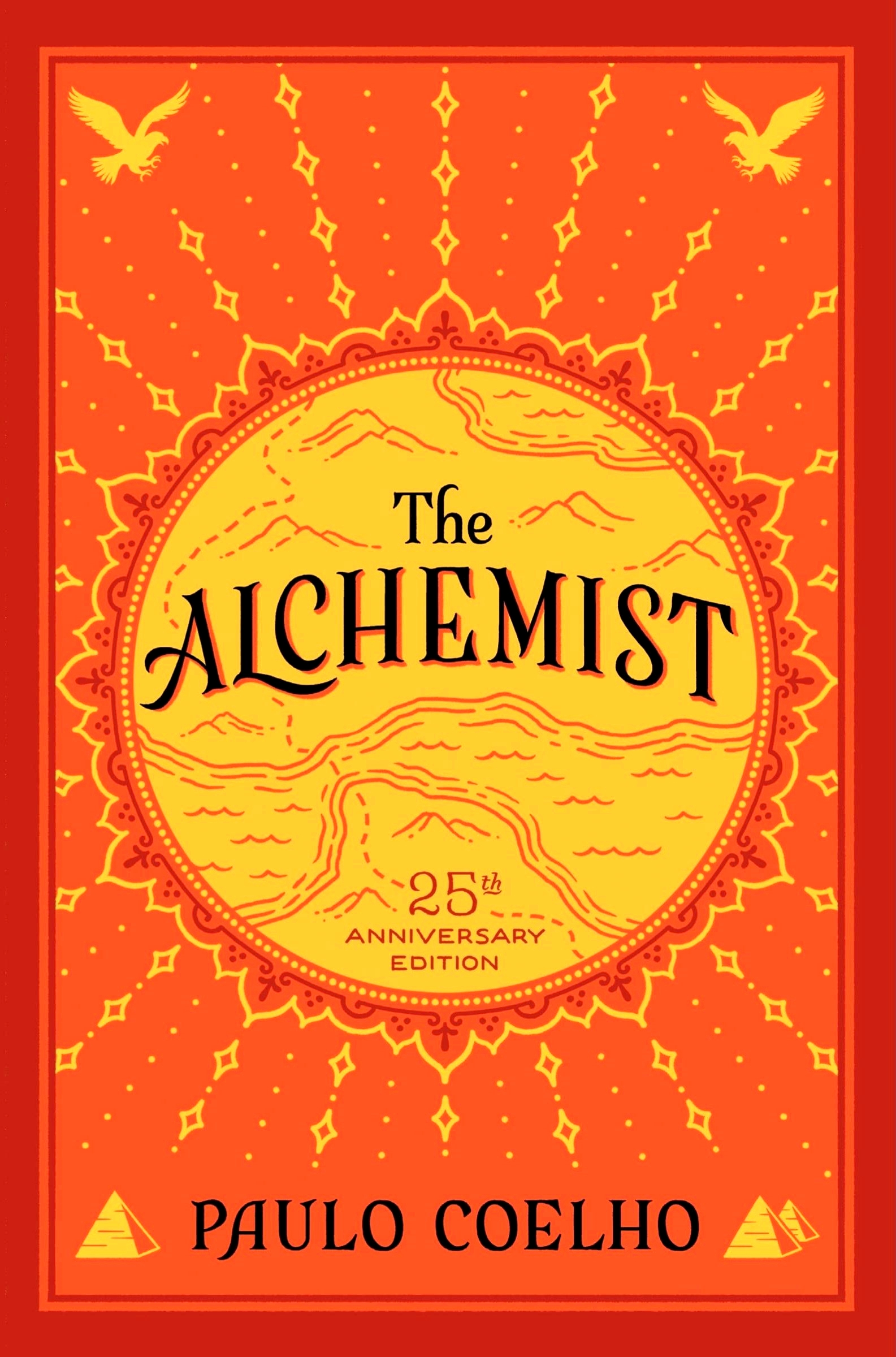
by Paulo Coelho
illustrated by James Noel Smith
translated by Alan R. Clarke
In this fictional account of an Andalusian shepherd, you will find a hodgepodge of philosophy, spirituality, and a variety of religions. Both the writer and the main character Santiago have their childhood roots in Catholicism, but both add in a blend of mysticism, Islamic beliefs, magic, and omens cloaked in a veil of wisdom. The Alchemist is the kind of book that readers will love or hate depending on their backgrounds and what they are searching for—in life and in a good book. The story is an adventure as Santiago goes on a pilgrimage of sorts, trying to live out his Personal Legend. In the process, he learns about the Language of the World, which all things, animate and inanimate, speak, and the Soul of the World in which everyone is a part of everyone else. The goal of his Personal Legend, treasure at the Egyptian pyramids, introduces him to a wise man who calls himself a king, a gypsy, a crystal glassware dealer, caravan operators, thieves, an English seeker of wisdom, and an actual alchemist. He learns first-hand about the desert, oases, love, and tribal warfare.
The Alchemist is fairly short (175 pages) and mildly interesting, but well-written. I don’t consider it a “treasure” or “masterpiece” as some readers describe it. The main attraction of the book, for me, is the beautiful artwork. From tiny sketches to a few full-color, two-page spreads, the art echoes the text with atmosphere that draws me in, keeps my attention, and enhances my enjoyment of the book.
Rating: 4/5
Category: Philosophy, Fiction, Spirituality, Self-Help
Publication: 1988—first published in Portuguese
1993—Harper One (translated to English)
Memorable Lines:
He was sure that it made no difference to her on which day he appeared: for her, every day was the same, and when each day is the same as the next, it’s because people fail to recognize the good things that happened in their lives every day that the sun rises.
“I’m like everyone else—I see the world in terms of what I would like to see happen, not what actually does.”
“When a person really desires something, all the universe conspires to help that person realize his dream.”
Top Ten Tuesday, May 26, 2020
Blogging friend, retired teacher/librarian, and book reviewer Carla has chosen out some of her favorite quotes from children’s books to share. I love them all. There is such wisdom in children’s literature. I challenge all education administrators to apply the quote from The Phantom Tollbooth in all of their dealings teachers and students. We do, in fact, learn from our mistakes!


Top Ten Tuesday was created by The Broke and the Bookish and is now hosted by That Artsy Reader Girl. Each week a new theme is suggested for bloggers to participate in. This week’s prompt is Top Ten Opening Lines. I do not have any idea or memory of opening lines except for Tale of Two Cities by Charles Dickens. Instead, after reading Carol’s list at The Reading Ladies, I went with Favourite Book Quotes, specifically Favourite Children’s Book Quotes. I had a real hard time limiting this to ten, but here is what I ended up with.
View original post 396 more words
Late Bloomers: The Power of Patience in a World Obsessed with Early Achievement
Late Bloomers: The Power of Patience in a World Obsessed with Early Achievement
by Rich Karlgaard
 I don’t think I have ever read an introduction as fascinating as Rich Karlgaard’s in Late Bloomers. With phrases like “trickle down societal madness for early achievement” he puts the reader into his world and his viewpoint. It’s not that he is opposed to the young people with scores of 800 on their SAT who create fantastic wealth in their early twenties. He does resent what our culture’s adoration of them does to the rest of us, those whose potential is downgraded because our star doesn’t rise at the same pace or shine as brightly.
In Late Bloomers we are brought to an understanding of the history and psychology of the conveyer belt systems of education and business that have led us to the current sad state of affairs. Karlgaard explains how late bloomers struggle in this early achievement focused society and how society suffers for not valuing late bloomers. This book is replete with examples—J.K. Rowling, Einstein, and the author himself, to name a few—of late bloomers. It also carefully examines the available psychological research and what it tells us about late bloomers. A large portion of the book is devoted to sharing what late bloomers and society can do to make the whole system function more successfully.
As a teacher, I applaud Karlgaard’s revelation of the background of our harmful testing culture designed to create cogs in an industrial wheel. As a parent, I agree with his theories about development occurring in different ways and times for individuals. I am especially intrigued by the promotion of a “gap year” (or two) for young people, giving them extra time for brain development before they are expected to “adult.” I can see the need for viewing 18-25 as a stage of life when, for most, that important brain maturation in the prefrontal cortex is still in process.
The main body of the book is addressed to the late bloomer, which Karlgaard argues is most of us. It is full of research studies which interestingly support his advice to the late bloomer—how to survive in a world that disparages late blooming and how to, in fact, bloom despite a society that does not value late blooming. The introduction and first three chapters of this book should be required reading for every teacher, administrator, policy maker, business entrepreneur, parent, and concerned citizen. Did I leave anyone out? After that, most will want to finish the book. Especially the late bloomers out there, the ones who have not yet “found themselves” or met their full potential.
I would like to extend my thanks to netgalley.com and to Crown Publishing (Currency) for giving me the opportunity to read this book in exchange for an honest review.
Rating: 5/5
Category: Self-Help, Education, Parenting
Notes: Rich Karlgaard, self-proclaimed late bloomer, is the publisher of Forbes Media, an author, and the founder of several businesses.
Publication: April 16, 2019—Crown Publishing (Currency)
Memorable Lines:
Being seen as a potential late bloomer was once a mark of vitality, patience, and pluck. Nowadays, more and more, it is seen as a defect (there must be a reason you started slowly, after all) and a consolation prize. This is an awful trend, since it diminishes the very things that make us human—our experiences, our resilience, and our lifelong capacity to grow.
Just when we should be encouraging kids to dream big, take risks, and learn from life’s inevitable failures, we’re teaching them to live in terror of making the slightest mistake.
…social media has now become our most toxic cultural mirror.
Reducing education to test preparation jeopardizes the quality of curricula and the craft of teaching. It drains education of humanity.
Lessons from Lucy–LOL funny
Lessons from Lucy
by Dave Barry
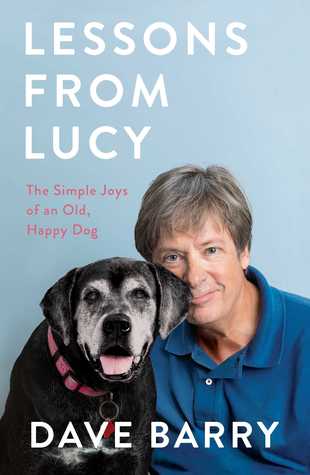 Lessons from Lucy has to be the funniest self-help book ever written. Dave Barry, the humor columnist, takes his lessons on aging from his also aging, happy, contented dog Lucy. There are indeed words of wisdom in these pages but in making his points Dave, in his typical fashion, goes off in side splitting fashion with outrageous opinions and funny anecdotes that combine to provide the reader with an outrageously funny good time. From the man who is famous for saying “I did not make this up” are totally fabricated footnotes for nautical terms and tales of marching with the World Famous Lawn Rangers of Arcola, Illinois, in the Broom Corn Festival. They are a “precision” drill team complete with lawn mowers, brooms, and silliness. Those members with a higher rank even have toilet plungers. No one takes themselves seriously, and they all have a blast. I had to do an Internet search to confirm the truth. Yes, the Lawn Rangers do exist and Dave Barry has more fun than a three year old when he can participate in their good-natured nonsense.
Lessons from Lucy is a fast read, and you may hope it won’t end. I think it would probably be fun to read again and just as funny the second time around. Dave Barry is an unexpected introvert who never fails in the humor department. At age seventy he proves he still has what it takes to keep us laughing.
I would like to extend my thanks to netgalley.com and to Simon & Schuster for giving me the opportunity to read this book in exchange for an honest review.
Rating: 5/5
Category: Humor, Self-Help
Notes: There are a few instances of profanity and more instances of bathroom words that three year old boys would find funny. Neither kept me from enjoying this book.
Publication: April 2, 2019—Simon & Schuster
Memorable Lines: Please note that there is no way for me to truly share the humor of this book because so much is lost when it is taken out of context, but here are some comments that make me nod and smile.
That’s what Lucy does: she makes the best of things. She’s way better at this than I am. I know much more than she does, but she knows something I don’t: how to be happy.
Even if you can’t travel, you can still find ways to have genuine fun. The key, I think, is to stretch your boundaries, to escape the numbing routine that old age so easily decays into, to take a chance, get out of your comfort zone, maybe risk making a fool of yourself.
1. Lucy spends every second she can being as close as she can be to the people she loves. This makes her a happy dog. 2. Mike Peters, who is a busy guy facing constant deadlines, still makes a point of making time for, and jumping on the trampoline with, the people he loves. and he is the happiest person I know over the age of three.
The whole world is way too angry these days. If you want proof of that, don some eye protection and take a look at Facebook. In case you just woke up from a coma, I should explain that Facebook is a social-media website that literally billions of people visit regularly for the purpose of making some person named Mark Zuckerberg insanely rich.

