Home » Posts tagged 'Warsaw'
Tag Archives: Warsaw
The Teacher of Warsaw–hope in the middle of despair
The Teacher of Warsaw
by Mario Escobar
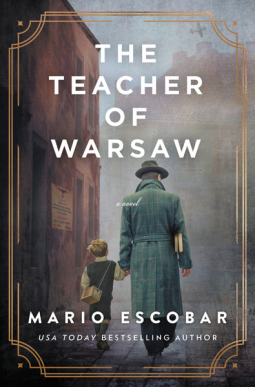
When a book leaves an impact on your soul after the covers are closed, you know you have read a treasure. I was a few chapters into The Teacher of Warsaw before I was captivated by Mario Escobar’s work of historical fiction. After I understood what this author with a master’s degree in Modern History had set out to share, I was repeatedly drawn back from my world into the sad and inspiring world of Janusz Korczak, a pediatrician and teacher with many talents who dedicated his life to the children in his orphanage. They suffered together as the Nazis made their lives and the lives of all Polish Jews a nightmare of starvation and deprivation. Thanks to Dr. Korczak and the dedicated group of tutors who worked alongside him, the children were given hope and taught to love even their enemies. Korczak was Jewish by heritage but had not been raised in a religious family. He admired and appreciated many things about the Jew Jesus and likened Him to the anticipated Messiah, but did not accept Him as the fulfillment of prophecies. Dr. Korczak described himself at various times as an atheist, an agnostic, and a seeker, but those around him would have been hard pressed to find a stronger, more sacrificial, more ethical, and more loving leader. In return the children loved him, and he was regarded with respect by all but the most evil of Nazis.
Dr. Korczak was encouraged by many, including Polish social worker Irena Sendler, to escape the Warsaw Ghetto and the extermination which was surely coming, but his answer was always the same: the children of the orphanage needed him and he would not abandon them. The Teacher of Warsaw is both horrifying and inspiring as it depicts the worst and the best of mankind and demonstrates the power of love.
I received a complimentary copy of this book in exchange for an honest review. Opinions expressed in this review are completely my own.
Rating: 5/5
Category: Historical Fiction
Notes: 1. Translated from Spanish by Gretchen Abernathy.
2. Includes two sections that discuss the historical basis of the story, a timeline of the Warsaw Ghetto, and discussion questions for the reader.
Publication: June 7, 2022—Harper Muse
Memorable Lines:
“Can you think what would’ve happened to the boy had we not been passing by? Everything happens for a reason. Even the greatest misfortunes can become the sweetest blessings.”
“We labor to give them back their hope: but we cannot give what we do not possess. Therefore, be full of hope this morning. May your joy overflow because you do what you do out of love and service for the weakest ones. And when negative thoughts come to steal your peace and joy, don’t let them make a nest in your minds. We can’t avoid those kinds of thoughts, but we can keep them from controlling us.”
I had two hundred children whom I loved and who loved me. I was undoubtedly the richest man in the Warsaw ghetto.
The Warsaw Orphan–survival in the Ghetto
The Warsaw Orphan
by Kelly Rimmer
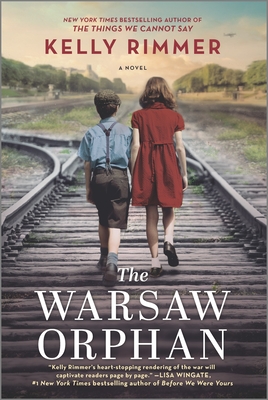
World War II is a popular subject for historical fiction. There are so many countries involved along with a variety of religions and philosophies. Lots of major political figures vie for power. Lives are turned upside down, families destroyed, and cultural icons demolished. In the midst of this upheaval, the citizens of Poland find themselves in a tug of war between Nazi Germany and the Red Army of the Soviet Union.
Roman, raised Catholic, is part Jewish. As a teenager he feels compelled to keep his Jewish family safe and later to fight from the Warsaw Ghetto with the Resistance for Poland’s freedom. Emilia (known as Elzbieta on her false identity papers) finds a way to work daily in the Ghetto under horrible conditions to help the people there who are overcrowded and sick from diseases and malnutrition. Their paths cross, and Roman and Emilia begin a friendship that lasts across the years.
In The Warsaw Orphan, Kelly Rimmer creates three dimensional characters who change and mature as a result of both growing up and experiencing the dramatic events that the war brings into their lives. They both see and endure things no one should have to—especially not teenagers. There are many characters of note and none of them see life as black and white. Many events take place in the grey area of life where one’s values and necessities do not line up perfectly. Some of the characters are Christian, some are Jewish, and others are atheists. Some are moral, decent people while others are torturing murderers.
The plot is told alternately from Roman’s and Emilia’s points of view. This is an effective way of narrating this story as it takes us on the personal journey each has to endure. There are decisions the characters have to make that affect others, not just themselves. The plot leads the reader through the many emotions that engulf the characters: grief, fear, shame, guilt, revenge. There are also moments of kindness, love, protectiveness, and generosity.
I thought The Warsaw Orphan was good, but the final fourth of the book was both surprising and riveting. You can’t expect a book about WWII to be filled with happiness and light, but I was amazed at Rimmer’s creative abilities to put her characters in desperate situations and then resolve them in a hopeful and rational way.
I received a complimentary copy of this book in exchange for an honest review. Opinions expressed in this review are completely my own.
Rating: 5/5
Category: Historical Fiction, General Fiction
Publication: June 1, 2021—Harlequin (Graydon House)
Memorable Lines:
Bystanders have allowed themselves to be convinced that the Jews are not like us, and as soon as you convince someone that a group of people is not human, they will allow you to treat them as badly as you wish.
Those agonizing weeks during the Uprising confirmed that art is not always for the viewer. Sometimes the very act of creating can mean salvation for the artist.
As punishment for our decision to rebel, our homes, our libraries, our monuments and our infrastructure would be reduced to dust. It wasn’t enough that they had taken our people and our homes—they were going to take what was left of our culture.
The Medallion–for the love of a child
The Medallion
by Cathy Gohlke
 What is worse than being a Pole during World War II? Being a Jew.
And what is worse than either? Being a Polish Jew, a target for abuse, humiliation, torture and destruction.
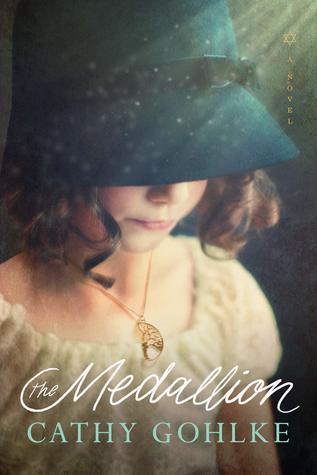
The Medallion by Cathy Gohlke tells the story of two families whose lives and deaths become joined through the horrors and hardships of life in Poland in World War II. Janet is a Polish fighter pilot married to Sophia, an English citizen, alone in Poland, but with a heart for Jewish children. Rosa has to make the most difficult decision possible to save her beloved daughter’s life. Her husband Itzhak, an electrician, endures the most horrific task assigned to any person by the Nazis, digging up mass graves with his bare hands. Can anything good possibly emerge from the desperation of this story?
Many of the characters in The Medallion are fictional, but are inspired by interviews and textual research. Some are found in history, including Irena Sandler who rescued 2,500 children and Dr. Janusz Korczak who ran an orphanage.
The tales of these two families are difficult to read but also inspiring. Towards the end of the book, when the war is over and all should be well, it isn’t. Sophia finds herself in a moral and personal crisis of faith that intimately affects the lives and futures of herself and those she loves most.
I would like to extend my thanks to netgalley.com and to Tyndale House Publishers for giving me the opportunity to read this book in exchange for an honest review.
Rating: 5/5
Category: Christian, Historical Fiction
Notes: The end of this book also includes discussion questions, notes to the reader about the writing of this book, and historical notes.
Publication: June 4, 2019—Tyndale House Publishers
Memorable Lines:
“Adonai makes a way when there appears no way. It is His specialty. Remember the Red Sea.” The words of her old friend came back to her, just as they did so often when Sophie felt at her wits’ end.
The Germans wanted to make certain that Poles were equipped only to follow orders, mostly for menial labor. They espoused the belief that a thinking Pole was a dangerous Pole. Hence, Polish schools were closed and thousands upon thousands of children did not learn to read or write—unless they were taught in secret.
“We’re not meant to handle life alone, Sophie. It’s too hard, too unpredictable, too messy and big. There is One who is willing and ready to help, to travel with us, if we let Him.”
 education pathways