Home » Posts tagged 'typhus'
Tag Archives: typhus
The Teacher of Warsaw–hope in the middle of despair
The Teacher of Warsaw
by Mario Escobar
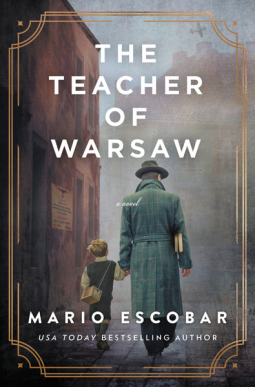
When a book leaves an impact on your soul after the covers are closed, you know you have read a treasure. I was a few chapters into The Teacher of Warsaw before I was captivated by Mario Escobar’s work of historical fiction. After I understood what this author with a master’s degree in Modern History had set out to share, I was repeatedly drawn back from my world into the sad and inspiring world of Janusz Korczak, a pediatrician and teacher with many talents who dedicated his life to the children in his orphanage. They suffered together as the Nazis made their lives and the lives of all Polish Jews a nightmare of starvation and deprivation. Thanks to Dr. Korczak and the dedicated group of tutors who worked alongside him, the children were given hope and taught to love even their enemies. Korczak was Jewish by heritage but had not been raised in a religious family. He admired and appreciated many things about the Jew Jesus and likened Him to the anticipated Messiah, but did not accept Him as the fulfillment of prophecies. Dr. Korczak described himself at various times as an atheist, an agnostic, and a seeker, but those around him would have been hard pressed to find a stronger, more sacrificial, more ethical, and more loving leader. In return the children loved him, and he was regarded with respect by all but the most evil of Nazis.
Dr. Korczak was encouraged by many, including Polish social worker Irena Sendler, to escape the Warsaw Ghetto and the extermination which was surely coming, but his answer was always the same: the children of the orphanage needed him and he would not abandon them. The Teacher of Warsaw is both horrifying and inspiring as it depicts the worst and the best of mankind and demonstrates the power of love.
I received a complimentary copy of this book in exchange for an honest review. Opinions expressed in this review are completely my own.
Rating: 5/5
Category: Historical Fiction
Notes: 1. Translated from Spanish by Gretchen Abernathy.
2. Includes two sections that discuss the historical basis of the story, a timeline of the Warsaw Ghetto, and discussion questions for the reader.
Publication: June 7, 2022—Harper Muse
Memorable Lines:
“Can you think what would’ve happened to the boy had we not been passing by? Everything happens for a reason. Even the greatest misfortunes can become the sweetest blessings.”
“We labor to give them back their hope: but we cannot give what we do not possess. Therefore, be full of hope this morning. May your joy overflow because you do what you do out of love and service for the weakest ones. And when negative thoughts come to steal your peace and joy, don’t let them make a nest in your minds. We can’t avoid those kinds of thoughts, but we can keep them from controlling us.”
I had two hundred children whom I loved and who loved me. I was undoubtedly the richest man in the Warsaw ghetto.
Auschwitz Lullaby–a mother’s amazing love
Auschwitz Lullaby
by Mario Escobar
 Auschwitz Lullaby is a sad book based on the life of Helene Hannemann, a German woman married to a talented Gypsy violinist. As an Aryan she could have saved her own life, but she chooses instead to accompany her five mixed-blood Gypsy children to Auschwitz. There she is chosen by the infamous Doctor Mengele to establish and run a nursery school at the concentration camp. Knowing that Mengele would only perform this “kindness” to the children for his own ends, she agrees anyway to provide the starving children with more nutritious food, several hours a day in a cleaner, healthier environment, and some mental respite from the stressful deprivations and horrors of the camp.
Without graphic descriptions, the author Mario Escobar uses a first person format, having Helene tell her own story through a journal which she supposedly left behind in the camp. Her writing is encased in a Prologue and Epilogue in Mengele’s voice. As I read this work of historical fiction, I wondered how much was true. I was gratified to discover a section called “Historical Clarifications” at the conclusion of the tale that explains clearly the aspects of the book that are nonfiction. The author is a historian so he also adds a “Chronology of the Gypsy Camp at Auschwitz” and acknowledgements of his sources of research.
Although the publisher categorizes the book as “historical fiction” and “Christian,” there are not a lot of overt references to Christianity, but there is an underlying thread of faith, hope,and love available through the power of God. The school holds a meager Christmas celebration which attempts to “give these children back a little bit of their faith.” Helene notes “that night we were celebrating life, the birth of the Christ child” and she ponders the message of the manger: “Glory to God in the highest, and on earth peace, goodwill towards men.” There are other Christian themes throughout of love, forgiving one’s enemies, God’s plan for Helene’s life, and the existence of evil.
I received a complimentary copy of this book from Thomas Nelson through NetGalley. Opinions expressed in this review are completely my own.
Rating: 5/5
Category: Historical Fiction, Christian
Publication: August 7, 2018 — Thomas Nelson
Memorable Lines:
“From the first time I saw you, I knew God had brought you here to ease our pain somehow. You were so lost, confused, and scared, but I could see a fierce determination in the back of your eyes.”
Death seemed like a gift from heaven, but I knew that it was not yet for me. I was an old ship in the middle of a storm, and my children anchored me to life. I had to keep fighting for them, trying to hold on to hope, looking each day in the face, praying for this nightmare to finally be over.
“God sent you here to guide us. We needed a breath of hope, and you showed up with your beautiful family. I’ve never known anyone as brave and determined as you.”
I tried to fill my heart with love. I did not want hatred to eat away my insides. I had to love even my enemies. It was the only way to keep from becoming a monster myself.
 education pathways