Home » Posts tagged 'suffering'
Tag Archives: suffering
Even if He Doesn’t–suffering and trust
Even if He Doesn’t: What We Believe about God When Life Doesn’t Make Sense
By Kristen LaValley
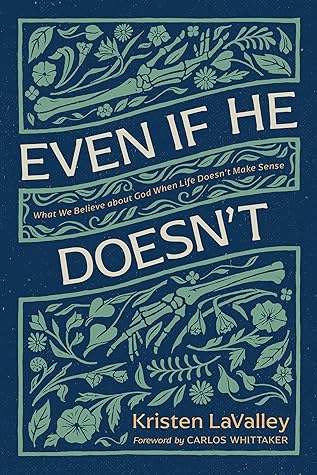
Life is not easy and it certainly can be messy. Just ask Kristen LaValley who with her husband suffered a miscarriage, loss of position in their church, income, and home through what certainly felt like betrayal by friends who turned their backs on the couple. They were faced with the necessity of deciding who should live—twin 1, twin 2, and/or mom. Along with traumatic events over the years, add in the changes that accompany situations like this—finding new friends and trusting them, moving, knowing what to say to well-meaning friends and family, anxiety attacks, health issues, and reconciling their life complications with what they know about a good God.
LaValley does not compare her sufferings with anyone else’s—suffering is suffering. She shares what it meant in her life and describes God’s faithfulness as she made her way through her life journey. Her story is not a comfortable one, but it is valuable to see how she relied on God through the high and low points. It is important to see how God is with us even when He doesn’t answer prayers the way we think He should. He is good because that is His character.
I received a complimentary copy of this book in exchange for an honest review. Opinions expressed in this review are completely my own.
Rating: 4/5
Category: Christian, Nonfiction, Religion, Spiritual Growth
Notes: 1. For some reason, my digital copy of this book disappeared so I checked out an audio version from my library. I’m glad I did. The author did a great job of reading her own book. We all suffer in different ways, and we all know others who are suffering. We need to know how to react to those in pain. Even if you don’t agree with every detail in the book, you can benefit from it. Life is a journey, and we are all involved in discerning the best way to trust in God and move forward with Him as our guide. You are not necessarily at the same place in your trip as LaValley is, but we share a common struggle.
2. Even if He Doesn’t includes a lot of Scripture references that LaValley uses to support her thoughts on suffering.
Publication: February 20, 2024—Tyndale Momentum
Memorable Lines:
The comfort of “even if he doesn’t” isn’t just that one day he will, which I fully believe. It’s that he’s good anyway. He’s faithful anyway. He’s loving anyway. Even when he doesn’t.
When our image of God is dependent on things going the way we believe they should, our image of him is centered on us, not on him. But true faith isn’t believing God is good just because we have proof of it. Faith is believing that he’s good even when we don’t have proof.
The idea that God wants us to suffer (for any reason) stands in direct contradiction to the life, testimony, and work of Christ. Jesus came to take our suffering on himself, not to have us prove something by our own suffering.
Tess of the d’Urbervilles–new look at a classic
Tess of the d’Urbervilles
by Thomas Hardy (and Karen Swallow Prior)
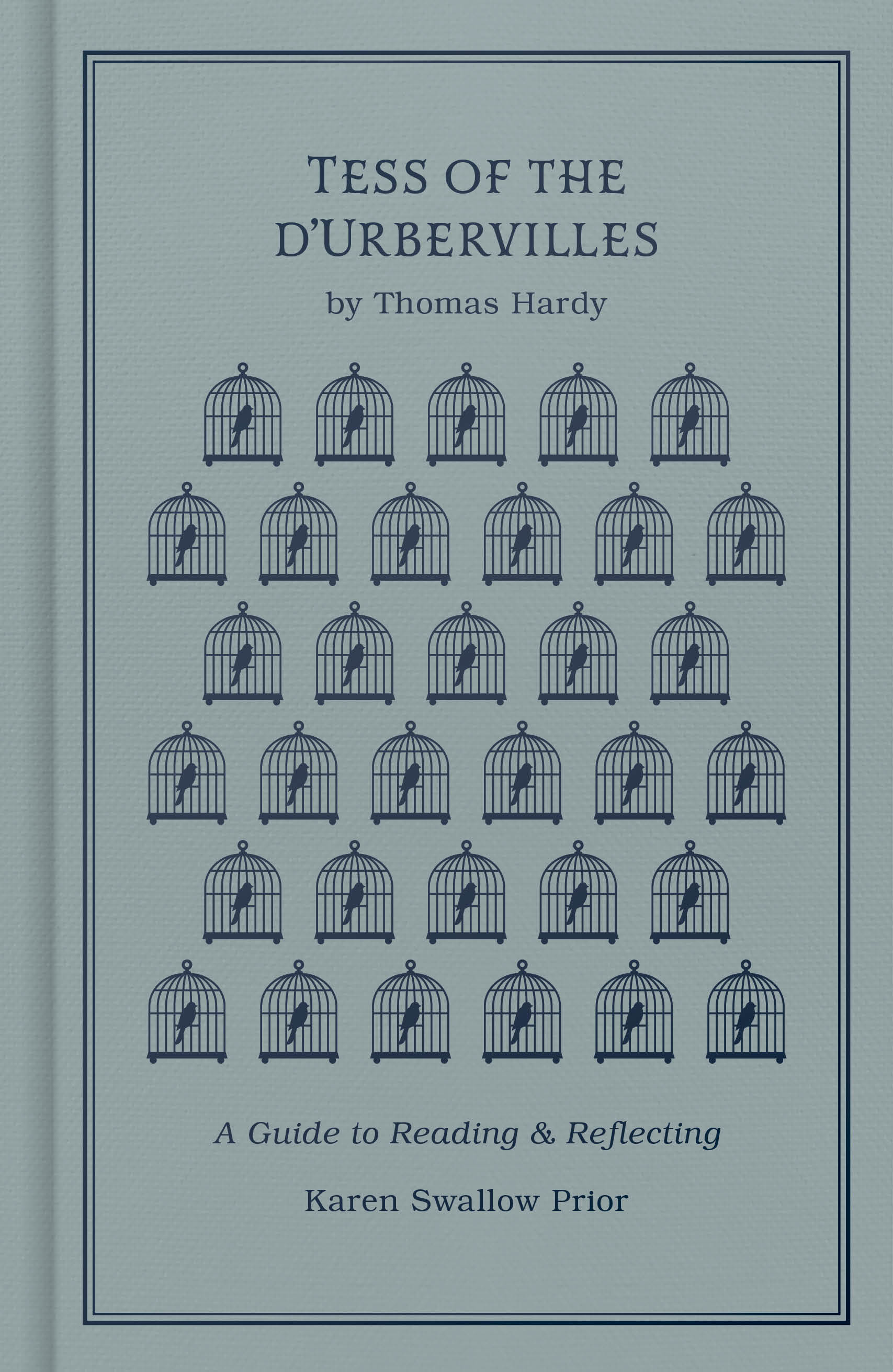
First published in serialized form in 1892, this classic has been read and studied over the years. Summaries are available everywhere on the Internet, so I want to share with you the particular edition I read this summer with my book club. It includes “A Guide to Reading and Reflecting” by Karen Swallow Prior who is a literature professor and author herself. We have read other books that include her notes, but I think this is the best one of the series that we have read.
Prior gives a lot of background on Thomas Hardy and the times in which he lived that are essential for understanding Tess of the d’Urbervilles. Born to a working class family, he longed for a scholarly life which at times seemed out of his reach. For example, he desired ordination but was unable to afford the university costs and so became a draftsman for a church architect. He studied on his own, and this book is full of classical and Biblical references. He also read books that are contradictory to traditional Christianity. He became an agnostic who attended church all his life. These are a few of the conflicts that show up thematically in Tess of the d’Urbervilles along with sexual purity being essential to women, but not to men. The plight of agricultural workers can not be missed as well as the difficulties of overcoming class rules and status. Nature itself and self-determination are also central themes.
In this edition, Prior helps the reader delve into the deeper meanings of the book. Hardy creates interesting characters and a solid plot, but also a certain line to destruction and despair for Tess. Prior points out Hardy’s use of literary techniques but also how to read this novel from a Christian worldview. I think her comments would also be interesting to those with a secular point of view.
Prior does not change anything in the original text. She does include brief, helpful footnotes that explain words that might be unfamiliar to a modern reader as well as classical allusions. Hardy divided the book into seven sections called “Phases.” Prior ends each phase with reflection questions which are valuable in pointing out aspects the reader might miss and in demanding deeper introspection. Prior concludes the book with questions “For Further Reflection” which apply to the text as a whole.
Rating: 5/5
Category: Classic, Fiction
Notes: There are currently 6 classics in this series.
Publication: 2022—B&H Publishing Group
Memorable Lines:
From Prior: Tess of the d’Urbervilles is not merely dark and pessimistic but is tragic—tragic in the true literary sense.
From Hardy: The clock struck the solemn hour of one, that hour when fancy stalks outside reason, and malignant possibilities stand rock-firm as facts.
From Hardy: It is Tess Durbeyfield, otherwise d’Urberville, somewhat changed—the same, but not the same; at the present stage of her existence living as a stranger and an alien here, though it was no strange land that she was in. After a long seclusion she had come to a resolve to undertake outdoor work in her native village…
Seeing Beautiful Again–encouragement
Seeing Beautiful Again
by Lysa TerKeurst

Are you going through a hard time, something that is devastating and you have no control over? Do you wonder if you’ll ever “see beautiful” again? Lysa TerKeurst experienced three of those, two physical and one relational, in a short period of time. She has written several books that describe her journey. In Seeing Beautiful Again, she has drawn from her experiences and writings to compose a devotional book to guide readers through fifty days of their struggle. The goal is to give hope and demonstrate that by clinging to God’s promises, readers can stay the course and trust God.
Seeing Beautiful Again is divided into sections and each section begins with a letter to the reader from author Lysa TerKeurst. Each devotional begins with Scripture and ends with a prayer. In between Lysa shares her thoughts on the topic. These passages sometimes include parts of her personal story and always draw the reader to God’s truth which can be applied to a personal situation.
TerKeurst’s other books like Forgiving What You Can’t Forget examine in depth our response to hurts. This devotional is a daily dose of encouragement to fight the good fight and to remember God’s love and His promises in the middle of the trauma.
I would like to extend my thanks to Edelweiss and to HarperCollins Christian Publishers for giving me the opportunity to read this book in exchange for an honest review.
Rating: 4/5
Category: Religion, Christian Life, Women’s Issues
Notes: Devotional
Publication: March 30, 2021—Harper Collins Christian Publishers
Memorable Lines:
Their victory never hinged on their ability or any of their well-thought-out plans. It was solely dependent on their unwavering obedience offered to a loving and mighty God.
My job is to be obedient to God. God’s job is everything else.
Father God, thank You for reminding me I can trust You in the waiting. I know I can entrust every season of my life into Your hands. Thank You for being present in every moment, strengthening me in the places that I feel inadequate to keep going. When I feel uncertain about what’s ahead, remind me of who You are. I know it will get me through. In Jesus’ name, amen.
What They Meant for Evil: How a Lost Girl of Sudan Found Healing, Peace, and Purpose in the Midst of Suffering
What They Meant for Evil: How a Lost Girl of Sudan Found Healing, Peace, and Purpose in the Midst of Suffering
by Rebecca Deng with Ginger Kolbaba
 We hear reports on the news of massacres of innocents in various countries around the globe and stories of displaced men, women, and children who become refugees and try to survive in crowded refugee camps. Those stories are usually sound bites, quickly discarded for the next big story. Rebecca Deng, a survivor of the horrific Bor Massacre of 1991 in Sudan, gives us the perspective of a six year old girl in What They Meant for Evil. We see her confusion as she flees with family walking through the wilds. She becomes an orphan as those she loves most are killed and grows up in a refugee camp. The UN provides a small amount of maize, without seasoning, to sustain the population. The bathroom is an open area on the other side of a dry riverbed with nothing to provide privacy. I had always imagined a refugee camp as a temporary facility, but Rebecca lived in Kakuma Refugee Camp in northern Kenya for eight years before she benefited from a special program that relocated her to the U.S. and placed her with an adoptive family. Many of her Sudanese relatives remained in the camp long after that.
In the latter part of the book, we learn of Rebecca’s life as an adult and her spiritual growth as she comes to terms with her identity and the trauma of her past. She uses her education, her experiences, and her faith in God to help other refugees recover as she sees God’s plan unfold to bring good out of what others intended for evil.
I would like to extend my thanks to netgalley.com and to Faith Words for giving me the opportunity to read this book in exchange for an honest review.
Rating: 4/5
Category: Christian, Memoir, Nonfiction
Publication: September 8, 2020—Faith Words
Memorable Lines:
That was what the war did to the tens of thousands of innocent children who lost everything—it took their childhood, their innocence, their families, their homes, even their lives.
More crowds meant less food for everybody. And less food meant more violence. Crime seemed to be everywhere. People began bullying other people, stealing their food, and beating and raping them. These things were unheard of for my people before coming here. My language doesn’t even have a word for rape.
…I had learned that God doesn’t always keep us from experiencing trauma, but his unseen presence is with us, strengthening us.
But there’s another aspect of forgiveness that we too often forget or neglect, and that is forgiving ourselves. If we want true forgiveness, we must forgive ourselves for the ways in which we have failed ourselves. We do more damage to ourselves when we believe the lies others have said about us and the lies the enemy whispers into our minds—the lies that tell us we are no good, we are worthless, we can never experience true freedom or true love.
 education pathways