
Home » Posts tagged 'society'
Tag Archives: society
A Moment’s Shadow–Danger in Ireland
A Moment’s Shadow
by Anna Lee Huber
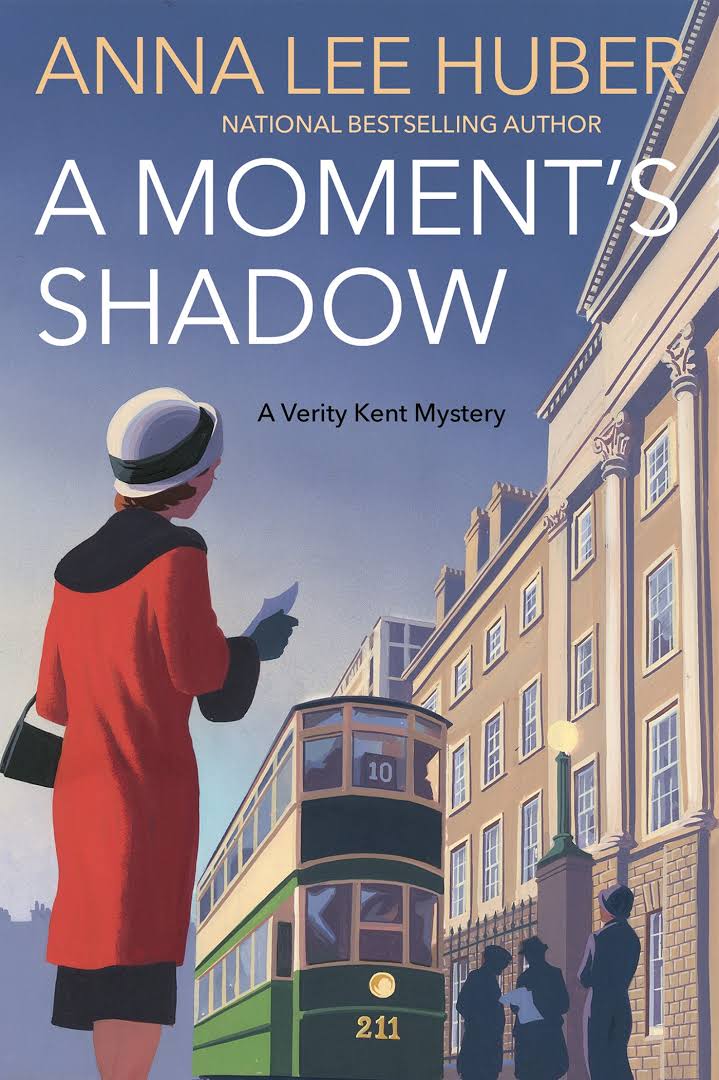
Having finished The Cold Light of Day, I was delighted to find that although I had missed getting A Moment’s Shadow as an ARC, my library had copies of this book in various formats. I grabbed the ebook to dive right in. It is even more interesting than the previous book which set the stage for Verity and Sidney Kent’s informal assignments in Ireland. They have several goals. Verity wants to find Alec, her former colleague during the Great War, who seems to have disappeared in Ireland. The pair has also been asked to investigate some missing phosgene cylinders, and they have determined that Verity’s nemesis, Lord Ardmore, who is always two steps ahead of them, is responsible. While they are in Ireland, a jewel thief visits one posh house after another. How he can accomplish these daring heists is baffling, but as Verity and Sidney already move in the social circles of the victims and have a reputation for solving mysteries, they are pulled into the investigation.
As the story progresses, it is difficult to know which side characters are on, and by the end the Kents are not sure which group they identify with. Both sides are committing heinous acts of murder, destruction, and torture. Both sides use deeply embedded spies to accomplish their goals. Verity disguises herself to pass as an Irish worker when needed and then as the socialite she is when that is appropriate to her sleuthing. Other than the social events they attend, nothing is glamorous about their lives in Dublin. Many of the wealthier class have escaped the turmoil by fleeing to their country homes, to England, and even abroad. Verity is “recalled” as some powerful person is unhappy with her inquiries. Since she is not working as a spy anymore, the government doesn’t really have the power or authority to demand her return. The people in charge, however, make it plain that they have been providing her with a measure of safety and can withdraw that protection if she does not return. A Moment’s Shadow has plot action that crescendos at the book’s conclusion with a hook that leaves the reader hanging and ready to devour the next book in the series.
Rating: 5/5
Category: Historical Fiction, Mystery
Notes: 1.#8 in the Verity Kent Mystery Series. The author reintroduces characters from #7 and previous books in the series but I think it would be hard to jump in with #8. If you really want to read just the ones dealing with the Irish Revolution, then start with #7 and plan on reading at least two more—#8 and #9.
2. A good plan for reading books #7-9 would be to list the characters and acronyms along with a basic note about each. There are a lot of characters, and you might find it helpful to comment on where you think their alliances lie.
3. The book ends with a teaser chapter from the next book in the series, The Bravest Hour, with a projected publication date of August 25, 2026!
Publication: 2025—Kensington
Memorable Lines:
These sights were always discomforting to me, for instinctively I wanted to cheer on our Tommies, and yet the Crown Forces’ behavior reminded me painfully of the Germans lording over the Belgians when they’d occupied their country during the war.
Everyone was trying to avoid the notice of the Black and Tans, to survive in a place where affordable housing was scarce, sanitation was abominable, and a stray bullet could end your life at any moment.
With all the dry and sunny weather we’d enjoyed in September, it was easy to forget how damp Ireland could be. October elected to remind us of this with a vengeance. It lashed, it bucketed, it showered, it drizzled, it misted—but at all times some sort of precipitation was falling from the sky.
The Cold Light of Day–the Irish Revolution
The Cold Light of Day
By Anna Lee Huber
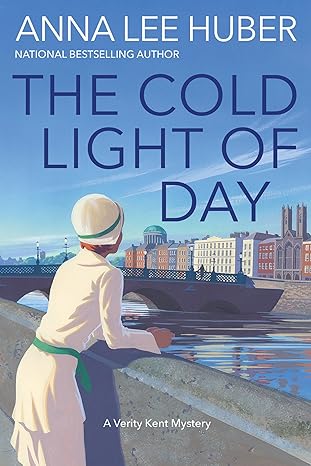
Told in the first person by Verity Kent, the reader is quickly informed that Verity had served as a spy during The Great War with dangerous assignments in Europe. Her husband also did undercover work, but he emerged as a well recognized hero. Despite needing to recover from their war experiences, including Verity’s belief that her husband Sidney had died, they quickly became a power couple invited to the very best homes in Britain. Money never seems to be a limitation for them.
The plot of The Cold Light of Day is tortuously twisted. Neither Verity nor Sidney knows which characters can be trusted as they work through unofficial assignments in Ireland where the two main branches of Irish rebels (Irish Republican Army and Sinn Féin) are resisting British rule. In talking about Irish resentment, she says “The Irish might be considered British citizens, but always second or third class.” The author researched the conflict well and is able to give the reader both sides of the revolution with Britain promising certain rights and then never fulfilling them. Both sides resorted to violence during this period.
The Kents live a double life in Ireland. They assume their natural role as socialites with their peers. Verity is a talented linguist so she also poses as an Irish house cleaner to be able to go places she can not visit as a glamorous Brit. Meanwhile, Sidney mixes with the males, some of whom were undercover or military during the war. They discuss current and past events after a few pints, and Sidney follows up on some of the things they divulge. They also bond over horse racing and riding.
The couple’s focus is on locating some missing phosgene cylinders so that this poisonous gas can not be used against either population. Also missing is Alec who formerly worked with Verity during her undercover years. In the middle of these searches, while trying to not trigger an enemy from either side, Verity is asked to solve the mystery of a young woman who has committed suicide. Even that effort becomes very complicated. When Verity confronts the British officials, she finds them very condescending; but when Nimble, her husband’s “batman” during the war and now his trusted valet, is brutalized and arrested, she stands up to those powerful men and makes them release him. She occasionally falls back on feminine wiles to manipulate men, using tricks she had to employ during the war.
The Cold Light of Day showed me how little I know about Irish history—especially the more recent Irish Revolution. Huber brings to light what people at that time experienced and how and why their loyalties were sometimes influenced by their humanity and often by their upbringing. The British in charge politically and militarily in Ireland were often motivated by greed, power, and career potential. There were many on both sides of the conflict who were willing to give up their lives for what they saw as the right thing to do.
I have read a few books in this well-written series, and I think it has just gotten better as it progressed. The author is skilled at creating believable characters from all classes—villains, heroes, and everyday workers. A thread that runs through the series is the character, actions, and motivations of Lord Ardmore. Almost everything bad can be traced back to his manipulations behind the scenes. I am not a fashionista, but I do like Huber’s descriptions of Verity’s clothes from the disguises as a “care woman” to her exquisite designs that attract both male and female attentions.
I received a complimentary copy of this book in exchange for an honest review. Opinions expressed in this review are completely my own.
Rating: 5/5
Category: Mystery
Notes: #7 in the Verity Kent Mystery series. I would not recommend it as a stand alone as there is so much critical background about the protagonists in the previous books.
Publication: October 24, 2024—Kensington
Memorable Lines:
But for every upstanding soldier there seemed to be another who took pleasure in the task of bullying and belittling those they were supposed to be protecting, not just policing.
Curse these men who had decided cutting women’s hair was a justified action. And curse the society who colluded in the weaponizing of shearing women’s hair by dint of the fact that somehow its length was an indication of virtue.
But while I’d failed to give chase, I had noted one particular thing about Collins’s bicycle. Its chain rattled like old Marley’s shackles from Dickens’s A Christmas Carol. That was something I was certain I would recognize if I heard it again.
Sycamore Circle–rebuilding a life
Sycamore Circle
by Shelley Shepard Gray
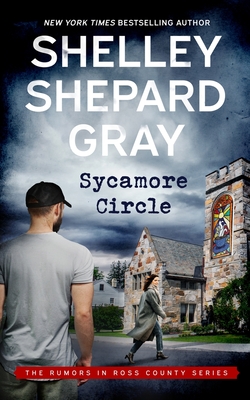
Madisonville is a prison in the novel Sycamore Circle. Lincoln was formerly incarcerated there, as were the men who work under him in the organization called T-DOT (Tomorrow Depends on Today). The group tries to rehabilitate former inmates, giving them practical skills by restoring houses and flipping them. They also learn self-discipline and how to survive in the outside world. Lincoln has earned the respect of law enforcement, probation officers, and prison officials. The program is voluntary, but the men who sign up agree to certain rules and will be kicked out of the program if they don’t abide by them.
Bo is Lincoln’s friend and his right hand man at T-DOT. He spent three years incarcerated as a felon, but has turned his life around. He is attracted to Joy, a literary tutor he met in a coffee shop, but he realizes that she is a special lady and he doesn’t know how to approach her. Joy has been divorced for 4 years from Tony, a man who constantly put her down. He had an affair and wanted to move on. Despite being a terrible and stingy ex-husband, he is a good father to their 16 year old daughter Chloe.
Joy and Bo are moving extremely slowly into a friendship when Joy starts receiving calls, texts, and letters from a stalker. Bo realizes how serious this could be and turns on his protection mode.
This story is well-written with likable characters, understandable relationship hesitations, and a lot of suspects for who the stalker might be. There is a subplot of an abused teenage boy who is trying to decide on a commitment to the Amish way. I was fortunate to read this on a day I could devote a lot of time to it as I wanted to keep reading until the end to find out who the stalker really is and what the future holds for Joy, Bo, and Chloe.
Trust is one of the themes of this series. It is a problem the former inmates and the people they come in contact with both have. Can someone who has done hard time in prison be trusted again? Even family members can have difficulty trusting their love ones, questioning if the changes are real. If they can’t be integrated into society again and find meaningful, financially sufficient employment, how can they survive without breaking the law again? Although this theme is not stated directly, it is the undercurrent of the series.
I received a complimentary copy of this book in exchange for an honest review. Opinions expressed in this review are completely my own.
Rating: 5/5
Category: Christian, Mystery and Thriller, Romance
Notes: 1. #2 in the Rumors in Ross County series, but could be a standalone.
2.I found that the stalker element leaned this mystery slightly into the thriller category.
Publication: February 7, 2023—Blackstone Publishing
Memorable Lines:
…he realized that he was going to need to be real patient if he wanted a chance with Joy—and that he was going to have to bring his A game too. She was not the kind of woman to accept a date on the fly or put up with him being anything but respectful and kind. I had been noted.
But he wasn’t worried about the Lord being upset with him. He’d started talking to God on his own years ago. Though it wasn’t something that he was comfortable sharing, he was pretty sure the Lord was still going to have his back whether he was Amish or not.
She treated him to a fake smile too. The kind women gave to security guards and annoying salespeople. Like she was glad for his place in her world, but she didn’t want them to connect on a regular basis.
Pride and Prejudice–courtship in the early 1800’s
Pride and Prejudice
by Jane Austen
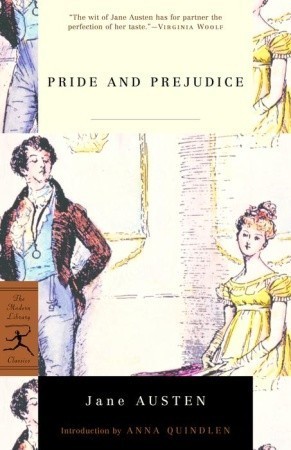
In preparation for reading Pride, a modern day version of Jane Austen’s Pride and Prejudice, with my book club, I decided to reread the original. I knew I could watch a video of the story, but I decided to aim for authenticity and read the actual book. I was glad I did as there is so much to be appreciated in Austen’s words, style, and depiction of characters. In retrospect, I believe my younger self had seen one of the several videos, but had never actually read the novel. I would still like to view one of the movies for an opportunity to better envision the costumes and settings of this period piece, but there is much value to be gained from the reading experience.
Pride and Prejudice is a romance particularly focusing on Jane and Elizabeth Bennet as they navigate the difficult waters of courtship in the early 1800’s in England. Their courses are made more murky by the family’s financial and social status. They are not part of the old monied class that is full of prejudice, but they have standards and they and their suitors are driven at least in part by pride. From a twenty-first century viewpoint, the courtship and rules of engagement seem stilted, but the reader can see in a younger sister’s impetuous disregard for the rules and assumptions of the time, that there are real societal and personal consequences for ignoring the standards of any time period.
I enjoyed the book which is as much about social issues as it is a romance. Pride and prejudice are, of course, themes throughout the book. Most of the characters of the novel grow and develop through the events of the story. Some remain stuck in their ways of thinking, and those continue to be persons the reader won’t like. You may find yourself rereading Pride and Prejudice for love of the characters, the joy of the language, or the journey towards a known ending—happy for some, less so for others.
Rating: 5/5
Notes: Edited by R. W. Chapman. Distributed by Gutenberg Press
Category: General Fiction, Romance
Publication: 1813—T. Egerton Military Library, Whitehall
Memorable Lines:
“Affectation of candor is common enough;—one meets it every where. But to be candid without ostentation or design—to take the good of every body’s character and make it still better, and say nothing of the bad—belongs to you alone.”
Without thinking highly either of men or of matrimony, marriage had always been her object; it was the only honorable provision for well-educated young women of small fortune, and however uncertain of giving happiness, must be their pleasantest preservative from want. This preservative she had now obtained; and at the age of twenty-seven, without having ever been handsome, she felt all the good luck of it.
“You mean to frighten me, Mr. Darcy, by coming in all this state to hear me? But I will not be alarmed though your sister does play so well. There is a stubbornness about me that never can bear to be frightened at the will of others. My courage always rises with every attempt to intimidate me.”
 education pathways