Home » Posts tagged 'social media'
Tag Archives: social media
The Dubrovnik Book Club–paralyzing fear
The Dubrovnik Book Club
By Eva Glyn
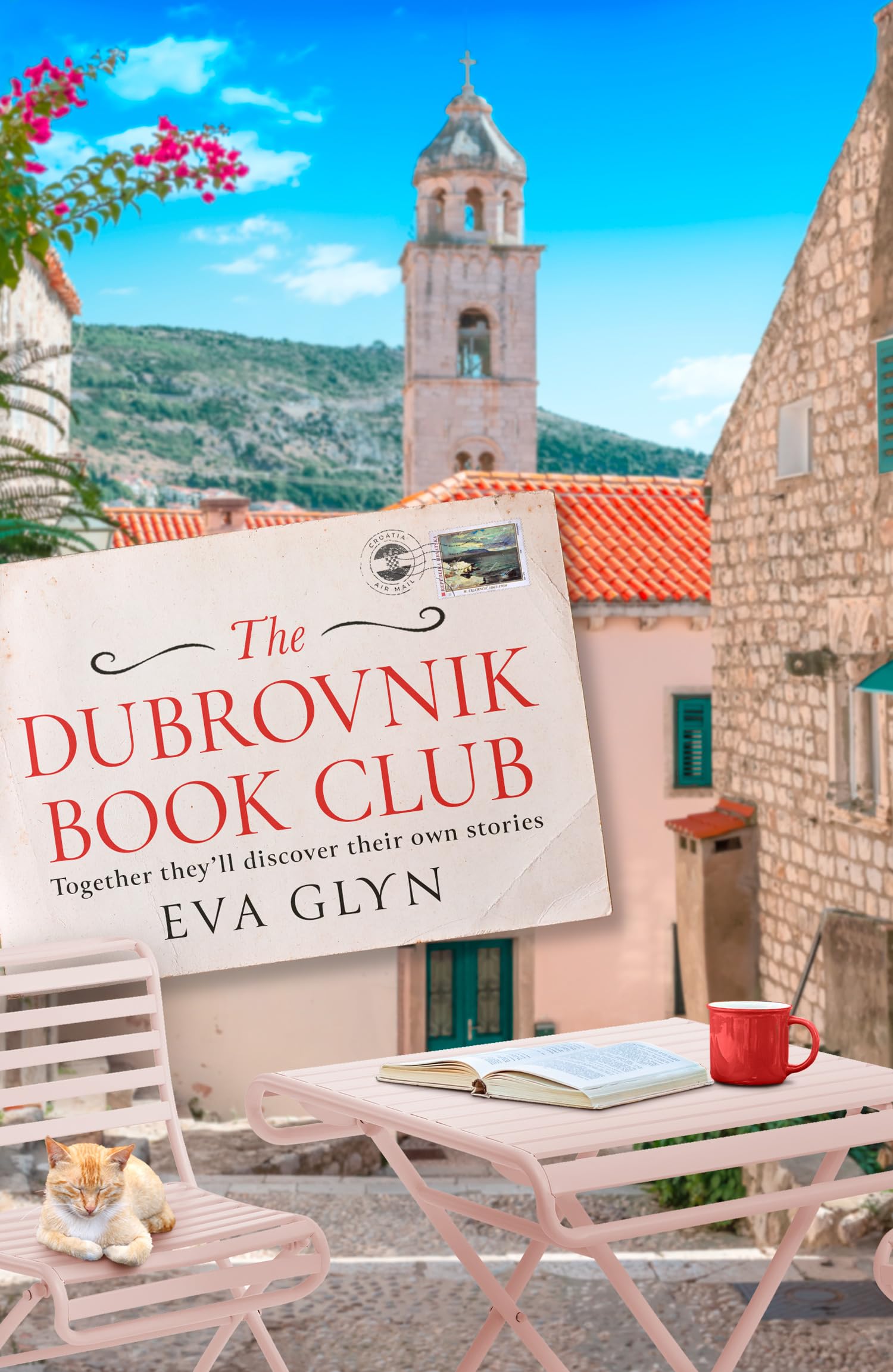
This book!
I love the title and subject.
The cover is appealing.
Glossary includes Croatian words.
Descriptions give a peek into the beauty of the country and the joy that comes from a delicious pastry.
You would think I would love this book, but I just couldn’t relate to or want to read about the circumstances that plague the characters. Four characters are consumed with paralyzing fear:
Long Term Covid
Gay
Abused by Wife, accused of murder
Refugee PTDS and survivor guilt.
The author does manage to weave their stories together through the book club. While I sympathize in general with their situations, I found that I had no empathy for any of their attempts to get over their problems. A main motif throughout the book is “fake it until you make it.” The conclusion, however, was quite satisfactory.
I received a complimentary copy of this book in exchange for an honest review. Opinions expressed in this review are completely my own.
Rating: 3/5
Category: Fiction, Women’s Fiction
Notes: There is a lot of swearing in English. There is also a lot of swearing in Croatian, but without the glossary, which generalizes the level of offensiveness, who would know?
Publication: March 8, 2024—One More Chapter (HarperCollins UK)
Memorable Lines:
“There is just one rule; a simple one. As its name implies, this shop is for everyone and so is the book club, so all I ask is that you leave any prejudices you may have about people and their reading choices outside. Let’s learn from each other.”
“And perhaps it does not have to make sense in your head when it is about how you feel in your heart.”
That was the biggest irony of all. That now she felt ready to leave and to see the world, all she wanted was to stay.
Positively, Penelope–theater and community
Positively, Penelope
by Pepper Basham
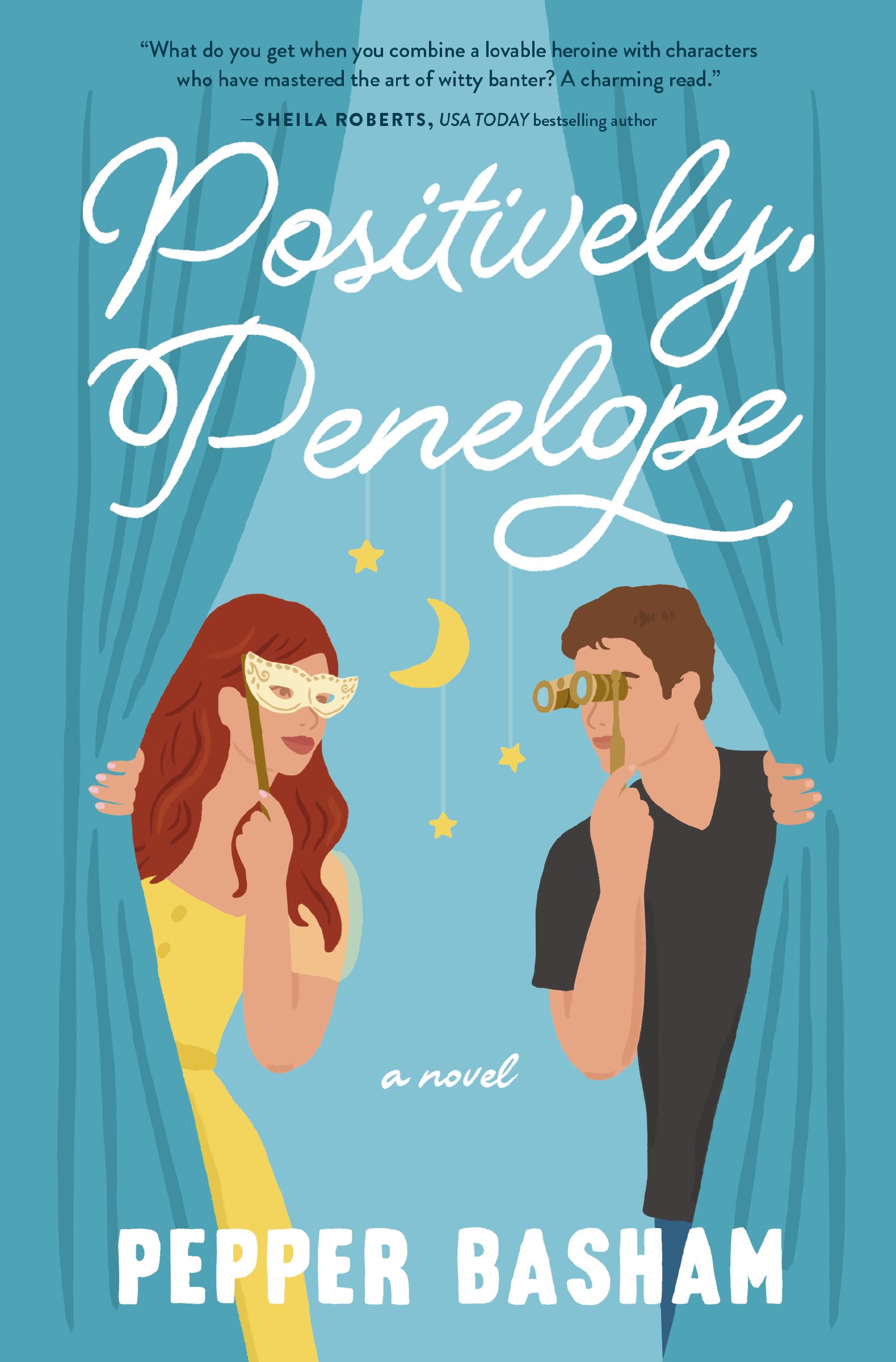
I wondered if Pepper Basham would follow up the very bookish epistolary novel Authentically, Izzy with another epistolary novel. If so, could it be as good, as fun, as the first? How do you write an epistolary novel in the twenty-first century anyway, a time when letter writing for personal reasons is rare? Basham continues her humorous style with Positively, Penelope told mainly in emails and text messages between Penelope who has taken a job as an intern helping the marketing team in the country of Skymar and her brother and two sisters who live in the Appalachians. There is also some third person narration thrown in. As a drama major, a very dramatic teacher of elementary age children, and a lover of storytelling and princesses, I can identify so much with Penelope who attacks life with more gusto than I can dream of mustering!
Penelope is trying to rescue the dying Darling House, a theater whose owners and managers lost their spirit with the deaths of the mother and grandmother over a short span of time. Penelope with her positive attitude spreads joy wherever she goes with her smiles, singing, and creativity. Two brothers, Matt and Alec, are grumpy but could make romantic heroes in the story as they fall under Penelope’s spell along with their father, Grandpa Gray. Matt’s daughter Iris who has not been allowed to enjoy fairy tales blooms under Penelope’s friendship as they share a love of pink and princesses. While Penelope seems like cotton candy fluff, she is actually quite bright. Unfortunately, every idea she comes up with is stolen by a rival theater; it seems a mole has invaded the Darling House team.
Silliness, suspicion, fear of sea monsters, a cute seven year old, costumes, royalty, creativity, and clean romance make Positively, Penelope a fun novel; I’m packing my bag for Skymar right now.
I received a complimentary copy of this book in exchange for an honest review. Opinions expressed in this review are completely my own.
Rating: 5/5
Category: Romance, Fiction, Christian
Notes: 1. #2 in the Skymar series. It could be read as a standalone, but I wouldn’t want you to pass up the very bookish first novel, Authentically, Izzy.
2. a lot of humor as the siblings banter with each other
3. Christian undertones woven subtly into the book
4. #3 has already been published about the flannel wearing, bachelor brother in the family, Loyally, Luke
Publication: August 1,2023—Thomas Nelson
Memorable Lines:
But no wonder he’s grumpy. Anyone who is against fairy-tale talk, singing in public, dancing on the sidewalk, and general hat-wearing has to be a sad sort of person.
Because story is the key to what we bring to the stage, how we present ourselves online, and even how we engage with one another. We all have stories, but in our hearts, we all LOVE stories (even if it takes some of us longer to admit it…kind of like a smile. Some people need more encouragement to smile than others, but you should really know a smile makes all the difference).
He came up to me, dismounted, and shot me this dazzling smile before saying, “I’ve always wanted to rescue a damsel in distress, but I never realized one would be so lovely in the rain.” Heaven HELP ME! Who says stuff like that? Only Skymarian men who ride on white horses in the rain????
Swamp Story–humor in the Everglades
Swamp Story
by Dave Barry
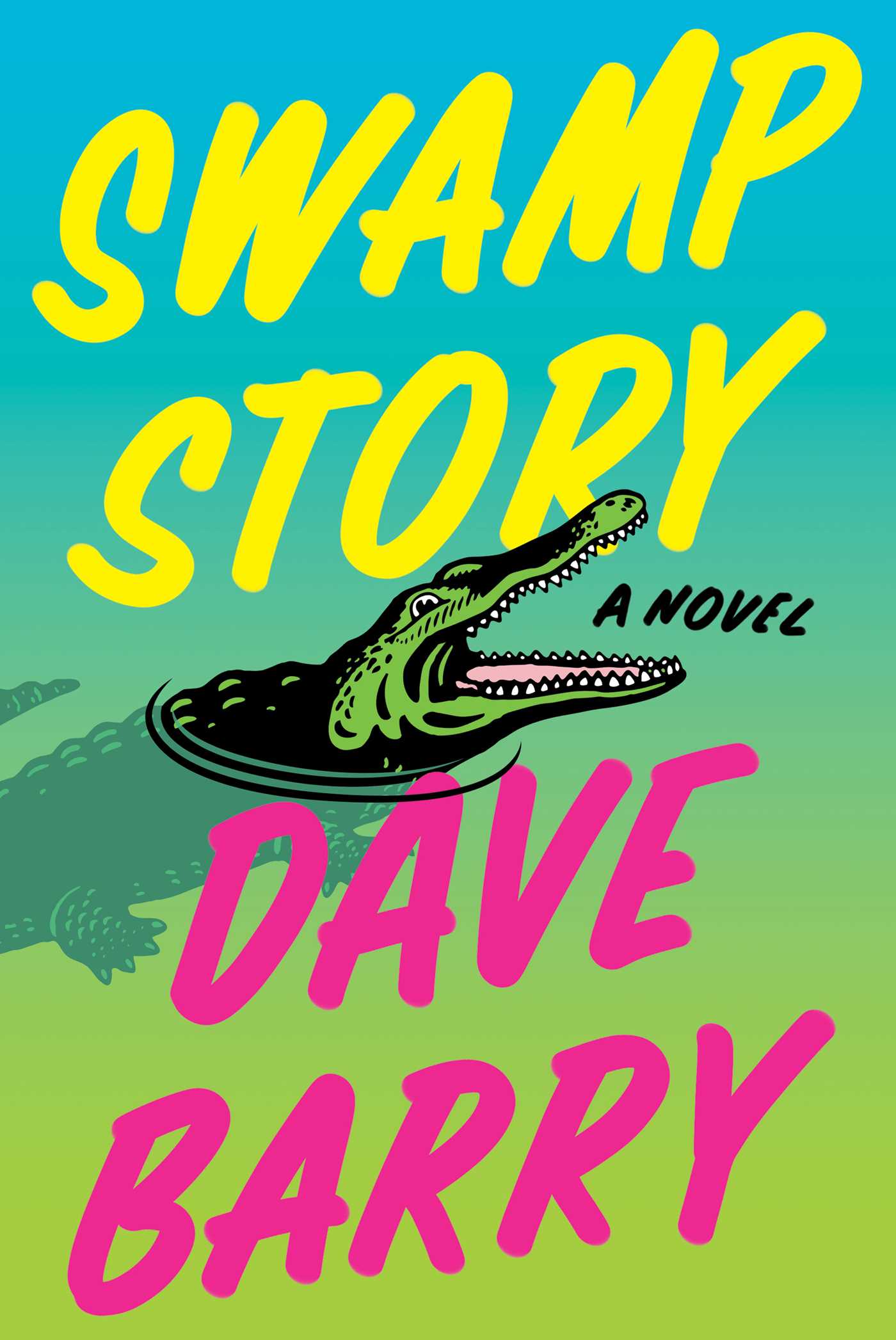
I have long enjoyed Dave Barry’s humor in the columns which brought him fame. I have four of his books on my bookshelf which in general are thematic collections of his writings on subjects like travel and aging. Swamp Story is my first reading of a novel by Barry. His humor permeates this book from tongue in cheek jabs at politicians to outrageous slapstick.
There are several major characters whose lives cross dramatically and surprisingly. Jesse and her baby Willa live with the baby’s worthless father Slater and his equally worthless buddy Kark. Jesse has made a series of mistakes and wants to get her baby out of their disgusting circumstances in the swamps of Florida. Stu, a marketing executive, and Phil, an alcoholic journalist, are middle aged, unemployed men. Ken and Brad are the Bortle brothers, trying (not very hard) to make a living in the bait shop left to them by their father. Ken’s main income sources are illegal.
Emerging from Dave Barry’s pen, these characters find themselves in some serious situations that Barry transforms into humor. Drug use leaves most of the men stoned most of the time, deciding that they have brilliant ideas. Phil and Stu are last minute hires as Elsa and her sidekick at a four year old’s birthday party. What happens there is caught on video and goes viral. That intersects with Ken’s idea to bring in customers with a branding of the Melon Monster. Kark gets involved as a videographer, and Slater sees this as an opportunity to show off his flawless body. Thanks to the wonders of TikTok and social media, the branding plan works! In a separate plot line, there are a number of characters involved in a search for lost gold which legend says is somewhere in the Everglades. As the story plays out, we see that the love of money is indeed the root of all evil. The tale includes a number of tense moments and a little romance. Not to be forgotten characters include the Secretary of the Interior who hates the outdoor; Skeeter Toobs, the longtime Python Champion winner and his emotional support boar Buddy; Zelda the python; and a fast-moving, hungry alligator.
I received a complimentary copy of this book in exchange for an honest review. Opinions expressed in this review are completely my own.
Rating: 4/5
Category: Fiction, Humor
Notes: 1. There is LOTS of salty dialogue in this book along with drug use.
2. Dave Barry is a talented writer. I thought the book was funny and inventive, but because of the language (which was appropriate to the characters) I would not reread it.
Publication: May 2,2023—Simon & Schuster
Memorable Lines:
The Bongo Mongo business model was built on the assumption that by the time the customers were handed the check, they would be too wasted to read it.
To say that Erik had a gambling problem was like saying that Hitler had an empathy problem.
Chastain handled the Cornwall interrogation with the smooth professionalism of the experienced, principle-free politician, emitting a dense, billowing cloud of words suggesting, without explicitly saying it, that he either was or was not deeply concerned about climate change, and as such was taking all necessary steps.
Healing the Rancher–making a family
Healing the Rancher
by Melinda Curtis
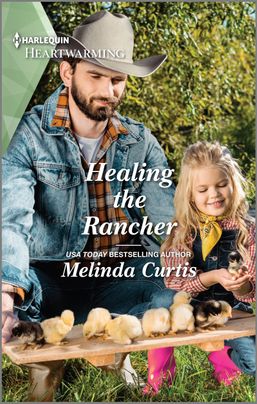
The story of the Mountain Monroes in Idaho continues in Healing the Rancher with a focus on Kendall Monroe, a city-girl with a knack for twenty-first century PR through social media. Needing employment, she decides to try to land a contract with a Texas ranch, but she needs to prove her cowgirl credentials to the owners. The problem is that she never really took to ranch life when she visited Grandpa Harlan in Idaho as a child. She returns to the little town of Second Chance where most of her cousins have relocated and agrees to intern on a ranch owned by Finn McAfee, a handsome but scarred ex-Marine. Besides his physical scars, he is weighted by the death of his young wife and his own cancer diagnosis.
Sparks fly when Kendall meets her tough new boss Finn who views her as a “princess.” She shows him how strong she is while keeping a smile on her face. The back and forth between the two will keep the reader smiling as will Lizzie, Finn’s adorable four year old daughter and their collection of “misfits,” animals dropped off at the ranch because their owners didn’t want them.
All kinds of problems arise as Kendall tries to become a cowgirl, but she owns up to her mistakes. Other difficulties have to be faced up to as well, things that are not her fault—cattle rustling and financial issues for both of them.
Several of the Monroe cousins play supporting roles and for those readers who have followed the Monroe saga, it is fun to see how those cousins’ lives are progressing. As with all the books in this series, the conclusion is more than satisfactory and will leave you with smiles just thinking about the future for Kendall and Finn.
I would like to extend my thanks to Melinda Curtis for giving me the opportunity to read this book in exchange for an honest review.
Rating: 5/5
Category: Romance
Notes: 1. While Healing the Rancher (#11 in the Mountain Monroes series) could be read as a standalone, I recommend reading the whole series in order.
2. All the books in this series are clean romances.
Publication: May 24, 2022—Harlequin
Memorable Lines:
“I feel like my grandfather wasn’t afraid to reinvent himself. Or afraid of failure. That’s what makes people succeed, I think. They want something more than they fear going belly-up.”
The grand Sawtooth Mountain range was just as imposing here as it was in Second Chance. The jagged mountains were as hard as she imagined the life here was. Or maybe that was just her perception as someone from the city.
“Boo, this is why I need to learn how to be a ranch boss and move on. The man is more irresistible than chocolate to me. And I’m like day-old bread to him.”
Fortitude—Resilience in the Age of Outrage
Fortitude—Resilience in the Age of Outrage
by Dan Crenshaw

Fortitude is a nonfiction work that holds Dan Crenshaw’s views on strength of character and how people who have fortitude can work together for a better America. Crenshaw is a member of the House of Representatives and a former Navy SEAL. Therefore, Fortitude is colored by his time in D.C. as well as his experiences in the military. It is, however, an inspirational book, not a political diatribe. Crenshaw references history, philosophy, psychology, SEAL training, and his personal story to explain the different components of character building as well as the deficits and issues prominent in our current society.
Crenshaw pulls the curtain back on the popular outrage displayed by both conservatives and liberals as many spew epithets without evidence to back up their position of hatred. “If you find yourself calling someone a racist, communist, traitor, RINO, or Nazi because they disagree with you, it is a good indication that your arguments are shallow and your emotions are driving your thinking.”
One of my biggest personal take-aways from this book is the importance of how I frame my own story, my personal narrative. Crenshaw explains how changing “I have to” to “I get to” is empowering, lets you take back control of your life, and removes you from the victim status.
He also speaks to suffering and hard times. Both can help you develop a strong character and confidence. Meeting challenges can actually push you to a higher level of functioning both physically and psychologically. If you voluntarily submit yourself to hardship, you are also building resilience that will help sustain you when you find yourself in trying times not of your choosing.
A review can not begin to cover all aspects of Fortitude. Read it to be exposed to Crenshaw’s background and experiences. Reread it to incorporate some of his philosophies, beliefs, and insights into your own frame of reference.
I would like to extend my thanks to NetGalley and to Twelve (Hachette Book Group) for giving me the opportunity to read this book in exchange for an honest review.
Rating: 4/5
Category: Politics, Inspiration
Notes: Contains foul language and is appropriate for adults, not children
Publication: April 7, 2020—Twelve (Hachette Book Group)
Memorable Lines:
…a culture characterized by grit, discipline, and self-reliance is a culture that survives. A culture characterized by self-pity, indulgence, outrage, and resentment is a culture that falls apart.
Life is a power struggle, and the heroes we value are no longer those who gracefully overcome adversity, but those who complain the loudest about their story of injustice.
Unfortunately, these days, too many people are overcoming their knowledge deficits with passion, and too many more people are mistaking “passion” and “authenticity” for righteousness and sophistication. It is an unhealthy trend.
Late Bloomers: The Power of Patience in a World Obsessed with Early Achievement
Late Bloomers: The Power of Patience in a World Obsessed with Early Achievement
by Rich Karlgaard
 I don’t think I have ever read an introduction as fascinating as Rich Karlgaard’s in Late Bloomers. With phrases like “trickle down societal madness for early achievement” he puts the reader into his world and his viewpoint. It’s not that he is opposed to the young people with scores of 800 on their SAT who create fantastic wealth in their early twenties. He does resent what our culture’s adoration of them does to the rest of us, those whose potential is downgraded because our star doesn’t rise at the same pace or shine as brightly.
In Late Bloomers we are brought to an understanding of the history and psychology of the conveyer belt systems of education and business that have led us to the current sad state of affairs. Karlgaard explains how late bloomers struggle in this early achievement focused society and how society suffers for not valuing late bloomers. This book is replete with examples—J.K. Rowling, Einstein, and the author himself, to name a few—of late bloomers. It also carefully examines the available psychological research and what it tells us about late bloomers. A large portion of the book is devoted to sharing what late bloomers and society can do to make the whole system function more successfully.
As a teacher, I applaud Karlgaard’s revelation of the background of our harmful testing culture designed to create cogs in an industrial wheel. As a parent, I agree with his theories about development occurring in different ways and times for individuals. I am especially intrigued by the promotion of a “gap year” (or two) for young people, giving them extra time for brain development before they are expected to “adult.” I can see the need for viewing 18-25 as a stage of life when, for most, that important brain maturation in the prefrontal cortex is still in process.
The main body of the book is addressed to the late bloomer, which Karlgaard argues is most of us. It is full of research studies which interestingly support his advice to the late bloomer—how to survive in a world that disparages late blooming and how to, in fact, bloom despite a society that does not value late blooming. The introduction and first three chapters of this book should be required reading for every teacher, administrator, policy maker, business entrepreneur, parent, and concerned citizen. Did I leave anyone out? After that, most will want to finish the book. Especially the late bloomers out there, the ones who have not yet “found themselves” or met their full potential.
I would like to extend my thanks to netgalley.com and to Crown Publishing (Currency) for giving me the opportunity to read this book in exchange for an honest review.
Rating: 5/5
Category: Self-Help, Education, Parenting
Notes: Rich Karlgaard, self-proclaimed late bloomer, is the publisher of Forbes Media, an author, and the founder of several businesses.
Publication: April 16, 2019—Crown Publishing (Currency)
Memorable Lines:
Being seen as a potential late bloomer was once a mark of vitality, patience, and pluck. Nowadays, more and more, it is seen as a defect (there must be a reason you started slowly, after all) and a consolation prize. This is an awful trend, since it diminishes the very things that make us human—our experiences, our resilience, and our lifelong capacity to grow.
Just when we should be encouraging kids to dream big, take risks, and learn from life’s inevitable failures, we’re teaching them to live in terror of making the slightest mistake.
…social media has now become our most toxic cultural mirror.
Reducing education to test preparation jeopardizes the quality of curricula and the craft of teaching. It drains education of humanity.
On the Internet: Our First Talk About Online Safety
On the Internet: Our First Talk About Online Safety
by Dr. Jillian Roberts
illustrated by Jane Heinrichs
 When we put technology in the hands of children, we need to do it with the awareness that social media involves a lot of concepts that children are not prepared to handle. Many parents did not participate in social media themselves as youngsters, and so they are not always prepared for the difficulties that may arise. With that in mind, Dr. Jillian Roberts, a former schoolteacher and practicing psychologist has written a book to help guide the needed discussions. The book is illustrated with both photographs and child friendly drawings. It includes questions children might ask, answers that an adult can help to interpret, and explanations for terms like “boundaries,” “inappropriate,” and “online bullying.” It also includes positive examples of using social media for good. It is a book intended to initiate discussion between parent and child.
On the Internet: Our First Talk about Online Safety is well written and illustrated, and I recommend it. My personal opinion, however, is that children in grades one through three, the suggested audience for this book, are too young to use social media independently. I suggest that it is not too early to begin the discussion as social media and its accompanying problems are pervasive in our society. Young children hear others talking about this technology and may see older siblings using it. Discussion of online issues not only prepares children for future exposure, but also opens up opportunities to discuss the basics of friendship and bullying as they occur outside of social media.
I would like to extend my thanks to netgalley.com and to Orca Book Publishers for giving me the opportunity to read this book in exchange for an honest review.
Rating: 5/5
Category: Children Nonfiction, Computer and Internet
Notes: Age Range suggested by publisher: 6-9 years
Grade Level suggested by publisher: 1-3
Publication: February 19, 2019—Orca Book Publishers
Memorable Lines:
THINK before you post:
T: Is it True?
H: Is it Helpful?
I: Is it Inspiring?
N: Is it Necessary?
K: Is it Kind?
Pruning the Dead–cozy mystery with a gardening theme
Pruning the Dead
by Julia Henry
 A new cozy mystery series. A different sort of mystery. In what way different? Don’t they all follow a general formula? Yes and no. There are common expectations for cozies such as the absence of graphic violence, sex, or language, and the presence of a likable main character who finds herself (or occasionally himself) drawn into solving a mystery, often in a small town. Pruning the Dead fits the bill. The manner of deviation is the amount of time the author spends setting up the backdrop, the small town of Goosebush, on the south shore of Massachusetts, the gardening theme, and the characters, some of whom take on the role of Garden Squad with the goal of replacing “weeds with plants” and restoring “order from chaos.”
Lilly Jayne is starting to emerge from a cloud of grieving and depression following her husband’s death. She is rich and considered somewhat of a matriarch in Goosebush. Having neglected her civic duties for years during her husband’s illness, she suddenly begins seeing the negative changes that have crept into her hometown.
Although the murder doesn’t occur until a quarter of the way into the book, don’t be lulled into thinking it is less than an interesting mystery. The time the author, Julia Henry, spends developing the characters and setting is time well-spent. Although I deduced the murderer as I approached the end of the book, I enjoyed reading how it played out, and there were many detours and suspects along the way that kept the journey interesting.
Even though the second book in the series has not been published yet, I anticipate that readers will benefit by starting the series by reading Pruning the Dead, the first book. I look forward to reading the next book to see how the Garden Squad develops and what happens next in Goosebush, Massachusetts.
I would like to extend my thanks to netgalley.com and to Kensington Books for giving me the opportunity to read this book in exchange for an honest review.
Rating: 5/5
Category: Mystery
Notes: #1 in the Garden Club Mystery Series
Gardening tips are included at the end of the book.
Publication: January 29, 2019—Kensington Books
Memorable Lines:
“Facts are facts, but the truth depends on the teller.”
“Choosing a kinder path is important. It makes the journey easier.”
“I made a decision a long time ago that hate is more exhausting for me than it is for the object on which I would bestow that energy.”
Keep It Shut: What to Say, How to Say It, and When to Say Nothing at All
Keep It Shut: What to Say, How to Say It, and When to Say Nothing at All
by Karen Ehman
 Have you ever stopped to think about the “aweful” (and sometimes awful) power our tongues can have? Like, maybe, when you put your foot in your mouth…again? Or, perhaps, you have pondered the good in your life when someone spoke words of kindness and encouragement. Karen Ehman has written a special, down-to-earth book for those interested in taming the tongue: Keep It Shut: What to Say, How to Say It, and When to Say Nothing at All.
This book is humorous and full of anecdotes. It is also biblically based and gets REAL about the issues that all honest women will admit arise in their lives from time to time—especially in this digital age. Ehman addresses various problems of communication including listening, talking to God before talking to others, gossip, flattery, and anger. She shares verses from Proverbs as the original tweets, and they are powerful. It turns out the Bible has a lot to say about what we have to say.
Ehman concludes Keep It Shut by summarizing tips and tricks derived from the body of her book as a quick and easy way to refer back to those truths. She discusses ways to find time and opportunities to get away with God for a few minutes or hours to be grounded in Him so you can make Godly decisions about what to say and when to say it. She lists ten verses that will “help you watch your words.” She has questions to ponder to help you examine your motives and decide if something is gossip or not. Ehman doesn’t stop at the negative. She also includes “powerful phrases” to speak to various people in your life and Scripture verses, quotes, and phrases that you can photocopy and display around your home or office as reminders.
Keep It Shut had a surprisingly big impact on me, giving me a lot to think about. One example is the “white lie.” Yes, I do tell white lies occasionally to avoid hurting someone’s feelings. Ehman discusses the dangers of that and offers alternatives. I recommend Keep It Shut for the humor, the chatty presentation, and the Godly truths found in its pages.
Rating: 5/5
Category: Christian, Nonfiction
Notes: Ehman addresses women in her book because psychologists have shown that women speak a lot more words every day than men (20,000 compared to 7,000). Of course there are exceptions, but in general women have a lot more opportunities to get in trouble because of things they say than men. Men, the biblical truths in this book would not be wasted on you either!
Publication: January 6, 2015—Zondervan
Memorable Lines:
Don’t say something permanently painful just because you are temporarily ticked off.
All the humans you encounter throughout the course of the day are “on purpose” people. God plopped them into your life for a reason.
When we harden our hearts and let every little offense poke a hole in our happiness, we only hurt ourselves…But when we soften our hearts with love for others, and toughen our skins against their barbs, we are better equipped to show the compassionate love of Jesus to a watching world.
 education pathways