
Home » Posts tagged 'social classes'
Tag Archives: social classes
The Fisherman’s Lady–Scottish classic
The Fisherman’s Lady
by George MacDonald
edited by Michael Phillips
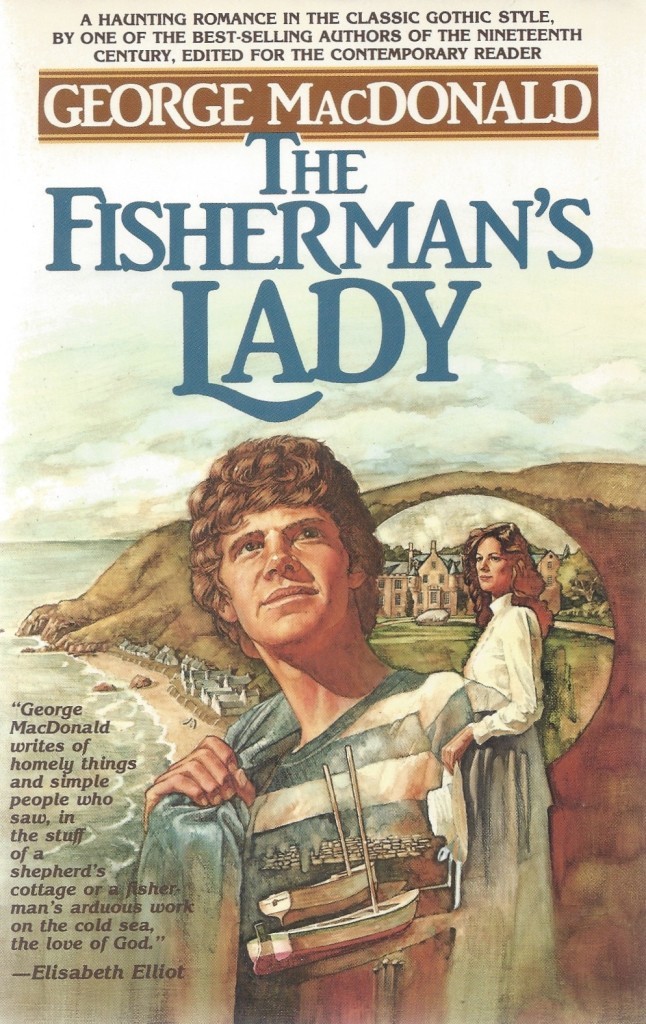
First published in 1875, entitled Malcolm, with a sequel arriving in 1877, The Fisherman’s Lady is a challenging read and a classical romance by a prolific writer of many genres. C.S. Lewis claimed MacDonald as his favorite writer saying, “I never wrote a book in which I did not quote George MacDonald.” The language is, of course, of an older age and reflects MacDonald’s background: Scottish minister, and author of fiction and nonfiction, including poetry. Contemporaries include Lewis Carroll, G.K. Chesterton, Charles Dickens, and Mark Twain.
Much of the dialogue in The Fisherman’s Lady is written with a Scottish brogue adding to the difficulty for the modern reader. Initially, I purchased a Kindle version that included both Malcolm and The Marquis of Lossie. Next, I located a printed version of The Fisherman’s Lady edited by Michael Phillips. He simplified the original by omitting some of the passages, but he also left some of the Scottish dialect for an authentic flavor.
Some readers categorize this novel as having a “gothic style.” It does contain some gothic elements from that Victorian period—a castle; dark, locked rooms; potential hauntings; crumbling stairways; the past affecting the present; twisted family ties; missing people; unusual sounds; and dreams.
The plot starts with sudden impact as it focuses on a corpse. Then, it proceeds slowly as characters are introduced. There are a lot of important figures in the book, and the editor lists them and a note about most of them, along with an area map. The story gains momentum and interest for the reader with lots of hooks leading into the following chapters. The protagonist is Malcolm, a fisherman who lives with his adopted father Duncan, an elderly, blind piper. Malcolm is a happy young man, honest, and a hard worker. He is devoted to the man who raised him whose only fault appears to be a quick temper over an old feud with another family. On the other side of the social strata is the Marquis of Lossie and his daughter, the beautiful Lady Florimel (Flory). Questions hang throughout the book concerning Malcolm’s parentage and that of the “Mad Lair,” a hunchbacked dwarf who has been badly mistreated by his mother.
Malcolm and Flory become friends, but they do not develop a romantic relationship because they both realize that social boundaries make any such bond between them unrealistic. Malcolm, however, would do anything for Flory, desiring to serve her long-term.
There are a few really evil women in this book. The way the upper class treats servants, laborers, the poor, and the disabled is upsetting, but a reflection of the times.
I enjoyed most of the book as far as it went, but I was disappointed in the sudden cut-off of the tale with no satisfactory conclusion for the characters. Most modern tales with sequels tie up the main threads in the first book but provide a motivation to encourage the reader to continue on to find out what happens to the characters in the next stage of their lives. This book contains a major event and then just ends with little attention to the aftershocks. The editor does include a brief paragraph to assure the reader on certain key points, but that statement was not part of the original text.
Rating: 4/5
Category: Historical Romance, Classic
Notes: 1. The first part of a two part set of books about Malcolm.
2. Includes Christian themes and shows characters trying to come to grips with their faith.
3. Clean
4. Includes preface by the editor and three appendices providing historical notes.
5. I have not yet decided if I will read the sequel, The Marquis of Lossie, or not.
Publication: Original in 1875—Henry S. King Publishers in Great Britain, and George Routledge & Sons in New York, and J.B. Lippincott in Philadelphia
This version edited by Michael Phillips in 1982—Bethany House Publishers
Memorable Lines:
Whatever may have been the projected attitude of the marquis, the moment he stood on the piper’s floor, the gentleman in him got the upper hand and his behavior to the old man was not only polite but respectful. At no period in the last twenty years had he been so nigh the kingdom of heaven as he was now when making his peace with the blind piper.
But Lady Florine had never studied anything yet, had never even perceived that anything wanted studying—that is, demanded to be understood. What appeared to her most odd, most inconsistent, was his delight in what she regarded only as the menial and dirty occupation of cleaning lamps and candlesticks; the poetic side of it, rendered tenfold poetic by his blindness, she never saw.
“No, no; never run from a lie. And never say, neither that you didn’t do the things except it be laid straight to your face. Let a lie lay in the dirt. If you pick it up, the dirt’ll stick to you, even if you fling the lie over the dike at the end of the world. No, no! Let a lie lay as you would the devil’s tail!”
The Mystery of Haverford House–multiple timelines
The Mystery of Haverford House
by Rachel Burton
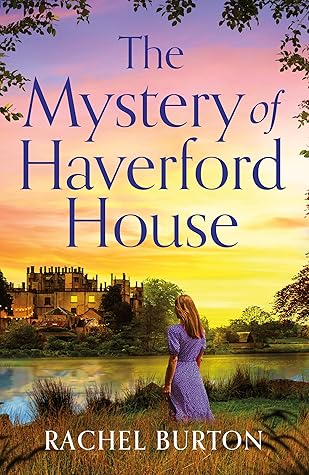
Viola, originally from Australia, has had to reinvent herself several times. She has finally found a place that feels like home—a huge estate in Yorkshire. Her job is to manage Haverford House as a tourist attraction, but it is difficult to maintain it as a viable establishment financially given its size, age, and tax status. The current earl and owner wants to sell it, but his mother, the dowager countess, is sentimentally attached to it.
There is a mystery and legend that Viola emphasizes in her house tours. Annie Bishop, a serving girl at Haverford, disappears in 1933. Was she murdered or did she travel to America to start a new life? As the story unfolds for the reader, much of the status of women during the period between the two World Wars is revealed. There is also a focus on the works of Shakespeare, particularly Twelfth Night, as there is a production of it in both timelines. The characters are fleshed out in both timelines with some villains and heroes in both. It is interesting to see that the Haverford residents in the 1930’s, even the “nice” ones, were disdainful of the servants that worked in the house. There were also those in the lower classes who felt they and their peers should “mind their place.”
My interest in both storylines never flagged. I no sooner finished a chapter with my interest peaked than the focus changed to equally compelling events in the other storyline. This seesaw continues all the way to the end of the book with a number of surprises along the way.
I received a complimentary copy of this book in exchange for an honest review. Opinions expressed in this review are completely my own.
Rating: 5/5
Category: Romance, Women’s Fiction, Mystery, Historical Fiction
Notes: clean in all aspects
Publication: March 14, 2024—Aria
Memorable Lines:
“I don’t know where you all find the time for reading,” Polly says regularly. In my opinion you make time for the things you love but she has no interest in fiction, or books in general. She hated dusting the library, but lucky for her I was always willing to do it.
I wonder if he knows why he is here—I wonder if he realizes how badly the estate needs his father’s money? And I wonder what it must be like for Prunella and Cecily, being duty-bound to marry somebody they might not even like, let alone love.
Viola wanted to run upstairs to her flat, get into bed and pull the duvet over her head. Alternatively if the ground would like to open up and swallow her that would be fine too.
My Several Worlds: A Personal Record
My Several Worlds: A Personal Record
by Pearl S. Buck
WHAT IS MY SEVERAL WORLDS?
It is a collection of essays integrated into a memoir. Author Pearl S. Buck, as she writes this tome, considers herself midway in her writing career. She presents it as a “record of the age in which I lived” and “as nearly an autobiography as I shall ever write.” It is not a linear book. The place she is located when she writes each section is noted, but not the date because it is such a combination of times. Although a confusing style at first, it makes sense because as she is writing about her current life in the United States, she will suddenly revert to recounting her younger years in China and historical world events or advance her opinions on a variety of subjects from practical to esoteric.
WHO WAS PEARL S. BUCK (1892-1973)?
She was a prolific author, primarily a novelist, and the winner of both the Pulitzer Prize in 1932 and the Nobel Prize in Literature in 1938. The child of Christian missionaries, she spent much of her life in China until politics forced Americans to leave. Completely bilingual, Pearl was an astute translator of Chinese and had great admiration for Chinese social structure and love for the Chinese people. When she returned to the United States, she found that she lived in two separate worlds and never felt quite at home in either. She was well-traveled and had friends from all over the world.
WHERE DID BUCK GET HER INSPIRATION?
Buck’s source material was mainly her observations of people. In her travels, she paid attention to people, listening more than talking. Her focus was more on the common man and woman than the famous people who wanted to entertain her as a celebrity.
WHAT ARE SOME OF BUCK’S “SEVERAL WORLDS”?
Buck watched various political groups attempt takeovers in China. This land she loved and which helped shape her was subject to political strife from inside the country and by forces from the outside. She was witness to Western influences on young Chinese who studied in the United States and tried to bring change to ancient Chinese customs. These endeavors were not always positives for the Chinese people.
As an American adult with Chinese training, Buck experienced disparate worlds in the United States. Looking past geopolitical issues, Buck also had several worlds on a personal level. Although equipped to mingle in high society circles, she preferred a rural lifestyle with a large household of adopted children who learned life and family skills on their farm. She had a long, unhappy marriage to an agricultural missionary in China followed by a long, happy marriage to her publisher in the U.S. Although a teacher and primarily a writer, Buck devoted her talents to social enterprises as well. She opened The Welcome Home for U.S.-born children of Asian descent whose mixed-race status made them “unadoptable” according to adoption agencies. She also advocated for appropriate care for the disabled, a cause close to her heart as her first child was unable to live independently.
WHAT IS YOUR OPINION OF MY SEVERAL WORLDS?
This is not an easy read; there is no fluff to it. In My Several Worlds you will discover a lot of Chinese history since, as Buck points out, the Chinese civilization is very old. She refers to many events in China’s past without details as she feels they have already been discussed thoroughly in books she and others have written. Her thoughts on the various subjects she examines are interesting although I do not always agree with all of them. They are informed by her unique background of living a cosmopolitan life. She was homeschooled by Christians but tutored by a Confucian. She went to college in the United States, but despite altering her clothing never felt like she fit in.
Buck is an excellent writer, but the reader needs to approach this non-fiction work with a desire to learn—to learn more about China, about adults who have grown up in more than one culture, and about the fascinating Pearl S. Buck. Having read this memoir, I think a good follow up would be to read one of her many novels.
Rating: 5/5
Category: Memoir, Nonfiction
Publication: 1954—John Day Co.
Memorable Lines:
But I had never known what hatred was. I had neither been hated nor had I ever hated anyone. I could not understand why we, who were still ourselves and unchanged, should be lumped with unknown white men from unknown countries who had been what we were not, robbers and plunderers. It was now that I felt the first and primary injustice of life. I was innocent but because I had the fair skin, the blue eyes, the blond hair of my race I was hated, and because of fear of me and my kind I walked in danger.
No people can be educated or even cultivated until books are cheap enough for everybody to buy.
I went back to my own resurrected home with a heavy heart indeed, for I knew that from that day on the new government was doomed in the end to fail. Why? Because it had failed already in understanding the people whom it purposed to govern and when a government does not rule for the benefit of those ruled, sooner or later it always fails, and history teaches that lesson to every generation whether or not its rulers can or will understand.

