
Home » Posts tagged 'skating'
Tag Archives: skating
Miss Plum and Miss Penny–love in a small village
Miss Plum and Miss Penny
By Dorothy Evelyn Smith
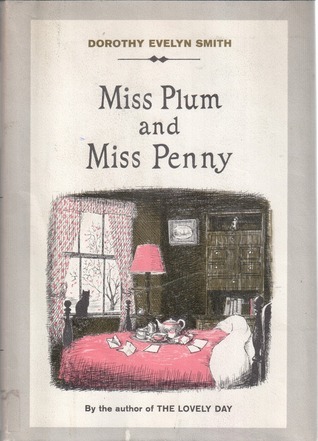
Miss Plum arrives in the little Yorkshire village of Greeth in a state of despair. When the main character of the story, Miss Penny, an unmarried woman, takes compassion on her, rescuing her from suicide by duck pond, she finds herself responsible for a woman who seems unable to accomplish anything and typically reacts to challenges, major or minor, by breaking down into tears. Somehow outside the government social system, Miss Plum has no one and nothing to her name. As Christmas approaches, Miss Penny and her friends find themselves unable to charitably rid themselves of the problems that daily accompany Miss Plum.
Miss Penny celebrates her fortieth birthday as the story opens. She is active in the village and content with her life. Romance for her is limited to a yearly birthday card from George, a commonplace beau she was forbidden by her parents to marry as a young lady. Her stalwart housekeeper and cook Ada is also her confidant and friend hailing back to her childhood. Miss Penny has two friends, a retired banker, and a vicar. Thoughts of a romantic relationship float about, but none of them take it seriously.
As Miss Plum, somehow attractive to men, stumbles from one disaster to another, the village moves on with skating on the frozen Tarn and engaging in Christmas caroling. Although a romance, Miss Plum and Miss Penny is very different from a modern love story. Character driven, this novel brings you into Alison Penny’s cozy home “The Laurels” and out into the wet and cold with galoshes, cardigans, and overcoats. The characters include a live-in housekeeper with various skill levels for Miss Penny and each of the two men. Clearly a marriage would disrupt the delicate balance of two households; good housekeepers are not easy to find!
There is a lot of humor in this charming novel. Not the “laugh out loud” kind, but the “smile and turn the page to see what the characters will do next” type. Imagine yourself curled up by the fire enjoying each page; that is the kind of book Miss Plum and Miss Penny is. The descriptions and writing style are enchanting. I liked the resolution as the book concluded, but was sorry to say goodbye to these delightful characters.
Rating: 5/5
Category: Fiction, Romance
Notes: This was a book club selection this fall, and not everyone in the book club enjoyed it as much as I did. Several members did not think there was enough character development or growth. Others pointed out that the characters did not change but did find contentment in their circumstances. These reactions are a prime example of not every book being the “right book” for every reader.
Publication: 1959—Robert Hale
August 3, 2020—Dean Street Press
Memorable Lines:
“Love isn’t safe,” he said heavily. “Love is a blinding flash in the dark. It is a leap over a cliff. It is a breathless dive to the bottom of the ocean…”
Love should be gentleness and tolerance and a sweet cherishing. That was the only kind of love she could ever have given—or accepted.
Women accepted sorrow and defeat. The cruel wind battered at them and they bowed to the wind; and when calmness came again they lifted their heads, bruised but unbroken. Not so men, who stormed and argued and kicked against the pricks, and often went to pieces altogether.
Hans Brinker, or The Silver Skates–historical look at Holland
Hans Brinker, or The Silver Skates
by Mary Mapes Dodge
illustrated by Edna Cooke
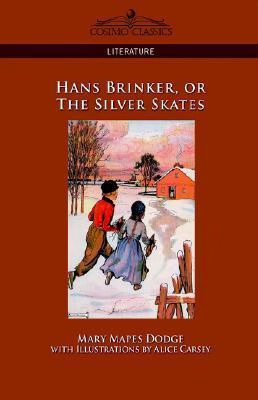
This children’s novel depicts life in Holland in the early 19th century and according to the author “aims to combine the instructive features of a book of travels with the interest of a domestic tale.” Dodge has done of lot of research so much of the book focuses on Dutch history and customs. Although Hans Brinker is the protagonist, he is not even a character in a large part of the book that describes a skating trip a small group of boys undertake traveling on frozen canals and rivers to various cities.
Hans and his family live in deep poverty because the father Raff had a work accident ten years prior that affected his brain. His wife also can not work because she has to stay home to look after her unpredictable husband. Hans and his sister Gretel are not always treated well because of their social standing. The author states that the circumstances of Raff’s situation were true.
Hans and Gretel have only inefficient wooden skates that Hans carved for them, but both are good skaters. Surprisingly, not much of the story deals with the race for silver skates. Hans is an honorable young man as is shown many times in the story.
The fictional part of Hans Brinker is interesting, even exciting, but the historical portions are less interesting. The boys visit museums on their trip and the history bounces from one item to another just as it would if you were visiting a museum. There are a lot of events referenced that students today do not have the historical background for (e.g. Prince William of Orange who freed Holland from Spain and became King of England). For further personal education on Dutch history or if working with homeschool students, Hans Brinker or the Silver Skates could be a valuable resource. Unless I were teaching a unit on Holland in a classroom, I doubt I would read this to or with Middle Grade students. I found the Preface to be a valuable introduction to what was to follow. I also liked the satisfying Conclusion which shared what happened to the characters as life moved on for them.
Rating: 4/5
Category: Children’s fiction, Historical fiction
Notes: 1. Intended for children 8-12 years old
2. I found this to be a slow read, but there were others in my book club who found the historical references very interesting.
Publication: 1865—George W. Jacobs & Co.
I obtained my copy from Gutenberg Press.
Memorable Lines:
“…the father and I saved and saved that we might have something laid by. ‘Little and often soon fills the pouch.’ ”
“We cannot say what we might have become under other circumstances. We have been bolstered up from evil, since the hour we were born. A happy home and good parents might have made that man a fine fellow instead of what he is. God grant that the law may cure and not crush him!”
Ten years dropped from a man’s life are no small loss; ten years of manhood, of household happiness and care; ten years of honest labor, of conscious enjoyment of sunshine and outdoor beauty, ten years of grateful life—One day looking forward to all this; the next, waking to find them passed, and a blank. What wonder the scalding tears dropped one by one upon your cheek!
 education pathways