Home » Posts tagged 'shyness'
Tag Archives: shyness
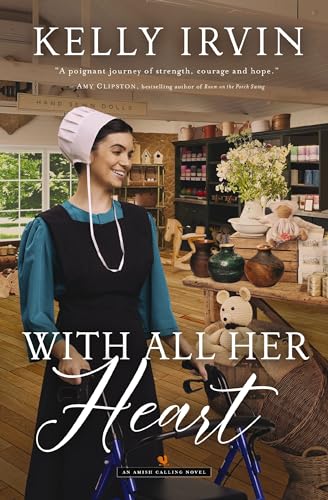
With All Her Heart–disabilities in the Amish world
With All Her Heart
by Kelly Irvin
Amish romances tend to follow the usual path of all gentle, clean romances. Romance is in the air for a couple or perhaps several. There is some type of conflict that will keep the couple apart. The problems are solved and the couples are united. That is, of course, a simplified summary and most have some serious issues that have to be resolved. In Kelly Irvin’s An Amish Calling trilogy, the author explores “the impact of the founder effect on Amish communities.” To try to obey Scripture, the Amish only marry within their faith. This small population of choices for marriage can result in rare, sometimes debilitating, diseases. Examples are Down Syndrome, spina bifida, and dwarfism. The Amish, or Plain folks as they call themselves, love “their children with physical and mental developmental disabilities with a fierceness that couldn’t be denied.” They are called “special,” integrated into family life, and ensured of care throughout their lives.
The main character in this story is Bonnie who has Spinal Muscular Atrophy (SMA) which despite treatment causes her muscles to progressively weaken. For an Amish woman, her life goal is to marry and have children. Bonnie can physically give birth, but caring for a home and children is not something she can do on her own. Bonnie joins with two other women with disabilities to found Homespun Handicrafts to support themselves and others with disabilities who make items for sale in the store. Their Amish crafts are especially popular with English tourists.
Several other characters in the book have disabilities from a variety of causes, not just the founder effect. Elijah is very shy which is a problem for his auctioneer family. He is deathly afraid of having to “call an auction.” He would rather spend his time and talents creating toys and furniture for sale. His love for Bonnie, however, loosens his tongue and emboldens him.
The plot and characters in this story will grab your heart as the characters deal with real, unremitting problems. This book is a page turner, partly to see what will happen next, but just as much because of empathy for the characters. They struggle with the age old questions of “why me?” and faith and trust in God in a fallen world where bad things do happen to good people. There is even an important thread dealing with a widow and widower and their obligations to their children. All of these are good characters and the reader will want God’s best for them.
I received a complimentary copy of this book in exchange for an honest review. Opinions expressed in this review are completely my own.
Rating: 5/5
Category: Christian, Romance, Religion
Notes: 1. This series has three novels that all deal with disabilities. The author, herself, has a disability and she says that “each book took me deeper into self-examination of my own life as a person living with disability and disease, while delving into how others perceive these issues—both Amish and non-Amish folks.” She tries to do this with sensitivity to the many issues encompassed in the book. This is the third book, but they can all be standalones. I read the first one and now this one. Do not be intimidated by the list of characters at the beginning. I used the glossary of Pennsylvania Dutch terms more than I did the list of characters.
2. There are discussion questions at the end of the book.
Publication: January 28, 2025—Zondervan
Memorable Lines:
The shop gave Plain folks like herself, with disabilities, a way to earn their keep when traditional Plain tasks couldn’t be accomplished. More importantly it gave them a sense of self-worth, a sense that they contributed just as their abled family members did.
“Everybody has disabilities. Some show. Some don’t. I think Gott allows them so we don’t get too uppity for our own gut. Like the verse says, so no one can boast. In our weakness Gott is strong.”
“Sometimes there are disabilities more limiting than the physical. They’re disabilities we create ourselves by doubting that we can have the full lives others around us have.”
 education pathways