
Home » Posts tagged 'Romance'
Tag Archives: Romance
The Fisherman’s Lady–Scottish classic
The Fisherman’s Lady
by George MacDonald
edited by Michael Phillips
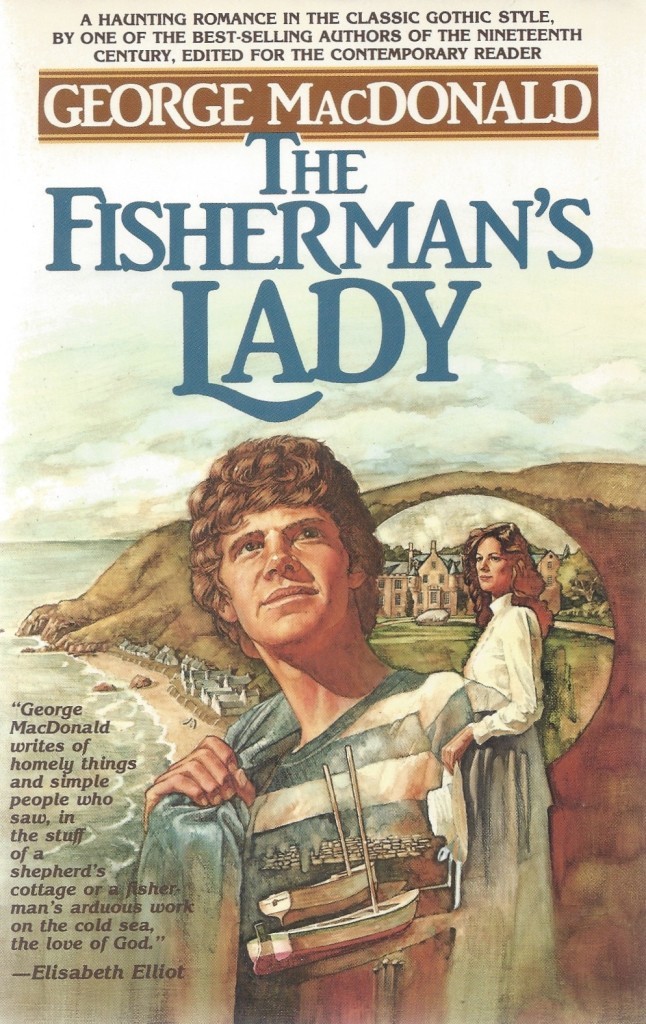
First published in 1875, entitled Malcolm, with a sequel arriving in 1877, The Fisherman’s Lady is a challenging read and a classical romance by a prolific writer of many genres. C.S. Lewis claimed MacDonald as his favorite writer saying, “I never wrote a book in which I did not quote George MacDonald.” The language is, of course, of an older age and reflects MacDonald’s background: Scottish minister, and author of fiction and nonfiction, including poetry. Contemporaries include Lewis Carroll, G.K. Chesterton, Charles Dickens, and Mark Twain.
Much of the dialogue in The Fisherman’s Lady is written with a Scottish brogue adding to the difficulty for the modern reader. Initially, I purchased a Kindle version that included both Malcolm and The Marquis of Lossie. Next, I located a printed version of The Fisherman’s Lady edited by Michael Phillips. He simplified the original by omitting some of the passages, but he also left some of the Scottish dialect for an authentic flavor.
Some readers categorize this novel as having a “gothic style.” It does contain some gothic elements from that Victorian period—a castle; dark, locked rooms; potential hauntings; crumbling stairways; the past affecting the present; twisted family ties; missing people; unusual sounds; and dreams.
The plot starts with sudden impact as it focuses on a corpse. Then, it proceeds slowly as characters are introduced. There are a lot of important figures in the book, and the editor lists them and a note about most of them, along with an area map. The story gains momentum and interest for the reader with lots of hooks leading into the following chapters. The protagonist is Malcolm, a fisherman who lives with his adopted father Duncan, an elderly, blind piper. Malcolm is a happy young man, honest, and a hard worker. He is devoted to the man who raised him whose only fault appears to be a quick temper over an old feud with another family. On the other side of the social strata is the Marquis of Lossie and his daughter, the beautiful Lady Florimel (Flory). Questions hang throughout the book concerning Malcolm’s parentage and that of the “Mad Lair,” a hunchbacked dwarf who has been badly mistreated by his mother.
Malcolm and Flory become friends, but they do not develop a romantic relationship because they both realize that social boundaries make any such bond between them unrealistic. Malcolm, however, would do anything for Flory, desiring to serve her long-term.
There are a few really evil women in this book. The way the upper class treats servants, laborers, the poor, and the disabled is upsetting, but a reflection of the times.
I enjoyed most of the book as far as it went, but I was disappointed in the sudden cut-off of the tale with no satisfactory conclusion for the characters. Most modern tales with sequels tie up the main threads in the first book but provide a motivation to encourage the reader to continue on to find out what happens to the characters in the next stage of their lives. This book contains a major event and then just ends with little attention to the aftershocks. The editor does include a brief paragraph to assure the reader on certain key points, but that statement was not part of the original text.
Rating: 4/5
Category: Historical Romance, Classic
Notes: 1. The first part of a two part set of books about Malcolm.
2. Includes Christian themes and shows characters trying to come to grips with their faith.
3. Clean
4. Includes preface by the editor and three appendices providing historical notes.
5. I have not yet decided if I will read the sequel, The Marquis of Lossie, or not.
Publication: Original in 1875—Henry S. King Publishers in Great Britain, and George Routledge & Sons in New York, and J.B. Lippincott in Philadelphia
This version edited by Michael Phillips in 1982—Bethany House Publishers
Memorable Lines:
Whatever may have been the projected attitude of the marquis, the moment he stood on the piper’s floor, the gentleman in him got the upper hand and his behavior to the old man was not only polite but respectful. At no period in the last twenty years had he been so nigh the kingdom of heaven as he was now when making his peace with the blind piper.
But Lady Florine had never studied anything yet, had never even perceived that anything wanted studying—that is, demanded to be understood. What appeared to her most odd, most inconsistent, was his delight in what she regarded only as the menial and dirty occupation of cleaning lamps and candlesticks; the poetic side of it, rendered tenfold poetic by his blindness, she never saw.
“No, no; never run from a lie. And never say, neither that you didn’t do the things except it be laid straight to your face. Let a lie lay in the dirt. If you pick it up, the dirt’ll stick to you, even if you fling the lie over the dike at the end of the world. No, no! Let a lie lay as you would the devil’s tail!”
The Paris Bookshop for the Broken-Hearted–starting over again
The Paris Bookshop for the Broken-Hearted
By Rebecca Raisin
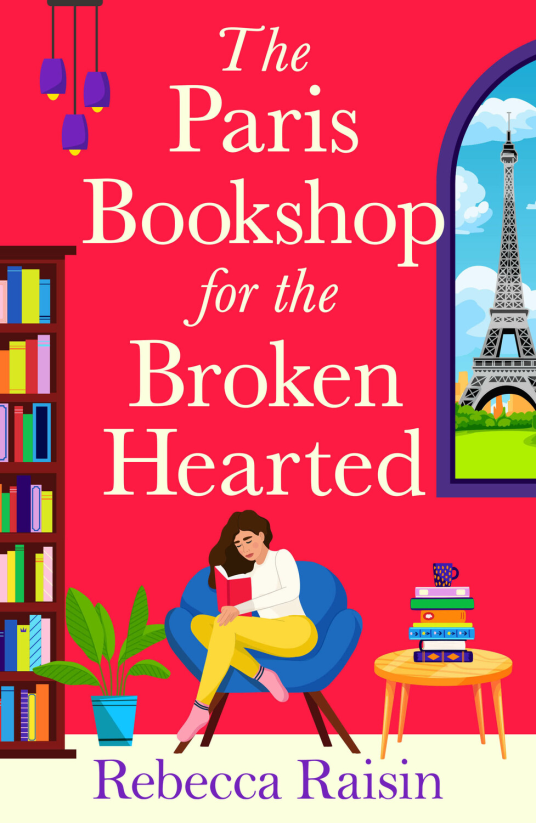
When Coco is betrayed by her romantic and business partner, she loses not only her lover and her small, London publishing firm, but also her reputation. Although she did nothing illegal or unethical, she finds herself unemployable. Picking herself up, she takes her teen daughter out of their home and comfort zone and moves into one bedroom in her parents’ apartment in Paris. Fortunately, all four of them are bilingual.
Just as Coco acknowledges to herself that she will be unable to find a job in a publishing firm, she wanders down a cobblestone side street and discovers The Bookshop for the Broken-Hearted. The owner of the combination chaotic bookstore and unusual bar with cocktails (potions) and bespoke passages is Valérie. She hires Coco to help in the shop. Coco helps with traditional clerking duties and makes innovations in the running of the store. She also takes over the store’s book club introducing a number of interesting characters to the story. There are several mysteries in the shop. Where does Valérie disappear to every day? How does she seem to know just what each customer needs? Who is this Henri who keeps crossing paths with Coco? Where does he go every day at 4:00?
While Coco is settling in to her new job, she also has to tread untested waters with a resentful teen who misses her friends back in London. Eloise is being bullied at school and all kinds of difficulties arise from that.
The plot is well-written with some surprising twists and romantic turns that provide opportunities for character development. The crisis in Eloise’s life is complicated by her mom’s possible entanglement with Henri. The other characters see the romantic interest between Henri and Coco before the pair recognizes it, but that doesn’t mean it will progress smoothly for the couple. By virtue of its setting, the book has a lot of the feel of Paris in it. That ambiance will be a big draw for some readers as well as the bookish mood that permeates The Paris Bookshop for the Broken-Hearted.
I received a complimentary copy of this book in exchange for an honest review. Opinions expressed in this review are completely my own.
Rating: 5/5
Category: Romance, Women’s Fiction
Notes: Includes several instances of one vulgar French word and one English expletive is uttered a few times. Otherwise clean.
Publication: February 3, 2025—Boldwood Books
Memorable Lines:
Eloise and I have left London with only two suitcases and a backpack full of books. I also have a couple of extra bags, but those are under my eyes and here for the duration.
I’ll probably lose my French citizenship mentioning that fashion doesn’t inspire me, but honestly, who can pretend about these things? “If I were to spoil myself, it would be a book-buying spree, not a blouse with or without frills.”
“Your car has more dimples than a golf ball.” “Parking in Paris is a blood sport.”
A Love Letter to Paris–lost art of correspondence
A Love Letter to Paris
by Rebecca Raisin
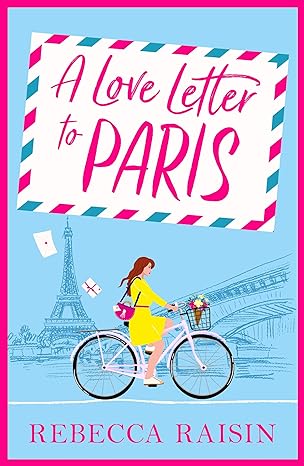
Lilou has been through several devastating romantic relationships as have some of her friends. Looking for a better way to connect, she anonymously founds Paris Cupid which matches people and enables correspondence which could result in a friendship and possibly a slow burn romance. Her day job is her own shop selling antique diaries and love letters in the Paris Market.
There are, of course, complications with both of her jobs. Through social media there is an outcry for transparency for Paris Cupid when a movie star sings its praises. Lilou has three handsome men at the Paris Market whom she suspects of secretly liking her. She visits with one of her antique dealers in a cemetery where some homeless cats hang out; their affection for the cats turns into a plot thread. Lilou is fluent in both English and French so the author throws in some French phrases that require no translation; the meaning comes from the context.
A Love Letter to Paris had no appeal for me through the first half. Then my interest picked up and was maintained throughout the second half of the book. The characters never came to life for me, however, and I didn’t like any of them. The resolution was apparent early on in the book, but the journey to the conclusion did not contain events that could have made it a page turner. Other books by Rebecca Raisin, especially those in the Travelling Shops series, have been delightful, but this one missed the mark for me despite my personal love of Paris and the French language.
I received a complimentary copy of this book in exchange for an honest review. Opinions expressed in this review are completely my own.
Rating: 3/5
Category: Fiction, Romance
Notes: Clean language except for the occasional use of “merde,” the most common French swear word. No inclusion of intimacies.
Publication: July 8, 2024—Boldwood Books
Memorable Lines:
The market is like a petri-dish when it comes to gossip, and left unattended it grows, multiplying until everyone hears an exaggerated version of the story that just isn’t true.
They’ve taken information directly from the Paris Cupid website, saying it’s a small affair dedicated to matching the lost, the weary, the broken hearted, or the just plain romantic, using the medium of love letters.
The perfume of old books: earthy, musty nuttiness with hints of vanilla and sweet almond is like a drug.
love, unscripted–creating the perfect man
love, unscripted
by Denise Hunter
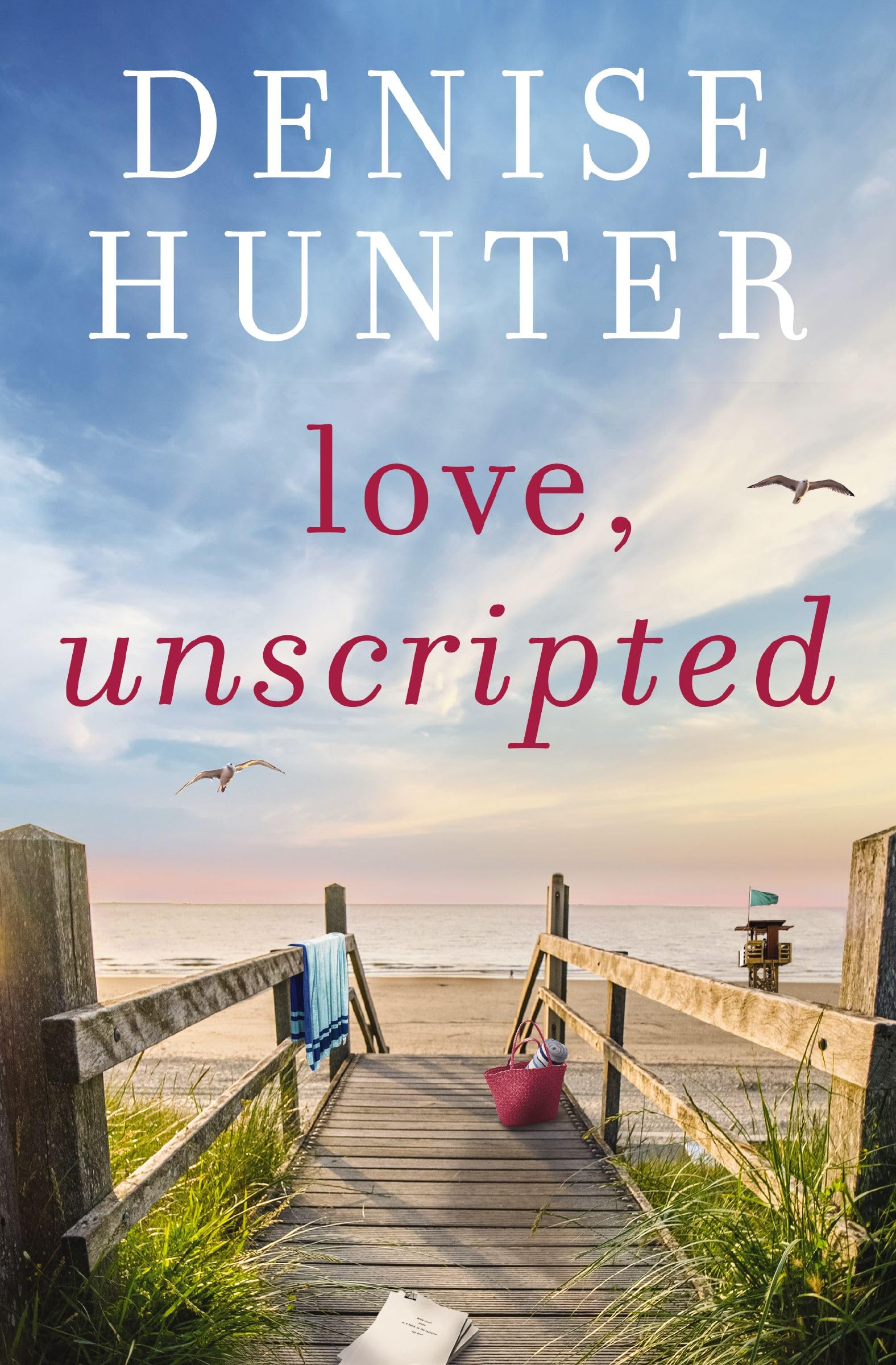
The “fake boyfriend/girlfriend” trope is a popular one, but it has never appealed to me. When Denise Hunter, an author I like, published one, I decided to give it a try.
In love, unscripted, Chloe has just published her first novel and it is a huge success. So successful that she already has sold the movie rights. Having been hurt and rejected by several men, including her father, Chloe has written a protagonist into her book who is heroic and “exhibits all the qualities that every woman yearns for in a partner.” Unfortunately, Liam, the actor chosen to play that role in the movie has a reputation as a handsome and charming lady’s man who moves quickly from one romantic interest to another. The tabloids love to use him for their headlines, and not everything they print is true.
Chloe’s first encounters with Liam are not positive, but they make a deal with each other. Her publisher wants her to increase her social media presence, and Liam’s publicists want him to shine up his image to fit the wholesome character portrayed in the movie. She agrees to pretend to have a relationship in exchange for his committing to work with her on his lines to better understand the character she created.
It’s easy to guess the direction the plot will take, but it is entertaining to watch their relationship develop. The hiccups along the way are caused by the paparazzi and by their own individual pasts which make it hard for them to trust others. Misunderstandings arise causing some hard lessons in forgiveness. Although this fake dating trope will never be my favorite, I did enjoy this clean romance with characters I liked. Most of the characters grew during the story, but realistically a few were unable to admit past mistakes or make good choices.
The events in the book take place over the course of three months showcasing how a movie is filmed, and I enjoyed participating vicariously in that process.
I received a complimentary copy of this book in exchange for an honest review. Opinions expressed in this review are completely my own.
Rating: 5/5
Category: Romance, Women’s Fiction
Notes: no inappropriate language or sex
Publication: March 12, 2024—Harper Collins Christian Publisher/Thomas Nelson
Memorable Lines:
“When you reach a certain level of success, people often want something from you other than friendship. Sometimes it’s hard to tell who’s genuine and who’s not.”
She’d felt closer to him since their illnesses. There was something about seeing a person at his weakest—and being seen at your most vulnerable—that lowered a person’s walls.
“You’ve gotta get good at forgiving. “Cause believe me, you’ll be the one needing it the next time.”
Surprised by Oxford–an intellectual’s search for meaning
Surprised by Oxford
by Carolyn Weber

Carolyn Weber had quite a culture shock when, as a scholarship student, she transported herself from Western Ontario into the revered halls of Oxford University. In that first year of working on her Master of Philosophy degree, she was introduced to a different system of learning and classes. She was expected to learn for the sake of learning and to pursue academic interests through tutorials—meetings of small groups of students with a professor. Along with tea or sherry, the groups dove into intellectual pursuits that exhilarated this future professor of literature.
Along the way, Weber discovered a diverse group of friends from a variety of backgrounds who challenged each other in the friendly way comrades can have in the pub over a pint at the end of a long day of studying. She discovered a diversity of spiritual beliefs from atheist to Eastern religions, but none kindled in her the desire to investigate like the Christian faith did. The Christian students and professors were not what she expected. No one was standing on street corners thumping a Bible. Instead, when they found she was interested, they encouraged her to actually read the Bible and to attend groups where the writings of C.S. Lewis were discussed.
Through Surprised by Oxford, I learned a lot about the University of Oxford that contradicted the stereotypes that are generally shared in media. It was interesting to watch her personal and intellectual growth, to see her search within herself for spiritual meaning and communication with God. Obviously a lover of literature, Weber begins each chapter with poetry and sprinkles other lines of poetry throughout the book, especially as she and her friends quote poetry to each other in the context of their discussions.
Rating: 5/5
Category: Memoir, Christian
Publication: 2011—Thomas Nelson
Memorable Lines:
I had no real need of believing in men, God incarnate or otherwise. Fathers especially were not to be trusted. They did not even seem relevant really. That much I had learned. That much I brought with me.
“Despair is the greatest sin,” Dr. Nuttham finally responded slowly. “It involves forgetting that God is there. Forgetting that He is good and that all He is and does extends from and works toward this perfect goodness. That doesn’t mean that He allows evil, or creates it, or perpetuates it. That’s our entwinement. Rather, He uses even our evil toward His good. We all need forms of remembering this first great love…writing, reading, creating, being.”
“Jesus brings the most radical message there is into any society at any time: you are beloved; you are worth a price that only the God of the universe could pay.”
The Start of Something Wonderful–Lake District of north west England
The Start of Something Wonderful
by Jessica Redland
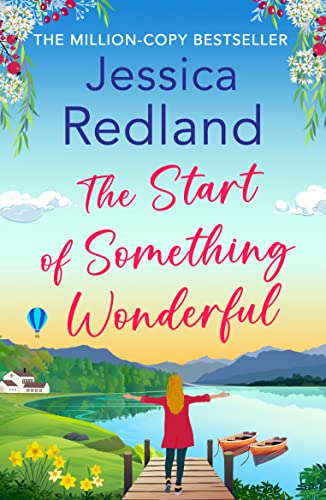
Sometimes people have to go through some hard times before they are ready to make changes in their lives. At some point they also begin to appreciate what they already have. Such is the case for Dane whose divorce is pending and for Autumn who loses her job as a greeting card illustrator while she is grieving for her grandfather and coming to grips with a past failed romance.
The Start of Something Wonderful is about Dane and Autumn as they literally bump into each other. In the process of their meeting, we learn so much about their pasts and their hopes and dreams. They do not start out looking for romance, but in their efforts to begin again with their lives, they discover a friendship and a kinship that draws them close together.
The setting is one the author is quite familiar with—Derwent Water in the Lake District National Park in north west England near Keswick. The beauty of the area and the feel of community in the small towns nearby are inspiring to Autumn as are her visits to Hill Top Farm and the legacy of her personal heroine, Beatrix Potter. She wants to take her inspiration from Potter and the area without copying her.
Rosie is an important character in that she was Autumn’s penpal from age eleven. Neither had a lot of friends in school and family needs kept each close to home. Thus they became confidants through the rest of their lives. When Autumn goes to meet and visit Rosie for a fortnight in the Lake District where Rosie manages a stable and teaches riding skills, a new stage of life begins for both women.
The main characters are quite likable along with several others who contribute to the plot. There are also a few who are despicable, especially Autumn’s ex-boyfriend. The romance is gentle and slow and suited to the story and the needs of the characters. Several events were quite touching, and I enjoyed the whole book. Redland is a good writer. I have enjoyed everything I have read by her, and I am excited for this new series.
I received a complimentary copy of this book in exchange for an honest review. Opinions expressed in this review are completely my own.
Rating: 5/5
Category: Fiction, Romance
Notes: #1 in Escape to the Lakes
Publication: July 17, 2023—Boldwood Books
Memorable Lines:
“You really think certain people are meant to be in your life?” “Of course! I think they appear when you need them and we’re the living proof of that.”
We really were kindred spirits, neither one us willing to travel far from home because we had a loved one to look out for, and neither of us having a friend who we could pour our hearts out to in person. It was no wonder we’d become so close as penpals. There’d been nobody else to turn to.
It was my grandparents’ home and I needed my own space. It was full of memories, but selling it wouldn’t take them away. They were in my heart and my head and would remain with me wherever life took me. I didn’t need to own their house to remember them.
A Cowboy Worth Waiting For–Rodeo Matchmaking
A Cowboy Worth Waiting For
by Melinda Curtis
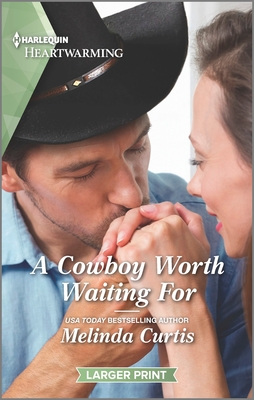
Why are cowboys so appealing? I think it is because their job is a tough one requiring strength and endurance and is embedded in the natural world, the outdoors. Cowboys are by their very nature high on the masculinity scale. That includes Wade, a bareback bull rider and his family of non-biological brothers who are former fosters on the D Double R ranch. These young men faced tough times in their pasts, but were successfully guided by Mary and Frank Harrison through the hurts that landed them in the foster system. The men view Mary and Frank as parents and have chosen to stay on working the ranch that supplies horses and bulls for rodeos.
Wade lost his wife Libby to a brain tumor. He continues to isolate himself from hurt by distancing himself from people. The exception is his foster family and his tweenage daughter Ginny. Ronnie, who was Libby’s best friend, promised Libby that she would find a new wife for Wade who was also a longtime friend of Ronnie’s. Her means to accomplish this end (while disguising it) is starting a matchmaking business for cowboys, cowgirls, and all who enjoy rodeo. Ronnie, known for her kind heart, also has a reputation for messing things up—from the businesses she starts to navigating the physical world.
All the characters are likable, and young Ginny is realistic as she bounces back and forth between being a little girl and wanting to be “grown up.” The brothers have different strengths and strong bonds; they enjoy a lot of good natured ribbing. Ronnie is a fun character; she has resolved not to fall in love and can’t see the romance right in front of her while she successfully matches up other couples.
If you like clean romances and cowboys or are just intrigued by the cowboy life and lifestyle, I think you will enjoy A Cowboy Worth Waiting For. Knowing author Melinda Curtis’ expertise with series that revolve around families, I would expect this to be only the first of some good stories about each of the brothers.
I received a complimentary copy of this book in exchange for an honest review. Opinions expressed in this review are completely my own.
Rating: 5/5
Category: Romance
Notes: #1 in The Cowboy Academy series, a Harlequin Heartwarming book
Publication: March 28, 2023—Harlequin Digital
Memorable Lines:
There was the Ronnie in her head, the one who planned romantic picnics. And then there was Ronnie out there in the world, spreading her picnic blanket over a fire ant mound. After her last date had called her a menace and was trying to sue her for damages, she’d come to a decision. Men were safer without her.
Ronnie’s cheeks heated until they felt hot enough to sizzle bacon.
In a nearby chute, a cowboy lowered himself on the back of Hustle Train, a beefy Brahman mix who delighted in turning on a dime to rid himself of pesky cowboys with dreams of grandeur.
Pride and Prejudice–courtship in the early 1800’s
Pride and Prejudice
by Jane Austen
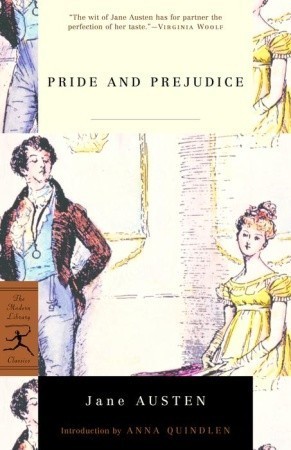
In preparation for reading Pride, a modern day version of Jane Austen’s Pride and Prejudice, with my book club, I decided to reread the original. I knew I could watch a video of the story, but I decided to aim for authenticity and read the actual book. I was glad I did as there is so much to be appreciated in Austen’s words, style, and depiction of characters. In retrospect, I believe my younger self had seen one of the several videos, but had never actually read the novel. I would still like to view one of the movies for an opportunity to better envision the costumes and settings of this period piece, but there is much value to be gained from the reading experience.
Pride and Prejudice is a romance particularly focusing on Jane and Elizabeth Bennet as they navigate the difficult waters of courtship in the early 1800’s in England. Their courses are made more murky by the family’s financial and social status. They are not part of the old monied class that is full of prejudice, but they have standards and they and their suitors are driven at least in part by pride. From a twenty-first century viewpoint, the courtship and rules of engagement seem stilted, but the reader can see in a younger sister’s impetuous disregard for the rules and assumptions of the time, that there are real societal and personal consequences for ignoring the standards of any time period.
I enjoyed the book which is as much about social issues as it is a romance. Pride and prejudice are, of course, themes throughout the book. Most of the characters of the novel grow and develop through the events of the story. Some remain stuck in their ways of thinking, and those continue to be persons the reader won’t like. You may find yourself rereading Pride and Prejudice for love of the characters, the joy of the language, or the journey towards a known ending—happy for some, less so for others.
Rating: 5/5
Notes: Edited by R. W. Chapman. Distributed by Gutenberg Press
Category: General Fiction, Romance
Publication: 1813—T. Egerton Military Library, Whitehall
Memorable Lines:
“Affectation of candor is common enough;—one meets it every where. But to be candid without ostentation or design—to take the good of every body’s character and make it still better, and say nothing of the bad—belongs to you alone.”
Without thinking highly either of men or of matrimony, marriage had always been her object; it was the only honorable provision for well-educated young women of small fortune, and however uncertain of giving happiness, must be their pleasantest preservative from want. This preservative she had now obtained; and at the age of twenty-seven, without having ever been handsome, she felt all the good luck of it.
“You mean to frighten me, Mr. Darcy, by coming in all this state to hear me? But I will not be alarmed though your sister does play so well. There is a stubbornness about me that never can bear to be frightened at the will of others. My courage always rises with every attempt to intimidate me.”
This Time Around–second chance romances
This Time Around
by Denise Hunter, Melissa Ferguson, and Kathleen Fuller

This Time Around is a collation of three second chance romances by three popular romance authors. I am posting my notes on each one. If you are interested in novella length romances to mix up your reading from some other genre, this would be the perfect book for you.
Denise Hunter has written a sweet second chance romance entitled A Summer Detour. Allie is free spirited and in her late twenties. She is painfully aware that her parents view her as irresponsible. Sadly, her boyfriend Luke ditched her right before the senior prom in her high school days, and the two have not connected since. When Allie makes a commitment to drive her grandparents’ 50th anniversary gift, a refurbished classic car to their party, she encounters a major hurdle and doesn’t know anyone to call on except Luke. It looks like a reconciliation could be in their future when a totally unpredicted hurdle throws everything off course. This is a short, enjoyable read with all the loose ends tied up nicely.
Told in the third person, Pining for You by Melissa Ferguson varies its focus from chapter to chapter between the two main characters, childhood friends Theo and Skye. When Theo went off to college, it was hard to maintain their blossoming romance. Fourteen years and a few misunderstandings later, can the successful financial advisor and established artist find their way back to each other?
In Kathleen Fuller’s He Loves Me; He Loves Me Not, Sophie Morgan at age 35 finally has her floral business well established and is ready to start dating. There are only two bachelors in Maple Falls. What are the chances they would both show up on her doorstep on the same afternoon inviting her on a date? Landon is a good looking lawyer, but seems a little slick. She has known Joe since Kindergarten, but has never really noticed those football coach biceps. Is it too late for Sophie to find love?
I received a complimentary copy of this book in exchange for an honest review. Opinions expressed in this review are completely my own.
Rating: 4/5
Category: Romance
Notes: Includes discussion questions
Publication: July 13, 2021—Thomas Nelson
Memorable Lines:
Who would choose to cocoon themselves into sleeping bags like saucy enchiladas for every Lyme-disease bearing tick, leg-amputating brown recluse, rattlesnake, mountain lion, bear, or serial killing maniac to discover? Someone needed to write that condition in the book of psychological disorders.
“I once left you unattended in Dad’s toolshed and came back to find you’d reorganized the whole thing alphabetically.” “So? I like organization. Everybody like organization.” “Yeah, well, we were six,” Skye replied.
The man deathly afraid of snakes had stepped into striking distance to save her. Was willing to put himself in front of his greatest fear in order to help her escape. It was touching. Absolutely crazy and ridiculous and paranoid, but also…touching.
Sense and Sensibility–guided reading of a classic
Sense and Sensibility
by Jane Austen
with A Guide to Reading and Reflecting by Karen Swallow Prior

Sense and Sensibility was first published anonymously in 1811; it was Austen’s first book. She was thirty-five. She published three more in her lifetime and two more were published after her death in 1817. Although the focus of this novel is love and marriage, it is not a romance in the modern sense. It is a satire finding humor in the manners and customs at the turn of the century.
The main characters are the pragmatic, self-controlled Elinor Dashwood and her sister Marianne who feels everything deeply and openly. Their financial situation is based on the inheritance system in place at that time in which the eldest son receives the lion’s share of the patriarch’s property and wealth. Thus the young ladies and their mother and younger sister are left with little to live on and are somewhat dependent on an ungenerous half-brother. As the older girls are at marrying ages (19 and 17), the main part of the novel tells of the ins and outs of various suitors and relationships. We watch the characters change and grow as their circumstances alter. The events work to balance out the extremes of character found in Elinor and Marianne.
Karen Swallow Prior takes this classic and becomes a guide for the modern reader. As an English professor, she begins with a thorough introduction befitting her profession. She provides information about the time period, Austen’s background, and the form of the satirical novel. She explains situational and verbal irony as well as free indirect discourse. She also discusses Austen’s Christian background and how a Christian today might view this work. Prior includes footnotes for words, terms, and concepts that harken from the last part of the eighteenth century and might cause confusion or difficulty for a reader in the twenty-first century. As Sense and Sensibility is divided into three “volumes,” Prior follows each section with discussion questions and then ends the book with more general “Questions for Further Reflection.” All of these features improve the reading experience and yield opportunities for a deeper understanding.
Rating: 5/5
Category: General Fiction (Adult), Historical Fiction, Classic
Notes: I found the introduction useful before I began reading Sense and Sensibility, but when I referred back to it in preparation for writing this review, I found it helpful to reread the information as I was able to apply some of it better having completed the novel.
Publication: The novel was originally published in 1811. This edition was published in 2020 by B&H Publishing Group.
Memorable Lines:
From Prior’s Introduction:
Some of its satire is directed at significant human flaws and social structures such as romanticism, greed, falsity, and the prevailing view of marriage as a business transaction. Other objects of satire in the novel are less serious but incur no less delight in being skewered incisively by Austen’s sharp eye and even sharper wit: silly women, idle men, and gossiping tongues.
From the novel:
This specimen of the Miss Steeles was enough. The vulgar freedom and folly of the eldest left her no recommendation, as Elinor was not blinded by the beauty, or the shrewd look of the youngest, to her want of real elegance and artlessness, she left the house without any wish of knowing them better.
Marianne, with excellent abilities and an excellent disposition, was neither reasonable nor candid. She expected from other people the same opinions and feelings as her own, and she judged of their motives by the immediate effect of their actions on herself.

