
Home » Posts tagged 'Resistance'
Tag Archives: Resistance
The Warsaw Orphan–survival in the Ghetto
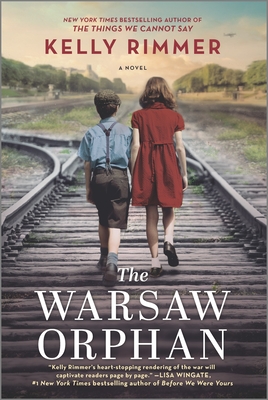
The Warsaw Orphan
by Kelly Rimmer
World War II is a popular subject for historical fiction. There are so many countries involved along with a variety of religions and philosophies. Lots of major political figures vie for power. Lives are turned upside down, families destroyed, and cultural icons demolished. In the midst of this upheaval, the citizens of Poland find themselves in a tug of war between Nazi Germany and the Red Army of the Soviet Union.
Roman, raised Catholic, is part Jewish. As a teenager he feels compelled to keep his Jewish family safe and later to fight from the Warsaw Ghetto with the Resistance for Poland’s freedom. Emilia (known as Elzbieta on her false identity papers) finds a way to work daily in the Ghetto under horrible conditions to help the people there who are overcrowded and sick from diseases and malnutrition. Their paths cross, and Roman and Emilia begin a friendship that lasts across the years.
In The Warsaw Orphan, Kelly Rimmer creates three dimensional characters who change and mature as a result of both growing up and experiencing the dramatic events that the war brings into their lives. They both see and endure things no one should have to—especially not teenagers. There are many characters of note and none of them see life as black and white. Many events take place in the grey area of life where one’s values and necessities do not line up perfectly. Some of the characters are Christian, some are Jewish, and others are atheists. Some are moral, decent people while others are torturing murderers.
The plot is told alternately from Roman’s and Emilia’s points of view. This is an effective way of narrating this story as it takes us on the personal journey each has to endure. There are decisions the characters have to make that affect others, not just themselves. The plot leads the reader through the many emotions that engulf the characters: grief, fear, shame, guilt, revenge. There are also moments of kindness, love, protectiveness, and generosity.
I thought The Warsaw Orphan was good, but the final fourth of the book was both surprising and riveting. You can’t expect a book about WWII to be filled with happiness and light, but I was amazed at Rimmer’s creative abilities to put her characters in desperate situations and then resolve them in a hopeful and rational way.
I received a complimentary copy of this book in exchange for an honest review. Opinions expressed in this review are completely my own.
Rating: 5/5
Category: Historical Fiction, General Fiction
Publication: June 1, 2021—Harlequin (Graydon House)
Memorable Lines:
Bystanders have allowed themselves to be convinced that the Jews are not like us, and as soon as you convince someone that a group of people is not human, they will allow you to treat them as badly as you wish.
Those agonizing weeks during the Uprising confirmed that art is not always for the viewer. Sometimes the very act of creating can mean salvation for the artist.
As punishment for our decision to rebel, our homes, our libraries, our monuments and our infrastructure would be reduced to dust. It wasn’t enough that they had taken our people and our homes—they were going to take what was left of our culture.
The Nine–despair and courage
The Nine
by Gwen Strauss

Five years of research and writing went into the creation of The Nine, a nonfiction work that focuses on a group of nine women, most in their twenties, who joined the Resistance movement in World War II at various times and places. Six were French, two Dutch, and one Spanish. They were individually captured and sent to worse than horrible Nazi internment camps.
The author was able to interview her great aunt Helène who spoke five languages and was the leader of this band who joined together to survive and escape. Strauss followed quite a maze of information and was aided by many including families of “The Nine.” The book begins with Helène’s story which for me was emotionally difficult as she provides some details of her capture and torture. There were some types of torture, however, that Helène would not discuss or even name. The rest of the account moved more quickly as we learn more about each of the young ladies in the first nine chapters along with descriptions of life in a labor camp. Each chapter moves them closer to either death or escape. Most of the rest of the book lays out their last days together and concludes with what happens after the war is over.
The ladies did not share their stories with very many people for a variety of reasons which the author relates. Several wrote about their experiences in unpublished formats to be discovered after their deaths. Many former prisoners of World War II suffered again after their presumed return to safety—homes and loved ones were gone, their bodies were physically ruined, and society turned against them. Statistically they were lucky to survive, but they bore visible and invisible scars. Most returnees were reluctant to discuss their imprisonment with even those closest to them and found that, in general, people did not want to hear about their experiences.
I highly recommend this book for the author’s insightful and thorough reporting about the brave women of the Resistance and the cruel and evil system that treated them as vermin. One of the policies that I sadly see repeated currently is those in power inciting division to weaken and control those under them. In the camps, the Poles received the best treatment from the Nazis, followed by the Reds. Every group looked down on another in the camps with the Roma (Gypsies), criminals, and homosexuals regarded as the bottom of humanity.
I received a complimentary copy of this book in exchange for an honest review. Opinions expressed in this review are completely my own.
Rating: 5/5
Category: History, Nonfiction (Adult)
Notes: 1. Subtitled: The True Story of a Band of Women Who Survived the Worst of Nazi Germany
2. At the first of the book there is a list of the women with their nicknames and a brief description
3. At the end of the book are notes about the author’s journey into the past, a bibliography, notes on each chapter, and a list of the illustrations (which sound interesting, but were not included in my Advance Reader Copy).
Publication: May 4, 2021—St. Martin’s Press
Memorable Lines:
The Jewish prisoners were given the worst rations, worst living conditions, and the hardest jobs. They were already the most traumatized group, having suffered pogroms, witnessed mass murders, and narrowly escaped the gas chambers. All of them had probably seen their loved ones die, and they may or may not have counted themselves lucky to be alive.
They were proud of how they served each other, divided food equally, and maintained their civility in such an uncivil place. It had kept them strong when others become more and more like animals, lost their sense of themselves, and fell into dark despair.
In the sea of people who seemed to have been tossed up like pebbles on a beach, the prospect of finding their loved ones felt nearly impossible.
 education pathways