
Home » Posts tagged 'psychology'
Tag Archives: psychology
Late Bloomers: The Power of Patience in a World Obsessed with Early Achievement
Late Bloomers: The Power of Patience in a World Obsessed with Early Achievement
by Rich Karlgaard
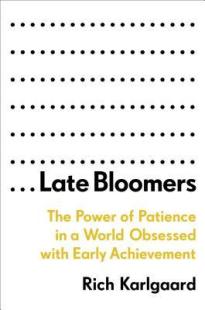 I don’t think I have ever read an introduction as fascinating as Rich Karlgaard’s in Late Bloomers. With phrases like “trickle down societal madness for early achievement” he puts the reader into his world and his viewpoint. It’s not that he is opposed to the young people with scores of 800 on their SAT who create fantastic wealth in their early twenties. He does resent what our culture’s adoration of them does to the rest of us, those whose potential is downgraded because our star doesn’t rise at the same pace or shine as brightly.
In Late Bloomers we are brought to an understanding of the history and psychology of the conveyer belt systems of education and business that have led us to the current sad state of affairs. Karlgaard explains how late bloomers struggle in this early achievement focused society and how society suffers for not valuing late bloomers. This book is replete with examples—J.K. Rowling, Einstein, and the author himself, to name a few—of late bloomers. It also carefully examines the available psychological research and what it tells us about late bloomers. A large portion of the book is devoted to sharing what late bloomers and society can do to make the whole system function more successfully.
As a teacher, I applaud Karlgaard’s revelation of the background of our harmful testing culture designed to create cogs in an industrial wheel. As a parent, I agree with his theories about development occurring in different ways and times for individuals. I am especially intrigued by the promotion of a “gap year” (or two) for young people, giving them extra time for brain development before they are expected to “adult.” I can see the need for viewing 18-25 as a stage of life when, for most, that important brain maturation in the prefrontal cortex is still in process.
The main body of the book is addressed to the late bloomer, which Karlgaard argues is most of us. It is full of research studies which interestingly support his advice to the late bloomer—how to survive in a world that disparages late blooming and how to, in fact, bloom despite a society that does not value late blooming. The introduction and first three chapters of this book should be required reading for every teacher, administrator, policy maker, business entrepreneur, parent, and concerned citizen. Did I leave anyone out? After that, most will want to finish the book. Especially the late bloomers out there, the ones who have not yet “found themselves” or met their full potential.
I would like to extend my thanks to netgalley.com and to Crown Publishing (Currency) for giving me the opportunity to read this book in exchange for an honest review.
Rating: 5/5
Category: Self-Help, Education, Parenting
Notes: Rich Karlgaard, self-proclaimed late bloomer, is the publisher of Forbes Media, an author, and the founder of several businesses.
Publication: April 16, 2019—Crown Publishing (Currency)
Memorable Lines:
Being seen as a potential late bloomer was once a mark of vitality, patience, and pluck. Nowadays, more and more, it is seen as a defect (there must be a reason you started slowly, after all) and a consolation prize. This is an awful trend, since it diminishes the very things that make us human—our experiences, our resilience, and our lifelong capacity to grow.
Just when we should be encouraging kids to dream big, take risks, and learn from life’s inevitable failures, we’re teaching them to live in terror of making the slightest mistake.
…social media has now become our most toxic cultural mirror.
Reducing education to test preparation jeopardizes the quality of curricula and the craft of teaching. It drains education of humanity.
Naturally Thin–Lasting Weight Loss without Dieting
Naturally Thin
by Jean Antonello, RN, BSN
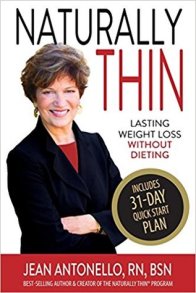 As both the holiday eating season and 2017 draw to a close, sharing a book on losing weight seems appropriate. So many of us focus on resolutions at this time of year, especially health related issues.
A little personal history: In the late 80’s I read the first book by Jean Antonello, RN, BSN, entitled How to Become Naturally Thin by Eating More. I remember successfully following the principles. Fast forward to a lengthy period during which, due to health problems, my concern was being underweight. Fast forward again to better health, but also to some life changes which resulted in an undesired weight gain. Recently I wanted to lose that weight, and I did lose some with a low carb diet, but then I hit a plateau for well over a month despite adherence to the diet and increased exercise.
In the back of my mind I remembered reading a book about eating, with a blue cover, written by a nurse, but that was not enough information for Google to help me locate it. As a book reviewer for NetGalley, I have an incredible number of books that I can request to review. Almost unbelievably, Jean Antonello’s new book popped up on my screen as I was seeking out answers for the plateau. Immediately I knew this was the same author.  While I was waiting for my request to be approved, with names now in hand, I was able to find not only the new book, but also a picture of my original book which is now tucked away in a box in NM while I am in Mexico. I felt like I had just found the Mother Lode!
So what do I think of Jean Antonello’s theories and her revised book about 30 years later? It makes so much sense to my personal situation, and she has backed it up with years of research, working with clients, and eating according to the principles herself. She advocates listening to your body’s signals for hunger and for being full. She calls for eating real food and plenty of it. This is not a diet. You are encouraged to eat good foods and never let yourself get hungry which then results in bingeing. She refers to the season of adaptation a former yo-yo dieter needs to go through as “recovery.” You are in charge of your own eating for a change. The plan is based on the feast and famine physiology of our bodies. Dieting is counterintuitive to your body because when you hold back good food, then your body perceives a famine and does not want to let go of the fat. It also slows down the metabolism to protect us from starvation. Both of these things explain my plateau.
There is so much more theory and research in her book, which is written in a very user friendly style. The approach is not complicated, but it does require commitment, not to hunger as in a diet, but to listening to your body’s signals and not thinking like a dieter any more. Antonello debunks lots of dieting myths such as the blame game that is put on overweight people that they are lazy, have psychological problems, and lack will power. She does not guarantee the fast weight loss most diets promise. She does offer freedom from obsession with food and something that rarely happens with diets—you will eat like a naturally thin person and you will not regain the weight.
Obviously I am impressed with the book. I am going to implement the mindset changes, and I anticipate that this will be a gradual process. Will it work? I don’t know. This blog is primarily about education, books, and Mexico. I only occasionally insert personal posts, but I promise to follow up this one with information on my progress or lack of it. According to Naturally Thin, I can’t put a time table on that because everyone’s body is different. I like that viewpoint, and I like that she recognizes people as individuals.
I would like to extend my thanks to netgalley.com and to Heartland Book Company for giving me the opportunity to read this book in exchange for an honest review.
Rating: 5/5
Category: Health, Nonfiction (Adult)
Notes: The Appendix includes a 31-Day Quick Start plan. These are motivational readings that reinforce the principles and help you make the mental changes necessary after years of being subjected to the dieting industry’s mantra of eating less. There is also a Reader’s Guide of questions for each chapter to help you focus on the principles in that chapter and apply them to your situation.
Publication: July 11, 2017—Heartland Book Company
Memorable Lines: (I probably highlighted half of this book in my efforts to absorb the plan. I have just cited a few portions here.)
When they diet, they force their bodies to quickly burn fat and at the same time create an increased need for fat for the future. This is why dieters always go off their diets—for the necessary restoration of the fat they’ve lost during the diet.
Just like going hungry regularly, eating a lot of poor quality food triggers the body’s survival response. Lousy food doesn’t satisfy the body’s need for nutrients.
…typically people eat too much and all the wrong stuff because they aren’t eating enough of the right stuff—at the right time.
Probably the most challenging aspect of recovery is the patience required for weight loss.
Healing Back Pain: The Mind-Body Connection
Healing Back Pain: The Mind-Body Connection
by John E. Sarno, M.D.
 Dr. Sarno, through many years of treating patients with back pain, has discovered what he considers an epidemic of back pain in the U.S. and states that usually the cause is not an accident or a degenerative disease. He attributes it to repressed emotions, usually anger or anxiety, and says that the stressful situation that causes the Tension Myositis Syndrome (TMS) does not always have to be resolved for the pain to go away. The patient just needs to recognize the mind-body connection that he is experiencing.
I have not tried to apply Healing Back Pain: The Mind-Body Connection’s seemingly simple techniques; I have only read the book. Dr. Sarno’s detailed discussion of the failure of traditional medicine’s handling of back pain does make sense. He advises someone with back pain to consult with a doctor to get that perspective, but then evaluate their symptoms in the light of his thesis. He also says many other conditions such as eczema, headaches, and irritable bowl syndrome may be attributable to repressed emotions also.
Dr. Sarno cites a lot of anecdotal evidence as well as data gained from surveys of patients to support his theory. He does not claim to understand how the brain can exert such powerful control over the body, but reminds the reader that there are many things about the way the brain works that are not completely understood yet. Dr. Sarno is a medical doctor, not a salesman, not a slick businessman ready to perform on morning TV. His background is displayed in his writing style, and my 4 star rating reflects that. His bold stance against the traditional and unsuccessful medical view of back pain and his obvious enthusiasm for helping those with back pain rates 5 stars.
Rating: 4/5
Category: Health
Notes:
- Much of the book is technical. The chapter about his technique is vague, maybe because it is so simple and we expect more bells and whistles from modern medicine. Because of these factors, I found the Appendix particularly valuable. It is comprised of “Letters from Patients” and shows concretely how various patients have applied his theory and their results.
- Having finished this book on the mind/body connection, which deals primarily with the power of repressed emotions, I was amazed as I started a fictional book to discover at least four prominent references in the first chapter to how the characters realistically reacted viscerally in various ways to stress inducing moments. I reflected that if people instantaneously respond physically (tightening muscles, a sinking feeling in the gut) to anxiety, then Dr. Sarno’s connection of repressed emotions and body pain seems rational even if ignored by the medical community.
Publication: Original 1991, Kindle 2001—Hachette Book Group
Memorable Lines:
Though the low back is the most common location for an acute attack, it can occur anywhere in the neck, shoulders, or upper and lower back. Wherever it occurs, it is the most painful thing I know of in clinical medicine, which is ironic because it is completely harmless.
It is not the occasion itself but the degree of anxiety or anger that it generates that determines if there will be a physical reaction. The important thing is the emotion generated and repressed, for we have a built-in tendency to repress unpleasant, painful, or embarrassing emotions. These repressed feelings are the stimulus for TMS and other disorders like it. Anxiety and anger are two of those undesirable emotions that we would rather not be aware of, and so the mind keeps them in the subterranean precincts of the subconscious if it possibly can.
Traditional medical diagnoses focus on the machine, the body, while the real problem seems to relate to what makes the machine work—the mind. TMS is characterized by physical pain, but that acute discomfort is induced by the psychological phenomena rather than structural abnormalities or muscle deficiency.
The Stepchild–does the past really stay in the past?
The Stepchild
by Joanne Fluke
 If you are a fan of Joanne Fluke’s Hannah Swensen cooking mysteries, you will be surprised and possibly disappointed by The Stepchild. I know Fluke has a huge following for the Hannah Swensen Mystery Series. I found the one I read too syrupy sweet with the emphasis on the personal lives of flat characters and their recipes.
The Stepchild is a completely different type of book. I would classify it as a psychological thriller. It begins with a prologue that focuses on two dramatic events. Then the scene fast forwards to describe the sudden problems of Kathi Ellison whose father is only a few weeks away from becoming a senator. There is a life changing secret in Kathi’s past that even Kathi does not know about.
Three quarters of the way through the book I almost stopped reading it because of what appears to be a strong paranormal aspect. I am glad I continued on to the end as the story progresses in a different and unexpected direction with surprising implications. The Stepchild is an unsettling read, but a good one.
I would like to extend my thanks to netgalley.com and to Kensington Books for giving me the opportunity to read this book in exchange for an honest review.
Rating: 4/5
Category: General Fiction (Adult), Mystery & Thriller
Publication: July 25,2017—Kensington Books
Memorable Lines:
To succeed in political circles he had to give up something, the same as in everything else. In the city you had to give up nature, in a marriage you had to give up privacy, and in politics you had to give up little pieces of yourself, carefully doled out in meetings and speeches, making your life smaller with each passing encounter. It was almost like bleeding, and Doug sometimes wondered what would happen when he was bled dry.
Now that she was awake, sleep eluded her like a fickle lover, tempting her by making her body warm and drowsy, but forcing her eyes to open.
And now, in the late fall, the leaves were swirling in the wind, blowing up against the wooden snow fences, gathering in piles. She could see the woods by the side of the narrow road, the carpet of fallen leaves and the lovely, deep darkness behind the bordering trees.
 education pathways