Home » Posts tagged 'Persia'
Tag Archives: Persia
Everything Sad is Untrue–memories are culture carriers
Everything Sad is Untrue
by Daniel Nayeri
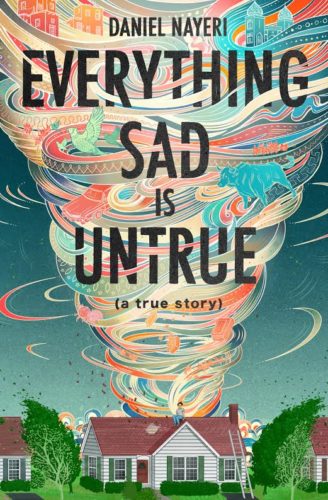
Daniel Nayeri’s Everything Sad is Untrue is part memoir and part storytelling where he fills in the things he doesn’t remember exactly from his childhood. The first part of the book is a mixture of three kinds of stories—myth, legend, and history—that attempt to place the reader in Daniel’s past and his ancestry as it happened and as he imagined it might have happened. He relates “story” in this way to help the reader understand the very different Persian culture he started his life in and which formed his beliefs and attitudes.
Although there are no chapters in this book, the reader can clearly tell when the story pivots from providing background to relating the events from the time his mother became a Christian on a visit to the West. She embraced Jesus and her faith in Him wholeheartedly. Christianity in Iran is a capital offense, so she had to take her children and flee. She traded a comfortable life as a respected physician married to a successful dentist for the life of an impoverished refugee, looked down on because of her language, menial job, and poverty. But she had Jesus, and no one could take that away from her.
Some of the book tells about the year they spent in a refugee camp in Italy. It was not actually a camp with tents, but a concrete building with small rooms and a bathroom. The residents were refugees from many countries, all waiting for the U.N. to find a place that would accept them. They had nothing and there was no access to books, media or recreation. It was made even harder by the refugees’ inability to converse with each other and by impatient workers who processed each refugee’s mound of paperwork.
A lot of Daniel’s story tells what life was like for him as a child in Edmond, Oklahoma, where they eventually settled. He experienced bullying, but came up with tricks for avoiding the worst of it. There was culture shock around every corner as he tried to fit into a very different mindset. Fortunately, he had an outstanding teacher in Mrs. Miller who encouraged him without babying him. The librarian in Edmond was kind too, and so Daniel spent many Saturdays there devouring books. His mom ended up in the emergency room several times thanks to his stepfather Ray, a black belt. Despite lots of difficult times, Daniel never seems to plead for sympathy from the reader and always points to his mother as the strongest person he knows.
Everything Sad is Untrue is a book I recommend. It is a challenging read as the author’s life is presented through the eyes of a child, but with some of the understanding of an adult. Memories are an important theme of this book as Daniel says, “Memories are always partly untrue.” and “A patchwork story is the shame of a refugee.” This is a book ripe with principles and beliefs worth pondering and a story and characters who will remain in the reader’s thoughts long after the last page is turned.
Rating: 5/5
Category: Autobiographical novel/fictionalized memoir
Notes: 1. This is a hard book to categorize which may, in part, be a critical factor in making it a very good book.
2. It has been rated for children 12+ on Amazon. Some readers refer to it as a Young Adult book. To me, it is probably more appropriate for adults. Some of the fascination with “poop,” however, in Daniel’s childhood classroom would attract the attention of middle school boys.
3. This book has won many awards.
4. I thought not having chapters would be a negative for me, but it does fit the style of Everything Sad is Untrue.
Publication: 2020—Levine Querido
Memorable Lines:
Memories are tricky things. They can fade or fester. You have to seal them up tight like pickles and keep out impurities like how hurt you feel when you open them. Or they’ll ferment and poison your brain.
And here is the part that gets hard to believe: Sima, my mom, read about him and became a Christian too. Not just a regular one, who keeps it in their pocket. She fell in love. She wanted everybody to have what she had, to be free, to realize that in other religions you have rules and codes and obligations to follow to earn good things, but all you had to do with Jesus was believe he was the one who died for you. And she believed.
Imagine you’re in a refugee camp and you know it’ll be a tough year. But for the person who thinks, “At the end of this year, I’m going somewhere to be free, a place without secret police, free to believe whatever I want and teach my children.” And you believe it’ll be hard, but eventually, you’ll build a whole new life….But if you’re thinking every place is the same, and there will always be people who abuse you, and about how poor you’ll be at first, the sadness overtakes you….But what you believe about the future will change how you live in the present.
You Were Made for This Moment–the God of great reversals
You Were Made for This Moment
by Max Lucado

Most of us are experiencing the “winter of our discontent” with ever-changing health orders, lockdowns, divisiveness on all fronts, inflation, shortages, and politicians who promise much and do little. Max Lucado has written a book that is very appropriate for these times, You Were Made for This Moment. It focuses on Queen Esther in the land of Persia. Her story is found in the book of Esther in the Old Testament of the Bible. The heroine has concealed her Jewish heritage, but now her people are about to be annihilated. Esther is the only Jew with access, limited as it is, to the throne room of the powerful Xerxes.
In his book, Lucado takes us through this dramatic tale, giving background to make it very understandable and including contemporary anecdotes to point out the relevancy of this situation to crises we might find ourselves in. Sometimes they are humorous, sometimes sad, but always they are pertinent. Both the short book of Esther and You Were Made for This Moment should be on a “must read” list for all as they display how God is always working behind the scenes. Our omnipotent God has power over rulers. We need to be open to what He asks us to do in our circumstances whether the situation looms large or is seemingly minor.
Through fasting and prayer, Esther came to understand that “silence is a form of acquiescence.” Although approaching the throne room uninvited was a potential invitation to death, she followed through to save her people with the famous line, “And if I perish, I perish.” Esther was indeed called for such a time as this.
Long a fan of the courageous Queen Esther, I enjoyed revisiting her story. My faith was confirmed, my attitude refreshed, and my courage bolstered. This is an inspiring book, and Lucado, as always, is a riveting storyteller.
Rating: 5/5
Category: Christian, Inspiration
Notes: 1. Take the time to read Max’s humble “Acknowledgements.” As a writer, he turns a “blah-blah” moment into one that will bring smiles to the hardest heart.
2. The book ends with “Questions for Reflection” prepared by Andrea Lucado. They are designed to accompany each chapter as you read it.
3. I also purchased the study guide, written in workbook format, with different questions from the ones in the book. The guide contains a code that gives streaming access to five videos prepared to accompany You Were Made for This Moment and the study guide. The videos feature Max Lucado as he brings the Esther story to life through a cast of characters simulating a dramatic production of the Esther story. As always, when Lucado speaks, listeners feel like the words are directed at them and for their benefit.
Publication: 2021—Thomas Nelson
Memorable Lines:
Seasons of struggle can be a treacherous time for the human heart. We are sitting ducks for despair and defeat. We turn away from others, turn our backs on God, and turn into fearful, cynical souls. Despair can be a dangerous season. But it can also be a developing time, a time in which we learn to trust God, to lean into his Word and rely on his ways.
God is in the details. He works in the small moments. The insignificant becomes significant because he is ever orchestrating the day-to-day details of innumerable lives through a millennia of time to do what he has foreordained to do.
In God’s hands no script is predictable, no story line is inevitable, no outcome is certain. He is ever a turn of the page from a turn-on-a-dime turnaround….He is the God of grand reversals.
Don’t tell God how big your storm is. Tell the storm how big your God is. Your problem is not that your problem is so big but that your view of God is too small.
 education pathways