
Home » Posts tagged 'Mary'
Tag Archives: Mary
The Case for Christmas: A Journalist Investigates the Identity of the Child in the Manger
The Case for Christmas
By Lee Strobel
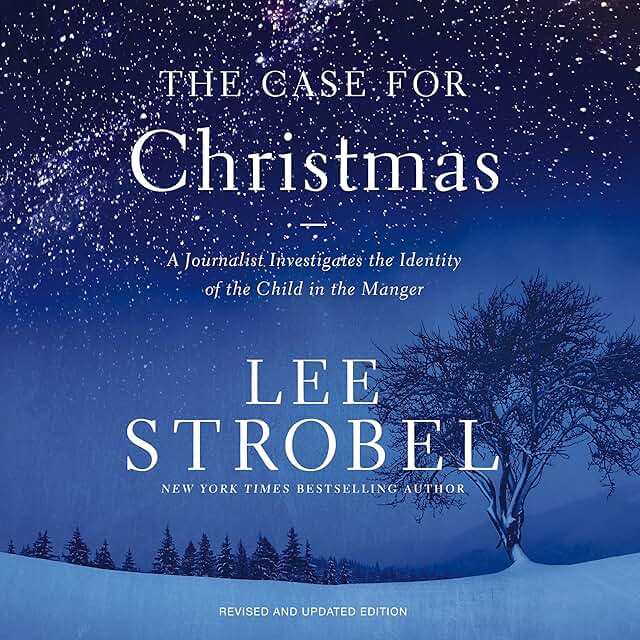
The author of the book The Case for Christmas is a former investigative journalist and atheist. His investigations into Christ have resulted in his becoming a Christian because of the proofs he uncovered. The Case for Christmas is part of a series of books Strobel has written delving into historical and scientific evidence concerning the Bible. In this case, he examines the virgin birth, the Gospel recounting of the Christmas story, December 25 as the date of the birth of Christ, the name Emmanuel, prophecy, and other pertinent topics. His research includes quotes from many authors in the field of Christian theology and from the Bible itself. I was not particularly comfortable with his use of other scholars’ opinions as a type of proof even when I agreed with them. When the author obtained actual historical data or sourced information from the Bible, I was more comfortable with his research. Overall, I found this book an interesting one for the Christmas season. I enjoyed the author’s reading of The Case for Christmas.
I received a complimentary copy of this audio book in exchange for an honest review. Opinions expressed in this review are completely my own.
Rating: 4/5
Category: Nonfiction, Christian, Religion and Spirituality
Notes: Audio version is narrated by the author
Publication: September 9, 2025—Zondervan
A Lineage of Grace–5 novellas point to Jesus
A Lineage of Grace
by Francine Rivers
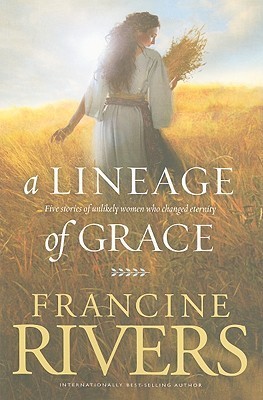
In the patriarchal societies of the Old and New Testaments of the Bible, there are many stories of men and their relationships with God, but there are also stories of women who played an important role in history. In the fictional stories of A Lineage of Grace, Francine Rivers chose out five women who are noted in the Bible for their lives and actions as well as their place in the earthly lineage of Jesus Christ, the Messiah or Savior, who came to Earth as a man to save people from their sins, restoring them to relationship with God.
Rivers has written five novellas which are available singly or as an anthology. Scripture is woven all through the book, but at the end of each novella there is a discussion guide that includes the specific Scripture passages from which the story is drawn. The plot is found in the Bible and is the backbone of the tale which Rivers fleshes out using knowledge of the history of the area and the culture of the times.
Unveiled is the story of Tamar, a young Canaanite married to an abusive husband. Her father-in-law, the Israelite Judah, is consumed with guilt over his actions towards his brother Joseph. Much of the story deals with Tamar’s need to have a son and the various devious means used to accomplish that goal.
Unashamed is the second story and one that is more familiar to many readers. It focuses on Rahab, a harlot, who is instrumental in Joshua’s successful destruction of Jericho. The author expertly fleshes out the character of Rahab. We see how she might have come to be in this position as well as her strength, intellect, and the trust she placed in the living God of the Israelites as opposed to the idols her family worshipped.
Unshaken is another familiar story, that of Ruth the Moabitess. When Ruth, her mother-in-law Naomi, and her sister-in-law all found themselves widowed, she decided to follow Naomi back to Bethlehem and trust in the God of Israel. She kept them from starvation and in the process God led her to a kinsman who continued the lineage.
Unspoken relates a version of a complicated plot set in motion by King David’s lusting after Bathsheba, another man’s wife. The Biblical story itself has soap opera drama to it and could be a morality tale about the consequences of sin. Rivers makes the characters come to life with assumed fictional motivations and background, all believable and appropriate to David’s status as King and what we know from the Bible about the people who surrounded him. Despite their sins, when David and Bathsheba sought forgiveness, God gave it to them, but they did suffer consequences. The story continues on past the initial drama through the rest of David’s life and the transfer of power to his son Solomon.
Unafraid is the story of Mary, the mother of Jesus. As a young teenager she showed courage, strength, and trust in God in her response to an angel telling her that, unmarried, she would become pregnant through the Holy Spirit with the Son of God. Betrothed to Joseph, she could have been disgraced and executed according to Jewish law. She endured an uncomfortable donkey trip to Bethlehem in her last month of pregnancy and gave birth to her first child in a stable without the help of a midwife.
This novella takes us through many of the events she witnessed as Jesus began his ministry all the way through his devastatingly horrible crucifixion to his glorious resurrection. Rivers writes what she thinks Mary’s inner struggles must have been and the way she always pointed attention to Jesus and not to herself. In fact, although Jesus made sure she was cared for after his death by his disciple John, he never elevated her as worthy of worship and she never sought such a role.
I enjoyed A Lineage of Grace which is thought provoking. The author made the characters of the Bible come alive and although separate in time and distance, I could see the links between the stories as they all lead to Jesus. The genealogies in the Bible can get tedious, especially if you are trying to pronounce some of those names! The core of this book is found in genealogies, but it comes alive as you look in depth at the bigger picture. Indeed, it’s all about the great Three in One: God the Father, His Son Jesus Christ, and the Holy Spirit.
Rating: 5/5
Category: Historical Fiction, Christian
Notes: My book club read this over five weekly meetings, and it worked well over a busy summer when members could drop in and out without losing the meaning of a longer work.
Publication: 2009—Tyndale House
Memorable Lines:
Unveiled—Was Bathshua blind to what she caused in this household? She constantly pitted son against father and son against son. She argued with Judah over everything—and in front of her sons—teaching them to rebel and follow their own desires rather than do what was best for the family. It was no wonder her mother-in-law was miserable! And everyone was miserable right along with her.
Unashamed—Jericho looked as though a hand had come down from heaven and flattened it against the earth. The walls and towers were scattered stones that had collapsed and rolled outward. Screams still rent the air as smoke and fire rose.
Unshaken—After Mahlon’s death, she decided she would never again allow her mind to dwell on things beyond her control. The future was one of these things. She would face whatever came and do the best with whatever life God gave her.
Unspoken—Yet, crouched at the door was a greater enemy than those who camped around Israel. And a greater battle was coming—one that could tear a nation to pieces. The battle would not take place in the mountains, valleys or plains of Israel. It would take place in the wilderness of the human heart.
Unafraid—“Hasn’t God always chosen things the world considers foolish in order to shame those who think they are wise? Maybe God chose a peasant girl to be his mother and a carpenter to be his earthly father because the Messiah is meant for all our people, not just those who dwell in the fine houses of the provinces or the palaces of Jerusalem.”
The First Christmas–Eastern philosophical take on the Nativity story
The First Christmas
by Stephen Mitchell
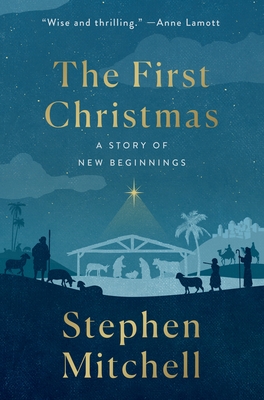
While I am not a theological scholar, I have been a Christian for over sixty years. Those are years in which I have studied the Bible, and God has grown my faith. When the author of this book gives an interpretation that I disagree with, I can accept that as a difference of opinion. An example in Stephen Mitchell’s The First Christmas is the angel Gabriel’s appearance to Mary. In the Bible this event is reported in chapter one of Luke. I believe this account literally, that the angel Gabriel appeared to Mary in a physical form and spoke to her in an audible voice. In fact, there is a dialogue recorded there. The author wants to interpret the appearance as a bright light (“the best I could come up with,” he says) and its communication as “empathy and telepathy,” nothing “so gross as speech.” Based on the writings in Luke, the author is creating a fiction that, though unconfirmed, could have happened. Many describe near death experiences as a comforting, blinding, white light. So, here, the author is using his imagination within the context of an angel visiting Mary.
What is more believable in his telling of the story are the extensive thought processes that Mary must surely have engaged in during the days and months following the angel’s announcement that she had been chosen to bear the Son of God as He comes to Earth in human form. The Bible doesn’t give details of all of her thoughts and feelings, but it does record her song of praise often called The Magnificat (Luke 1:46-55). Luke also shows us that her response is meditative.
There were shepherds who had an angelic visitation. After that they came to worship the baby Jesus, explaining how they found the little family in Bethlehem filled with visitors paying their taxes. “Mary treasured up all these things, pondering them in her heart” (Luke 2:19). Using common sense and based on Biblical evidence that Mary was a reflective person, the inner dialogue the author creates is believable, even if you don’t agree with all the fictional details.
There are some larger issues with this novel, however, that bother me. Mary says “No one had ever prophesied that the Messiah would never die.” This statement skirts the issue that there were many Old Testament prophecies which predict the Messiah would be resurrected to reign in His eternal kingdom. Her statement feels like a deliberate distraction in the text. Author Mitchell is clear that Mary would know the Jewish teachings. Therefore, she would have been aware of the many prophesies that Jesus would be resurrected and sit on the right hand of God the Father (Psalm 110:1). Psalm 49:15 says “But God will redeem my soul from the power of the grave, for He shall receive me.” Interpretations are acceptable, but contradictions are not.
The format of the book is interesting. The author states “my only agenda was to inhabit the characters.” He tries to put himself into an ancient time and experience it as each of the characters in the Nativity story might have. As he looks at the role each person or animal had in this pivotal moment, the author makes the decision to tell the story in the third person for the people and first person for the animals. He separates the chapters with an “Interlude” which is his opportunity to reveal his thoughts as an author and provide some background information. This format (which he explains in an Interlude is based on “the glorified sestet of an Italian sonnet) is a good choice for this book. Unfortunately, the author deviates in the second part of Mary’s story and interrupts the tale as he inserts his “authorial I” into her story rather than waiting for the Interlude. This happens again in Joseph’s story. In general I found Joseph’s tale more convincingly told. Oddly though, Mary and Joseph were approached in the book by angels who were totally different in appearance with Joseph’s angel not even culturally appropriate to the time period.
The section of The First Christmas that tells of the visit of the wise men is an elaborate fictional tale of two Jewish scholars who travel to the East studying Buddhism and other mystic philosophies that concentrate on meditation and finding the god within. It deviates from Scripture in many ways, most notably in the visions of the future of Jesus and his family that the men have as they sit with Mary, Joseph, and baby Jesus. (In the book, they visit the family in the stable whereas most Christians believe this visit occurred somewhat later as the Bible says the wise men or magi went to a house.) If you believe that Jesus is the Son of God and He was with God from before the creation of the world, as set forth in John 1:1-3, then much of this chapter is disturbing. They envision a confused young man, estranged from His family, and perhaps mentally deranged. A reading of any one of the four gospels shows anything but what they see for His future. He was fully man and fully God. Their supposed vision is not in character. They even shortcut and omit important parts of His death, fantasize his burial in a mass grave, and totally neglect His resurrection.
The last major section focuses on the donkey and is my favorite. The donkey tell the Nativity story from his perspective. Recalling ancient donkey traditions, he retells the Biblical story of Balaam’s donkey who could both see angels and could talk. He points out the good qualities of donkeys—intelligence, honesty, service, dignity, and trustworthiness.
I have an admiration for the author as a multi-lingual translator, well-versed in many Eastern religions and philosophies. He possesses a great imagination and makes connections from various works of literature. I hope that he will return to the Bible to connect with Jesus in a personal relationship. I don’t regret reading The First Christmas as an intellectual exercise, but I don’t recommend it as an Advent activity or as a pleasure read.
I would like to extend my thanks to NetGalley and to St. Martin’s Press for giving me the opportunity to read this book in exchange for an honest review.
Rating: 2/5
Category: Religion & Spirituality, General Fiction (Adult)
Publication: November 9, 2021—St. Martin’s Press
Memorable Lines:
[From the chapter Yosef (Joseph)] Where was the Lord now? Not here, not amid this swirling chaos. But if the Lord was not with him, it was his own fault. He knew that. God had not left him; he had left God. It could be no other way.
[From the chapter Yosef—speaking of Maryam (Mary)] She was graced with a quality he had been striving for all his life, ever since he had realized what his purpose, what the purpose of every Jew, was: to love God with all his heart and to fulfill His commandments as impeccably and with as much joy as he could summon.
[From the chapter The Donkey] …throughout the day angels from every order of the hierarchy descending to take a peek at the new little visitor. They don’t knock or announce themselves; they just fly in through the roof or the walls, without so much as a by-your-leave, and nobody greets or even notices them. When they see me, though, they nod to acknowledge my presence and to let me know that they know I know.
 education pathways