Home » Posts tagged 'love' (Page 4)
Tag Archives: love
Aria’s Travelling Book Shop–trauma of grief
Aria’s Travelling Book Shop
by Rebecca Raisin
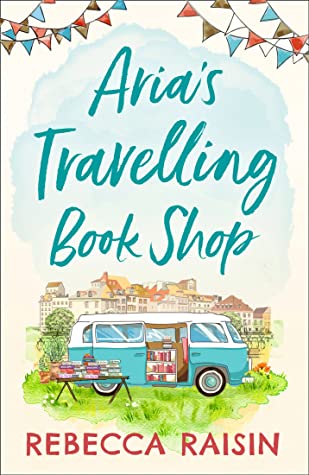
This second adventure of the Van Lifers features Aria, Rosie and Max who are the main characters in Aria’s Travelling Book Shop. We follow them to France for the summer where they meet up with new and old friends as is the way with these nomadic souls who travel from festival to festival earning their way as they go by holding pop-up specialty shops.
This story is told from Aria’s point of view. She lost the love of her life to cancer three years ago and is still struggling with grief, guilt, and an inability to move forward in her life. Her friend Rosie is always there to support her, but Rosie has a life surprise that complicates her ever-meticulous plans. Aria tries to re-establish a relationship with her husband’s family who estranged themselves from her after TJ’s death. She receives a journal written by TJ during his last months that reveal his hopes for her future. Jonathan is a successful writer who wants to be friends with the romance book loving Aria.
An interesting technique the author uses is to have Aria step outside herself, as if she were an onlooker announcing the events. For example, in italics we read “Hopeless romantic Aria vowed never to love again after loving her husband, TJ, but fate seems to have other ideas and keeps throwing mysterious Jonathan in her path. Is this a test of her commitment…” Using this approach, we get an up close view of Aria’s working through her issues in an almost humorous way.
In addition to personal matters, Rosie and Aria are confronted with a negative and unhappy “friend” who invites herself along. She is not a nice person, but Rosie and Aria try to understand and help her. Look for a surprise transformation for that character, and enjoy the very bookish nature of this novel.
I would like to extend my thanks to Edelweiss and to HarperCollins for giving me the opportunity to read this book in exchange for an honest review.
Rating: 5/5
Category: Romance, General Fiction (Adult)
Notes: #2 in The Travelling Shops series, but can be read as a standalone.
Publication: August 10, 2021—Harper Collins
Memorable Lines:
Promises that won’t be kept swirl in the air above like the glittery trail of a sparkler extinguished before the word is written. I smile sadly, wishing things didn’t have to end but knowing that they do.
“According to my translation app you just told him: You’re a wet chicken!” She bites down on her lip before laughter gets the better of her.
I duly sit and wait for Rosie as she hurries to make tea and serves me a slice of cake so large it has its own postcode.
Rosie’s Travelling Tea Shop–home and business in a van
Rosie’s Travelling Tea Shop
by Rebecca Raisin
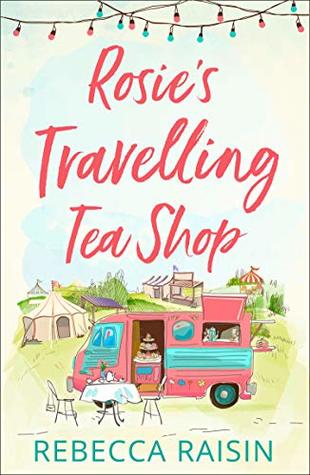
Personal Note: Fall is bringing glorious temps in my area along with some hints of winter to come. Days are too short and dark is uncomfortably extended. It’s the perfect time to mix up my stringent standards of reading books, excepting book club tomes, in the order in which they were published. It’s also a good time to again acknowledge that I am fearfully behind in my reading queue, but I am gradually catching up, mainly because I am requesting about half the number of Advanced Reader Copies that I did when I lived in Mexico. What does my sudden free-spiritedness have to do with this review?
I just finished reading Rosie’s Travelling Tea Shop, a fun romance and the first in a series that focuses on some nomadic souls. I’m going to jump into the next one tomorrow, soon to be followed by the third, which has a Christmas theme—perfect!
My Review: It’s Rosie’s birthday and she just turned 32. Her husband Callum has a surprise for her, but it is not a pleasant one. As the sous chef at a famous London restaurant, she works long hours, has almost total independence in creative decisions, but gets no credit for her contributions to the restaurant’s fame.
Can she be successful personally and financially as a Van Lifer, someone who lives out of a van, travelling with no schedule, following fairs and special events or his or her personal whim? Does she have what it takes to strike out on her own, preparing and selling special teas and comfort food in her tiny kitchen at these events? Can she recover from Callum’s betrayal and find love with either sensitive Ollie whom she met on the Internet or with hunky nomadic Max who draws her outside her cocoon of contentment with adventures?
I obviously enjoyed this book. Rosie’s Travelling Tea Shop has romantic themes, but it also addresses the serious events that the main characters have experienced that make them the way they are. Rosie is a really nice person and all through the book I wanted only the best for her, although life doesn’t always work out that way. Rosie is a planner with OCD tendencies. She has not had much time for friendships so interacting with romance book loving, free-spirited, kind hearted Aria is a challenge. I can’t forget to mention Poppy, Rosie’s fuchsia pink van; Poppy is as important to Rosie and to the plot as any flesh and bones character! The next book in the series will focus on Aria and her Travelling Bookshop; I’m hoping for a very bookish romance with some adventure and fun thrown in as Rosie and Aria continue their Van Life travels.
I would like to extend my thanks to Edelweiss and to HarperCollins for giving me the opportunity to read this book in exchange for an honest review.
Rating: 5/5
Category: Romance, Women’s Fiction
Notes: 1. #1 in The Travelling Shops Series 2. When I posted my review on Amazon on 12/6/2021, the Kindle version of this book was on sale for $.99.
Publication: February 16, 2021—Harper Collins
Memorable Lines:
“The right person is out there, you just have to take the leap and find him. But first you need to figure out what makes you happy, and then have it in spades.”
“Anomaly is just another word for extraordinary, and who wants to be ordinary, anyway? To me you’re a shining light in a crowd of beige.”
And now I see with such life-altering clarity, that all those material things did the exact opposite of fulfilling me, they held me back, kept me in debt, kept me working to maintain a lifestyle that didn’t satisfy me at all.
Christmas Wishes–love crosses the Channel
Christmas Wishes
by Sue Moorcroft
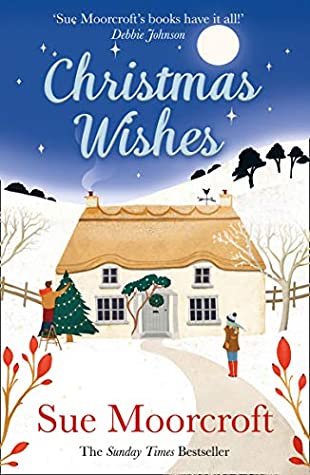
Good personal character is something that is often taken for granted, but in moments of crisis it can rise to the forefront to shine. That is what happens to Nico Pettersson when he takes his eight-year old daughter Josie to her mother Lauren’s home for a planned visit only to discover an alcohol and drug mess. Lauren is in no condition for a visit or to take care of her two-year old Maria. This precious little one is not Nico’s child. In fact, her conception had resulted in divorce. As a single parent, Nico has his own set of problems, but can he leave his daughter’s sister in a filthy, hungry, and thirsty state?
Throughout Sue Moorcroft’s Christmas Wishes, Nico has many decisive moments of conscience. Meanwhile, he reconnects with Hannah, a childhood friend who is his former hockey teammate’s little sister. She is confronted with a break in her relationship with Albin, a cold, wealthy, supercilious boyfriend who controls her shop and her residence in Sweden. The setting bounces back and forth between Stockholm, Sweden, and Middledip, England, with Hannah and Nico having ties in both countries.
The setting is beautiful and Moorcroft has a talent for descriptions. Christmas is not just a backdrop, but an integral part of the story. The plot and relationships are complex. The ups and downs of romance weave through the story and provide a few surprises. A well-behaved Josie and cute-as-a-button Maria are a wonderful pair of children, and my heart went out to them in their respective situations. Hannah’s grandmother, Nan Heather, is a wise and delightful ninety year old who rounds out the cast beautifully. Christmas Wishes is a Christmas gift to readers who want a good storyline coupled with romance in a Christmas setting.
I would like to extend my thanks to NetGalley and to HarperCollins (Avon Books) for giving me the opportunity to read this book in exchange for an honest review.
Rating: 4/5
Category: General Fiction (Adult), Romance, Women’s Fiction
Notes: 1. This book is part of the Middledip Series which seems to be loosely connected by a Middledip, England, setting and by an emphasis on seasons. My impression is that the books in this series do not need to be read in any particular order and that they make excellent standalones.
2. There is one place in the book where the description of a sexual encounter borders on too much detail for my taste, but it is not enough to make me wish I hadn’t read the book. Skim and move on!
Publication: October 29, 2020—HarperCollins (Avon)
Memorable Lines:
The butterflies that journeyed home with her fluttered wings of ice…
Anders rocked a mixed retro look with a Seventies mustache but a Sixties short-back-and-sides. His wide-lapelled suits teamed with busy floral ties were a fashion mystery.
Autumn seemed to have decided not to bother this year and winter had swept in as if from Narnia. Iron-hard frosts stripped the color from the landscape, bleak but beautiful…
A Man Called Ove–tale of a curmudgeon
A Man Called Ove
by Fredrik Backman

Ove is a puzzle of a man—a man you will grow to love, as his wife Sophia did, as you learn more about him. Almost any details about Ove’s background would be spoilers. Let’s just say that his father was a good role model for him, he came from a loving home, and he found himself on his own too soon.
In Fredrik Backman’s A Man Called Ove, the main character Ove runs his life according to routines and has undeniable moral standards and an impeccable work ethic. His wife is the color in his black and white life, and he loves her completely, always trying to do things that will please her. Sophia can tease him about things they don’t agree on, and she is the only one who can do so without angering him.
This novel is filled with interesting characters who bring out the best in Ove who might be described as a curmudgeon. Of special note is Parvaneh, the Iranian, pregnant mother of two, who is persistent in her attempts to bring Ove out of his shell and interacting with neighbors. Gradually, as the plot develops, more characters are introduced, and we learn how things came to be the way they are—why the kitchen counters and cabinets at Ove’s house are all low, how his neighbor Rune and Ove over the many years have both cooperated and feuded, and why Ove feels so passionately about the government “white suits.”
I smiled, laughed, and cried my way through A Man Called Ove. It is impossible to read it without reaction. Backman has a talent for relating Ove’s character and actions in a humorous way. The story is told in the third person, but in such a manner that the reader feels present. The narration goes back and forth between the present and the past with fluidity. New chapters begin with no segue or introduction. The reader is dropped abruptly into the action and setting as in Chapter 21 which begins with “Of course, the bus tour was her idea. Ove couldn’t see the use of it.” This style of writing works well in relating the tale. In concluding the story of the unforgettable Ove, the plot threads all tie together nicely and there is closure with a feeling of satisfaction and hope.
Rating: 5/5
Category: General Fiction (Adult)
Notes: 1. Originally published in Swedish.
2. Contains some foul language, but it is appropriate to Ove’s character, and he attempts to curb it around children, etc.
Publication: 2012—Simon & Schuster (Washington Square Press)
Memorable Lines:
And then he utters seven words, which Parvaneh will always remember as the loveliest compliment he’ll ever give her. “Because you are not a complete twit.”
“What sort of love is it if you hand someone over when it gets difficult?’ she cries, her voice shaking with sorrow. “Abandon someone when there’s resistance? Tell me what sort of love that is!”
…Ove had probably known all along what he had to do, whom he had to help before he could die. But we are always optimists when it comes to time; we think there will be time to do things with other people. And time to say things to them. Time to appeal.
1984–is 2021 moving us into this future?
1984
by George Orwell

When I finished the first chapter of 1984, which introduces the very intrusive society of Oceania dominated by Big Brother and the Party, I was disquieted by what was happening in that society and the easy comparison to current events in the U.S. and around the world in 2020-2021. I knew I would return to the book, but immersed in the intensity of the total lack of personal freedom in this totalitarian regime, I allowed myself a few hours respite. I was only reading about it; what if I had to live it? George Orwell had my complete attention within the well-crafted words of the first few pages.
Winston Smith works in the Records Department at the Ministry of Truth where he rewrites the past to align it with current events. This process involves multiple revisions over time with all documentary evidence of a different previous reality immediately destroyed. He has a shabby existence—never enough food, a cold, dingy apartment, and most importantly the monitoring of every movement, facial expression, and utterance 24/7 by Big Brother through a telescreen. Even Big Brother’s eyes on giant posters seem to follow him. In this society, sex is allowed occasionally, but only for the sole purpose of procreation. Children belong to groups called “Spies;” and as they mature, they advance to the “Youth League.” Both organizations encourage their members to denounce their parents and other adults to the Thought Police for crimes of unorthodoxy. Party members engage in Two Minutes Hate daily to keep their loathing at a high level and focused on the internal threat, The Enemy of the People, and on the external threat, whatever group of countries is supposedly currently at war with Oceania.
Winston internally rebels, and 1984 charts the expression of his rebellion as well as the consequences. His parents were disappeared when he was ten or eleven. Using doublethink to convince the population that what is, isn’t and Newspeak to provide a minimal language in which it is impossible to express certain ideas, Big Brother (the Party) gains control of minds subtly, but effectively. We are, sadly, seeing a version of that today with censorship and mind control by main stream media as they tell us what to think and say and try to shame those who disagree. It is echoed in our educational system that stresses rote learning, eliminates creativity, and insists on social, political, and religious “correctness.” We are in a season that calls us to read or reread 1984 before this work of fiction becomes reality and is banned.
Rating: 5/5
Category: Fiction
Notes: 1. In the Signet Classic version, there is an afterword by Erich Fromm, a psychoanalyst who moved from Nazi Germany to the U.S. in 1934. This essay is about several books, including 1984 that warn us of the future unless we change our direction.
2. I strongly recommend reading Orwell’s Animal Farm first (and especially for younger readers) as an introduction to the ideas found in both books. As an allegory, Animal Farm is more gentle and less descriptive of the violence that is part of the control of the populace.
3. A reader’s guide is available at penguinrandomhouse.com
Publication: Originally it was published in 1949. I read one of the many reprints. My copy is a Signet Classic published January 1, 1961 by Penguin Random House.
Memorable Lines:
And if all others accepted the lie which the Party imposed—if all records told the same tale—then the lie passed into history and became truth. “Who controls the past,” ran the Party slogan, “controls the future: who controls the present controls the past.”
Doublethink means the power of holding two contradictory beliefs in one’s mind simultaneously, and accepting both of them…The process has to be conscious, or it would not be carried out with sufficient precision, but it also has to be unconscious or it would bring with it a feeling of falsity and hence of guilt…Even in using the word doublethink it is necessary to exercise doublethink.
…no change of doctrine or in political alignment can ever be admitted…And if the facts say otherwise, then the facts must be altered.
A Pho Love Story–kitchens in conflict
A Pho Love Story
by Loan Le

Perfect for Valentine’s Day—or any day for that matter! Loan Le’s A Pho Love Story, written with a teenage or young adult audience in mind, is a modern day Vietnamese-American “Romeo and Juliet” tale. Báo and Linh, seniors in high school, do not understand the family conflict that has gone on for as long as they can remember. Their families’ restaurants, serving authentic Vietnamese dishes, are situated on opposites sides of the same street. The parents, however, clearly dislike each other. In fact, the children are not allowed to talk or play together. Is this conflict a result of competition for economic survival or is there a deeper reason going back to their days in Vietnam and the dangerous boat trips to safety and freedom? Cultural norms for showing respect to their parents prevent both Báo and Linh from questioning them about the deeply felt social boundaries in the neighborhood.
Báo and Linh are sympathetic characters; Báo is trying to decide on a career and Linh wants to make her passion and talent for painting acceptable to her parents. The Vietnamese flavor throughout is authentic and reflective of the author’s family heritage. Because both families own restaurants, food plays an important role. Vietnamese culture is also prominent in descriptions of the parents and the family dynamics. As someone familiar with Spanish, French, and Latin, I can usually read expressions from those languages when added to the text for authenticity, but the phrases included in this book sent me scurrying to a translation app. Most meanings could be divined from context, but I really like to know the exact meaning of words, whether in English or another language, for a deeper reading experience. A Pho Love Story was enriching in that respect.
I am sure most readers can predict the outcome, but not how the characters will arrive there. The journey is bumpy, but fun, as the author weaves literary magic within the plot. The story is told by the teenagers from alternating points of view by chapter, a technique which works really well in this book. There are several interesting adults who act as mentors to the pair without telling them what to do. This would be an engaging read for teenagers and young adults.
I would like to extend my thanks to NetGalley and to Simon & Schuster Children’s Publishing for giving me the opportunity to read this book in exchange for an honest review.
Rating: 4/5
Category: Teen and Young Adult
Notes: There is some bad language sprinkled throughout the book.
Publication: February 9, 2021—Simon & Schuster Children’s Publishing
Memorable Lines:
My parents—my mom, really—has now perfected the art of non-encounters; knowing their schedule right down to when they close and when they leave. In a way, their schedule has become ours. We’re background characters in each other’s stories.
She trusts Viet to do his job, as well as make sure I do mine. The concept’s not perfect: We’re the same age, and letting him watch over me makes as much sense as letting a horse and a pony run the show. But somehow it works.
I like the writer’s style. One person can say something that’s been said before but in a way that’s completely different; their unique experiences and personality infuse their words, their sentences.
Consider This, Señora–newcomers in a Mexican village
Consider This, Señora
by Harriet Doerr
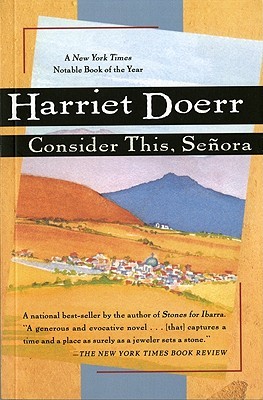
If asked what a particular country is like, the wise respondent does not declare that the whole country is mono-anything. Cities are different from villages, mountains from deserts, and north from south. At the same time, there are cultural aspects that transcend regional differences. This is certainly true of Mexico as I can attest to after being privileged to live in that country for seven years. In Harriet Doerr’s Consider This, Señora, she captures the essence of rural Mexico, the things that make me nod and smile as I remember the way it is.
Here are things from the book that are, for the most part, neither bad nor good, just typically Mexican. I list them out, but in the book, they are integrated into the story:
- Workmen that don’t finish jobs.
- Problems solved by greasing the wheels with a little cash.
- Extended family relationships determining work placements.
- Government promises for utilities only partially or never fulfilled.
- Accidents caused by disregard for traffic “suggestion” signs.
- Brilliantly colored fiestas.
- Beautiful vistas.
- No understanding of queues, but extreme politeness one on one.
- Animals roaming free.
- Very young mothers.
- Children working from a young age.
- Beautiful babies with wide brown eyes and shy smiles.
- The staple food—taco.
- Popsicles sold from street carts.
The story is the tale of Sue Ames and Bud Loomis, strangers trying to escape their pasts who meet by chance in a property agent’s office in Mexico and buy a large plot of land to both live on and subdivide. Other people join them. Fran is a travel author. Fran’s mother, Ursula, is widowed and in her late 70’s. Don Enrique, the original owner of the land by ancestry finds a home there. Later the mysterious musician Herr Otto is added to the community. There are locals that make an essential supporting cast including Patricio, gardener and so much more for the Norte Americanos and Father Miguel who is a friend to all.
Consider This, Señora is a gem, a tale of travelers to another culture and how their lives intersect with the land and the lives of the locals. Although not a romance, love is a major theme in the book. Even though she is divorced, Sue has never fallen out of love with her husband. Fran, divorced twice, continues to search for an exciting but long-lasting love with men she meets in her travels. Ursula, widowed, is still in love with the husband she spent her life with. She, especially, contemplates what it means to love.
Sue is altruistic and generous, helping those in need. She takes on Altagracia, her part time maid from a young age, providing needed dental work and opportunities to bathe. As the girl emerges from her cocoon at age sixteen, Altagracia is described as one who “merely by her passage, turned the heads of men.” When Altagracia takes on a different domestic position, she supplies Sue with three of her little cousins who are starving. Sue opens her heart to them and provides help to the family.
Harriet Doerr’s descriptions are so well-written that the background comes to life enhancing the story without belaboring the details. She also includes a sprinkling of Spanish words adding to the authentic flavor, but most can be understood from context. The book flows, and I read it in one day wanting to know more and more about the characters and the little village of Lomas de Amapolas.
Rating: 5/5
Category: Fiction
Publication: August 15, 1994—Harcourt (A Harvest Book)
Memorable Lines:
Today had stopped happening. Already it had consigned its events to memory. Touched by the evening chill, she sat outside until dark, wrapped in the mists of her brief, uncertain future and the brilliant patchwork of her never-ending past.
The Mexican sky was excessive too, she believed. Wider than others, it stretched over people who appeared no fonder of life than death, as they darted on bicycles between trailer trucks and buses and hurried hand in hand, whole families strong, across divided freeways.
On all sides of the dead man and the mourners, headstones tilted into weeds. Two cypress trees shaded the crisscrossing tracks of animals, both tame and wild. A crumbling adobe wall bounded the pantéon and protected the dead.
Stay: Discovering Grace, Freedom, and Wholeness Where You Never Imagined Looking
Stay: Discovering Grace, Freedom, and Wholeness Where You Never Imagined Looking
by Anjuli Paschall

A spiritual journey is such a personal adventure. Anjuli Paschall shares hers in the book Stay. She also reaches out to other women encouraging them to lean into God through the irritations of daily life and the times of actual trauma and to stay with the pain of hard places because you’ll find God there. She suggests that, instead of building up walls of protection and withdrawing from the fray or working harder to force things to happen, we need to stay with Jesus and “drink life-giving water.” With intriguing chapter titles like “The Guard Shack: An Invitation to Make Mistakes” and “Old Spaghetti Factory: An Invitation to Hold On,” this book is filled with anecdotes and Paschall’s descriptions of how God led her to grow spiritually.
Paschal is a good writer and very effective at drawing the reader into her frame of mind as she navigates the various circumstances in her life. I highlighted many passages and agreed with most of the things she said. I am amazed at the number of turns in her life journey. She is the mother of five, wife of a pastor, photographer, founder of a social media site that helps other moms in truly desperate straits, and a spiritual counselor. Now add writer to that list.
Realizing that I am isolating statements that come from a rich context, I feel I must point out what I perceive to be a major conflict. Towards the end of the book, the author states “My one and only purpose in life is to be loved by God.” I disagree with that and she does too as earlier in the book she states: “We all have one calling. One deep, right, true, foundational calling in life—to love God and to love others.” That philosophy is found in the Bible in Matthew 22 in the New Testament and in Exodus 20 and Leviticus 19 in the Old Testament. Although, I have a few points of disagreement, in general I find this book to be refreshing in the author’s honesty and transparency. She doesn’t try to appear to have it all together. She shares her fears and vulnerabilities as she also shares her hopes and dreams. She encourages women to abandon shame over never being enough and stay the course resting and trusting in Jesus.
I would like to extend my thanks to NetGalley and to Bethany House for giving me the opportunity to read this book in exchange for an honest review.
Rating: 4/5
Category: Christian, Self-Help
Notes: Discussion questions are included.
Publication: March 31, 2020—Bethany House
Memorable Lines:
I’m learning to be okay with my mistakes. They don’t define me or determine my worth, but simply direct me to God.
I believe we all can be placeholders of heaven for others. We can create a seat at a table, offer a single cup of coffee, leave bread on a doorstep, or clear an hour in our schedule. God will continually bring us people who are desperately in need of home. If we can embrace each other’s differences, move toward the disabled, welcome the foreigner, laugh with a child, talk with the elderly, all kinds of heaven can burst open like a flower in bloom here on earth. Even the tiniest spaces can become a place for others to taste eternity.
No amount of getting, accomplishing, or achieving will ever satisfy the soul. The soul focused on gaining power, influence, and admiration will only grow hungrier.
In the Land of Blue Burqas–eye opening view of the women behind the blue veils
In the Land of Blue Burqas
by Kate McCord
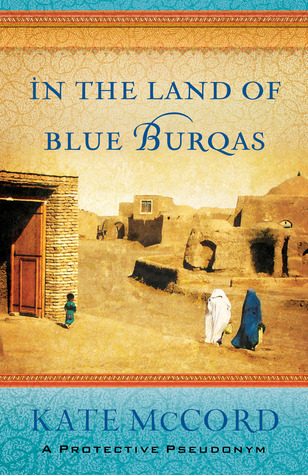
What would it be like to live in a country where the language, religion, and culture are extremely different from your own, a country like Afghanistan? Kate McCord raised support from friends and embarked on what was destined to be a five year adventure as a project manager, arranging for and supervising programs to help the local people. In the process, she found ways to interact within the cultural norms which, if violated, could result in penalties including physical abuse, expulsion, or execution.
Although she could not openly evangelize, she spent much time there having tea with women, and sometimes men, sharing stories to illustrate the teachings of the Honorable Jesus who is regarded as a prophet in Islam. Those stories included parables Jesus himself shared with His followers. In recounting tales they could relate to and by the way she lived her life, Kate was able to show her Muslim neighbors and friends a God who loves them, unlike Allah, who is never associated with love. Allah’s followers obey him according to the interpretations of the local mullah in a most legalistic fashion.
Kate spent time learning the language and culture. Led by the Holy Spirit, she developed culturally sensitive ways to share difficult concepts like the Trinity. She lived as an Afghan woman, learning clothing requirements and social rules such as where to sit on a bus and when to make eye contact. Clearly a foreigner with her own religion, she adapted their customs to her own in a way that respected both traditions. Kate faced challenges in deciding whom to help in the most culturally appropriate way and looked to the locals to ascertain their attitudes toward individuals seeking aid. Knowing she could not revolutionize a society in which none of her many female friends said their husband had never beaten them, she nevertheless planted seeds of generosity, good attitudes, and kindness which helped the women in their relationships as well as showed them a side of the Honorable Jesus that they did not know thus drawing them to Him.
In the Land of Blue Burqas is the canvas on which Kate McCord paints a remarkably positive picture of Afghanistan and its citizens in spite of their dislike of most foreigners and regardless of the many brutal aspects of their culture. I came away with a clearer understanding of why the country vehemently resists change and is so hostile to non-Muslims. I also emerge from this enlightening book grateful that I live in a country where I am free to choose to worship a loving God.
Rating: 5/5
Category: Evangelism, Christian Missions
Notes: I had a difficult time choosing the memorable lines I wanted to share. Sound bites and even longer quotes don’t do this story justice. I urge you to read the book to get a more complete understanding. It is a fascinating read. It also stimulates me to want to read about how Islam plays out in other countries.
Publication: May 1, 2012—Moody Publishing
Memorable Lines:
Still, my greatest fear in the country has always been that I would be kidnapped and sold to some warlord as a fourth or fifth wife, relegated to household and sexual slavery behind a twelve-foot, mud-brick wall and locked gate. Even the mildest stories of Afghan women’s lives haunt me.
Our very presence challenges the power of the mullahs and the worldview of our neighbors. It’s one thing to hate and reject the voiceless, faceless masses of pig-eating, alcohol-drinking sons of Satan from the other side of the world—mythic caricatures interpreted by the mullahs through history and religion.
But we Christian foreigners are flesh and blood with eyes and voices, laughter and tears, stories and faith. When Afghans meet us, see our lives, hear our stories, and recognize our humanness, conflicting worldviews collide. The safe box of well-defined ideological fortress-orthodoxy trembles, walls collapse, and doors open.
A Baby for the Mountain Firefighter–tick-tock for babies and fires
A Baby for the Mountain Firefighter
by Melinda Curtis
 When Aiden, known as “Spider” in his Hot Shot crew, has a little R & R in Las Vegas, he follows his usual pattern of “love ’em and leave ’em” with a beautiful woman. When Becca, whose biological clock is ticking, searches out the casinos and bars in the same city for a baby daddy, she thinks she has found the perfect voluntary and unwitting sperm donor in Aiden, a handsome and charming younger man. He need never know the consequences of his one night stand.
When Aiden and a very pregnant Becca meet up again, he doesn’t recognize her, and she absolutely does not want him to discover she is carrying a child he helped to create. Obviously their relationship is at the center of Melinda Curtis’ A Baby for the Mountain Firefighter, but there are other major threads woven into the plot. Aiden’s family life as a child was less than stellar and Becca, a Fire Behavior Analyst, has personal reasons for her emotional involvement in each fire. This romance includes a lot of insight into the movement of mountain forest fires, the dangers involved, and the expertise of the various crews and their responsibilities. The struggles of women in that male dominated field are also highlighted.
This was a quick read with a predictable and hoped for ending. The fun of the book was watching the characters work through their issues both personally and professionally and discovering their motivations. There are some exciting adventures as fires are fought in Idaho, but the dangers are experienced from the safety of the reader’s armchair.
I would like to extend my thanks to Melinda Curtis for giving me the opportunity to read this book in exchange for an honest review.
Rating: 5/5
Category: Romance
Notes: #3 in The Mountain Firefighter Series but works well as a standalone.
Publication: April 20, 2020—Purple Papaya
Memorable Lines:
The new fire toyed with the Hot Shots for only a moment before bending across their six-foot-wide break and igniting a fresh blaze on the opposite side with a heated kiss.
There was a difference on the fire line between being brave and being stupid. Jack hadn’t learned that difference, had probably never scrambled up a steep slope praying that he could outrun the fiery dragon at his heels. To him, being cautious was a sign of weakness.
“It was an accident. Patience is a virtue of good leaders and good parents.” She berated him as if she were his second-grade teacher, appalled that he’d eaten paste.
 education pathways