Home » Posts tagged 'love of learning'
Tag Archives: love of learning
The Other Einstein–Did Albert Have Help with his Theory of Relativity?
The Other Einstein
by Marie Benedict
 Fascinating! I found the story of The Other Einstein to be a very different and fascinating reading experience: this historical novel is like none other I have read. The author, Marie Benedict, examines the facts that exist about Albert Einstein’s first wife, Maleva Marić, an outstanding physicist and mathematician in a time when women were rarely admitted to universities. Some speculate that her contributions to Einstein’s Nobel Prize winning theory of relativity may have been significant.
The book traces Maleva’s journey from Serbia to the Polytechnic campus in Zürich where, as a woman, she must struggle to be recognized as a serious and capable student. To that end she tries to maintain a collegial relationship with fellow student Albert Einstein who has more romantic inclinations. The author is able to weave a convincing tale of how this dedicated female student deviated from her professional goals as a result of various circumstances, including the death of their daughter born out of wedlock, Maleva’s physical health, her lack of acceptance (because of a physical disability, her intelligence, and her ethnicity) by many in society including Albert’s family, and the self-centered behaviors of Albert Einstein himself. Maleva struggles to be everything Einstein wants–totally devoted to his needs, the perfect housewife and mother, and a scientific collaborator. She finds the task impossible, especially in the face of Einstein’s professional and personal betrayals of her.
The Other Einstein ends with an epilogue which gives Maleva a chance to reflect upon her life and gives the reader a few details about her life after she and Einstein are divorced. The author adds an interesting and helpful section on her own motivations in writing the book, her research, and the extent of fictionalization. She includes sources for readers who want to pursue the story further, including original correspondence discovered in the 1980’s. She follows with a Reading Group Guide of questions that could be the catalyst for excellent discussions. The book ends with an author interview which provides more background information on the writing of The Other Einstein.
Although there are a lot of references to various specific theories of physics, a physics background is definitely not necessary for full enjoyment of this book. As a personal opinion, I think women would tend to relate better to Maleva’s difficulties and struggles than men. This book enthusiastically receives my highest recommendation.
This book is scheduled for publication on October 18, 2016.
I would like to extend my thanks to netgalley.com and to Sourcebooks for giving me the opportunity to read this book in exchange for an honest review.

The Top 12 Global Teacher Blogger Discussion: September 2016
Why should the arts still be important in education?

 How can we maximize the value of art and music in education and how can it be blended with more traditional subjects (math, science, history, etc.)?
I teach at a community college, and a professor there created an art therapy club for professors, adjunct, and staff. Nine people attended the first session where they colored with pens and painted with watercolors. Future sessions will consist of making jewelry, drawing, and using mixed media—all as therapy to help adults relieve a stressful week. This is brilliant; however, our primary and secondary children are going to school during a time when the arts are slowly being eliminated from their curriculum. I find this dichotomy painfully ridiculous.
Instead of answering the question this month, I’m going to ask a few of my own:
If schools embraced this idea of art therapy, would we have as many children and teens suffering from stress and…
View original post 199 more words
Three Day Quote Challenge–Day 1
My new blogger friend, Wendy from Ramblings and Musings, invited me to participate in this three day quote challenge.
The rules for the challenge are:
- Thank the person nominating you for the challenge.
- Post a quote on your blog for 3 consecutive days.
- Invite 3 of your favorite bloggers to join the challenge.
My nominees for the challenge are:
- David from David Snape and Friends, whom I originally started following because of an interesting post he wrote on autism. It is also through his blog that I discovered the fantastic Kindness Blog.
- Shellie from Shellie Woods who writes about marketing and life, from a Christian perspective.
- Kim from Learn to Love Food. Through her blog Kim has taught me about the need some children have for food therapy and her fun approach to helping those with food issues.
No obligation–just fun, inspiration and exposure to bloggers you may not have encountered before.
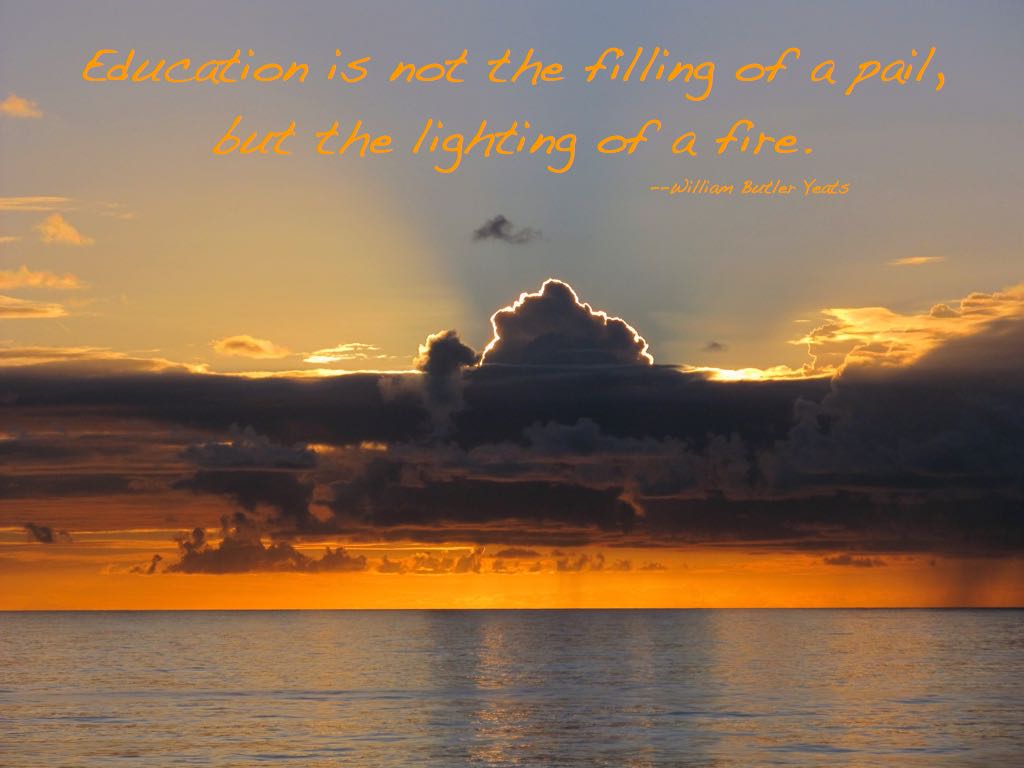
My first quote has been my favorite for years. It was my signature quote on my work email. I wanted it always there as a reminder to the “Standardistas” that accumulating facts is not what education is all about. Many education policy makers and enforcers (in my former school district and around the country) have forgotten that education is inspiring children to be lifelong learners.
I Am That Teacher Too (Letter 5)–Reading is a Passion, Not a Learning Objective
Dear Former Students,
What do I hope you remember about me?
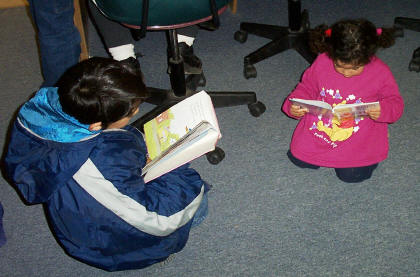
Reading, of course! Together we fell in love with the books we read. If you were in my recent classes, you will remember the magical repetitions of Pete the Cat books. For a more sophisticated enchantment, we devoured several books in the Magic Tree House series, sneaking social studies and science into our day. Who could forget the adventures of Jamie and Tom at Dinosaur Cove or Dorothy and her friends in the Wizard of Oz? Some students may be reminiscing about the aliens in The Sand Witch and the mystery and history found in Help! I’m a Prisoner in the Library. Bunnicula, a great children’s mystery, was a favorite with some classes.
As a young teacher, I had experts tell me that first graders are not ready to sit and listen to chapter books. Not true! Storytellers have been recounting their tales without benefit of visuals since before the written word. Perhaps you were in the class that listened at story time to several picture books, at least one chapter in a longer book, and then BEGGED for more. I usually introduced classes to chapter books with Judy Blume’s short chapter book Freckle Juice followed by Chocolate Touch and Chocolate Fever.
We had many special literacy activities related to stories we read. For example, we discussed the meaning of Bill Martin Jr.’s Knots on a Counting Rope and made our own counting rope. In the 1st/2nd grade multiage class, we read the original version of 101 Dalmatians learning the meaning and use of many British words and enjoying playing with the unfamiliar words. We made a huge mural containing 101 Dalmatians just in time for the 100th day of school. Drama, dancing, art, music, and writing were all pulled into the process of learning to read and learning through reading. Activities did not begin and end because of the clock on the wall or the threat of an administrator’s possible walk-through. We had reading buddies once a week from the upper grades, working on social skills as well as reading skills and giving you the opportunity to read your favorite books as many times as you liked and have a positive emotional connection to reading. Our buddies benefited in similar ways with the addition of an opportunity to practice leadership and demonstrate maturity.
You amazed your parents with your beautiful poetry recitations—poems that move the soul like “Stopping by Woods on a Snowy Evening” and poems that giggle the spirit like “The Purple Cow.” You recited the poems by yourself before the whole class exploring the sounds of language and gaining self-confidence. You learned to appreciate language by playing with rhymes, patterns, meter, and figures of speech. Often whole families memorized the poems, and some can still recite their favorites. Reader’s Theatre and musical Reader’s Theatre provided fun opportunities to practice reading with fluency and expression.
My philosophy was “I teach reading all day long.” It worked. I had parents tell me that their child loved reading because of me. I hope you were one of them.
Will Great Scores on a High Stakes Test Land You a Job at Goodreads?
Goodreads is a website that has created a huge community of readers, and their goal is to hook up readers with books they will love. In browsing today, I came across their Jobs page. I’m not looking to come out of retirement, but I was interested in their values:
- Ownership

- Create Fun
- Be Humble
- Think Big
- Customer Obsession
- Be Passionate
- Help Each Other
- Always Be Learning, Always Be Teaching.
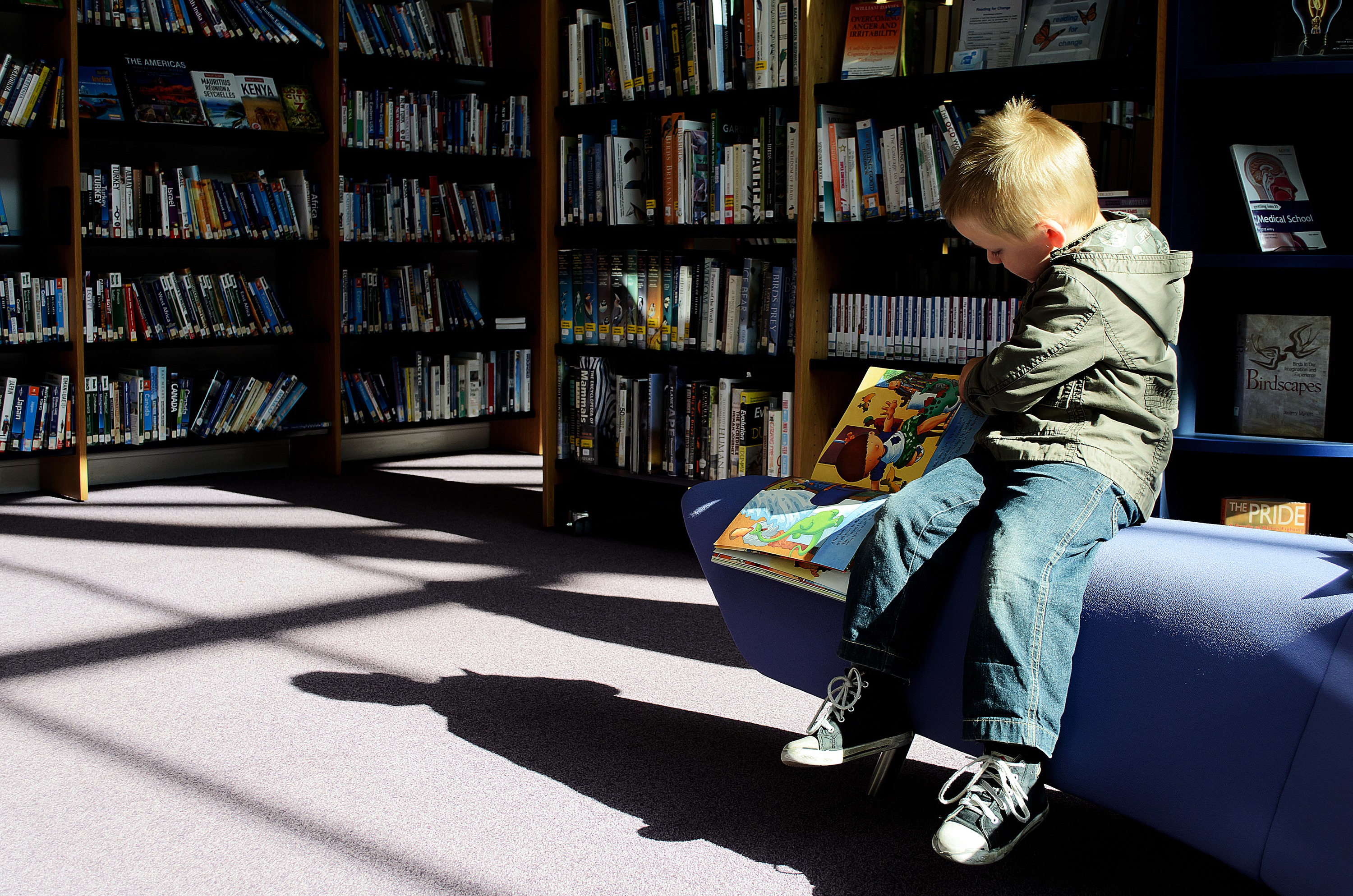
Goodreads says they want people that are creative and care about the customer. Reread their list of values. Are any of those items on a standardized test? Are any of those values part of the Common Core State Standards? Would they be integral to a private school education where neither the CCSS nor standardized testing is required? Then WHY are we not including them in a public school education? All of our kids deserve a first class education.
If you want to see the source, go to:
I Am That Teacher Too (Letter 3) Thematic Learning—Where the Pieces Work Together
Dear Former Students,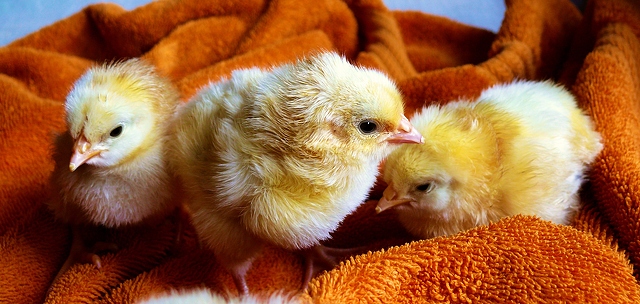
What do I hope you remember about me?
Reading, Math, and Science, Oh My!
Social Studies, Art, and Music, Oh My!
I hope you remember the special activities and projects that made learning so much fun—different activities for different years. Some of you raised calves and others hatched baby chicks or silkworms. We grew plants. Lots of you will remember our parakeet and our gerbils. You took turns letting Little Bird sit on your shoulder. You cleaned out cages and pens and learned a lot about life and a little about death. Some first grade classes researched dinosaurs and created individual reports on their work producing the most fantastic books.
Our whole day was about learning how to read, but you didn’t know it. Reading was in everything we did. I cocooned you with the look, sounds, and feel of language. When you emerged from that cocoon at the end of first grade, I had succeeded if you loved to read and to learn. I had succeeded if you had found a passion in some of the many things we explored: math, science, social studies, art, music, and of course language itself. We sprinkled in movement, drama, and dance. Was there anything you couldn’t do? I remember one of you telling me, “I am UNSTOPPABLE!” When the year began, your behavior was unstoppable, but when the year ended, your desire to learn was unstoppable. That was success for both of us.
 education pathways