Home » Posts tagged 'Literature'
Tag Archives: Literature
Reading for the Love of God–erudite and spiritual
Reading for the Love of God
by Jessica Hooten Wilson

I thought Reading for the Love of God would be the perfect book for me, channeling my reading choices in a way that points to God and shining a light on the spiritual connection of God and a reader. It did both of those things, but I have to admit that, as a whole, it was not the right book for me. Some of this well organized book was appropriate for the average reader, but much of it was clearly written by a professor with a strong background in both literature and theology. Perhaps it would be more appropriate for study in a college level course. Here is an example from the text that demonstrates the background knowledge needed to fully benefit from this book: “In Christian tradition, the anagogic sense refers to a text’s echo or reflection of the divine. Where do we see God here? Or we might equate the anagogical with the eschatological: Knowing that all will end in our death and Christ’s second coming, what matters in what we have read? It’s the cultivation of a sight that points our eyes ever upward toward heaven.”
On the other hand, Hooten presents a lot of interesting ideas about reading. She is quite knowledgeable and gathers information from and about many authors. The footnotes cover about twenty percent of the book. She extols the virtues of reading and rereading the classics, and she asserts that learning how to read various genres helps us learn to read Scripture. If we read other books than the Bible, even secular books, through the lens of Scripture, God can teach us. Even books that some Christians avoid reading (e.g. Harry Potter) can lead to examination and discussions of evil versus good, etc. We should both enjoy and use literature, but should not put the message above the story itself. She points out that there are many current and historical opinions about how to best read the Bible addressing issues such as meditation, interpretation, the role of allegory, the depths of word meanings, and symbolism.
The author carefully places essays in the book expounding on what we can learn from examining the writing and reading of St. Augustine, Julian of Norwich, Frederick Douglass, and Dorothy L. Sayers. After her Conclusion and Acknowledgments, she guides the reader through a practice session of analysis of Flannery O’Connor’s short story “The River.” O’Connor is a much referenced author in this book so this discussion seems quite appropriate. A section of Frequently Asked Questions is very practical and useful. It is followed by “Reading Lists of Great Books” which is grouped by ages. The next list is “Great Books: The Living Tradition” which contains classics sorted by time periods and followed by a list entitled “Writers Whose Works Touch the Sacred and the Profane.” I’m not sure what her criteria are for this list, but it includes authors such as Wendell Berry, Frederick Buechner, Willa Cather, G. K. Chesterton, and Dorothy Sayers.
I received a complimentary copy of this book in exchange for an honest review. Opinions expressed in this review are completely my own.
Rating: 4/5
Category: Christian, Religion & Spirituality
Notes: As I think back over Reading for the Love of God, I find I am viewing it in a more positive light than when I was working my way through it. I am not recommending it to my book club as I initially thought I would do. I will be mulling her theses over and referring to her suggestions for reading selections as I expand my personal reading choices.
Publication: March 28,2023—Brazos Press (Baker Publishing Group)
Memorable Lines:
If we are going to read—the Bible included—we should learn how to read well. We should become readers who do not read for our own gain but who read as a spiritual practice, always open to how the Lord is planting seeds in our heart, teaching us more about him, and showing us ways of living more like Christ in the world.
But we should not read Virgil’s Aeneid in order that we may check a box on a great books list. Rather, a book such as the Aeneid is to be used—for pleasure and edification temporarily—and ultimately enjoyed in how it points us to God.
We read because without books our world shrinks, our empathy thins, and our liberty wanes. We read for the same reason that people have read—and shared poems or stories—for thousands of years because our eyes are not enough by which to see. The time and place in which we live blinds us to other perspectives and ways of being that are not of our own experience. We read because we have been given the gift of imagination and intellect, and we exhibit our gratitude by using it.
A Portrait of Emily Price–forgiveness
A Portrait of Emily Price
by Katherine Reay
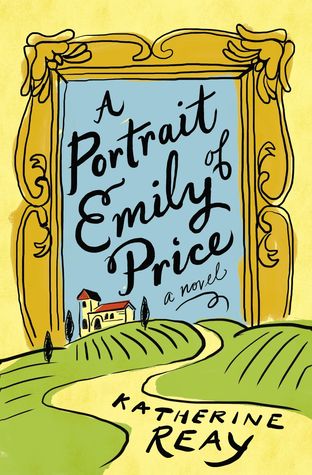
There is depth to Katherine Reay’s A Portrait of Emily Price. A story of painful pasts, the approaching death of a patriarch, and the love of family, it is a novel that draws the reader in with characters who seem straight forward at first, but are actually struggling to find their ways through life. It is the tale of people who, like all of us, have events in their pasts that affect their relationships and their futures.
Emily Price is a restorer and an artist. She has a talent for fixing thing. Ben is a handsome Italian chef who comes to Atlanta to reconnect with his brother Joseph after 18 years of separation, but quickly falls in love with Emily. In Italy she finds herself in a situation where she is unwanted; no matter what she does, she ruffles feathers.
Ben’s family has experienced great trauma, but no one is willing to bring the source out in the open so the distance between Joseph and his mother grows and their hearts harden. The author only gradually reveals the core of the difficulties as Emily confronts them. The tale is spun organically at just the right speed. We learn about Emily’s family’s troubles and Ben’s family’s problems as part of the pair’s character development and in such a way that, like Emily, we want to be able to fix them.
Life is not always easy and hurts do not always go away quickly. Giving and accepting forgiveness can be difficult. In the process of negotiating problems and overcoming pain, we learn more about ourselves and others. We grow through those trials. This book records a portion of the journey Emily experiences as she becomes part of a noisy, messy, Italian family.
I would like to extend my thanks to Edelweiss and to HarperCollins Christian Publishers for giving me the opportunity to read this book in exchange for an honest review.
Rating: 5/5
Category: General Fiction (Adult)
Notes: Ends with questions for discussion or thought.
Publication: November 1, 2016—HarperCollins Christian Publishers
Memorable Lines:
It almost made me wonder if I’d gotten it all wrong. Perhaps fixing things wasn’t about the end product—it was, oftentimes, about the process.
Home. That word again. In my life, it had always been transient, replaceable with each stepfather or with Mom’s next job. But there was nothing transient about this place. Lucio had said eight generations. This was the dream—stones warmed from above and roots that gripped deep below.
…while I might not know much about his family, I understood pressure, fear, the need to fix things, and the black hole that opened within you when you realized nothing could fix all that was broken.
Perfect Chapter Book for Beginning Readers
 As a teacher of early learners, K-2 in particular, I was always on the lookout for useful books for the classroom. I have found one that is great for students to read at home and at school. I am not a fan of the “guided reading” programs currently pushed in many school districts. A large number of the book selections are frankly boring. Reading should be fun! Pedro, First Grade Hero is a book young readers will enjoy. Its anticipated release date by Capstone Press is September 1, 2016, and I highly recommend it! I personally would use it in reading groups and then send it home for kids to enjoy there as well.
Pedro, First Grade Hero
by Fran Manuskin
Pedro, First Grade Hero, is a delightful “chapter book” for early readers. Children usually want to read chapter books like their teacher models for them. Unfortunately most chapter books are just too difficult for them to read independently. Pedro, First Grade Hero, however, comes to the rescue for the beginning reader. It is actually a collection of four stories, all about Pedro. The readability level, length of the stories, and interest level is perfect for first graders as is the focus of each story.
Pedro is a very likable little boy. In the first story, “Pedro Goes Buggy,” Pedro has to find a bug to write about in school. Discussions about the best bug ensue in the classroom and at home. Even his little brother Paco gets involved in the fun. The story has a nice resolution and ends on a humorous note. For the teacher who likes to integrate learning strands, language arts, math and science provide easy tie-ins.
“Pedro’s Big Goal” draws in boys and girls who love soccer. This chapter has “bigger is not always better” as well as “keep trying” as its themes. Children will enjoy the ending and teachers can help them appreciate the play on words.
Most people love a good mystery as do Pedro and his friends who form a mystery club in the third story, trying to find a missing locket and cell phone. Good vocabulary words include sparkle, locket, and chirping.
The final story, “Pedro for President,” teaches Pedro and his friend Katie Woo what is involved in being class president. As they ponder what they have to offer the class, little brother Paco “helps” with the election poster and Pedro creatively turns that effort into a positive. Pedro, who always encourages his classmates and promotes fairness in the election, is the obvious favorite for president.
The illustrations by Tammie Lyon are colorful, appealing, and depict well the characters’ emotions and reactions. Teachers interested in promoting multi-cultural cohesiveness in their classrooms will appreciate the inclusion of children of various backgrounds. At the end of this book are four pages of jokes in the riddle format that will delight first graders.
I would like to thank netgalley.com and the publisher, Capstone Press, for the opportunity to read this book in exchange for an unbiased review.
I Am That Teacher Too (Letter 5)–Reading is a Passion, Not a Learning Objective
Dear Former Students,
What do I hope you remember about me?
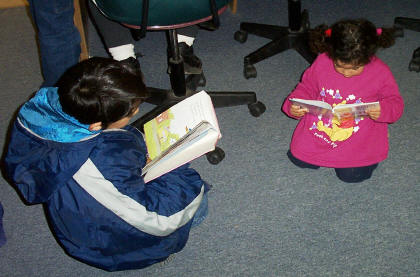
Reading, of course! Together we fell in love with the books we read. If you were in my recent classes, you will remember the magical repetitions of Pete the Cat books. For a more sophisticated enchantment, we devoured several books in the Magic Tree House series, sneaking social studies and science into our day. Who could forget the adventures of Jamie and Tom at Dinosaur Cove or Dorothy and her friends in the Wizard of Oz? Some students may be reminiscing about the aliens in The Sand Witch and the mystery and history found in Help! I’m a Prisoner in the Library. Bunnicula, a great children’s mystery, was a favorite with some classes.
As a young teacher, I had experts tell me that first graders are not ready to sit and listen to chapter books. Not true! Storytellers have been recounting their tales without benefit of visuals since before the written word. Perhaps you were in the class that listened at story time to several picture books, at least one chapter in a longer book, and then BEGGED for more. I usually introduced classes to chapter books with Judy Blume’s short chapter book Freckle Juice followed by Chocolate Touch and Chocolate Fever.
We had many special literacy activities related to stories we read. For example, we discussed the meaning of Bill Martin Jr.’s Knots on a Counting Rope and made our own counting rope. In the 1st/2nd grade multiage class, we read the original version of 101 Dalmatians learning the meaning and use of many British words and enjoying playing with the unfamiliar words. We made a huge mural containing 101 Dalmatians just in time for the 100th day of school. Drama, dancing, art, music, and writing were all pulled into the process of learning to read and learning through reading. Activities did not begin and end because of the clock on the wall or the threat of an administrator’s possible walk-through. We had reading buddies once a week from the upper grades, working on social skills as well as reading skills and giving you the opportunity to read your favorite books as many times as you liked and have a positive emotional connection to reading. Our buddies benefited in similar ways with the addition of an opportunity to practice leadership and demonstrate maturity.
You amazed your parents with your beautiful poetry recitations—poems that move the soul like “Stopping by Woods on a Snowy Evening” and poems that giggle the spirit like “The Purple Cow.” You recited the poems by yourself before the whole class exploring the sounds of language and gaining self-confidence. You learned to appreciate language by playing with rhymes, patterns, meter, and figures of speech. Often whole families memorized the poems, and some can still recite their favorites. Reader’s Theatre and musical Reader’s Theatre provided fun opportunities to practice reading with fluency and expression.
My philosophy was “I teach reading all day long.” It worked. I had parents tell me that their child loved reading because of me. I hope you were one of them.
Detective Gordon, The First Case
Move over Holmes and Watson! Move over Poirot and Hastings! Another Detective duo is in town: Detective Gordon, the aging police chief toad, and his sidekick Buffy, a very young, energetic mouse. Use Ulf Nilsson’s book, Detective Gordon, The First Case, with readers who are ready for chapter books or to introduce mysteries as a read aloud. The story is a kinder, gentler type of mystery with easily understood messages. It also contains some word fun that students will enjoy exploring and repeating. For those who love drama, the characters are unique and lend themselves to creative expression. The illustrations are sweet, appealing, and as soft as the snow covered landscape of the book’s origins in Sweden.
Will Great Scores on a High Stakes Test Land You a Job at Goodreads?
Goodreads is a website that has created a huge community of readers, and their goal is to hook up readers with books they will love. In browsing today, I came across their Jobs page. I’m not looking to come out of retirement, but I was interested in their values:
- Ownership

- Create Fun
- Be Humble
- Think Big
- Customer Obsession
- Be Passionate
- Help Each Other
- Always Be Learning, Always Be Teaching.

Goodreads says they want people that are creative and care about the customer. Reread their list of values. Are any of those items on a standardized test? Are any of those values part of the Common Core State Standards? Would they be integral to a private school education where neither the CCSS nor standardized testing is required? Then WHY are we not including them in a public school education? All of our kids deserve a first class education.
If you want to see the source, go to:
Interested in World War II ? Dobryd is a good read!
 The period known as the Holocaust is a frequent topic of books for both adults and young adults. The book Dobryd is different in that it does not focus on characters who are arrested or imprisoned. In fact most of the story occurs in the years following the war. Told in the first person, this story details the struggles of a five year old girl as she emerges from over two years of hiding in a space too small for a standing adult. Most of her family is dead, but she still has her mother and an aunt. The reader is soon absorbed by their relationships as they begin to integrate into a Poland that is very different from the one they hid from. Their rescuer is Yuri, a Russian soldier who plays a pivotal role in helping young Ann relate to her new world and provides stability for her. Dobryd shows us the best and the worst of people and how they have a long lasting impact on Ann and her family.
Dobryd is classified as an autobiographical novel as the author was very young when the story begins and much is retold from the memories of others. It reads like fiction, but has the authenticity of history. Dobryd would be an excellent addition to a unit on the Holocaust or World War II. It invites comparisons to books such as The Diary of a Young Girl by Anne Frank that are typically enjoyed by students in learning about this period. Dobryd offers opportunities to feel with Ann the discrimination she experienced based on religion and her family’s former social standing. We get to learn of her rapidly disappearing Polish heritage and of the geographical struggles Poland underwent as a nation being divided by its neighbors as one of the spoils of war.
 education pathways