Home » Posts tagged 'literacy'
Tag Archives: literacy
The Frozen River–Remarkable midwife
The Frozen River
by Ariel Lawhon

Martha Ballard is a historical figure, a midwife who also had other medical skills. She is an unusual figure for her time—literate (a rarity) and a wife and the mother of a large brood who traveled the area quite independently to deliver babies. In Ephraim, she had a strong, trusting, industrious, and helpful husband. He was a man of faith. He saw his wife’s potential and taught her how to read. He also helped her overcome trauma she had suffered as a young lady.
The setting of The Frozen River is the winter of 1789-1790 (actually 1785 in historical records) and was known as “the year of the long winter” in Hallowell, Maine. Martha is called to document a body found in the river, caught by ice. Thus begins a murder mystery that is so much more. A pastor’s young wife is the victim of multiple violent rapes. In the process of disclosing the truth of the events, the author also reveals much about women’s rights at that time. In summary, they had few. To even give testimony in court a woman had to be accompanied by a husband or father. It was clear that a man’s testimony had greater weight than a woman’s. Premarital sex was fairly common, but if a pregnancy was the result, the woman could be jailed or fined. The man incurred no consequences.
Pre-Bill of Rights, the court system was very different than what we have in America today. It was similar to what is commonly referred to as “frontier justice.” Townsfolk flocked to a local trial where the jury was composed solely of men and the judge was likely to be biased. There were other levels of courts depending on the accusations and the findings of a lower court. In some cases it was clear that justice would not be done, and so men would take action on their own following the dictum of “an eye for an eye.”
Death from natural causes, sickness, childbirth, or accidents was something the people of that time had to live with. Although expected, accepting it was still very difficult, especially for mothers. Life was not easy, and circumstances often left people bereft of material needs and emotional support.
The author, Ariel Lawhon, makes the characters come alive. Without being melodramatic, she presents the characters as real people with flaws and strengths, individuals that the reader will really like despite some weaknesses or truly detest because of the evilness they harbor in their hearts. There were many secrets to be revealed, but those were skillfully hidden until the author chose to disclose them. Even then, the motivation for the matter might remain unknown for a time. Because of the rapes and other types of violence found in the book, it is a hard book to read and certainly not a book to read right before bedtime. It is a page turner that is not for the faint of heart, but reveals so much about a remarkable woman and a time of history that required much of people.
Rating: 5/5
Category: Historical Fiction
Notes: 1. The Author’s Notes at the end delve into the historical accuracy of the book and the author’s resources. She estimates that about 75% of the book “closely follows the historical record.” The rest is “what could have happened.” As all works of historical fiction, the author had to flesh out events and characters to create a story of interest that flows.
2. I do recommend this book, but I would be remiss if I did not include a warning of violence and rape for any potential readers for whom those topics are triggers. There is also some swearing.
3. This book is excellent for book club discussion. Our group engaged in topics that covered the many themes found in the book extending past the regulars of characters and setting to symbolism of a silver fox and the all important river.
Publication: 2023—Doubleday
Memorable Lines:
Memory is a wicked thing that warps and twists. but paper and ink receive the truth without emotion, and they read it back without partiality. That, I believe, is why so few women are taught to read and write. God only knows what they would do with the power of pen and ink at their disposal.
The act of mothering is not limited to the bearing of children. This is another thing that I have learned in all my long years of midwifery. Labor may render every woman a novice, but pregnancy renders every woman a child. Scared. Vulnerable. Ill. Exhausted. Frail. A pregnant woman is, in most ways, a helpless woman. Her emotions are erratic. Her body betrays her.
“No baby is conceived apart from the will of God, May. If you are pregnant, it means that you have been touched by Providence, and you will never hear me say an ill word about the child you carry. Nor will I let anyone do so in my presence.”
This is a new thing I’ve discovered about myself in recent years. The noises. Stand and groan. Sit and grunt. Some days it seems that I can hardly take a step without some part of my body creaking or cracking and this—even more than the gray hairs and the crow’s-feet at my eyes—makes me feel as though I am racing down the final stretch of middle age.
Under the Tulip Tree–must-read book about slavery
Under the Tulip Tree
by Michelle Shocklee
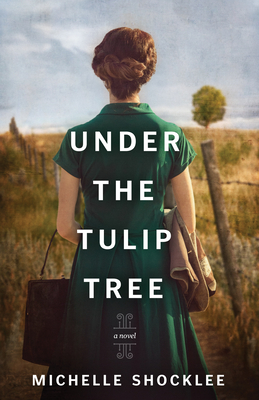
We have all heard it: it is important for us to know history so we don’t repeat the mistakes of the past. Michelle Shocklee does that in her novel Under the Tulip Tree. We get a view of slavery through the eyes of Lorena (Rena), an aspiring writer, who struggles to pursue her career in a male dominated society. She is sixteen when the stock market crashes and her privileged life changes forever. Seven years later she accepts a job with the Federal Writer’s Project (FWP) and meets Frankie who at 101 years old has a horrendous story to tell about what life was like for her and for others who were slaves.
The impact of someone being owned by another person is a concept that is hard for Rena to get her head around. The atrocities that Frankie shares are heartbreaking—even more so when you realize these things are drawn from actual events as told to FWP workers who were employed by the government to interview former slaves and record their stories for posterity.
What makes this story especially impactful is that Rena is telling this story from the viewpoint of a young White woman during the Great Depression. Although slaves had been freed, Blacks still did not enjoy equal rights. From sitting at the back of the bus, to lower pay, to being treated as dirty and ignorant, Blacks suffered from discrimination. Some Whites treated Blacks that way just because they could—acts of control and power. Some Whites treated Blacks that way because they were raised with that mindset, a deep cultural fear and hatred of someone who was different or because their own families had been mistreated by the Feds during and after the Civil War.
Rena’s father was a banker who fell apart after the crash. With her grandmother’s help, her family stayed afloat with both Rena and her mother getting jobs. Employment outside the home was something that was not acceptable for “their kind.” Rena’s mother was especially class conscious and worried about what her gossiping neighbors and former friends would say about Rena consorting with Blacks in Hell’s Half Acre where Frankie lived in a well-kept, small home boasting a beautiful floral garden and an outhouse.
As Frankie tells her story to Rena, the reader is quickly tied into the cruelty of the drama taking place in the book, and it becomes a page turner. It is harder to connect with Rena, but she grows as a person and becomes someone with the potential to do good. You can’t tell a story like this without pondering how a good God can allow bad things to happen. Frankie understandably harbors a lot of hate in her heart, but God works gently on her by bringing Illa, a Quaker woman, and Sam, a former slave, into her life, each encouraging, challenging and helping her.
Shocklee is a masterful storyteller, evoking empathy for 7 year old Frankie and embedding her into the heart of the reader. She shares the difficulties Frankie endured throughout her life without bearing down on graphic details. The author also dives into the “contraband” camp where Frankie lived for three years, still nominally a slave but under the protection of the Federal soldiers. Then she paints a picture of the horrors of war and its aftermath. As we learn about this part of history, we also see how citizens, both Black and White, were faring during the Great Depression. There are several surprising events at the end of this tale that help to bring closure for the characters and the reader.
There is a strong spiritual theme in Under the Tulip Tree. Frankie’s mother, Mammy, is a Christian believer, and although separated from each other early in Frankie’s life, Frankie never forgets her mother’s faith. Another important theme is literacy. Slaves were not allowed to learn to read. It was clear to the masters that slaves who could read could not be controlled as easily. Therefore books were forbidden. Frankie initially wanted very much to read, but the consequences were too great, robbing her of that desire. Standing up for what is right, for the downtrodden, for yourself against the power of the group in control is also a recurrent theme. All of these and many others remain ideas we wrestle with in our current society. On the positive side, we see the strength to be found in literacy, in trusting in God despite the circumstances, in the power in the Word of God, and in love for others—even our enemies.
Rating: 5/5
Category: Historical Fiction, Christian
Notes: 1. My personal thoughts in response to Under the Tulip Tree:
—The problem is not addressed in this book; but, sadly, slavery/human trafficking is widespread all over the world today. It is a major problem in the U.S.
—We make quick assumptions every day about other people based on where they come from, how they look and talk, and so many other factors. People, Black and White, did that in the book, and we still do it today.
- Original stories collected by WPA are available online from several sources. One is sponsored by Rice University: https://libguides.rice.edu/c.php?g=1231494&p=9012494
- Discussion questions are included in the back of the book.
Publication: 2020—Tyndale
Memorable Lines:
[Rena]: “People like me, like my family, we don’t know much about what slaves experienced. I’ve never heard of children being beaten with no one held accountable, or being forced into labor at the age of seven. Even though slavery isn’t legal anymore, I believe it’s important to remember the past as it truly was, not as we wish it to be.”
[Frankie]: “Helplessness washed over me, and I hated myself for it. Ever since the day I was sold away from Mammy, I’d despised helplessness. When overseers beat me and chased me down like an animal, I’d been helpless. When men used my body for their own pleasure and babies died, I’d been helpless to prevent it from happening. But the one thing I’d fought to maintain control over was my emotions. No one could force me to love or hate. They were mine to decide. I wasn’t about to allow this white woman to steal that away from me, no matter her attentive ministrations.”
[Sam]: “Don’t you see, Frankie? The day I landed on Miz Annabelle’s doorstep changed my life. I thought I found freedom when I ran away from my master, but it weren’t mine. Not yet. Freedom comes in knowing the truth of God. He loves each of us the same. He loves you, Frankie.”
Sycamore Circle–rebuilding a life
Sycamore Circle
by Shelley Shepard Gray

Madisonville is a prison in the novel Sycamore Circle. Lincoln was formerly incarcerated there, as were the men who work under him in the organization called T-DOT (Tomorrow Depends on Today). The group tries to rehabilitate former inmates, giving them practical skills by restoring houses and flipping them. They also learn self-discipline and how to survive in the outside world. Lincoln has earned the respect of law enforcement, probation officers, and prison officials. The program is voluntary, but the men who sign up agree to certain rules and will be kicked out of the program if they don’t abide by them.
Bo is Lincoln’s friend and his right hand man at T-DOT. He spent three years incarcerated as a felon, but has turned his life around. He is attracted to Joy, a literary tutor he met in a coffee shop, but he realizes that she is a special lady and he doesn’t know how to approach her. Joy has been divorced for 4 years from Tony, a man who constantly put her down. He had an affair and wanted to move on. Despite being a terrible and stingy ex-husband, he is a good father to their 16 year old daughter Chloe.
Joy and Bo are moving extremely slowly into a friendship when Joy starts receiving calls, texts, and letters from a stalker. Bo realizes how serious this could be and turns on his protection mode.
This story is well-written with likable characters, understandable relationship hesitations, and a lot of suspects for who the stalker might be. There is a subplot of an abused teenage boy who is trying to decide on a commitment to the Amish way. I was fortunate to read this on a day I could devote a lot of time to it as I wanted to keep reading until the end to find out who the stalker really is and what the future holds for Joy, Bo, and Chloe.
Trust is one of the themes of this series. It is a problem the former inmates and the people they come in contact with both have. Can someone who has done hard time in prison be trusted again? Even family members can have difficulty trusting their love ones, questioning if the changes are real. If they can’t be integrated into society again and find meaningful, financially sufficient employment, how can they survive without breaking the law again? Although this theme is not stated directly, it is the undercurrent of the series.
I received a complimentary copy of this book in exchange for an honest review. Opinions expressed in this review are completely my own.
Rating: 5/5
Category: Christian, Mystery and Thriller, Romance
Notes: 1. #2 in the Rumors in Ross County series, but could be a standalone.
2.I found that the stalker element leaned this mystery slightly into the thriller category.
Publication: February 7, 2023—Blackstone Publishing
Memorable Lines:
…he realized that he was going to need to be real patient if he wanted a chance with Joy—and that he was going to have to bring his A game too. She was not the kind of woman to accept a date on the fly or put up with him being anything but respectful and kind. I had been noted.
But he wasn’t worried about the Lord being upset with him. He’d started talking to God on his own years ago. Though it wasn’t something that he was comfortable sharing, he was pretty sure the Lord was still going to have his back whether he was Amish or not.
She treated him to a fake smile too. The kind women gave to security guards and annoying salespeople. Like she was glad for his place in her world, but she didn’t want them to connect on a regular basis.
The Book Woman of Troublesome Creek–the blue librarian
The Book Woman of Troublesome Creek
by Kim Michele Richardson
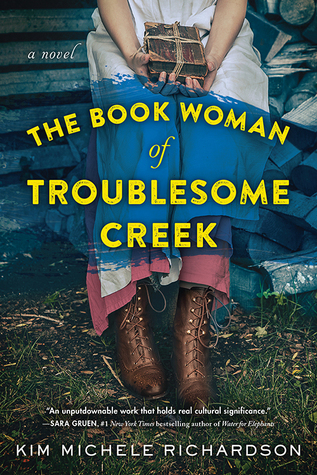 Two tales woven seamlessly into one—that’s The Book Woman of Troublesome Creek, a work of historical fiction carefully researched and crafted by Kim Michele Richardson. Cussy Carter is a blue-skinned young woman, strong, determined, and the subject of suspicion, hatred, and discrimination in the backwoods of the Kentucky Appalachians in the 1930’s. She is also a Book Woman, a librarian who travels by mule to deliver books to the far reaches of the mountains to patrons who otherwise would have no reading options. Cussy, also called Bluet, knows her place in society as does her Black friend Queenie. They are both considered “colored.” Most people are disgusted by looking at Cussy and certainly avoid any kind of touch.
Richardson paints a moving portrait of Cussy and what it must be like to be an object of ridicule and perhaps the last of her kind. You will be hoping for the best for Cussy who, as a coal miner’s daughter, lives in poverty but shares freely with her even more impoverished patrons. Her father, also a Blue, suffers from lung issues and horrible working conditions.
The Book Woman of Troublesome Creek is a work you will read with your heart in your throat, amazed at the struggles and sufferings of Cussy, her pa, her patrons, and those who dare show kindness to her. At the same time, the book is uplifting because there are good people included in the story and Cussy always stands as a model of someone who does what is right because it is right and in spite of those who would hurt her.
I would like to extend my thanks to netgalley.com and to Sourcebooks Landmark for giving me the opportunity to read this book in exchange for an honest review.
Rating: 5/5
Category: Historical Fiction
Notes: There are helpful Author’s Notes at the end of the book discussing the rare condition called methemoglobinemia. Richardson also gives background on the Pack Horse Library Project and courting candles. She explains that she altered one fact regarding dates so that she could include certain medical information.
Publication: May 7, 2019—Sourcebooks Landmark
Memorable Lines:
I lived for the joy of bringing books and reading materials to the hillfolk who were desperate for my visits, the printed word that brought a hopeful world into their dreary lives and dark hollers. It was necessary. And for the first time in my life, I felt necessary.
I couldn’t help notice again how the students waited for me, looked up at me, all quiet and not a single fidget or wiggle, as hungry for the stories in these books as they were for the food that always seemed sparse in this real land.
Nary a townsfolk, not one God-fearing soul, had welcomed me or mine into town, their churches, or homes in all my nineteen years on this earth. Instead, every hard Kentucky second they’d filled us with an emptiness from their hate and scorn. It was as if Blues weren’t allowed to breathe the very same air their loving God had given them…
 education pathways