Home » Posts tagged 'labor'
Tag Archives: labor
The Four Winds–Historical Fiction about The Great Depression and the Dust Bowl
The Four Winds
By Kristin Hannah
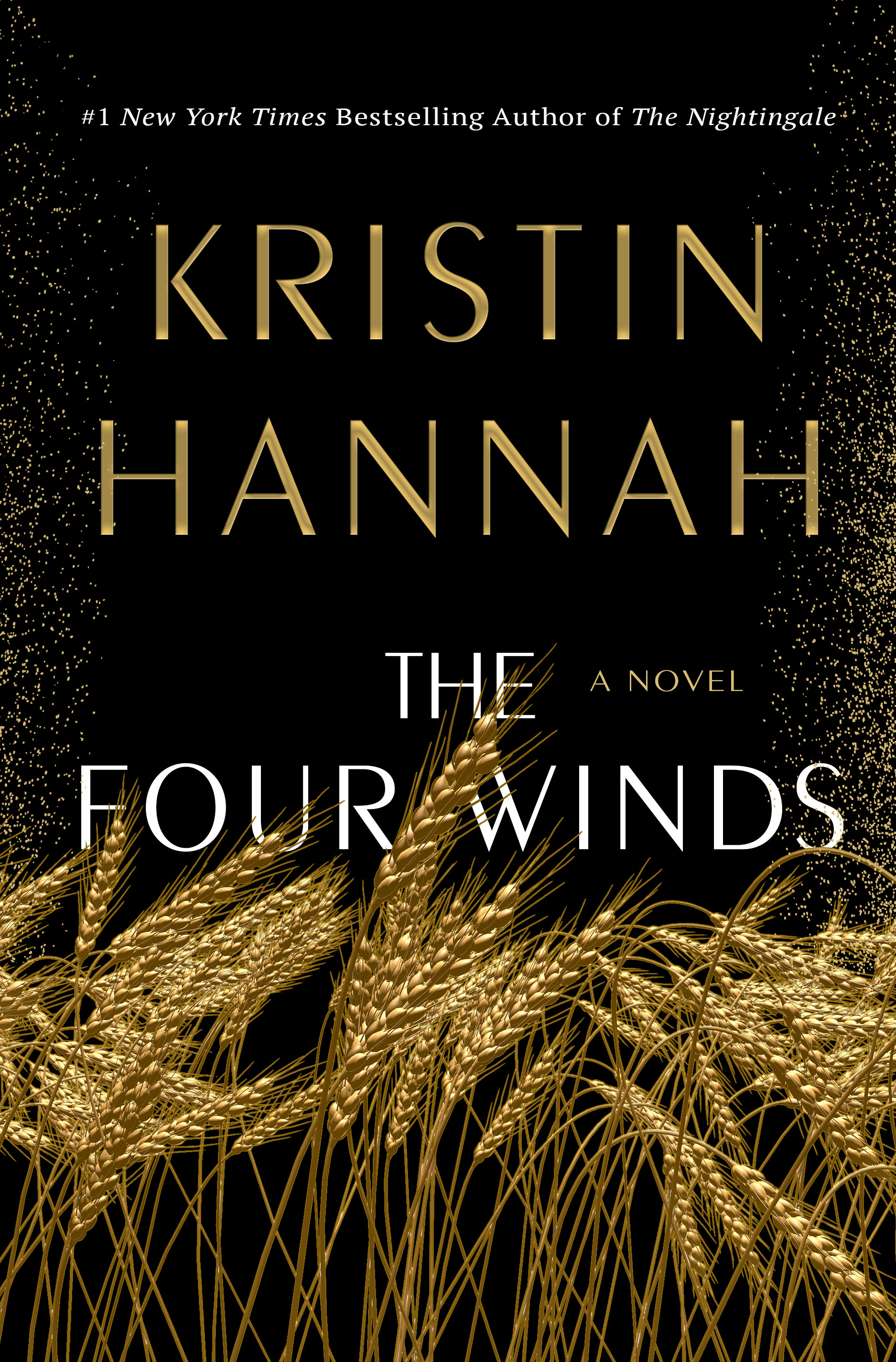
From prosperity to devastating poverty, The Four Winds takes the reader on a journey across time and across the United States. Since childhood, Elsa has been told she is unattractive, physically weakened by an illness, and ineligible for marriage. Her brief search for adventure and love in her small town leads her to Italian immigrants Tony and Rose and their son Rafe. The Martinellis take Elsa under their wing, connect her to the land, and love her as their own.
The Great Depression rips away the hopes and dreams of the generations who endured the struggle, but Tony and Rose are strong and refuse to give up their land. Then come years and years of drought and dust storms. The government says the farmers are to blame and provides minimal help. Millions of citizens leave Texas and surrounding states to find what is billed as a “land of milk and honey” where they will surely find work so they can support their families. Instead they find difficult work on large farms if they are lucky. They live in filthy conditions on subsistence wages or less. Each day they have to walk miles both ways from muddy tent cities to the fields where there is no guarantee of a job. Those seeking work are maligned by the residents who view them as dirty and lazy. If they manage to get on at a farm that supplies housing, a few toilets, and some running water and electricity, they soon discover that they are paid with credit at the expensive company store. There is a fee for everything, even obtaining pay in cash. When they dig deeper, the workers find that the whole setup, including where they live and when they work is completely set up to satisfy the greed of the owner. A worker is always indebted to the company.
Communists, at physical danger to themselves, work to organize the farm workers to strike for better working conditions. It is an uphill battle because the workers have safety concerns if they protest in addition to the possibility of losing their opportunity for work—such as it is. California is not the “Promised Land” after all.
Elsa is not just the main character of The Four Winds: she is the heroine. She is a strong, strong woman living out a difficult life with perseverance and determination. Come what may, she would do her best for her children whether eking out survival in a formerly rich land where cattle died with bellies full of sand or traveling across the desert in an unreliable vehicle praying that there was enough water and gas to get the family to their destination. She proves to be a good friend to others in need. She compromises when necessary for the sake of her children, but she reaches a limit where she stands up to greedy business people who deserve to be shamed.
The Four Winds exposes a sad part of our history showing a period in time that was devastating to people. Through no fault of their own they found themselves unable to care for their families. Many were proud and refused government aid. Some of that help from the government was commendable putting men to work in respectable jobs, but some was too little, too late and unreliable in execution. The people of California were depicted as mean-spirited and unwilling to help those who needed help. They looked down on the laborers with contempt. The one exception that stood out for me was an understanding librarian who checked out books to Elsa’s daughter and then gave Elsa a library card which Elsa presented to her daughter as her Christmas gift. It was treasured.
This work of historical fiction concludes nicely, but there is not a happy ending for everyone. The book is more realistic than that. Overall it is well written and kept me wanting to read more. It is a sad book, however. It has to be—it is about sad times.
Rating: 5/5
Category: Historical Fiction
Publication: March 14, 2023—St. Martin’s Griffin
Memorable Lines:
“Believe me, Elsa, this little girl will love you as no one ever has…and make you crazy and try your soul. Often all at the same time.” In Rose’s dark, tear-brightened eyes. Elsa saw a perfect reflection of her own emotions and a soul-deep understanding of this bond—motherhood—shared by women for millennia.
“Girls like that, unkind girls who think it’s funny to laugh at another’s misfortune, are nothing. Specks on fleas on a dog’s butt.”
Once, Elsa would have said, God will provide, and she would have believed it, but her faith had hit the same hard times that had struck the country. Now, the only help women had was each other. “I’ll be here for you,” Elsa said, then added, “Maybe that’s how God provides. He put me in your path and you in mine.”
Winter hit the San Joaquin Valley hard, a frightening combination of bad weather and no work. Day after day, rain fell from steel-wool-colored skies, fat drops clattering on the automobiles and tin-can shacks and tents clustered along the ditch bank. Puddles of mud formed and wandered, became trenches. Brown splatter marks discolored everything.
Poverty was a soul-crushing thing. A cave that tightened around you, its pinprick of light closing a little more at the end of each desperate, unchanged day.
Animal Farm–still relevant
Animal Farm
by George Orwell

In reaction to Stalin’s efforts to gain control in the Spanish Civil War in 1937, George Orwell, a writer who fought in that war and witnessed the purges, created what he called “a fairy tale.” Russell Baker, author of the afterword in the Signet Classics edition of Animal Farm said that Orwell “thought too many decent people in the Western democracies had succumbed to a dangerously romantic view of the Russian revolution that blinded them to Soviet reality.” Clearly, Orwell, a self-proclaimed socialist, abhorred the totalitarian state which could emerge from socialism.
The allegory Animal Farm was first published in 1945 after pro-Soviet sentiment died down. It was immediately popular in England and America. It has a timeless theme which Téa Obreht, originally from Yugoslavia, shares in her introduction: “no society is inherently safe from these horrors.” Sometime in the new century, when engaging in retirement downsizing, I donated my copy of Animal Farm remembering it as an important work, but convinced that it is not relevant in our freedom loving United States of America. Recently, concerned about the direction toward total control being gradually imposed in my country, I bought a new copy of Animal Farm.
This short work of fiction tells the story of the animals on Mr. Jones’ farm. They don’t have it too bad. They have just enough to eat and a place to sleep, but they resent Mr. and Mrs. Jones and their farmhouse. The animals are convinced by Major, a prize boar, to fight for their freedom and transform their home into a socialistic farm where no one would be their master, they wouldn’t have to work as hard, and food would be in abundance. They are successful initially in working toward their dream, but things change very gradually as two competing pigs take over after the death of Major. Some of the problems at Animal Farm are born of natural disasters; others are the result of greedy and power-hungry pigs with their security guard dogs.
The animals continue to work hard and grumble little, but life gets worse for all but the pigs and dogs. Eventually the animals no longer remember what the seven commandments that structure their society are or recognize the changes that occur in them. Most can not read them anyway. They also don’t remember what things were really like in the past. They are easily convinced by the leader’s assistant, who with rapid-fire delivery spouts off “facts and figures,” thus proving that their lives are much better than they used to be.
Most of the characters are animals, of course. My favorite is the donkey, Benjamin, who has seen it all, but rarely talks. He just goes along knowing he will probably outlive whatever the latest notion is. Boxer is a very strong horse who has two personal mottos: “I will work harder.” and “Napoleon [the victorious pig leader] is always right.” The other animals find Boxer very inspiring. The animals are divided into committees. Interestingly, there is a Re-education Committee which the cat, who is rarely around at work time, joins. There is a large contingent of sheep who can be counted on to respond to everything with a loud chanting of “Four legs good, two legs bad.”
If you have not read Animal Farm, I encourage you to do so. It truly is reflective of what is occurring within the U.S. society including the political class and those who serve them. Although this was written with Stalin in mind, I was able to discern similarities to people, groups, and events in 2020-2021 and ponder the twenty or so build-up years leading to the changes we’re currently experiencing. Animal Farm is relevant today, and sadly will remain relevant as long as there is a greedy, power-hungry class and a populace that can be duped by false “facts,” persuasive rhetoric, and romantic notions of a utopian society.
Rating: 5/5
Category: Fiction
Notes: Political Allegory
Publication: Originally published in 1948. I read the Signet Classics edition published in June 2020 by Penguin Random House.
Memorable Lines:
He repeated a number of times, “Tactics, comrades, tactics!” skipping round and whisking his tail with a merry laugh. The animals were not certain what the word meant, but Squealer spoke so persuasively, and the three dogs who happened to be with him growled so threateningly, that they accepted his explanation without further questions.
Truth to tell, Jones and all he stood for had almost faded out of their memories. They knew that life nowadays was harsh and bare, that they were often hungry and often cold, and that they were usually working when they were not asleep. But doubtless it had been worse in the old days. They were glad to believe so.
But once Benjamin consented to break his rule, and he read out to her what was written on the wall. There was nothing there now except a single Commandment. It ran:
ALL ANIMALS ARE EQUAL
BUT SOME ANIMALS ARE MORE EQUAL THAN OTHERS
 education pathways