Home » Posts tagged 'kindness'
Tag Archives: kindness
Congratulations, Class of 2025!
Regardless of what school you attended or what level you attained, I want to congratulate you on your achievement and encourage you to do your best in all your endeavors. Be truthful, honest, and hardworking. Above all, be KIND to everyone you meet because “everyone is going through something”!

Evergreen Christmas–a place to call home
Evergreen Christmas
by Janet Dailey
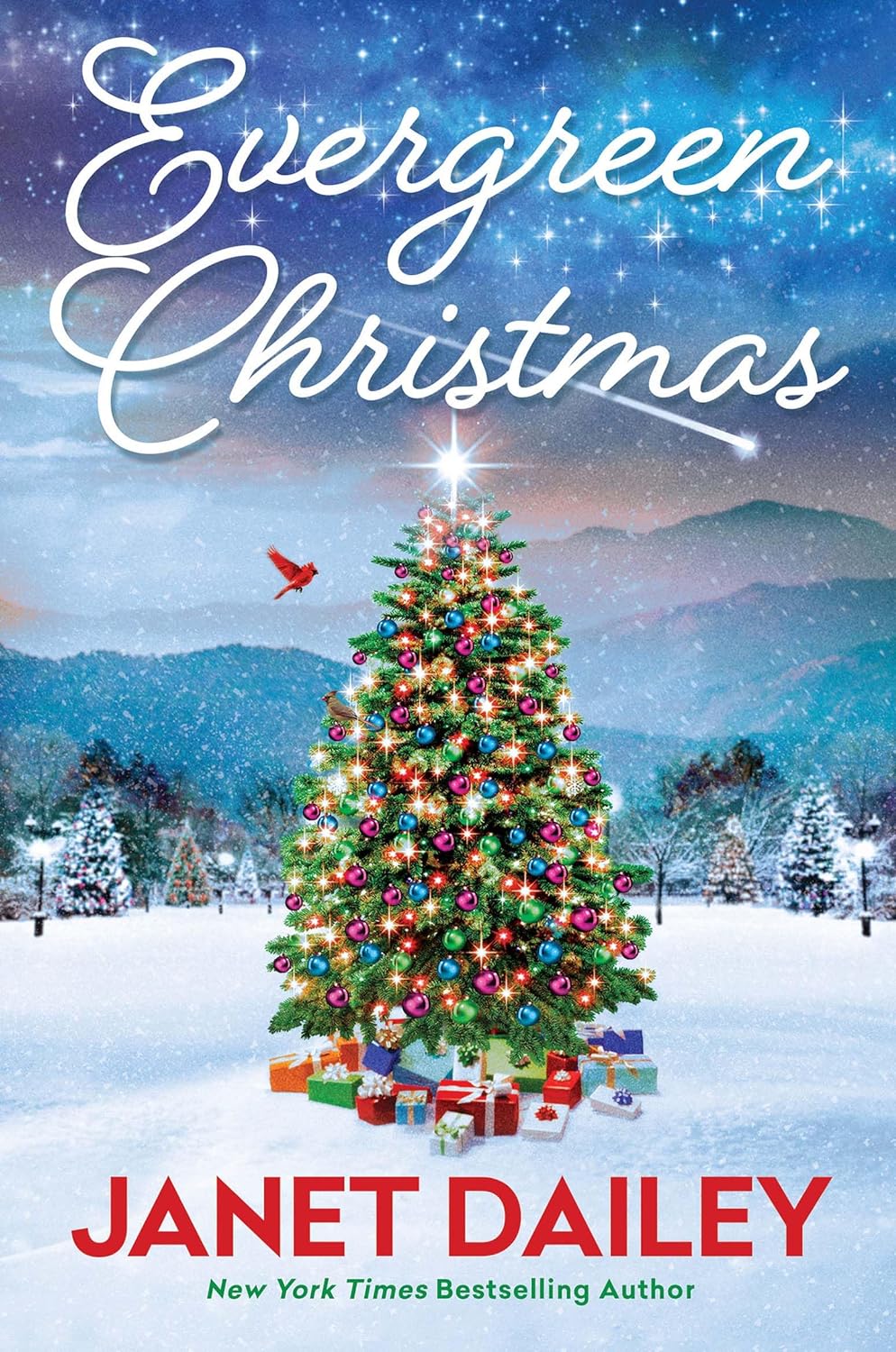
Tucked away in the Appalachians is Noel, North Carolina, known as “America’s Christmas Tree Capital.” In Evergreen Christmas, Jordyn moves to Noel looking for a home in a small town with big community feels. She spent most of her life bouncing from one home to another in foster care—no real home, no love, and certainly no Christmas trees. Jordyn establishes herself as a winning barrel racer and earns enough to buy a small house with acreage. Her goal is to breed horses and teach barrel racing.
A group of four women, known affectionately in the community as “The Nanas” immediately take her under their collective wing to help her get established and fit in. They also encourage her and mentor her with the goal of defeating her neighbor Nate in Noel’s annual Christmas Competition. He has won the Christmas Crown nine years in a row, but the Nanas think Jordyn could change that by entering “Fabio Fraser,” a fir tree on her property in the contest. There are actually 12 Christmas themed contests involved in winning the crown.
Nate is a handsome tree farmer who sells Christmas trees and has a gift and decorations shop on his property with his brother Tucker, a bull rider. Together they are raising Nate’s daughter Roxie. She is an adorable, polite, and kind six year old. Her mother died in childbirth and Nate has made himself “unavailable” to local women to protect his own heart and Roxie’s.
The story is a delightful adventure through many of the Christmas contests. Jordyn and little Roxie develop a friendship. Jordyn and Nate struggle with their attraction for each other, both wanting to do what is best for Roxie. The Nanas are in charge of the Christmas Competition which they champion to encourage town spirit. Except for one family who only appears in a few of the contests, all of the characters are people you would want to know making this a fun, clean Christmas romance.
I received a complimentary copy of this book in exchange for an honest review. Opinions expressed in this review are completely my own.
Rating: 5/5
Category: Romance
Notes: #1 in the Frosted Firs Ranch series. Evergreen Christmas gives a hint at the end of the book that the next book in the series will probably feature Nate’s charming, handsome brother, Tucker.
Publication: September 24, 2024—Kensington
Memorable Lines:
She smiled full blast, her worries melting away like a mini marshmallow tossed into a blazing bonfire.
Life can be scary and painful—but the unexpected gifts it gives us along the way, especially when we’re not looking for them, make it all worth it in the end.
“The Nanas care about people. They help them when they’re in need, look for ways to make other people’s lives better. They fuss over you, bring welcome baskets if you’re new to town and”—she winked—“knit wool caps for your head so your ears don’t get cold.”
The Boy, the mole, the fox and the Horse–charming
The Boy, the mole, the fox and the Horse
by Charlie Mackesy

A short book.
A quick read with much to ponder.
With delicate ink drawings, evocative watercolors and bold calligraphy type, it speaks of dreams and love and kindness, but mostly of kindness and its interplay with love.
This book is a gift—a gift to the reader and a gift the reader will want to share with loved ones.
The Boy, the mole, the fox and the Horse is a philosophy of life sprinkled with humor and told through simple words and graceful illustrations.
Rating: 5/5
Category: Fiction, Philosophy
Notes: A book to be savored and reread and reread.
Publication: 2019—Harper One
Memorable Lines:
“What do you want to be when you grow up?” “Kind” said the boy.
The Secret Garden–delightful classic
The Secret Garden
by Frances Hodgson Burnett
Illustrated by Tasha Tudor
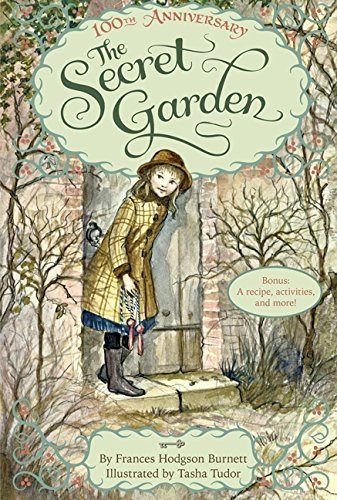
An avid reader as a child, I am surprised that I somehow missed out on the classic children’s tale The Secret Garden written by Frances Hodgson Burnett. For this reading with my book club, I chose an edition with delightful illustrations added to this 1911 book by Tasha Tudor in 1962. The Secret Garden is recommended by the publisher for ages nine and up, but I strongly recommend it for all readers. Please don’t relegate it to the “kiddie lit” genre.
The Secret Garden is the kind of book that instructs the reader in positivity without being preachy. Ten year old Mistress Mary (as in “quite contrary”) is a child who is both spoiled and neglected in her upbringing in India where she does not experience love. Things are not much better for her when her parents die, and she is shipped to Yorkshire to be under the care of her uncle. There she is still not loved as her uncle, Mr. Craven, has not dealt well with the death of his wife ten years prior and the illness of his son Colin who is physically cared for but also is not loved.
When Mary discovers that the mysterious crier in the night is Colin, she gradually creates a bond with her cousin. She is a curious girl who is given little freedom in the house, but almost total freedom in the gardens. She discovers the benefits of fresh air, sunshine, and natural exercise, and she explores the grounds looking for a secret garden that has been hidden away since Colin’s mother died.
Mary and Colin meet so many interesting people during the spring and summer. Dickon is a twelve year old who can converse with animals and plants. His older sister Martha is a sweet young lady who works at Misselthwaite Manor as a housemaid and helps take care of Mary. She has one day a month off, and she travels home by foot to help her kindly mother with laundry and baking. She gladly gives her mother her earnings to help support her large family of twelve happy siblings. Ben Weatherstaff is an elderly gardener who knew Colin’s mother and is eager to help restore the secret garden. While this tale is not full of goody two-shoes, it does have characters the reader will enjoy getting to know and in the cases of Mary and Colin watching their physical and emotional growth.
The Secret Garden is a pleasant read that begins with difficulties for the characters but progresses to a magical time in their lives. The author’s descriptions are wonderful to read as spring approaches in the garden. It is a book I would reread for the pleasure of the story and the language of the author.
Rating: 5/5
Category: Children, Fiction, Classics
Publication: 1911—Harper Collins
Memorable Lines:
The rainstorm had ended and the gray mist and clouds had been swept away in the night by the wind. The wind itself had ceased and a brilliant, deep blue sky arched high over the moorland. Never, never had Mary dreamed of a sky so blue. In India skies were hot and blazing; this was of a deep cool blue which almost seemed to sparkle like the waters of some lovely bottomless lake, and here and there, high, high in the arched blueness floated small clouds of snow-white fleece. The far-reaching world of the moor itself looked softly blue instead of gloomy purple-black or awful dreary gray.
“Half-witted!” said Colin angrily. “Who thought that?” “Lots o’ fools,” said Ben. “Th’ world’s full o’ jackasses brayin’ an’ they never bray nowt but lies.”
He had made himself believe that he was going to get well, which was really more than half the battle, if he had been aware of it.
Souvenirs from Kyiv–devastation of war
Souvenirs from Kyiv
by Chrystyna Lucyk-Berger
I want to believe Chrystyna Lucyk-Berger’s stories in Souvenirs from Kyiv are more fiction than history, but I know that is not true. She has researched and conducted interviews with survivors of World War II and its aftermath. She has compiled their memories into composite stories that share brutal truths about war. Her goal Is to “make it clear that conflict is not about two teams meeting on the battlefield—one called ‘good’ and one called ‘bad.’ There are no winners in this story.”
These tales are emotionally hard to read; I put aside the book several times to regroup. Because the author is Ukrainian-American, I expected the book would be slanted towards the Ukrainians. While they are certainly the focus, they are not depicted as guiltless. The barbarism of war is demonstrated in acts performed by Germany, Poland, the USSR, Ukraine, and the United Nations. “Sides” were not clear cut and people had to quickly change their nationalism based on necessity for survival.
In Ukraine’s War of Independence (1917-1921), a chant was popular:
Glory to Ukraine.
Glory to the heroes!
Death to the enemies.
It was revived in the 1940’s as a partisan group struggled to “ ‘purify’ Ukraine of Jews, of Poles, of Nazis, of Soviets.” The Organization of Ukrainian Nationalists (OUN) was founded after WW I. It fractured into two groups, each fiercely loyal to its leader. They expended energy which would have been better used in fighting their common enemy. That is an easy position to take from my safe twenty-first century armchair.
The author creates believable, fictional characters. Through them she makes real:
–the desperation of those in labor camps
–the hard work required just to survive each day
–the quick adjusting of priorities for those fleeing
–the raw, animalistic violence that emerged during the fight for survival—whether to get a place in a bomb shelter or to grasp a stale piece of bread.
There are also shining lights:
–parents sacrificing for children
–the kindness of a German officer leading a refuge family to safety during a bombing
–everyday citizens risking their lives by sharing their homes and what little food had been left for them by ravaging soldiers.
These are all stories that need to be told, but the tale goes further. When the dust of battle settles, what happens to the survivors? To what country will they claim allegiance? Even those captured by an army and put in uniform or forced into slave labor, can be blacklisted as traitors in their home country. There is the unimaginable prospect of labor camps once more. If these threats are not realized, the survivors still have to overcome physical and mental hurdles of reintegrating into a society, perhaps not the one of their birth. During and after the war, Ukraine Diaspora occurred in the U.S. and in Europe.
Although this book is historical fiction, I learned a lot about the strife between Ukraine and its neighbors. Conflict is not new in that area. The author made history come alive with characters caught up in a war not of their making. It is important to read the forward. The first story slowly immersed me into the time period. Then the rest of the book sped by quickly. This author has written other books, and I am interested in reading them as well. Although Souvenirs from Kyiv is about Ukraine, its theme, the devastation of war, has worldwide applications.
I would like to extend my thanks to NetGalley and to Bookouture for giving me the opportunity to read this book in exchange for an honest review.
Rating: 5/5
Category: Historical Fiction, General Fiction (Adult)
Notes: 1. A map of Ukraine is included.
2. The book ends with a letter from the author and also a valuable glossary. Some foreign language words are defined within the story, but the glossary is helpful for the other terms.
Publication: April 22, 2022—Bookouture
Memorable Lines:
I think of the Germans picking up and fleeing, the Red Army laying claim to the scorched land, and I know that one oppressor is no better than the next.
[Pretend death notification letter composed by an enlisted Ukrainian forced into the German army.] As we waited for our weapons to thaw, your son took a bullet. He did not die a hero. He did not kill many Red Army troops. He was shot, and others have died of TB, frozen to death, or have simply lost hope. You may stop sending blankets. They go to the officers, anyway. You could send clubs and knives, for we have been forced to turn into primitive cavemen. Our weapons are useless in this frozen land.
…if he has learned anything on this journey, it is this: he will give up everything—including his principles, including his painting, his life—to keep his family alive.

All This Homeless Veteran and His Dog Needed Was Human Kindness…
Being the hands and feet of Jesus…

 While seated at a Starbucks, a homeless man came in and sat nearby.
His scent was unpleasant and people looked at him and rolled their eyes. He was simply doing what we were all doing, drinking coffee and taking advantage of free WiFi.
He brought his dog, Legacy, who was well behaved. He proceeded to tell me he walked 60 miles from Seattle to Tumwater over a few days period. He spoke highly of Legacy who, in stride, journeyed along with his master every step of the way without complaint. As soon as Legacy was told to lay down, he fell asleep.
It was sad to see people distance themselves from this homeless veteran. Kids who inquired about the dog were quickly shielded by their parents and hurried away.
This Veteran explained most people have no concept of being Christ like because they simply place Christ on the shelf as…
View original post 327 more words
My Real Name is Hanna–extremes of human behavior
My Real Name is Hanna
by Tara Lynn Masih
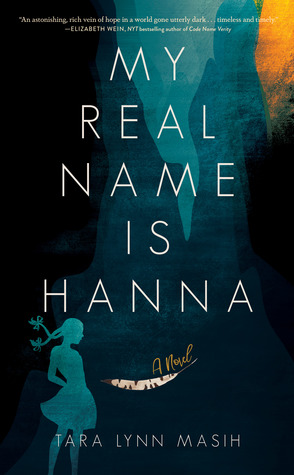 My Real Name is Hanna is the story of a Jewish girl and her family who live under horrible circumstances in Ukraine to escape death at the hand of the Nazis and others. This book by Tara Lynn Masih has much potential. Many parts of the survival tale are drawn from the story of a real family that had to live underground. The first part of the book bounces around a little and then settles down into a sequential tale. Although it is a sad story, I didn’t really find myself emotionally involved with any of the characters. Parts of the narrative got my attention, such as when family members were in danger. I wanted to see them survive, but mainly I wanted the book to be over.
The author uses words from other languages freely. I like the authenticity of that but I would have appreciated a glossary, and I think young people would find that helpful as well. The area the family lives in has been occupied by many countries so there are competing cultures and languages—Jewish, Polish, Ukrainian, Russian, and German.
I actually found the “Historical Notes” at the end of the book more interesting than the book itself. Unfortunately, the author includes her own political stance on current events in these historical notes. If she wants to put forth these ideas in her book, I would suggest she do it in an editorial type section separate from a discussion of the historical basis of the book. Like the author, I hope the day will come when we don’t need reminders of the Holocaust as cautionary tales against cruelty. I don’t think, however, that it is appropriate to use her historical notes as a platform for indoctrinating young people into her political views. The story should stand on its own merits, and young people are capable of reading the book and making their own moral conclusions.
I would like to extend my thanks to netgalley.com and to Mandel Vilar Press for giving me the opportunity to read this book in exchange for an honest review.
Rating: 3/5
Category: Historical Fiction, Teens
Notes: Interest Level—Ages 12 and up
Grade Level 10-12
Publication: September 25, 2018—Mandel Vilar Press
Memorable Lines:
I see in my mind again those posters in the window, the big red letters, the lice, the blaming of Jews for the war. Someday, someone will betray us. For money, for food, for their own lives spared.
I can now hear what sounds like heavy boots approaching the house from down the lane, grinding the dirt and gravel with their murderous purpose.
When you’re hidden away, with no freedom, you crave news of the outside world as much as you crave food.
 education pathways