
Home » Posts tagged 'journal'
Tag Archives: journal
I Capture the Castle–class structure in mid-20th century England
I Capture the Castle
by Dodie Smith
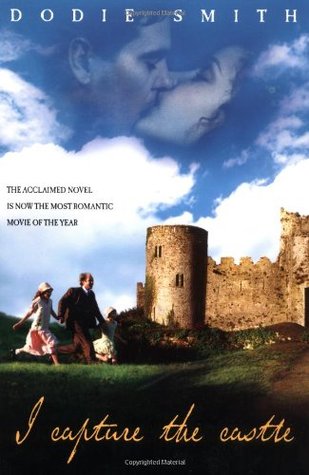
To label I Capture the Castle as a “coming of age” story is true, but the novel is so much more. It is related in her journal by Cassandra who lives in poverty under the leaky roof of a crumbling castle. Her father Mortmain is a writer with one successful book to his credit before he hit a writing desert. He secured a forty-year lease on the castle on a whim. The other residents are his son, another daughter, a boy taken in when his servant mother passed, and Topaz, the children’s stepmother. All in the family realize that the only way out of their financial straits is for at least one of the girls to marry into a rich family.
Author Dodie Smith has gifted us with a book full of nonconventional characters, a beautiful romantic background, and moral dilemmas. The plot begins with touches reminiscent of Pride and Prejudice but deviates fairly quickly. There is a similar theme of class differences, but without Austen’s use of satire. Two of the potential romantic interests grew up in America, one in the East and one in the West. Their backgrounds add another layer of social and cultural differences. Cassandra’s family is caught in the middle. They clearly had money in the past, but they have sold off most of their belongings and are reduced to very meager meals and one or two threadbare outfits per person. They have to be very creative to be acceptable in the social milieu to which they aspire.
I Capture the Castle has the depth necessary for a book to stand the test of time and appeal to a wide audience. It includes topics like women’s roles, art and sexuality, depression, literary criticism, and the laws of inheritance in Great Britain. While it addresses these issues, it remains an interesting and well-told tale with an ending that does not tie everything up neatly. Instead, it gives the reader the opportunity to speculate on the characters’ future decisions and actions which is a good way for this novel to conclude.
Rating: 5/5
Category: Romance, General Fiction
Notes: 1. There are discussion questions at the end.
2. The book has been made into a movie.
Publication: 1948—St. Martin’s Press
Memorable Lines:
I am writing this journal partly to practice my newly acquired speed-writing and partly to teach myself how to write a novel—I intend to capture all our characters and put in conversations. It ought to be good for my style to dash along without much thought, as up to now my stories have been very stiff and self-conscious.
The taxi drew up at a wonderful shop—the sort of shop I would never dare to walk through without a reason. We went in by way of the glove and stocking department, but there were things from other departments just dotted about; bottles of scent and a little glass tree with cherries on it and a piece of white branched coral on a sea-green chiffon scarf. Oh, it was an artful place—it must make people who have money want to spend it madly!
In the end, Topaz got Stephen to take the hen-house door off its hinges and make some rough trestles to put it on, and we pushed it close to the window-seat, which saved us three chairs. We used the grey brocade curtains from the hall as a table-cloth—they looked magnificent though the join showed a bit and they got in the way of our feet. All our silver and good china and glass went long ago, but the Vicar lent us his, including his silver candelabra.
The Secrets of Paper and Ink–God’s working it out
The Secrets of Paper and Ink
by Lindsay Harrell
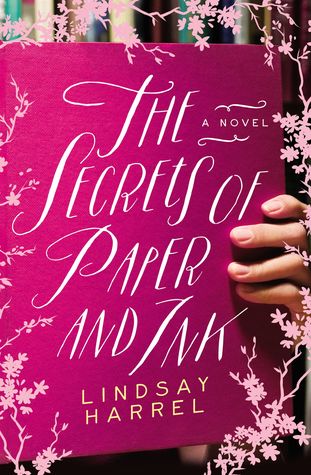 The lives of three women cross in Lindsay Harrell’s novel The Secrets of Paper and Ink. Sophia is a women’s therapist in Arizona who finds herself in the need of therapy. Ginny is a formerly rich American who abandoned that life to follow her husband to Cornwall, England, to open a bookstore. Their lives cross when Sophia, who needs more healing time, answers Ginny’s ad for a vacation rental. They find a notebook with the story of Emily Fairfax, a woman who lived in the mid 1800’s. Sophia becomes obsessed with learning more about Emily.
Each of the three main characters has to deal with a problem particular to women—abuse, abandonment, and discrimination. The author handles all of these issues with respect. The plot pops back and forth with each chapter focusing on one character, but with Ginny and Sophia’s stories overlapping in real time. Both ladies are impacted by Emily’s story, and there is a delightful surprise ending. Readers who delight in all things bookish will particularly relish this book as it includes a wonderful bookstore, journaling, and a female author in a time period when that was unacceptable. Readers who enjoy a good Christian romance will take pleasure in the gentle ways in which the characters’ interest in God is reawakened. Lastly, historical fiction buffs will appreciate the inclusion of Emily’s story.
I received a complimentary copy of this book from Thomas Nelson through NetGalley. Opinions expressed in this review are completely my own.
Rating: 5/5
Category: Romance, Women’s Fiction, Christian Fiction
Publication: February 26, 2019—Thomas Nelson
Memorable Lines:
But no matter what she felt, she knew deep down that her story did matter. She had to fight against the lie that it didn’t. And if she didn’t protect her own story or have the courage to write it down, no one else would. No one else could.
My senses rang with the cacophony of the muffin man’s bell, the clamor of the clarinet player on the corner, and the clickety-clack of the pattens on ladies’ feet.
Someone had finally noticed me drowning and offered to point me in the direction of the shore. Now it was up to me to keep stroking through the water until I reached the sandy beach beyond.
 education pathways