Home » Posts tagged 'Jews' (Page 2)
Tag Archives: Jews
The Woman with the Blue Star–refuge in a sewer
The Woman with the Blue Star
by Pam Jenoff
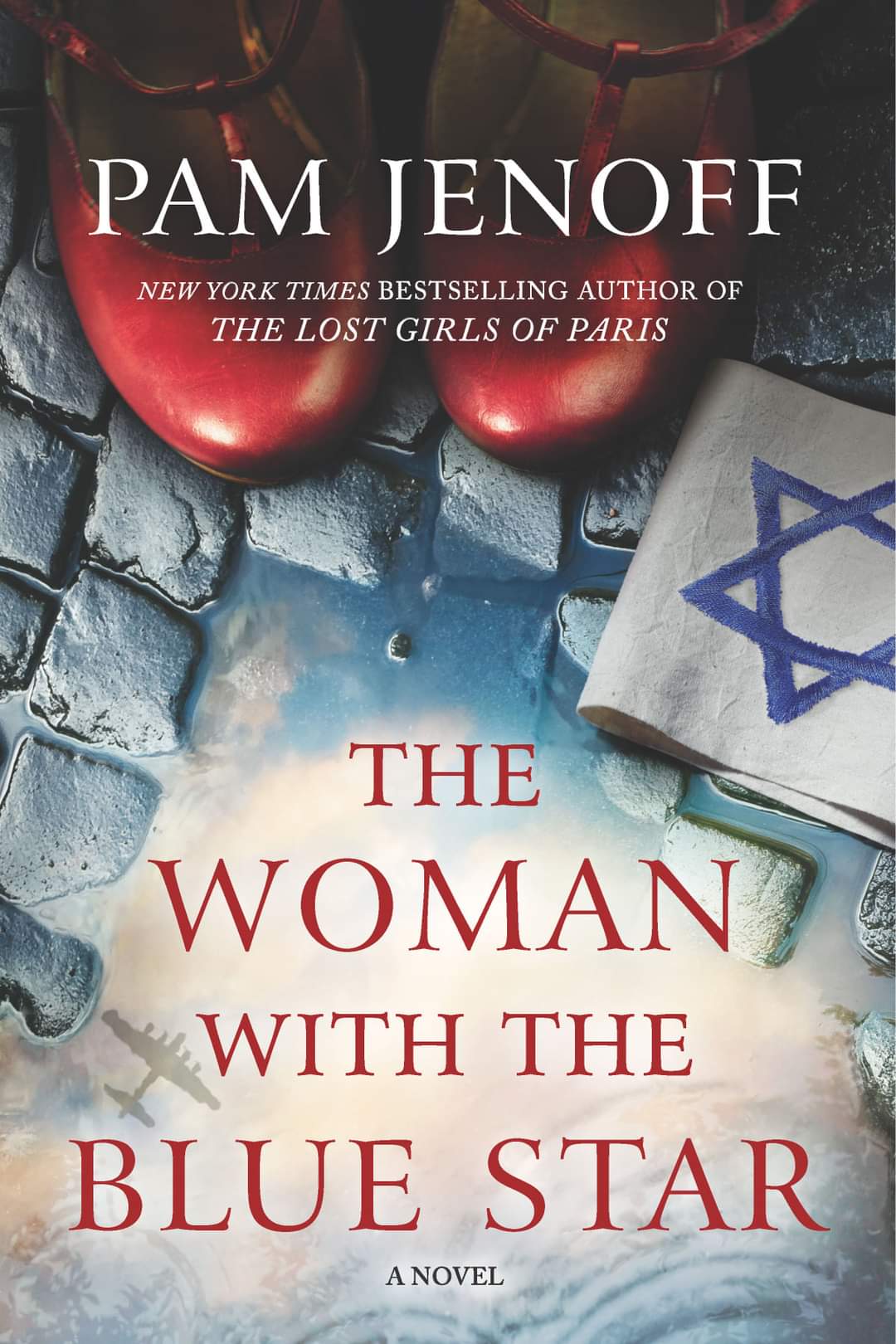
If you are an aficionado of World War II novels, you will probably like The Woman with the Blue Star, the story of Sadie and her family who are forced into a Polish ghetto and later avoid a roundup of Jews for deportation by fleeing to the dark stench and filth of the sewers. Their survival depends on the mercy of the sewer worker who leads them there and provides them with what food could be had in Krakow in 1942. The Germans leave little for the local population and ration cards are required.
Sadie’s path crosses with Ella’s at a chance glance down through a sewer grate. Ella lives with her stepmother who maintains a fairly good standard of living by acting as a mistress to various German officers.
The author describes in detail both the disgustingly putrid conditions for the Jewish family in the sewer and the better, but still precarious, lives of the Polish citizens above ground. The characters and their reactions are generally believable. There are a number of dramatic twists in the story along with some romantic threads and a look at those involved in the Polish Home Army underground movement.
Most of the story seems realistic. I do wonder about the many occasions when Ella ventures out after the government imposed curfew, once even with Sadie above ground. Given the enormous threat of German soldiers and Polish police patrolling the streets, their adventures seem foolhardy and unlikely.
I love the epilogue which confirms something I suspected, but its revelation makes a great twist. Although it is difficult to read about the enormous hardships, this book is an important reminder of a piece of history we should never forget so we will not allow it to be repeated.
I received a complimentary copy of this book in exchange for an honest review. Opinions expressed in this review are completely my own.
Rating: 4/5
Category: Historical Fiction, Women’s Fiction
Publication: May 4, 2021—Harlequin
Memorable Lines:
We had almost nothing by the end; it had all been sold or left behind when we moved to the ghetto. Still, the idea that people could go through our property, that we had no right to anything of our own anymore, made me feel violated, less human.
Once I could not have imagined staying in the sewer for so long. But there was simply nowhere to go. The ghetto had been emptied, all of the Jews who lived there killed or taken to the camps. If we went onto the street, we would be shot on sight or arrested.
Saul talked on and on through his tears, telling stories of his brother, as if pressing the memories of his brother between pages to preserve like dry flowers.
You Were Made for This Moment–the God of great reversals
You Were Made for This Moment
by Max Lucado

Most of us are experiencing the “winter of our discontent” with ever-changing health orders, lockdowns, divisiveness on all fronts, inflation, shortages, and politicians who promise much and do little. Max Lucado has written a book that is very appropriate for these times, You Were Made for This Moment. It focuses on Queen Esther in the land of Persia. Her story is found in the book of Esther in the Old Testament of the Bible. The heroine has concealed her Jewish heritage, but now her people are about to be annihilated. Esther is the only Jew with access, limited as it is, to the throne room of the powerful Xerxes.
In his book, Lucado takes us through this dramatic tale, giving background to make it very understandable and including contemporary anecdotes to point out the relevancy of this situation to crises we might find ourselves in. Sometimes they are humorous, sometimes sad, but always they are pertinent. Both the short book of Esther and You Were Made for This Moment should be on a “must read” list for all as they display how God is always working behind the scenes. Our omnipotent God has power over rulers. We need to be open to what He asks us to do in our circumstances whether the situation looms large or is seemingly minor.
Through fasting and prayer, Esther came to understand that “silence is a form of acquiescence.” Although approaching the throne room uninvited was a potential invitation to death, she followed through to save her people with the famous line, “And if I perish, I perish.” Esther was indeed called for such a time as this.
Long a fan of the courageous Queen Esther, I enjoyed revisiting her story. My faith was confirmed, my attitude refreshed, and my courage bolstered. This is an inspiring book, and Lucado, as always, is a riveting storyteller.
Rating: 5/5
Category: Christian, Inspiration
Notes: 1. Take the time to read Max’s humble “Acknowledgements.” As a writer, he turns a “blah-blah” moment into one that will bring smiles to the hardest heart.
2. The book ends with “Questions for Reflection” prepared by Andrea Lucado. They are designed to accompany each chapter as you read it.
3. I also purchased the study guide, written in workbook format, with different questions from the ones in the book. The guide contains a code that gives streaming access to five videos prepared to accompany You Were Made for This Moment and the study guide. The videos feature Max Lucado as he brings the Esther story to life through a cast of characters simulating a dramatic production of the Esther story. As always, when Lucado speaks, listeners feel like the words are directed at them and for their benefit.
Publication: 2021—Thomas Nelson
Memorable Lines:
Seasons of struggle can be a treacherous time for the human heart. We are sitting ducks for despair and defeat. We turn away from others, turn our backs on God, and turn into fearful, cynical souls. Despair can be a dangerous season. But it can also be a developing time, a time in which we learn to trust God, to lean into his Word and rely on his ways.
God is in the details. He works in the small moments. The insignificant becomes significant because he is ever orchestrating the day-to-day details of innumerable lives through a millennia of time to do what he has foreordained to do.
In God’s hands no script is predictable, no story line is inevitable, no outcome is certain. He is ever a turn of the page from a turn-on-a-dime turnaround….He is the God of grand reversals.
Don’t tell God how big your storm is. Tell the storm how big your God is. Your problem is not that your problem is so big but that your view of God is too small.
The Medallion–for the love of a child
The Medallion
by Cathy Gohlke
 What is worse than being a Pole during World War II? Being a Jew.
And what is worse than either? Being a Polish Jew, a target for abuse, humiliation, torture and destruction.
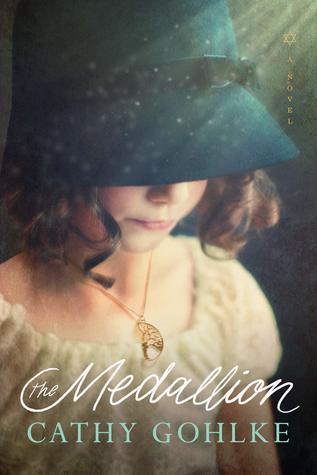
The Medallion by Cathy Gohlke tells the story of two families whose lives and deaths become joined through the horrors and hardships of life in Poland in World War II. Janet is a Polish fighter pilot married to Sophia, an English citizen, alone in Poland, but with a heart for Jewish children. Rosa has to make the most difficult decision possible to save her beloved daughter’s life. Her husband Itzhak, an electrician, endures the most horrific task assigned to any person by the Nazis, digging up mass graves with his bare hands. Can anything good possibly emerge from the desperation of this story?
Many of the characters in The Medallion are fictional, but are inspired by interviews and textual research. Some are found in history, including Irena Sandler who rescued 2,500 children and Dr. Janusz Korczak who ran an orphanage.
The tales of these two families are difficult to read but also inspiring. Towards the end of the book, when the war is over and all should be well, it isn’t. Sophia finds herself in a moral and personal crisis of faith that intimately affects the lives and futures of herself and those she loves most.
I would like to extend my thanks to netgalley.com and to Tyndale House Publishers for giving me the opportunity to read this book in exchange for an honest review.
Rating: 5/5
Category: Christian, Historical Fiction
Notes: The end of this book also includes discussion questions, notes to the reader about the writing of this book, and historical notes.
Publication: June 4, 2019—Tyndale House Publishers
Memorable Lines:
“Adonai makes a way when there appears no way. It is His specialty. Remember the Red Sea.” The words of her old friend came back to her, just as they did so often when Sophie felt at her wits’ end.
The Germans wanted to make certain that Poles were equipped only to follow orders, mostly for menial labor. They espoused the belief that a thinking Pole was a dangerous Pole. Hence, Polish schools were closed and thousands upon thousands of children did not learn to read or write—unless they were taught in secret.
“We’re not meant to handle life alone, Sophie. It’s too hard, too unpredictable, too messy and big. There is One who is willing and ready to help, to travel with us, if we let Him.”
Auschwitz Lullaby–a mother’s amazing love
Auschwitz Lullaby
by Mario Escobar
 Auschwitz Lullaby is a sad book based on the life of Helene Hannemann, a German woman married to a talented Gypsy violinist. As an Aryan she could have saved her own life, but she chooses instead to accompany her five mixed-blood Gypsy children to Auschwitz. There she is chosen by the infamous Doctor Mengele to establish and run a nursery school at the concentration camp. Knowing that Mengele would only perform this “kindness” to the children for his own ends, she agrees anyway to provide the starving children with more nutritious food, several hours a day in a cleaner, healthier environment, and some mental respite from the stressful deprivations and horrors of the camp.
Without graphic descriptions, the author Mario Escobar uses a first person format, having Helene tell her own story through a journal which she supposedly left behind in the camp. Her writing is encased in a Prologue and Epilogue in Mengele’s voice. As I read this work of historical fiction, I wondered how much was true. I was gratified to discover a section called “Historical Clarifications” at the conclusion of the tale that explains clearly the aspects of the book that are nonfiction. The author is a historian so he also adds a “Chronology of the Gypsy Camp at Auschwitz” and acknowledgements of his sources of research.
Although the publisher categorizes the book as “historical fiction” and “Christian,” there are not a lot of overt references to Christianity, but there is an underlying thread of faith, hope,and love available through the power of God. The school holds a meager Christmas celebration which attempts to “give these children back a little bit of their faith.” Helene notes “that night we were celebrating life, the birth of the Christ child” and she ponders the message of the manger: “Glory to God in the highest, and on earth peace, goodwill towards men.” There are other Christian themes throughout of love, forgiving one’s enemies, God’s plan for Helene’s life, and the existence of evil.
I received a complimentary copy of this book from Thomas Nelson through NetGalley. Opinions expressed in this review are completely my own.
Rating: 5/5
Category: Historical Fiction, Christian
Publication: August 7, 2018 — Thomas Nelson
Memorable Lines:
“From the first time I saw you, I knew God had brought you here to ease our pain somehow. You were so lost, confused, and scared, but I could see a fierce determination in the back of your eyes.”
Death seemed like a gift from heaven, but I knew that it was not yet for me. I was an old ship in the middle of a storm, and my children anchored me to life. I had to keep fighting for them, trying to hold on to hope, looking each day in the face, praying for this nightmare to finally be over.
“God sent you here to guide us. We needed a breath of hope, and you showed up with your beautiful family. I’ve never known anyone as brave and determined as you.”
I tried to fill my heart with love. I did not want hatred to eat away my insides. I had to love even my enemies. It was the only way to keep from becoming a monster myself.
The Tattooist of Auschwitz–tribute to human resilience and the power of love
The Tattooist of Auschwitz
by Heather Morris
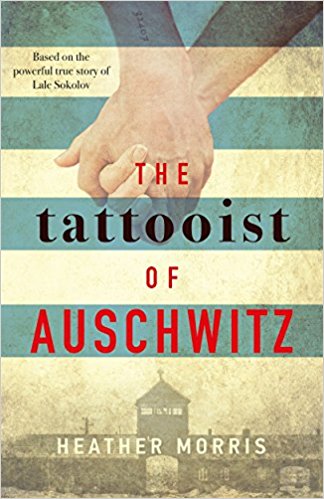
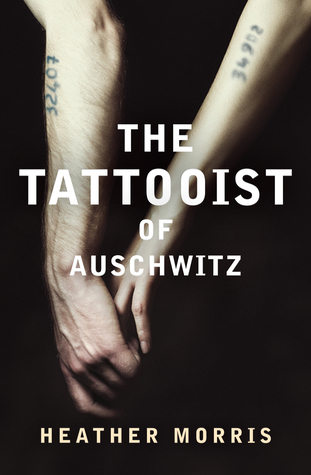 When a book reads like fiction but is a union of memories and history, it is literary work that is destined to engage and move the reader. The Tattooist of Auschwitz is such a tale, related by Lale Sokolov to Heather Morris over a three year period. It is a horrific story of desperation in the worst of circumstances and of Lale’s confidence that he would survive and marry his beloved fellow sufferer Gita.
The Tattooist of Auschwitz displays the best and worst of mankind. It shows the incredible resilience of the human spirit. Throughout, the reader witnesses people doing whatever it takes to survive as does Lale who is innovative, multilingual, charming, and determined that in the end his tormentors would not get the best of him. There are many books written about the Holocaust. Each addresses the events from a different perspective. This is another valuable contribution, adding to our understanding and reinforcing the sentiment of “never again.”
 I would like to extend my thanks to netgalley.com and to Bonnier Zaffire for giving me the opportunity to read this book in exchange for an honest review.
Rating: 5/5
Category: General Fiction (Adult), Historical Fiction
Notes: Despite the nature of the events being retold, the writing has a respectful tone without graphic descriptions of violence or swearing. I highly recommend this book.
Publication: January 11, 2018—Bonnier Zaffire
Memorable Lines:
Lale has witnessed an unimaginable act. He staggers to his feet, standing on the threshold of hell, an inferno of feelings raging inside him.
How can a race spread out across multiple countries be considered a threat?
“I know it’s a strange thing for me to say, but you will honor them by staying alive, surviving this place and telling the world what happened here.”
He knows they will never grow to be the women they were meant to be. Their futures have been derailed and there will be no getting back on the same track. The visions they once had of themselves, as daughters, sisters, wives and mothers, workers, travelers, and lovers, will forever be tainted by what they’ve witnessed and endured.
Raisins and Almonds–even the title is a mystery
Raisins and Almonds
by Kerry Greenwood
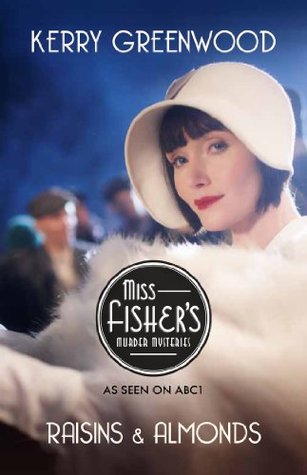 Raisins and Almonds is a typical Phryne Fisher mystery, but somewhat more cerebral. Evidence of that is found in the inclusion of a bibliography reflective of the author’s research and a glossary of Yiddish words. This mystery is strongly tied into the Jewish community that settled in Australia, the politics of Zionism, and a sub-sect focused on alchemy. Phryne has to do a lot of research in addition to her usual methods of sleuthing in order to find the murderer of a young Jewish scholar and free an innocent bookseller from prison.
Greenwood excels in this book in three ways. She uses the supporting characters to good advantage in solving the mystery as she sends her adopted daughters, her assistant Dot, and friends Bert and Cec out on different missions which play to their strengths. Phryne and Jack agree on the bookseller’s innocence enabling them to cooperate in their separate missions to solve the mystery. The ending of Raisins and Almonds is a fun surprise which wraps up the mystery and the title quite satisfactorily.
I would like to extend my thanks to netgalley.com and to Poisoned Pen Press for giving me the opportunity to read this book in exchange for an honest review.
Rating: 5/5
Category: Mystery, Historical Fiction
Notes: #9 of Miss Fisher’s Murder Mysteries
Publication: June 6, 2017—Poisoned Pen Press
Memorable Lines:
Phryne smiled guilelessly into the policeman’s face. He winced. Miss Fisher was at her most dangerous when she was smiling guilelessly. It was a sign that someone, somewhere, was about to be shaken down until their teeth rattled and the Detective Inspector was uneasily aware that he was the closest available target.
Bert was nervous because he didn’t know what to look for in this big bustling market. Neither did Cec, but his Scandinavian ancestors had bequeathed him some Viking fatalism. If they were meant to find out, they’d find out.
Kadimah was as ordinary as a church hall, and as extraordinary as a landing of Well’s Martians. It was as sane as porridge and as lunatic as singing mice.
 education pathways