
Home » Posts tagged 'Jews'
Tag Archives: Jews
The Forgotten Names—forever a timely reminder
The Forgotten Names
by Mario Escobar
translated by Gretchen Abernathy
Many historical novels focus on one particular character and develop a story around that character. If it is a dual timeline, then the focus is on one character in each timeline. Escobar’s The Forgotten Names does, in the current timeline, focus on a nonfictional French historian and law student, Valérie Portheret. She spent 25 years identifying at least 90 of the 108 children whose identities were deliberately and necessarily abandoned in the rescue attempt from the Vénissieux internment camp near Lyon. Had their brave parents not signed release forms giving up their parental rights, the children would certainly have been killed by the Nazis who issued mandates for the number of Jews to be “processed.” The Vichy government was theoretically in control of France, but the reality was that they answered to the Nazis who disregarded both the legalities and moralities of the French.
A diverse coalition of Catholics, Protestants, and Jews, including social workers and Resistance organizations, found a loophole in the law. Orphaned minors could obtain an exemption from the roundup that sent the occupants of Vénissieux to their deaths. Escobar tells of the harrowing days and nights spent getting parents to agree, separating the children from their parents, arranging for new homes, transporting them to Lyon, and keeping them until the new parents arrived. All very secretive and all very dangerous for everyone involved in any way.
Escobar is a historian, but he also knows how to tell a story. The chapters are short, encouraging the reader to jump from the end of one into the beginning of the next chapter. The escape story of 1942 is framed by the research story which begins in 1992 when it was still difficult to find a sympathetic advisor. Sadly, the research was hampered by continuing anti-Semitism, rising fascism, and a reluctance to open up wounds of the past. Portheret persisted in locating the children for twenty-five years. The novel is personalized with the backgrounds and experiences of various children and families as imagined by Escobar. In this way, a sad part of history is brought to life with the goal of societies not repeating the horrific tragedies so many suffered through. Portheret originally planned her thesis to examine the life of the infamous Klaus Barbie, known as “the Butcher of Lyon.” As she began her work, however, she found herself drawn to the plan to “exterminate innocent children” and preferred to focus on the victims rather than the barbaric individuals who perpetrated the crimes.
There are so many books about World War II and the Nazis, but this is a new take on the crimes committed in that war. As hard as it is to read about the suffering of innocents whose only crime is to be Jewish, I am glad I read this book. Some of the Christian characters connect various events to Christian theology such as the birth of Jesus who was a Jew, God given Christian/human morality “which imposes duties and recognizes rights,” and the “demands of charity [love] made by Christ to be the distinctive mark of his disciples.” Above all is the emphasis that the human heart rebels against the cruel and painful measures enacted on Jews and certain groups of foreigners.
I received a complimentary copy of this book in exchange for an honest review. Opinions expressed in this review are completely my own.
Rating: 5/5
Category: Historical Fiction, Multicultural
Notes: The book contains references and something I always look for in historical fiction—a discussion of what is real and what is fictional. What follows is a World War II timeline beginning with the invasion of Poland by Germany in 1939 and continuing through the surrender of Nazi Germany to the Allies in 1945. The book concludes with Discussion Questions, information about the author who is Spanish and the translator.
Publication: June 11, 2024—Harper Muse
Memorable Lines:
“Have you noticed how the executioners often end up as celebrities? There are books and books about them. But so few write about their victims. The victims are mere numbers, faceless statistics, figures on the yellowed pages of history.”
The land of Mozart, Goethe, and Immanuel Kant had become a nation of barbarians, of heartless warriors whose driving desire was to control the human race and conquer the world.
“But now everybody—at least in the West—knows that it’s wrong to sacrifice humans. Maybe war will teach us a lesson we can’t learn any other way: the lesson that killing one another for our ideas, beliefs, or flags is absurd, because we all belong to the only human race there is, and we’re all brothers and sister of one another.”
The Watchmaker’s Daughter: the true story of World War II heroine Corrie Ten Boom
The Watchmaker’s Daughter
by Larry Loftis
The Hiding Place, the original popular story of Corrie ten Boom, written with John and Elizabeth Sherrill, was released in 1971 and made into a movie in 1975. Corrie, skilled in watch repairs, and the rest of the ten Boom family saved many Dutch—both Jews and non-Jews—from being sent to prison, concentration camps, and labor camps by German Nazis in World War II.
Although The Hiding Place was a landmark book in telling the story of this remarkable Christian lady, Larry Loftis has gone even further in writing The Watchmaker’s Daughter. His research into the background of the World War II setting of the book sets the reader up to better understand the times culturally and politically and the invasion of Holland. His research includes examining photos and original small books by Corrie ten Boom along with memorabilia that are archived in the Billy Graham Center Archives at Wheaton College. Corrie ten Boom did not keep a diary, but Loftis sought out many other primary sources including journals and letters from survivors who had been hidden in the ten Boom home.
Corrie and her older sister Betsie were interned in Ravensbrück Concentration Camp for their crimes of hiding Jews. There these Christian sisters had a ministry within the barracks, holding secret Bible studies and encouraging the other women to hold strong despite the horrible conditions and continuous threat of execution. Upon release, Corrie began a ministry of traveling internationally with a message of forgiveness and established 3 different centers, one in a transformed concentration camp, to meet the physical and emotional needs of survivors. Betsie had a vision of the centers while they were still in the camp at a time when the fulfillment of her vision seemed impossible. Corrie’s story is an amazing one showcasing the love of God and the power of forgiveness.
Rating: 5/5
Category: Biography, Nonfiction, Christian, History
Notes: Even if you think you know the story of Corrie ten Boom, I encourage you to read this book. Corrie’s story is unforgettable, and her courageous life of dependence on God extended way past the events in Ravensbrück. Loftis’ research and writing along with Corrie’s life and faith make this book remarkable.
Publication: 2023—HarperCollins
Memorable Lines:
This was the hardest part—the hatred. Over ensuing days Corrie tried to be nice to the woman, but to no avail. “She seemed to be entirely devoid of human feeling,” Corrie recalled, “and altogether hard, hostile, and wicked…Why should they always snap and snarl at us? I always greeted them with a pleasant ‘Good morning,’ but everything seemed to glance off their impenetrable armor of hate.”
“My sister died here,” she told Tiny. “She suffered so much. I, too, have suffered. But Jesus is always with us. He did a miracle in taking away all my hatred and bitterness for my enemies.”
For more than fifty years the Beje had been her own hiding place, her refuge. But Ravensbrück had taught her that this magnificent home—with all of its memories—was but a shadow; her true hiding place was Christ.
The Keeper of Hidden Books–importance of books
The Keeper of Hidden Books
by Madeline Martin

This book is perfect for:
—lovers of books, reading, and libraries
—those who think reading is important for continuity of culture
—people who value ideas
—readers who like the notion of discussion in book clubs
—history buffs
—those interested in Poland—culture, history, role in WWII, underground resistance
—Girl Guides and Boy Scouts
—people who want to know more about the horrific treatment by the Nazis of Jews and Poles.
The Keeper of Hidden Books starts gently with Girl Guides preparing their skills for a war they assumed would never happen. Poland had lost its freedom before, and the Poles were determined it would not happen again. We gradually learn about the lives and values of several of the girls and their families. We witness the responses of the Polish citizens—both heroic and traitorous. As the story progresses we watch the destruction by the Nazis of libraries and books and the valiant efforts of librarians and volunteers who resist this extinction of knowledge. We also observe the desire of people of all ages to maintain access to books that provide escapism during times of hunger, persecution and despair.
This is a good book for me because I treasure books as many of the characters in the novel do. It is a warning to all of us to guard our freedoms, especially the freedom of speech which includes the written word. Hitler worked hard to maintain his power through censorship; we must not let history repeat itself.
I received a complimentary copy of this book in exchange for an honest review. Opinions expressed in this review are completely my own.
Rating: 4/5
Category: Historical Fiction
Notes: The author concludes with notes about her research into the history behind her story, a tale which is based on real events and people in Warsaw. Buried in her discussion of the destruction of books by the Hitler Youth is the statement “But the power of books still endured.” That is a distillation of the theme of this book.
Publication: August 1, 2023—Hanover Square Press (Harlequin)
Memorable Lines:
Now the world crumbled in on itself, burning away the beauty of Warsaw, and there was no more time for reading than there was food to eat.
More and more children were appearing at the library as time went on. Many of them were desperate for distraction, to read about faraway places they could not go, or to transport themselves to mythical lands that could still tease at their dulled imaginations. They wanted stories where villains were vanquished. But books were more than a means of escape for these children; they offered another life to live. They offered hope.
…why Hitler so feared the books he banned. There was power in literature. Brilliant and undeniable. Books inspired free thought and empathy, an overall understanding and acceptance of everyone.
Pentecost: A Day of Power for All People
Pentecost
by Emilio Alvarez
Pentecost is celebrated by Christians as the day when the Holy Spirit came to the early Christian church empowering Jesus’ followers to evangelize the world with the good news of salvation to all who believe that Jesus Christ died for their sins and was resurrected on the third day as He foretold. The writer Luke in Acts 2:1 sets the stage for the narrative with “when the day of Pentecost was fully come.” Jesus’ followers had been waiting for the prophecy to be fulfilled but were not told exactly when that would be. Pentecost is celebrated 50 days after the Jewish Passover. The author of Pentecost, Emilio Alvarez, writes that this season of waiting is a time to prepare our hearts. Fittingly, this book is part of the Fullness of Time series.
This little book begins with a discussion of the concepts of power and of pilgrimage. Next Alvarez devotes a chapter to various Jewish feasts that are the roots of the Pentecost celebration. Then a chapter is devoted to the speaking in other tongues as the Holy Spirit on that day of Pentecost enabled the Jews gathered from many nations to speak in each others’ languages. He relates this phenomenon to a reunion of peoples and a reversal of what happened at the Tower of Babel.
A large part of the book Pentecost is devoted to the rituals and liturgy related to the celebration of Pentecost ranging from the dates of remembrance to the custom of specific colors used for decorations and clothing and on to practices of kneeling or standing. Within the unity of Christian worshipers, there is a diversity of groups who celebrate in many different ways. Alvarez chooses to discuss the Christian tradition found in these five churches: Eastern Orthodox, Roman Catholic, Syrian Orthodox, Anglican, and Pentecostal. From this discussion you can extrapolate that there are a number of ways to celebrate Pentecost. They vary by culture, tradition, and understanding of Scriptures. The hymns, prayers, and Scriptures of these five traditions are just samples of the many available to Christians, and this theological scholar invites Christians to draw from other groups’ practices to enrich, not dilute their own. He ends this section with an interesting testimony of his own spiritual background as a Pentecostal Christian which differs greatly from the liturgies in the other church groups examined in this book. It is a personal spiritual journey which neither discredits nor confirms the formal liturgies found in the other churches mentioned. There are truths and blessings to be found in all of these traditions.
Upon a first reading of the Conclusion, I found it to be beautifully written, helping the reader to imagine the first Pentecost. Upon a second reading I realized I was in disagreement with the author. While I, also, want all people to overcome the “differences in race, culture, and religion,” I do not connect that as a necessity upon which the coming of the Holy Spirit depends. In Acts 1:4-8, Jesus told his followers that they should wait in Jerusalem until they received baptism of the Holy Spirit which would empower them as witnesses. Jesus had said that he would send the Holy Spirit. Just like salvation, this empowerment is a gift of God, not something we can earn.
Overall, I profited from reading this book. It gave me much to think about, and I had my view of the practices within many Christian churches widened.
Rating: 4/5
Category: Religion, Christianity, Theology, Nonfiction
Notes: 1. This is probably not an appropriate book for someone new to Christianity, but might be helpful to someone looking to understand formal liturgical church services.
2. I have read three other books in the Fullness of Time series, and this is my least favorite. I personally battle between it being highly edifying and overly pedantic.
3. I read this for my book club, and it was full of topics for discussion. My understanding of the book profited from hearing other viewpoints.
Publication: 2023—InterVarsity Press
Memorable Lines:
…no matter where we are in the world, and no matter what Christian tradition we belong to, at Pentecost all those who believe in the coming of the Holy Spirit sing and glorify the Most Holy Spirit, and God hears it as if it was coming from one voice.
At Pentecost we are awakened from the delusion that only our race, ethnicity, culture, political party, or language matters, is important, or is even truly Christian. This is one of the great errors of postmodernity, this division through delusion. In remembering Pentecost, however, we once again call on the Spirit to illuminate the dark areas of our lives and confront our delusion with godly wisdom and truth.
There is nothing we can successfully rationalize or theologize about Pentecost that would cause all Christian parties to nod with complete approval, yet there is nothing we can do or say against it that discredits its success in evangelizing the nations.
The Paris Daughter–a story of art, women, and children in WWII
The Paris Daughter
by Kristin Harmel

World War II brings death, horror, and destruction to the civilians of Paris in this tension filled story of three women who have to make difficult decisions. They are never relieved of the agony of questioning their own judgements and actions: what would a good mother do?
Elise is the belittled wife of a famous painter whose actions put his family in danger. Juliette has the perfect charmed family life until the bombs begin to fall. Ruth Levy is a widowed mother whose Jewish religion and heritage endangers her children. As you read this novel, you will get to know these women and see how each reacts to hardships and trials. You can decide for yourself what it takes to be a good mother and whether any of these ladies are good mothers.
Alongside the main plot in The Paris Daughter, there is another that emerges; it interweaves and is essential to the first. It deals with artists at the time, how they interacted and how they were affected by the war. Elise was a wood sculptor and a painter. Art helped her through the emotional trauma of the war. Art also helped Juliette’s daughter deal with her mother’s increasing mental distress. Alongside these therapeutic benefits, we also witness the personal devastation that occurs when Elise returns home to discover her apartment has been looted of the valuable artwork she and her husband had created.
There are hints along the way as to what may have occurred personally during the war to these families. Eventually the characters and the reader learn the truth, and with the truth there is a way forward. Some of the characters are despicable, while others are noble and honorable. Some crumble morally under the stresses.
This book was a page turner for me, but was also a novel I found upsetting. The depiction of the characters is realistic so watching bad things happen to them was hard. As this book is set in World War II, not everyone is going to have a happily ever after. It is a book I recommend if you enjoy historical fiction, particularly about WWII.
I received a complimentary copy of this book in exchange for an honest review. Opinions expressed in this review are completely my own.
Rating: 5/5
Category: Historical Fiction
Notes: In the author’s notes she responds to questions about why she is drawn to history as her subject matter: “My reasons are numerous, but perhaps the most important one is that if we don’t learn from history, we run the risk of repeating it. Too often in recent years, those of us who read frequently about World War II have seen shadows of that long-ago war in current events and it’s difficult seeing versions of past horrors happening again.”
Publication: June 6, 2023—Gallery Books
Memorable Lines:
Later, Olivier snored peacefully beside Elise while she wiped tears of despair away. He only seemed to see her these days when he wanted the closeness of her; at all other times, his indifference cut her to the core. She owed Olivier everything, and perhaps that was what made it so difficult when it felt to her, sometimes, that he was trying to erase her.
“This isn’t a decision I make lightly, but being a parent is not about dong what is right for ourselves, is it? It’s about sacrificing all we can, big and small, to give our children their best chance at life.”
“There must be something we can do.” “There is,” Madame Levy said. “You can pray for my children. And you can talk to yours about never turning their back on their fellow man. Maybe one day, we’ll all live in a batter world.”
The Boys in the Boat: Nine Americans and Their Epic Quest for Gold at the 1936 Berlin Olympics
The Boys in the Boat
by Daniel James Brown
Are you a big sports fan? Do you love rowing competitions? Do you know what makes a good coxswain? If your answers, like mine, are “no,” I guarantee that you will love The Boys in the Boat anyway!
Daniel James Brown is a masterful writer. His research is the backbone of the story, but that is just the beginning. He focuses his story of nine young Americans and their coaches on one amazing young man, Joe Rantz. In the process of rolling out this tale, Brown gives the reader a deep look at Joe, who despite terrible odds survived desperate times and the abandonment of his family. With sacrifices and persistence, he struggled through the Depression to earn his way through college and a place on the University of Washington eight-oar crew.
Holding down several jobs and living in tiny, dank quarters, Joe was bullied by his teammates for always wearing the one ragged sweater he owned and for being perpetually hungry. Despite World Wars, the collapse of Wall Street, the Great Depression, flooding, the Dust Bowl, and record unemployment, there were still students who were of a “privileged” class. Many students in the West were from tougher, more humble circumstances, but few of Joe’s teammates had backgrounds comparable to Joe’s. The rowers in the East generally went to elite schools and reflected British roots in their rowing.
Although the book focuses on Joe, partly because of Joe’s unique story and partly because the author was able to interview Joe himself and Joe’s daughter, Brown also includes the backgrounds and activities of each of the other boys in the boat.
The descriptions of the qualifying race in Poughkeepsie and the Olympic competition in Berlin will immerse you in the races to the point of feeling like you are there. There are so many factors that play important roles in rowing. The coaches are key in bringing the boys along, eliminating those who do not have extreme desire and persistence. They have to motivate them to work as a team, teach them how to row, and strategize which students will work best in each position on the boat.
Each chapter starts with a philosophical rowing quote by boat builder George Yeoman Pocock. He hailed from a line of boat builders and prided himself on the quality of his boats. He also had a talent for both seeing how a rower could improve and effectively sharing that with the young man.
Leading into the Olympic competition is fascinating information about Hitler’s motivations with the Olympics and what he did to achieve world-wide acclaim. His public relations efforts portraying Nazis as accepting and culturally sensitive were quite successful internationally.
The Boys in the Boat is one of those books that will stay with me for a long time. Joe’s strength of character and physical endurance are inspirational. I am thankful that the author included an epilogue that shares what happened to each of the rowers in their adult lives. There are also a few pages that give insight into how Brown learned so much about this “epic quest.” The crew endured practices in cold and rain, in heat and rough waves. The success of the nine was well-deserved and merited recording in this outstanding book.
Rating: 5/5
Category: Nonfiction, History, Sports
Publication: 2013—Penguin
Memorable Lines:
To defeat an adversary who was your equal, maybe even your superior, it wasn’t necessarily enough just to give your all from start to finish. You had to master your opponent mentally. when the critical moment in a close race was upon you, you had to know something he did not—that down in your core you still had something in reserve, something you had not yet shown something that once revealed would make him doubt himself, make him falter just when it counted the most. Like so much in life, crew was partly about confidence, partly about knowing your own heart.
“It takes energy to get angry. It eats you up inside. I can’t waste my energy like that and expect to get ahead. When they left, it took everything I had in me just to survive. Now I have to stay focused. I’ve just gotta take care of it myself.”
The wood, Pocock murmured, taught us about survival, about overcoming difficulty, about prevailing over adversity, but it also taught us something about the underlying reason for surviving in the first place. Something about infinite beauty, about undying grace, about things larger and greater than ourselves, About the reasons we were all here. “Sure, I can make a boat,” he said, and then added quoting poet Joyce Kilmer, “ ‘But only God can make a tree.’ “
As the observation train drew back upriver again for the start of the varsity race, the atmosphere grew electric, the dusky sky crackling with static. The crowd began to buzz. Boat whistles shrilled. Alumni draped arms over one another’s shoulders and sang fight songs. Somebody was about to win big; somebody was about to lose big.
The Swiss Nurse–refugees from war
The Swiss Nurse
by Mario Escobar

I am so glad that I had read other books by Mario Escobar, because this work of historical fiction started off roughly for me. I feel sure the fault was my own. I am shamefully unfamiliar with the Spanish Civil War, and I started the book too late in the evening. I persevered the next day, however, and was quickly immersed in a tale of evil hearts and the strength of some good people who worked to help others in dire circumstances.
When Franco and his troops were successful in this war, they were determined to obliterate the Republicans fighting for their freedom and anyone associated with them. The result was a massive exodus of refugees into southern France which was not prepared for the influx and did not welcome them with open arms. The “camps” they provided were sandy beaches with no structures. There was little food and no potable water; the refugees were not allowed outside the camp.
This book is about the refugees in that war which was followed up by the events of World War II and the further torment of innocents by the French Vichy government which was a puppet government of the Nazis, and then by the Nazis themselves. Much of the story describes the horrible conditions of the refugee camps and the strength and boldness of Elisabeth Eidenbenz, a Swiss woman whose focus was orphans in Spain until she was forced relocate to southern France where she opened a hospital taking in pregnant women and giving them a safe place to deliver their babies. The other main character is Isabel, a Spanish lady who married Peter, an American who fought with the Spanish for their liberation. Their lives intersect when Isabel gives birth to her precious daughter Lisa at the Elne Maternity Hospital. With Peter held in various prisons and concentration camps and conscripted into the army for manual labor, Isabel stays to help in the maternity hospital.
The author pulls the reader into the horrible conditions and the faith and courage of characters who stand up for what is right. As a reader, you want everything to turn out great for the sympathetic characters. This is, however, a work of historical fiction, so not everyone has a happy ending. It is important to read works like this so that we are not duped yet again by politicians who promise good things and deliver nothing, creating untenable situations. History like this must not be allowed to repeat itself.
I received a complimentary copy of this book in exchange for an honest review. Opinions expressed in this review are completely my own.
Rating: 5/5
Category: Historical Fiction, Multicultural, Fiction
Notes: Additional material includes: References, Clarifications from History, Timeline, Discussion Questions, and Information about the Author and the Translator
Publication: April 14, 2023—Harper Muse
Memorable Lines:
Gazing off into the distance, their gaunt faces reflected the weary sadness of their souls. Their cheeks were sunken with hunger, and their skin was pallid from exhaustion and malnourishment.
An entire generation had been killed for naught: anonymous heroes on both sides, idealists attracted by the siren songs of their leaders who stayed safe in the rear guard. The only hope was to erase those painful years from their lives and try to start over from scratch.
Argelès-sur-Mer had been both refuge and jail. It had stamped out of us the hope of recovering our lives one day. We were now flea-infested riffraff with bones aching from damp nights spent on hard sand with thin blankets. The starry sky had been our prison roof.
“Sometimes we have to feel our way in the dark in order to find the path, but beyond the fog the sky is still blue, and the sun is still shining.”
The Sound of Light–Denmark in WWII
The Sound of Light
by Sarah Sudin
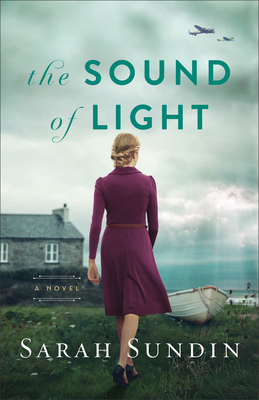
Through the fictional characters of Baron Henrik Ahlefeldt and Dr. Else Jensen, a physicist working in the lab of the famed Niels Bohr, Sarah Sudin tells the story of the German occupation of tiny Denmark. Initially, freedoms are not as restricted by the Nazis as in the rest of occupied Europe, but many Danes resist through sabotage, work slowdowns, and underground newspapers. Henrik assumes several identities and uses them to hide covert activities; he also uses his skills as an Olympic rower to transfer messages from Denmark to Britain. Else, while fighting her personal battles of discrimination as a female in a traditionally male field, becomes involved in helping the underground cause.
There are a lot of subplots and threads that are woven into this story. Henrik is working as a laborer in his estranged father’s shipyard. Henrik portrays himself as barely literate instead of the well-educated nobleman he is. He and Else live in the same boarding house but are unable to share their identities or secrets with each other because of the confidential nature of the underground. The final straw for the Danes is when the Germans begin to round up Jews for deportation. Many Danish citizens quickly rise up to protect their Jewish friends and neighbors. I will leave it to the author to share what happens to the Jews and to Henrik and Else as they grapple with the question of whether it is “right to do wrong (i.e. to break the law) to do right.”
I highly recommend The Sound of Light. I didn’t feel like I needed to be an expert on Danish history to appreciate the story. I did learn a lot about Denmark’s wartime experiences. The book is fast-paced, and there is good character development. It contains a good plot, scenes tense with intrigue, and a Christian viewpoint on good versus evil.
I received a complimentary copy of this book in exchange for an honest review. Opinions expressed in this review are completely my own.
Rating: 5/5
Category: Historical Fiction, Christian, Romance
Notes: Includes historical notes by the author, pronunciation guide and glossary, and discussion questions.
Publication: February 7, 2023—Revell
Memorable Lines:
Henrik, on the other hand, hadn’t endured Far’s anger. He’d absorbed it, every biting word. For fourteen years, he’d absorbed the anger, and it had fermented inside, loathsome and noxious, until at last, in one moment of clarity, he’d turned from his father and all he stood for.
She was one small individual in a sea of people. But if each person did just one thing to help, a lot of good could be done.
On the deck, the captain sprinkled powder, a mixture of dried blood and cocaine, developed by a Swedish scientist. If the Germans brought police dogs on board, the compound would deaden the dogs’ sense of smell so they couldn’t detect the passengers below.
Into the Forest–A Holocaust Story of Survival, Triumph, and Love
Into the Forest
by Rebecca Frankel
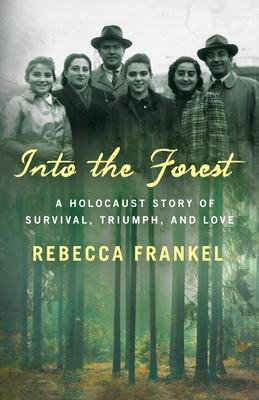
So many books have been written about World War II and, more recently, about the Nazi treatment of Polish Jews. Rebecca Frankel adds Into the Forest to the collection. It is nonfiction that in many parts the reader would wish it to be fiction, that the torture, annihilation, and deprivation should not really have happened. It is the story of the Rabinowitz family, of the many Jews who died, of the love that persisted through two years of living on the move in the cold forests, of digging holes in the ground to hide from Nazis. It is the story of survival, of triumph as the lives of some of the people in the book intersect years and thousands of miles later.
This book was emotionally difficult to read, knowing it is nonfiction, and thus was a slow read for me. The author knew first hand some of the people she wrote about. She spent five years researching and interviewing. There is a huge section of copious notes detailing where her information came from for each chapter.
The Prologue ties the tale together and is worth rereading at the conclusion of the book. There are two chapters that set the stage of what life was like in the little Polish village of Zhetel before the invasion of the Russians, followed by the occupation of the Germans. Then the focus lands on the German-created Jewish Ghetto, the Polish Resistance, and the various “selections” in which laborers and those destined for the mass graves were chosen. The “lucky” escaped to a huge forest, but many died there as hunted animals before the liberation came. The Rabinowitz family had their eyes set on a future in Palestine, but they had many more moves in their future and were caught up in the growing prosperity of the 1950’s. Into the Forest is a challenging book worth reading. It shows Jewish life and customs in the midst of both tribulation and good times. The book thankfully ends on positivity as the author stresses the various types of love woven into the book.
I received a complimentary copy of this book in exchange for an honest review. Opinions expressed in this review are completely my own.
Rating: 5/5
Category: History, Nonfiction, Memoir
Publication: September 7, 2021—St. Martin’s Press
Memorable Lines:
The forest, however, would not be exempt from the war’s brutalities or the bare-knuckled survival required to endure it. Nor would it provide ample shield for the Jews or the partisans—Russian and Jewish alike—who had taken shelter here and set up their outposts in its wilds, no matter how dark or deep. The farther they went and the safer they were, the more determined their killers became to root them out.
In some areas, the advertised reward for information on the partisans or hiding Jews was a single cup of sugar. Which was either a reflection of the paltry value of a Jewish life, or the peasants’ depth of desperation.
But Moscow’s successful onslaught had made the retreating Nazis more dangerous and, however unimaginably, even more murderous. Himmler issued an order to those in the path of the fast-moving Soviet troops: destroy all evidence.
The Teacher of Warsaw–hope in the middle of despair
The Teacher of Warsaw
by Mario Escobar
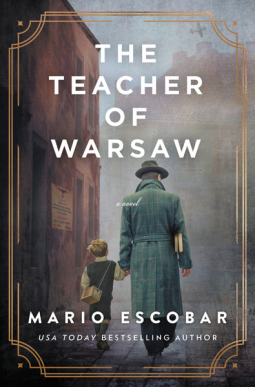
When a book leaves an impact on your soul after the covers are closed, you know you have read a treasure. I was a few chapters into The Teacher of Warsaw before I was captivated by Mario Escobar’s work of historical fiction. After I understood what this author with a master’s degree in Modern History had set out to share, I was repeatedly drawn back from my world into the sad and inspiring world of Janusz Korczak, a pediatrician and teacher with many talents who dedicated his life to the children in his orphanage. They suffered together as the Nazis made their lives and the lives of all Polish Jews a nightmare of starvation and deprivation. Thanks to Dr. Korczak and the dedicated group of tutors who worked alongside him, the children were given hope and taught to love even their enemies. Korczak was Jewish by heritage but had not been raised in a religious family. He admired and appreciated many things about the Jew Jesus and likened Him to the anticipated Messiah, but did not accept Him as the fulfillment of prophecies. Dr. Korczak described himself at various times as an atheist, an agnostic, and a seeker, but those around him would have been hard pressed to find a stronger, more sacrificial, more ethical, and more loving leader. In return the children loved him, and he was regarded with respect by all but the most evil of Nazis.
Dr. Korczak was encouraged by many, including Polish social worker Irena Sendler, to escape the Warsaw Ghetto and the extermination which was surely coming, but his answer was always the same: the children of the orphanage needed him and he would not abandon them. The Teacher of Warsaw is both horrifying and inspiring as it depicts the worst and the best of mankind and demonstrates the power of love.
I received a complimentary copy of this book in exchange for an honest review. Opinions expressed in this review are completely my own.
Rating: 5/5
Category: Historical Fiction
Notes: 1. Translated from Spanish by Gretchen Abernathy.
2. Includes two sections that discuss the historical basis of the story, a timeline of the Warsaw Ghetto, and discussion questions for the reader.
Publication: June 7, 2022—Harper Muse
Memorable Lines:
“Can you think what would’ve happened to the boy had we not been passing by? Everything happens for a reason. Even the greatest misfortunes can become the sweetest blessings.”
“We labor to give them back their hope: but we cannot give what we do not possess. Therefore, be full of hope this morning. May your joy overflow because you do what you do out of love and service for the weakest ones. And when negative thoughts come to steal your peace and joy, don’t let them make a nest in your minds. We can’t avoid those kinds of thoughts, but we can keep them from controlling us.”
I had two hundred children whom I loved and who loved me. I was undoubtedly the richest man in the Warsaw ghetto.
 education pathways