Home » Posts tagged 'Islam'
Tag Archives: Islam
Everything Sad is Untrue–memories are culture carriers
Everything Sad is Untrue
by Daniel Nayeri
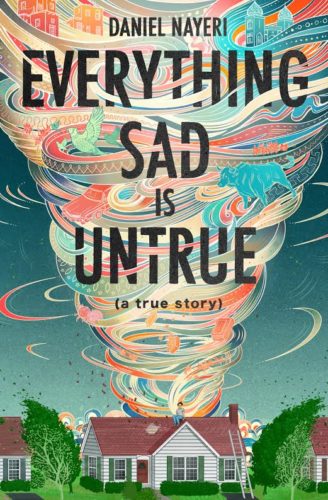
Daniel Nayeri’s Everything Sad is Untrue is part memoir and part storytelling where he fills in the things he doesn’t remember exactly from his childhood. The first part of the book is a mixture of three kinds of stories—myth, legend, and history—that attempt to place the reader in Daniel’s past and his ancestry as it happened and as he imagined it might have happened. He relates “story” in this way to help the reader understand the very different Persian culture he started his life in and which formed his beliefs and attitudes.
Although there are no chapters in this book, the reader can clearly tell when the story pivots from providing background to relating the events from the time his mother became a Christian on a visit to the West. She embraced Jesus and her faith in Him wholeheartedly. Christianity in Iran is a capital offense, so she had to take her children and flee. She traded a comfortable life as a respected physician married to a successful dentist for the life of an impoverished refugee, looked down on because of her language, menial job, and poverty. But she had Jesus, and no one could take that away from her.
Some of the book tells about the year they spent in a refugee camp in Italy. It was not actually a camp with tents, but a concrete building with small rooms and a bathroom. The residents were refugees from many countries, all waiting for the U.N. to find a place that would accept them. They had nothing and there was no access to books, media or recreation. It was made even harder by the refugees’ inability to converse with each other and by impatient workers who processed each refugee’s mound of paperwork.
A lot of Daniel’s story tells what life was like for him as a child in Edmond, Oklahoma, where they eventually settled. He experienced bullying, but came up with tricks for avoiding the worst of it. There was culture shock around every corner as he tried to fit into a very different mindset. Fortunately, he had an outstanding teacher in Mrs. Miller who encouraged him without babying him. The librarian in Edmond was kind too, and so Daniel spent many Saturdays there devouring books. His mom ended up in the emergency room several times thanks to his stepfather Ray, a black belt. Despite lots of difficult times, Daniel never seems to plead for sympathy from the reader and always points to his mother as the strongest person he knows.
Everything Sad is Untrue is a book I recommend. It is a challenging read as the author’s life is presented through the eyes of a child, but with some of the understanding of an adult. Memories are an important theme of this book as Daniel says, “Memories are always partly untrue.” and “A patchwork story is the shame of a refugee.” This is a book ripe with principles and beliefs worth pondering and a story and characters who will remain in the reader’s thoughts long after the last page is turned.
Rating: 5/5
Category: Autobiographical novel/fictionalized memoir
Notes: 1. This is a hard book to categorize which may, in part, be a critical factor in making it a very good book.
2. It has been rated for children 12+ on Amazon. Some readers refer to it as a Young Adult book. To me, it is probably more appropriate for adults. Some of the fascination with “poop,” however, in Daniel’s childhood classroom would attract the attention of middle school boys.
3. This book has won many awards.
4. I thought not having chapters would be a negative for me, but it does fit the style of Everything Sad is Untrue.
Publication: 2020—Levine Querido
Memorable Lines:
Memories are tricky things. They can fade or fester. You have to seal them up tight like pickles and keep out impurities like how hurt you feel when you open them. Or they’ll ferment and poison your brain.
And here is the part that gets hard to believe: Sima, my mom, read about him and became a Christian too. Not just a regular one, who keeps it in their pocket. She fell in love. She wanted everybody to have what she had, to be free, to realize that in other religions you have rules and codes and obligations to follow to earn good things, but all you had to do with Jesus was believe he was the one who died for you. And she believed.
Imagine you’re in a refugee camp and you know it’ll be a tough year. But for the person who thinks, “At the end of this year, I’m going somewhere to be free, a place without secret police, free to believe whatever I want and teach my children.” And you believe it’ll be hard, but eventually, you’ll build a whole new life….But if you’re thinking every place is the same, and there will always be people who abuse you, and about how poor you’ll be at first, the sadness overtakes you….But what you believe about the future will change how you live in the present.
Seeking Allah, Finding Jesus: A Devout Muslim Encounters Christianity
Seeking Allah, Finding Jesus
by Nabeel Qureshi
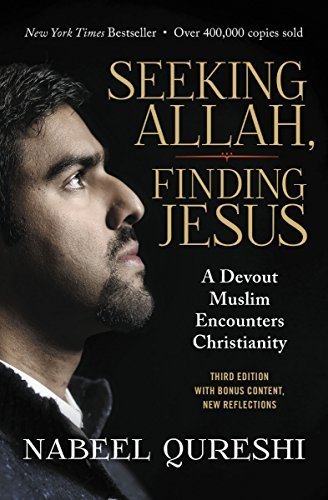
Nabeel Qureshi was an intellectual raised in a Muslim home who devoted years of study and fellowship with his best friend David, a Christian intellectual. They argued, researched, prayed, and maintained their friendship as Nabeel sought the Truth. Was he to find it in Jesus or in the teachings of Islam? This book is perfect for anyone who wants to:
—approach the Bible analytically
—prove or disprove the claims about Jesus Christ
—learn more about the beliefs of Muslims, their culture and how the two are related
—learn about the history of Islam
—understand the difference in approaches to Islam in the East and in the West
—learn some basic Islamic terminology
—witness a true Christian/Muslim friendship
—see how a Christian can share Jesus with others by example as he lives out his beliefs in Jesus through his actions
—learn how to disagree respectfully
—understand the Trinity
—gain an understanding of what a Muslim gives up when he converts to Christianity and the consequences of a conversion
—comprehend the claims and arguments against and for the crucifixion and resurrection of Jesus
—read truths about Muhammad and the Quran that imams don’t share with their followers.
The Foreword of Seeking Allah, Finding Jesus summarizes the book quite well: “This is the riveting story of one man’s quest to set aside his preconceptions and pursue answers to the most pressing issues of life and faith, despite enormous pressure to maintain the status quo.”
Rating: 5/5
Category: Memoir, Christian, Religion and Spiritual
Notes: The author describes the book as a “narrative biography,” and one of the contributors to the lengthy appendix which expands on the topics in the book calls it Qureshi’s “spiritual autobiography.”
Publication: August 21, 2018—Zondervan
Memorable Lines:
The culture clash of immigrant parents with their Western-born children is especially common during the emotionally stormy teenage years, and it serves to illustrate a vital fact: Muslim immigrants from the East are starkly different from their Muslim children born in the West.
Effective evangelism requires relationships. There are very few exceptions.
Because of hadith and tradition, Muslim religion, culture, heritage, and identity all find their core in the person of Muhammad. This is why Muslims see an attack on his character as equivalent to a personal attack on them and everything they stand for.
These are the costs Muslims must calculate when considering the gospel: losing the relationships they have built in this life, potentially losing this life itself, and if they are wrong, losing their afterlife in paradise. It is no understatement to say that Muslims often risk everything to embrace the cross.
The Wind in My Hair–compulsory hijab
The Wind in My Hair
by Masih Alinejad with Kambiz Foroohar

In her memoir The Wind in My Hair, Masih Alinejad, in exile first in Great Britain and later in America, tells the struggles she had and all Iranian women still endure with laws in Iran that make wearing the hijab compulsory from age seven. The “morality police” in that country take this law over what women wear to the extreme. Women can be beaten, flogged, and jailed if even a strand of hair escapes the hijab. Women who have resisted this compulsory law have had acid splashed in their faces and have been incarcerated, tortured, and sometimes raped.
Masih tells her personal story of an impoverished, but mostly happy, rural childhood with conservative parents. Always a bit of a rebel, Masih was expelled from high school in her final semester and jailed for belonging to a small anti-government secret society. Later as a parliament reporter, she was banned from the parliament building for asking the wrong questions.
In exile Masih worked tirelessly and sometimes under threats of violence for the rights of women in Iran. There are more issues involved than compulsory hijab, but that is a visible sign of the control men have over women in Iran. Masih used the tools of social media, especially Facebook and Twitter, to broadcast her positions in Iran where the government controls television and newspapers. The movements she started were given exposure internationally via the Internet.
Masih is highly critical of female politicians and government employees who visit Iran but are unwilling to bring up women’s rights in official discussions and wear some version of head covering during their visit. Masih made recordings of Iranian families’ stories about their dead or missing loved ones called The Victims of 88. Brave women flooded her social media accounts with pictures of themselves without the hijab in the interest of freedom. The Wind in My Hair is well-written by a journalist-storyteller who has lived the story she tells. It will grip you and not release you as you ponder the freedoms you currently enjoy in your own country.
Rating: 5/5
Category: History, Memoir
Notes: Perhaps because she was not raised American, perhaps because she is a journalist, Masih’s perception of current politics and reporting in the U.S. seem somewhat skewed. She clearly understands that you can’t trust reports in Iran, but does not seem to realize that there is censorship in the U.S. by big business, politicians, and the media working in concert. That viewpoint does not change the importance of her analysis of the Iranian government’s control over its people following the deposition of the Shah.
Publication: May 29, 2018—Little, Brown, & Co.
Memorable Lines:
“The Americans are coming to steal Iran away. They’ll kill us all.” I really thought we’d face another war immediately. It was not rational, but, like millions of Iranians, I had been brainwashed by the daily propaganda on the national television and radio stations. I thought it was only Khomeini who was strong enough to stand up to the greedy U.S. capitalists. Many years later, I discovered that Khomeini was a coldhearted dictator who ordered the execution of thousands of Iranians.
I didn’t even know what charges I faced. No one had read the complaint against me. I had no lawyer to defend me. I was forced into giving a confession, and now all that remained was for this judge to pass a sentence. It didn’t sound very just. Later in life, I discovered that there is not much justice in the Islamic Republic.
There is a predictable cycle in Iranian politics, as predictable as the weather. Every year, for a few months, the government relaxes its grip and some actions are tolerated—women can show a few inches of hair under their head scarves, or men and women can actually walk together without being married, or the newspapers can publish mildly critical articles. Then, just like the dark clouds that gather in late autumn, the freedoms are taken away and transgressors are punished.
In the Land of Blue Burqas–eye opening view of the women behind the blue veils
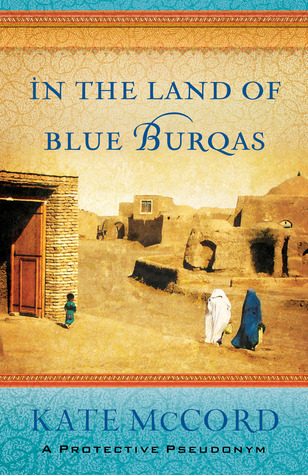
In the Land of Blue Burqas
by Kate McCord
What would it be like to live in a country where the language, religion, and culture are extremely different from your own, a country like Afghanistan? Kate McCord raised support from friends and embarked on what was destined to be a five year adventure as a project manager, arranging for and supervising programs to help the local people. In the process, she found ways to interact within the cultural norms which, if violated, could result in penalties including physical abuse, expulsion, or execution.
Although she could not openly evangelize, she spent much time there having tea with women, and sometimes men, sharing stories to illustrate the teachings of the Honorable Jesus who is regarded as a prophet in Islam. Those stories included parables Jesus himself shared with His followers. In recounting tales they could relate to and by the way she lived her life, Kate was able to show her Muslim neighbors and friends a God who loves them, unlike Allah, who is never associated with love. Allah’s followers obey him according to the interpretations of the local mullah in a most legalistic fashion.
Kate spent time learning the language and culture. Led by the Holy Spirit, she developed culturally sensitive ways to share difficult concepts like the Trinity. She lived as an Afghan woman, learning clothing requirements and social rules such as where to sit on a bus and when to make eye contact. Clearly a foreigner with her own religion, she adapted their customs to her own in a way that respected both traditions. Kate faced challenges in deciding whom to help in the most culturally appropriate way and looked to the locals to ascertain their attitudes toward individuals seeking aid. Knowing she could not revolutionize a society in which none of her many female friends said their husband had never beaten them, she nevertheless planted seeds of generosity, good attitudes, and kindness which helped the women in their relationships as well as showed them a side of the Honorable Jesus that they did not know thus drawing them to Him.
In the Land of Blue Burqas is the canvas on which Kate McCord paints a remarkably positive picture of Afghanistan and its citizens in spite of their dislike of most foreigners and regardless of the many brutal aspects of their culture. I came away with a clearer understanding of why the country vehemently resists change and is so hostile to non-Muslims. I also emerge from this enlightening book grateful that I live in a country where I am free to choose to worship a loving God.
Rating: 5/5
Category: Evangelism, Christian Missions
Notes: I had a difficult time choosing the memorable lines I wanted to share. Sound bites and even longer quotes don’t do this story justice. I urge you to read the book to get a more complete understanding. It is a fascinating read. It also stimulates me to want to read about how Islam plays out in other countries.
Publication: May 1, 2012—Moody Publishing
Memorable Lines:
Still, my greatest fear in the country has always been that I would be kidnapped and sold to some warlord as a fourth or fifth wife, relegated to household and sexual slavery behind a twelve-foot, mud-brick wall and locked gate. Even the mildest stories of Afghan women’s lives haunt me.
Our very presence challenges the power of the mullahs and the worldview of our neighbors. It’s one thing to hate and reject the voiceless, faceless masses of pig-eating, alcohol-drinking sons of Satan from the other side of the world—mythic caricatures interpreted by the mullahs through history and religion.
But we Christian foreigners are flesh and blood with eyes and voices, laughter and tears, stories and faith. When Afghans meet us, see our lives, hear our stories, and recognize our humanness, conflicting worldviews collide. The safe box of well-defined ideological fortress-orthodoxy trembles, walls collapse, and doors open.
 education pathways