
Home » Posts tagged 'inventor'
Tag Archives: inventor
Hedy, What a woman
Blogger friend Wendy has long been an admirer of Hedy Lamarr. When she read my review of The Only Woman in the Room, she took the information and ran with it. Thank you, Wendy, for adding to my appreciation of the remarkable Hedy Lamarr!
The Only Woman in the Room–beauty, talent, and brains
The Only Woman in the Room
by Marie Benedict
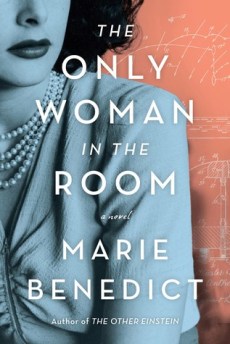 We meet Hedy Kiesler as a young actress in Vienna, Austria, in 1933 just as munitions manufacturer Friedrich (Fritz) Mandl begins courting her. Europe is on the cusp of war, and Hitler has started his attack on Jews. Under other circumstances, Hedy’s parents might have refused permission for the courtship, but they could see the benefit of a marriage to the rich, powerful, and well connected man.
Unfortunately, Mandl’s character changes after their marriage, and he becomes abusive and controlling. Hedy’s father had encouraged her as a child in studying many subjects, especially the sciences. Hedy teams her interest in science with her position as an ornament at dinner parties to listen in on the conversations of dangerous and powerful guests in the Mandl home. Later, after escaping from Fritz, she tries to use that knowledge to save lives as Hitler continues his military advances.
The book is divided into two parts. The first part deals with Hedy, her marriage, and the entrance of the United States into the war. The second focuses on her two careers after her escape from Fritz: one as the famous Hedy Lamarr (her new, non-German sounding, stage name) and the other as an inventor. Her talents as an actress and her incredible beauty outweigh her potential contributions to the war effort in the eyes of the men in power at that time.
In The Only Woman in the Room, Marie Benedict has created a historical novel about a very complex woman living in times that were difficult for everyone, but especially for women. It is important to remember that even though the book is well researched, Benedict is basically filling in the skeleton of a plot with details, some of which are true and others that only might have occurred. In this book Hedy is overcome with guilt over hearing Hitler’s plans but not doing anything about them. She doesn’t believe in God, but she is dogged by a fear that she has not done enough to make up for her silence and inaction. Of course, as she finds out later, as a woman there was little she could contribute that would be valued. During the last part of the book, I couldn’t help but wonder whose scales she was concerned about—her own sense of morality, public opinion, or judgement by a higher being. That was never clarified and yet it appeared to be a driving force for her.
I liked this book but not as much as Benedict’s two prior books, The Other Einstein and Carnegie’s Maid. All three novels address the hidden contributions of women. All three ladies are women of talent and intellect operating under difficult circumstances. All deserve respect, but I think I can empathize more with Mileva, Einstein’s first wife, and with Clara, a lady’s maid in Andrew Carnegie’s household. Hedy was born into privilege and by virtue of her beauty moved in important social circles. Although perhaps it shouldn’t, that background erects a barrier for me.
The Only Woman in the Room is a well-written and well-researched historical novel. Benedict specializes in drawing out the stories of women whose intellectual abilities have been overlooked. It will be interesting to see whose story she will discover and share in her next historical novel.
I would like to extend my thanks to netgalley.com and to Sourcebooks Landmark for giving me the opportunity to read this book in exchange for an honest review.
Rating: 4/5
Category: Historical Fiction
Publication: January 8, 2019—Sourcebooks Landmark
Memorable Lines:
I’d become like one of the Rembrandts on the wall or the antique Meissen porcelain on the sideboard. Simply another priceless, inanimate decoration for Fritz to display, a symbol of his wealth and prowess.
It seemed that my best chance of undermining the Third Reich—and ensuring that a German submarine or ship never again harmed a ship full of refugee children—might be to somehow use the knowledge I’d gathered to capitalize on the weakness in the German torpedo systems.
“I must admit it would be hard for us to sell our soldiers and sailors on a weapons system created by a woman. And we’re not going to try.”
 education pathways