Home » Posts tagged 'Indians'
Tag Archives: Indians
A Truth Revealed–ambition and revenge
A Truth Revealed
By Tracie Peterson

At age twelve, Laura Evans lost her mother to consumption in 1858. Her father, Granite Evans, who became her long distance hero, immediately sent her to boarding school. After ten years apart, she finally rejoins him in Cheyenne in the Wyoming territory which was a rough area at that time. Does Laura really know the man she has put on a pedestal for so many years? Is he the gracious, generous man the townspeople admire so much? He doesn’t hide his political ambitions, but is there a limit to what he will do to become governor of the territory or even president of the U.S.?
Wilson Porter is a young minister hoping for a government appointment to work with the Indians in the area. Until treaties can be sorted out, Wilson is employed in a local furniture shop using his woodworking skills to provide a living. When his father dies unexpectedly, Wilson encourages his mother and sister to travel to Cheyenne to be closer to him. Sadly, tragedy strikes the family again in several ways. When Wilson is injured, Laura takes him into her father’s home and nurses him back to health. They come to know each other better, but they also learn about an evil side of Cheyenne.
One of the main plot threads is faith in God. Both Laura and Wilson attend church, but Granite refuses. He blames God for his wife’s death. Wilson also has some questions of faith that he has to work through. Meanwhile, Laura finds support from a group of ladies at church who meet weekly to pray and work on handicrafts.
The characters have depth, and the setting seems true to the Cheyenne area during Wyoming’s territorial days. The Christian faith is consistently woven into the story as many of the characters look to God for strength and wisdom. Life is not a smooth path as the characters endure some very difficult challenges. The author has Laura attend a women’s college in Tennessee which actually existed and added realism to the skills and knowledge Laura had that would have been unusual for a woman during that time period. The theme of evil versus good permeates the novel. I enjoyed this book and am planning to return to the series to pick up the second book in the series which focuses on Laura’s friend Melody.
I received a complimentary copy of this book in exchange for an honest review. Opinions expressed in this review are completely my own.
Rating: 4/5
Category: Christian, Historical Fiction, Romance
Notes: #3 in The Heart of Cheyenne series. The background is fully explained and in good order; it can definitely be enjoyed as a standalone. There is an overlap of characters but there are central protagonists specific to each book.
Publication: November 5, 2024—Bethany House
Memorable Lines:
Rejections from the doctors, church, and family had left Granite hard and angry, and when his beloved wife died, he vowed to make a success of himself in such a way that he could get back at those who had denied her help.
“Evil men will always do evil things, and, yes, there will be times when we suffer the effects, even as God’s beloved children. However, I still believe in His love and goodness.”
“But you know, life is a risk. Every day presents new challenges and heartache. But it also allows for happiness and good gifts. And no matter which come our way, God is there to help us through.”
Caroline: Little House, Revisited
Caroline: Little House, Revisited
by Sarah Miller

The book Little House on the Prairie is part of a series of historical fiction books about the Ingalls family. Treasured by several generations of readers, it was written for children, but has also been enjoyed by adults and made into a television series. Caroline: Little House, Revisited tells the same story but from the perspective of the mother, Caroline. The original Little House on the Prairie book is written by one of the children in the story, Laura Ingalls Wilder. Both books are historical fiction with Little House on the Prairie based on Laura’s memory while Caroline is a combination of Wilder’s reminiscences, historical research, and Miller’s creativity.
Because of the source material and the intended audiences, the books are similar in most of the basic events, but quite different in a few aspects. Intending to read the two books side by side, I soon found Caroline deviating. In the book for adults, Caroline makes the long journey in a covered wagon from Wisconsin to Kansas pregnant with her third child. In Little House on the Prairie, Baby Carrie is already a part of the family and makes the trip with Pa, Ma, Mary, and Laura. Miller attributes this difference, which readers may find rather jarring at first, to Wilder’s condensing events because she had not planned on writing a series. She later continued writing about the Ingalls family because of her fans’ requests. As you might imagine, Caroline has a lot of focus on what it would be like to travel pregnant and give birth in very humble circumstances far from family support. Miller is a good writer who leads the reader to empathize with the protagonist even though her circumstances are outside the cultural norms of the twenty-first century.
Some of the disparities occur because Laura Ingalls Wilder was three years old when the family began their journeys. What impacts a child and stays with them can be quite different than what is important to an adult. Things that happen to the animals in the story are important to Laura. For example, in Wilder’s book, when they are trying to negotiate crossing a rushing creek with the wagon and ponies, their dog Jack disappears. This loss is traumatic for Laura. She recounts frequently how she tries to be as good as her older sister Mary and that sitting still is hard for her.
On several occasions, Indians came uninvited into their home and took things. This tale was a part of both books but only in Little House on the Prairie was there a description of the horrible odor in the house. It seems that the Indians were wearing skunk pelts! That would definitely make an impression on a young child.
Caroline is historical fiction that can make you feel like you are there—experiencing the jolting wagon, the terror of being a woman alone for days at a time in Indian Territory, the pain of childbirth, and the agony of malaria. The story is not all disheartening, however. Christmas is memorable, and the girls’ happiness over what we would consider a meager celebration will pull at heartstrings. The main characters are all likable. Pa is hardworking and kind. With his fiddle and the twinkle in his eye, he manages to make light of hardships. Ma (Caroline) is a strong woman who loves her husband and ever tries to smooth things over. She attempts to absorb the bad times and disappointments to protect her husband’s feelings and model strength for her daughters.
Caroline: Little House Revisited is a good work of historical fiction whether the reader is familiar with Little House on the Prairie or not. I also recommend Laura Ingalls Wilder’s original book for children. I enjoyed a reread as an adult, especially the version I chose with illustrations by Garth Williams.
Rating: 5/5
Category: Historical Fiction
Notes: The story of Little House on the Prairie told from the mother’s perspective.
Publication: 2017—Harper Collins
Memorable Lines:
“You’ll need two hands to fire it—hold your arms out straight ahead and lace your fingers around the stock, the way you do to pray.” Caroline’s tongue rose to object to the juxtaposition, then halted. If ever she had cause to fire this gun, there would indeed be a prayer behind it.
She sat down close beside Charles, too full for words, and looked out into the wide open night. It was to hard to imagine that darkness stretching all the way back across the long way they had come. And the fiddle sang, low and rich now, its melodies swaying in an easy back-and-forth rhythm until the home they had left and the home they would make seemed within reach of each other.
They would never, never forget this Christmas. None of them. Already Caroline could feel the morning embedding itself in her own memory. Her mind was a bottling it whole, so that it would remain fresh and glistening as a jar of preserves.
The Healing of Natalie Curtis–destroying a culture by forbidding its music
The Healing of Natalie Curtis
by Jane Kirkpatrick

The Healing of Natalie Curtis is historical fiction based on a period in the life of Natalie Curtis, a classically trained singer and pianist during a time when women in music had few lifetime choices—remain single achieving success as a performer or marry and teach. After suffering psychological trauma which also affected her physically, her brother George, who had been cowboying in the Southwest, invited her to accompany him because living there had done wonders for his health.
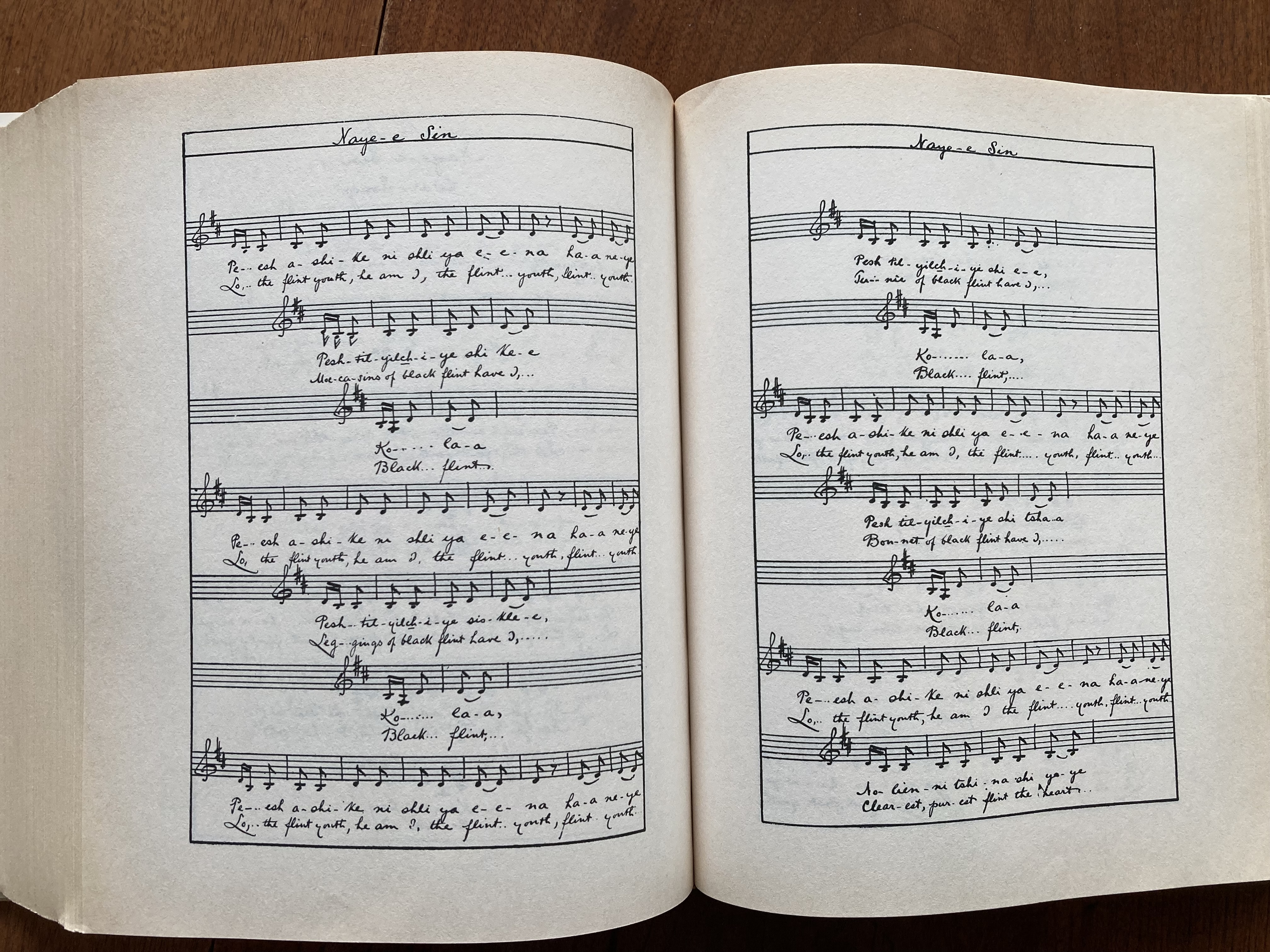
Natalie embarked on a developing, many year journey to record the music and dances of many American Indian tribes. She was afraid their voices would be forever lost as the U.S. government had imposed a Code of Offenses forbidding native singing, dancing, and other customs in its desire to assimilate the “savages” into a white culture. If they broke the Code, their food rations were cut and penitentiary was a possibility. Horrified by the treatment of the Indians, she set about to respectfully learn their stories and compile them along with their music in a book. To do this meant she had to gain legal access which she obtained by letters petitioning President Theodore Roosevelt and finally getting personal appointments with him.
Political change was slow and Natalie had roadblocks along the way. Her family wanted her at home, and she needed benefactors to fund her project. She made many friends, both Anglo and Indian along the way. She and her brother spent many nights camping, and she had to learn to ride horses western style. Her wardrobe changed from that of a proper lady in the early 1900’s to outrageous split skirts for riding and plain dresses adorned with native jewelry.
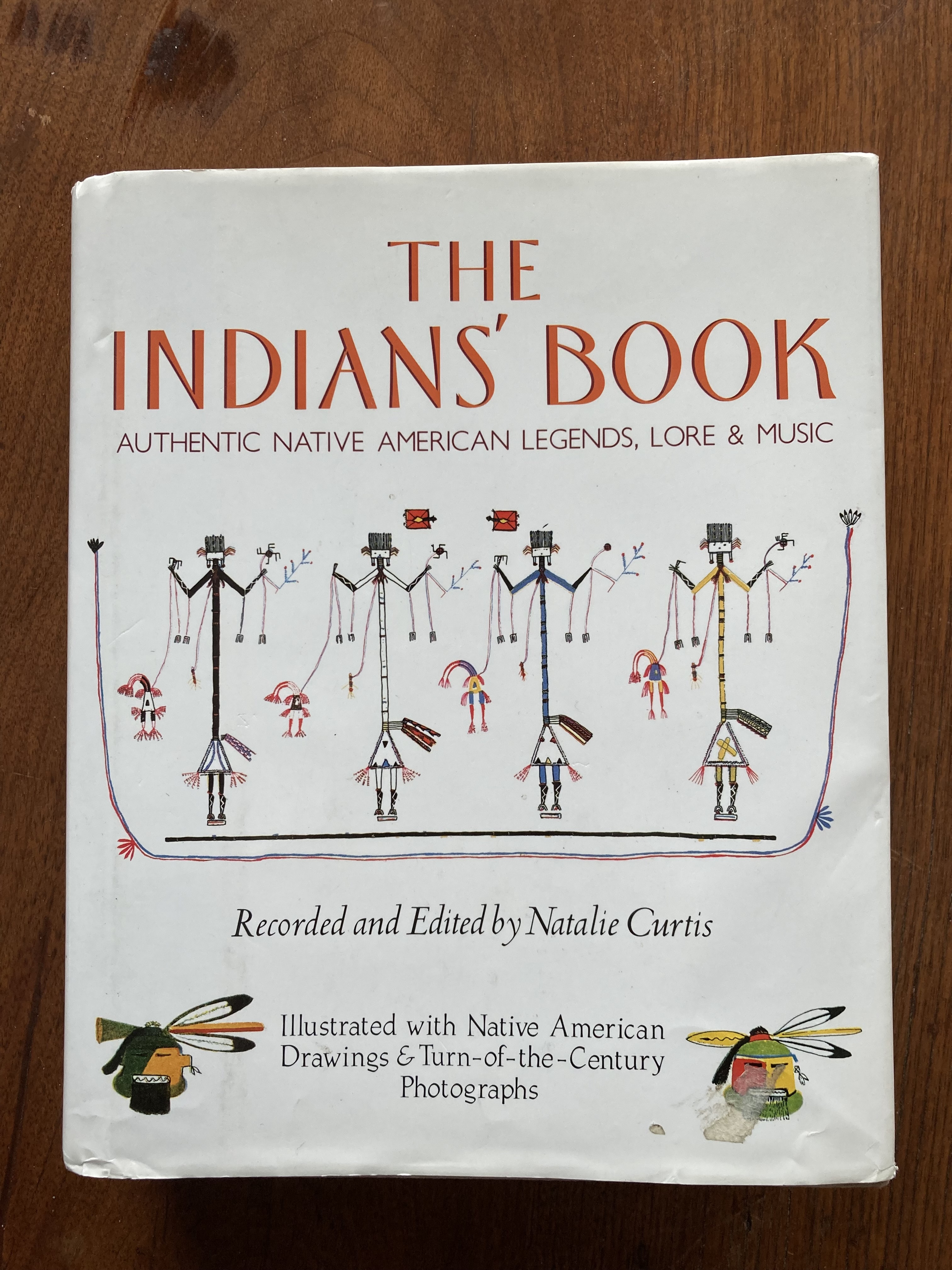
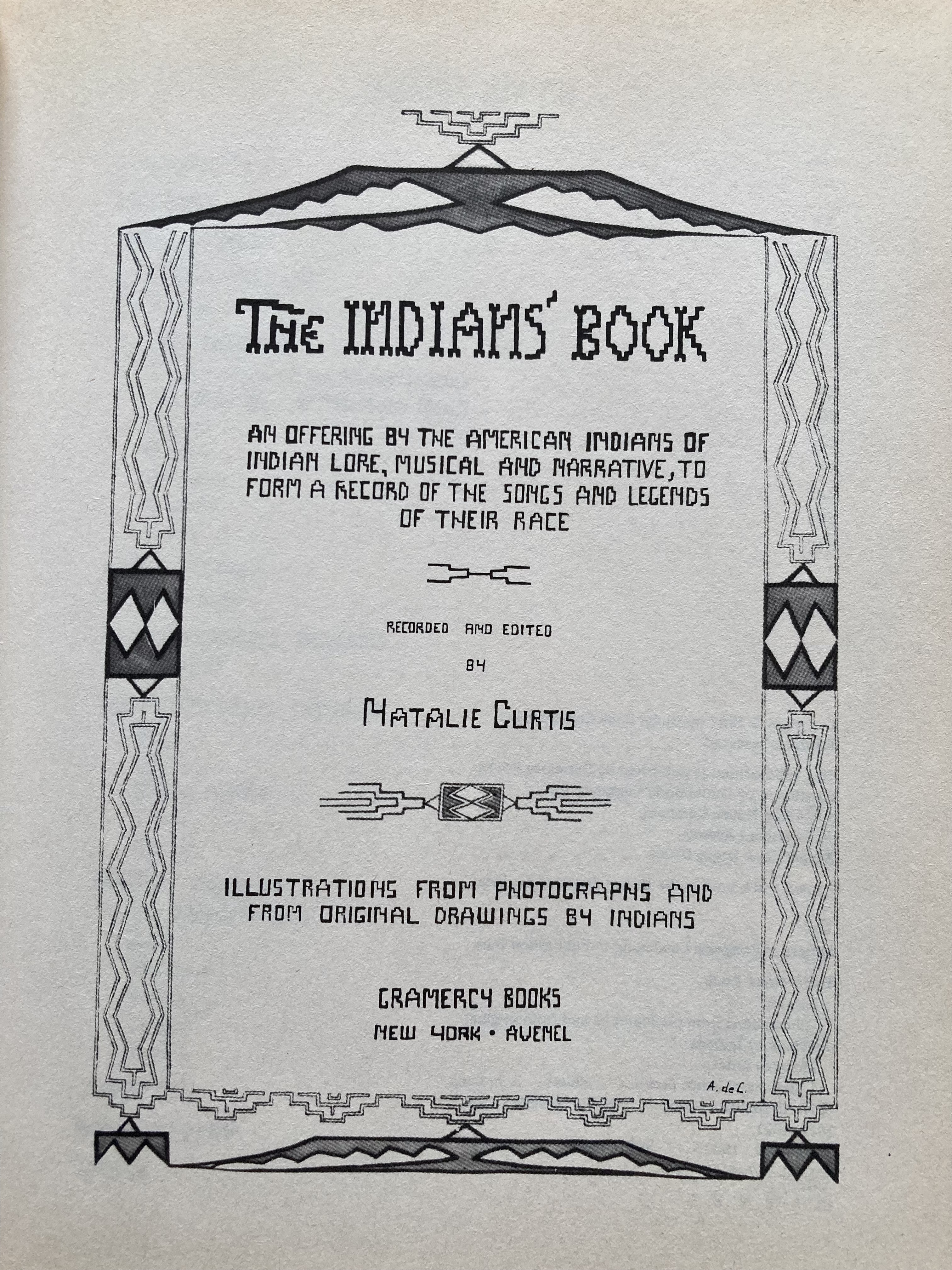
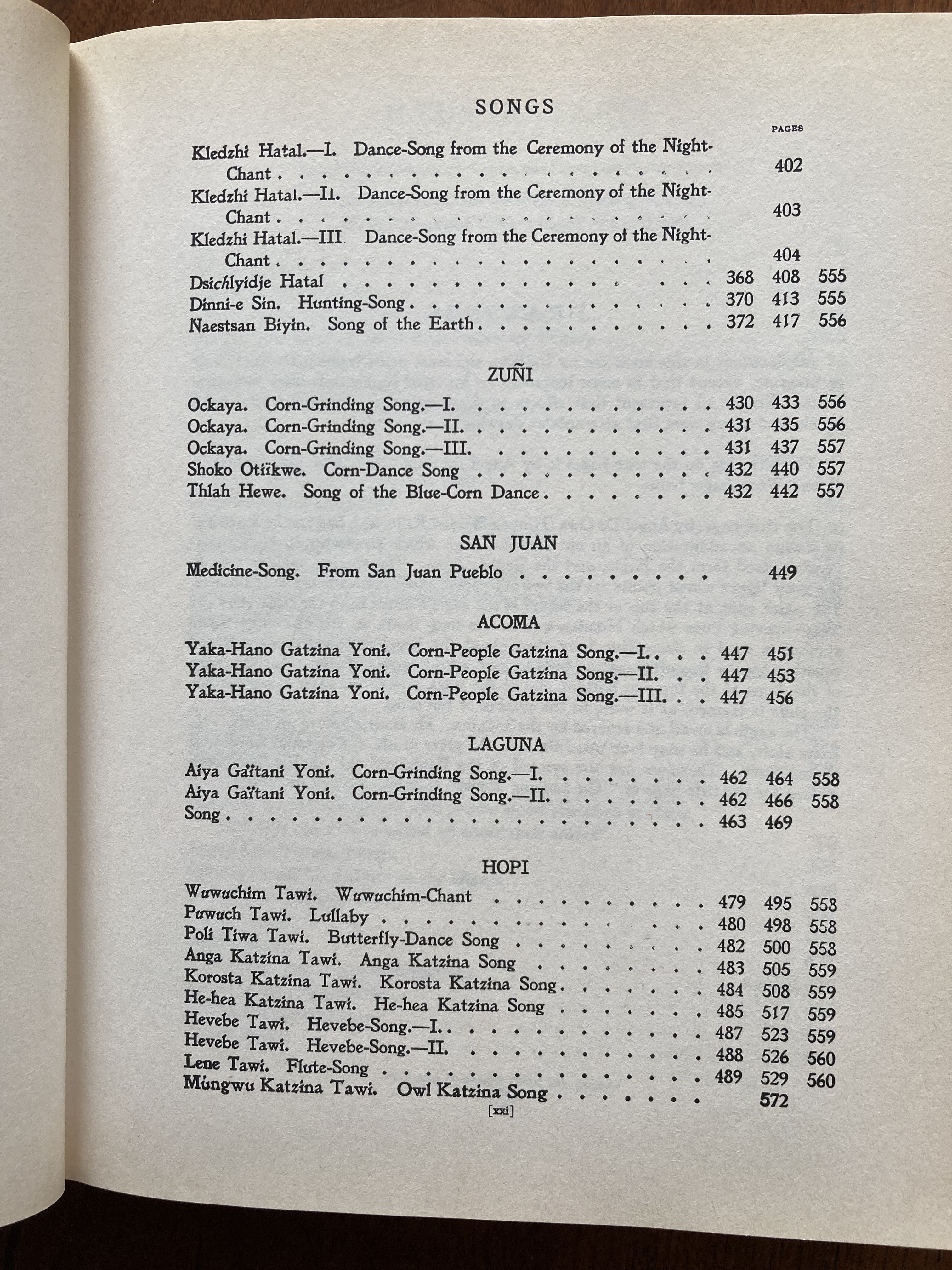
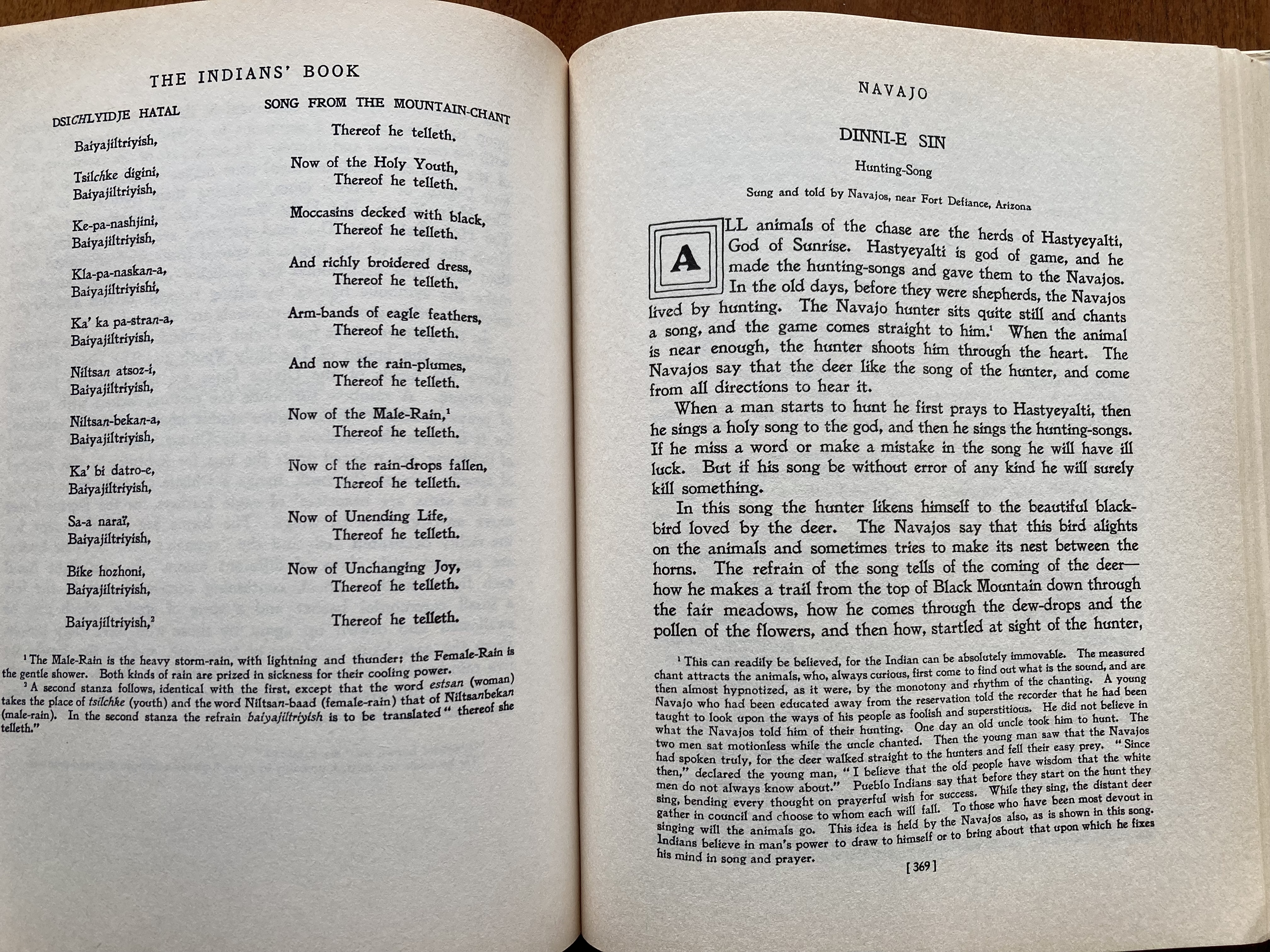
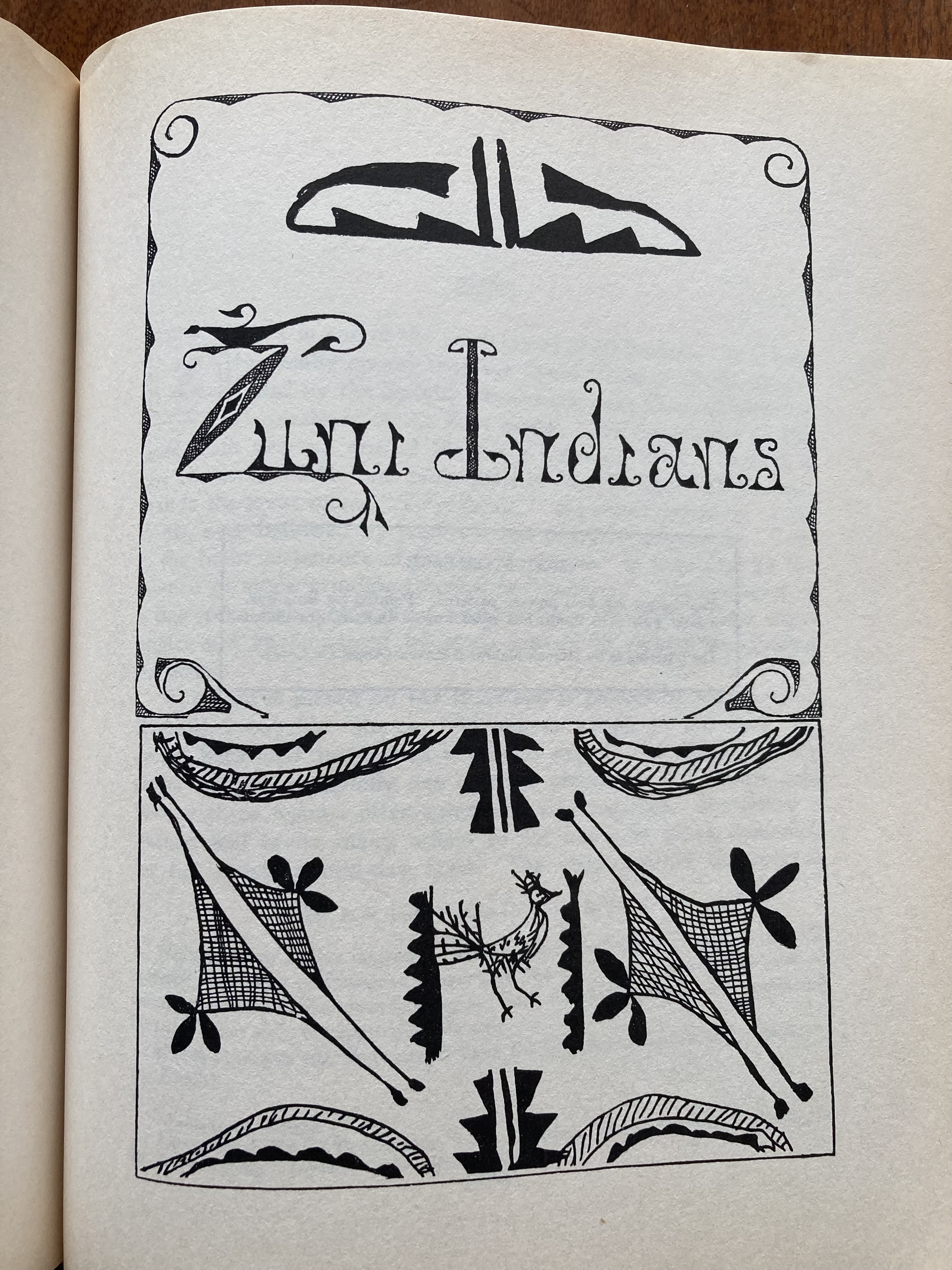
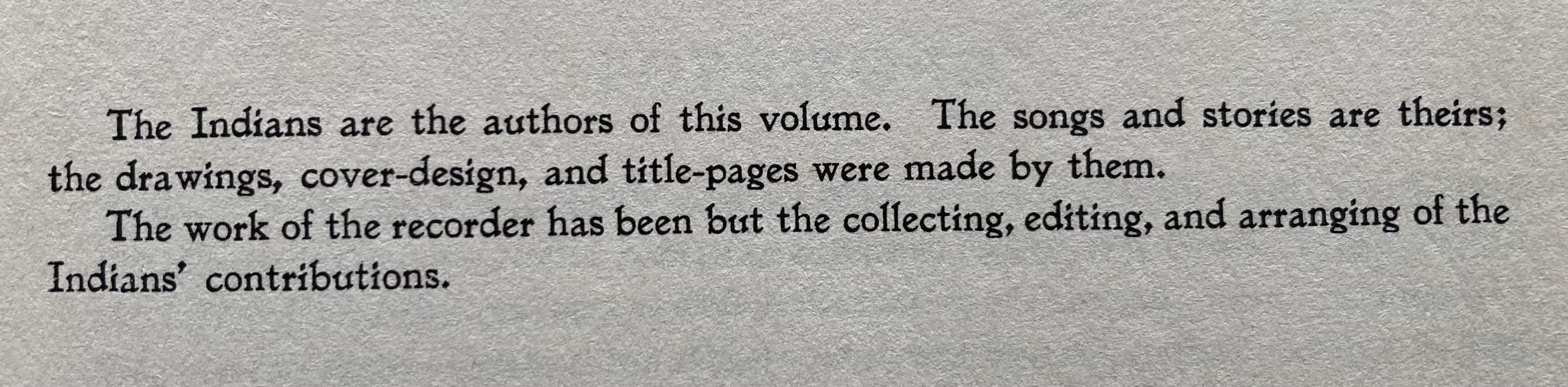
Initially I was puzzled by Natalie’s illness and her abrupt abandonment of the music world for five years, but the causes were revealed as the story progressed. This book is as much about Natalie’s struggle to change attitudes toward the Indians and consequently treatment of them as about the music itself. She threw herself into this project with the same enthusiasm and drive that she had exerted in developing her music career. The book is very factually based except for conversations which had to be imagined but were based on the context of her known travels and meetings. By the time I finished reading The Healing of Natalie Curtis, I had ordered a copy of the book Natalie put together from her research, The Indians’ Book, which was a major resource for author Jane Kirkpatrick. My desire was to see the finished product of almost 600 pages. Wanting to make it clear that the book truly belonged to the Indians, she called herself the editor rather than the author.
I received a complimentary copy of this book in exchange for an honest review. Opinions expressed in this review are completely my own.
Rating: 4/5
Category: Historical Fiction
Notes: 1. In keeping with the times, Natalie Curtis, Jane Kirkpatrick, and I have used the designation “Indians” for the indigenous people living in the U.S. The various tribes all had names for themselves in their own languages which often translated as “The People.”
2. The end of the book contains: Suggested Additional Reading, Book Group Questions, and Author’s Notes that address cultural issues and the factual basis for the book.
Publication: September 7, 2021—Revell (Baker Publishing)
Memorable Lines:
This dismissiveness had happened before, mostly with professional men who saw any independent unmarried woman as lacking brains and capable of nothing more than sitting at Daddy’s table and taking nourishment from others.
“What I don’t understand,” Natalie said, “is how the Hopi are punished for practicing their religious customs, and those same songs and dances are advertised to bring people to see them. Burton approves because the railroad wants the business?”
This was what she was called to do, to save these songs and more, to give these good people hope that their way of life would not be lost to distant winds.
PHOTOGRAPHS FROM
THE INDIANS’ BOOK:
 education pathways