Home » Posts tagged 'hunger'
Tag Archives: hunger
The Teacher of Warsaw–hope in the middle of despair
The Teacher of Warsaw
by Mario Escobar
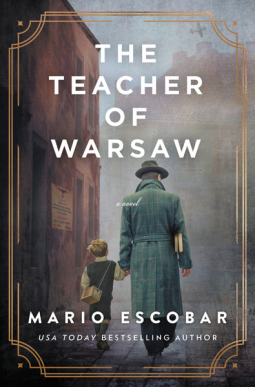
When a book leaves an impact on your soul after the covers are closed, you know you have read a treasure. I was a few chapters into The Teacher of Warsaw before I was captivated by Mario Escobar’s work of historical fiction. After I understood what this author with a master’s degree in Modern History had set out to share, I was repeatedly drawn back from my world into the sad and inspiring world of Janusz Korczak, a pediatrician and teacher with many talents who dedicated his life to the children in his orphanage. They suffered together as the Nazis made their lives and the lives of all Polish Jews a nightmare of starvation and deprivation. Thanks to Dr. Korczak and the dedicated group of tutors who worked alongside him, the children were given hope and taught to love even their enemies. Korczak was Jewish by heritage but had not been raised in a religious family. He admired and appreciated many things about the Jew Jesus and likened Him to the anticipated Messiah, but did not accept Him as the fulfillment of prophecies. Dr. Korczak described himself at various times as an atheist, an agnostic, and a seeker, but those around him would have been hard pressed to find a stronger, more sacrificial, more ethical, and more loving leader. In return the children loved him, and he was regarded with respect by all but the most evil of Nazis.
Dr. Korczak was encouraged by many, including Polish social worker Irena Sendler, to escape the Warsaw Ghetto and the extermination which was surely coming, but his answer was always the same: the children of the orphanage needed him and he would not abandon them. The Teacher of Warsaw is both horrifying and inspiring as it depicts the worst and the best of mankind and demonstrates the power of love.
I received a complimentary copy of this book in exchange for an honest review. Opinions expressed in this review are completely my own.
Rating: 5/5
Category: Historical Fiction
Notes: 1. Translated from Spanish by Gretchen Abernathy.
2. Includes two sections that discuss the historical basis of the story, a timeline of the Warsaw Ghetto, and discussion questions for the reader.
Publication: June 7, 2022—Harper Muse
Memorable Lines:
“Can you think what would’ve happened to the boy had we not been passing by? Everything happens for a reason. Even the greatest misfortunes can become the sweetest blessings.”
“We labor to give them back their hope: but we cannot give what we do not possess. Therefore, be full of hope this morning. May your joy overflow because you do what you do out of love and service for the weakest ones. And when negative thoughts come to steal your peace and joy, don’t let them make a nest in your minds. We can’t avoid those kinds of thoughts, but we can keep them from controlling us.”
I had two hundred children whom I loved and who loved me. I was undoubtedly the richest man in the Warsaw ghetto.
The Guernsey Literary and Potato Peel Pie Society–comeback from World War II
The Guernsey Literary and Potato Peel Pie Society
by Mary Ann Shaffer and Annie Barrows
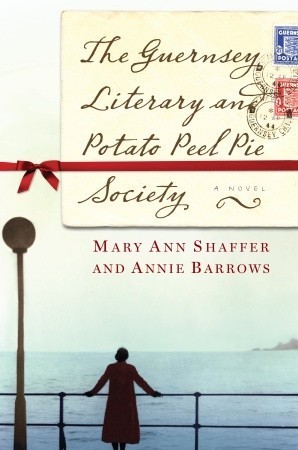
I approach epistolary fiction with a bit of trepidation. Can a story really be told effectively through a series of letters? In the case of the unusually named The Guernsey Literary and Potato Peel Pie Society, that is probably the best way to relate the events of the Nazi occupation of Guernsey and to present the characters and how the war affected them.
Juliet Ashton is a budding author with one successful book based on a column she wrote. Her publisher, Sidney, and his younger sister, Sophie, are friends of Juliet; their letters are part of the correspondence that moves the story along. The heart of this tale begins when a letter finds its way to Juliet in London from Guernsey where Dawsey Adams has bought a book by Charles Lamb with her name and address. Dawsey seeks more books by Lamb as well as information about him. Their correspondence leads to a discussion of the local book club which began during the Nazi Occupation.
Most of the book club characters are quite likable and work together because of, or in spite of, their idiosyncrasies and the hardships they have endured. They welcome the opportunity to share their stories with Juliet for potential publication. They are quite open to her personally as well. Juliet grows as a writer, her maternal instincts emerge, and she shows strength of character as she discovers what is important to her.
The Guernsey Literary and Potato Peel Pie Society is well-written with detailed settings and empathy for the characters. It is both a gentle and a strong book and gives a fair depiction of Nazi soldiers, most of whom suffer deprivation in Guernsey along with the locals. Some Nazis are depicted as brutal and a few as humane. Some citizens are supportive of each other and a few are treacherous. The accounts also included Todt slaves, brought in by the Germans. They suffer the most in this book. The Guernsey Literary and Potato Peel Pie Society has deservedly caused a lot of buzz among readers and has been made into a movie.
Rating: 5/5
Category: Historical Fiction
Publication: July 29, 2008—Dial Press
Memorable Lines:
I turned to a man sitting against a fence nearby and called out “We’re saved! It’s the British!” Then I saw he was dead. He had only missed it by minutes. I sat down in the mud and sobbed as though he’d been my best friend.
All those people I’ve come to know and even love a little, waiting to see—me. And I, without any paper to hide behind….I have become better at writing than living…On the page, I’m perfectly charming, but that’s just a trick I learned. It has nothing to do with me.
Dawsey was seeing to my bags and making sure that Kit didn’t fall off the pier and generally making himself useful. I began to see that this is what he does—and that everyone depends upon him to do it.
A Walk in the Woods–bears, snakes, and spooky woods…oh, my!
A Walk in the Woods
by Bill Bryson
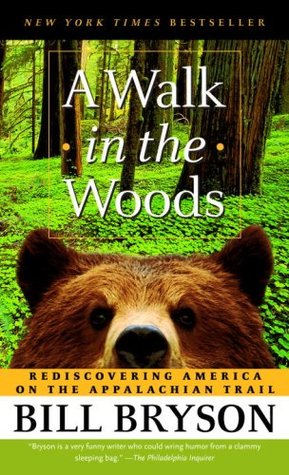
The Appalachian Trail, a little over 2,000 miles of challenging terrain, is a test that hikers of all ages, genders, and experience levels attack in various ways. There are parking lot visitors; they drive in, look around a bit and perhaps picnic, but do not actually hike the trail. Section hikers traverse parts of the trail at various times with a few completing the whole trail over the course of a lifetime. Then there are a few hardy souls who are full thru-hikers; they keep at it from south to north until they complete the trail.
As you might imagine, hiking the Appalachian Trail is an endeavor that requires a lot of planning and the purchase of expensive equipment to get the lightest weight gear possible. Carrying a forty pound backpack all day over rough terrain with formidable ascents and descents is a difficult task indeed. Author Bill Bryson who has written a number of travel books relates in A Walk in the Woods his experiences on the Appalachian Trail with Stephen Katz, a former school chum he had traveled around Europe with twenty-years prior. Much of the book describes the harsh realities of the hike and the delightful relief of their occasional forays into civilization to replenish supplies and sleep in a real bed. Some of the book relates their changing relationship as they confront the trials of the trail together as well as anecdotes about the interesting people they meet along the way.
Bryson’s writing style is comfortable. The descriptions are detailed without being overblown, and there is just enough history of the trail to give the reader an understanding of why it is the way it is. Often humorous, it provides an interesting read taking the reader into a once in a lifetime experience on the Appalachian Trail.
Rating: 4/5
Category: Travel
Notes: Some profanity
Publication: December 26, 2006 (first published May 5, 1998)—Anchor Books
Memorable Lines:
But even men far tougher and more attuned to the wilderness than Thoreau were sobered by its strange and palpable menace. Daniel Boone, who not only wrestled bears but tried to date their sisters, described corners of the southern Appalachians as “so wild and horrid that it is impossible to behold them without terror.” When Daniel Boone is uneasy, you know it’s time to watch your step.
I was beginning to appreciate that the central feature of life on the Appalachian Trail is deprivation, that the whole point of the experience is to remove yourself so thoroughly from the conveniences of everyday life that the most ordinary things—processed cheese, a can of pop gorgeously beaded with condensation—fill you with wonder and gratitude.
And all the time, as we crept along on this absurdly narrow, dangerous perch, we were half-blinded by flying snow and jostled by gusts of wind, which roared through the dancing trees and shook us by our packs. This wasn’t a blizzard; it was a tempest.
This Road We Traveled–“Mother of Oregon”
This Road We Traveled
by Jane Kirkpatrick
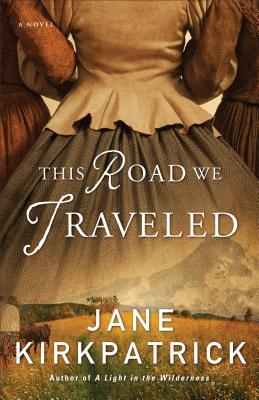 The wilds of the western United States were conquered by the strengths, sacrifices, and sometimes deaths of women as well as men who left the security of their homes for adventure and, for some, a better life. Women often made the dangerous journey solely because their husbands made that decision for them. Women of that day had no vote and no right to apply for the free land being apportioned in Oregon. Oftentimes heart wrenching decisions were made for them, leaving them to trust in God for the consequences.
Jane Kirkpatrick researched the history of Tabitha Brown carefully and then brought her story to life in a fictional account of her actual travels from Missouri to Oregon in 1846. Never wanting to be dependent on her grown children, or perhaps because her independent nature carved from early widowhood drew wedges between her and her sons, Tabitha (Tabby) took responsibility for her decision to accompany part of her family on a harrowing journey and also care for her elderly brother-in-law on this long and dangerous trip.
This Road We Traveled gives insight into the physical, emotional, and spiritual struggles the various characters endure as seen through the eyes of Tabby, her daughter Pherne, and Pherne’s daughter Virgilia. These three generations of women are united in their love for God, family, and each other. Each struggles with different challenges and their characters are formed in the forge of the many tests they endure.
Kirkpatrick is a skilled storyteller cycling through the main characters’ points of view revealing the events occurring in each life without getting bogged down in any one character’s difficulties. None of the issues are simple, varying from choosing the correct fork in the road to discovering God’s will for the future. One woman dealt with reining in her tongue so that her words matched the kindness in her heart. Another struggled with the importance of possessions, and the third had difficulties with friendships.
The pacing of the plot is good and the characters are well developed. Although there are many Christian themes emphasizing moral choices, the book is not about a cookie cutter religion; the characters have various attitudes about their relationship with God and how they should live out their faith. The author describes the desert landscape, the treacherous mountain passes, and the homes, both humble and more luxurious with equal skill. Slavery, an issue that is being stiltedly worked out during that time period, crops up several times. The various Indian tribes are not stereotyped. Some are quite generous to the travelers who are in the throes of desperation and others are violent and aggressive. Politics also play a role as the U.S. is afraid the British will cut off routes in the west.
This Road We Traveled brings to life an important part of history. Tabitha was a real person who actually made this journey at the age of 66. She had hardships on the journey and went on to help many in the state of Oregon which publicly acknowledges her contributions with the title “Mother of Oregon.” I learned a lot about her life, travels in the 1840’s to the west, and the difficulties of settling into a new community. Tabby’s story is an inspiration, and I am grateful to Kirkpatrick for sharing it.
Rating: 5/5
Category: Christian, Historical Fiction
Notes: 1.Questions for discussion are included.
2. I read this book as the first book chosen for a book club newly formed by friends at church and held via Zoom meetings. I think the consensus was that we all enjoyed the book. There was plenty of depth for discussion on a variety of topics.
Publication: September 6, 2016—Revell
Memorable Lines:
“Your sadness, your anger at Orus, at me, those are losses reaching out like the gnarled hands of Shakespeare’s witches. They seek something to hold on to, but there is only air.”
Oh, she’d prayed and asked for guidance but didn’t see the clarity she would have liked. Some choices were like that. God left her to step into uncertainty. She guessed that’s where faith grew strongest.
“In the end, things don’t really matter. We think they do, but they don’t. What matters is keeping those we love alive.”
My Real Name is Hanna–extremes of human behavior
My Real Name is Hanna
by Tara Lynn Masih
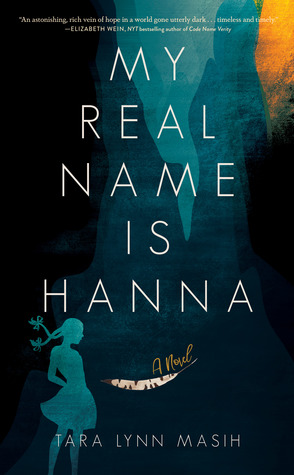 My Real Name is Hanna is the story of a Jewish girl and her family who live under horrible circumstances in Ukraine to escape death at the hand of the Nazis and others. This book by Tara Lynn Masih has much potential. Many parts of the survival tale are drawn from the story of a real family that had to live underground. The first part of the book bounces around a little and then settles down into a sequential tale. Although it is a sad story, I didn’t really find myself emotionally involved with any of the characters. Parts of the narrative got my attention, such as when family members were in danger. I wanted to see them survive, but mainly I wanted the book to be over.
The author uses words from other languages freely. I like the authenticity of that but I would have appreciated a glossary, and I think young people would find that helpful as well. The area the family lives in has been occupied by many countries so there are competing cultures and languages—Jewish, Polish, Ukrainian, Russian, and German.
I actually found the “Historical Notes” at the end of the book more interesting than the book itself. Unfortunately, the author includes her own political stance on current events in these historical notes. If she wants to put forth these ideas in her book, I would suggest she do it in an editorial type section separate from a discussion of the historical basis of the book. Like the author, I hope the day will come when we don’t need reminders of the Holocaust as cautionary tales against cruelty. I don’t think, however, that it is appropriate to use her historical notes as a platform for indoctrinating young people into her political views. The story should stand on its own merits, and young people are capable of reading the book and making their own moral conclusions.
I would like to extend my thanks to netgalley.com and to Mandel Vilar Press for giving me the opportunity to read this book in exchange for an honest review.
Rating: 3/5
Category: Historical Fiction, Teens
Notes: Interest Level—Ages 12 and up
Grade Level 10-12
Publication: September 25, 2018—Mandel Vilar Press
Memorable Lines:
I see in my mind again those posters in the window, the big red letters, the lice, the blaming of Jews for the war. Someday, someone will betray us. For money, for food, for their own lives spared.
I can now hear what sounds like heavy boots approaching the house from down the lane, grinding the dirt and gravel with their murderous purpose.
When you’re hidden away, with no freedom, you crave news of the outside world as much as you crave food.
 education pathways