Home » Posts tagged 'hate'
Tag Archives: hate
Under the Magnolias–a darkness of the mind
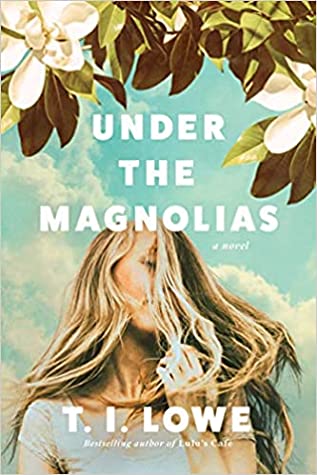
Under the Magnolias
by T. I. Lowe
Dave Foster is a tobacco farmer and the pastor of the church he fondly refers to as the First Riffraff of Magnolia. He has a large family including two sets of twins, a mentally challenged son, and another who is physically disabled. His wife Edith is a loving mother who somehow manages her husband’s dark times and keeps the family happy. The main character is the oldest daughter Austin, and the story is related from her point of view as she finds herself at the age of fourteen having to become a mother to her six siblings and walk the fine line of respect for her father while acting as a buffer between him and the other children. She works to maintain his standing in the community and keep the tobacco farm running.
Under the Magnolias is very much a character driven story as Austin struggles and sacrifices for others. She is a very intelligent young lady who puts aside her dreams to help her family survive. Unfortunately her father’s dark times become deeper and more frequent and his outbursts more violent. A teenager, Austin doesn’t really know how to deal with her father’s mental issues or get assistance.
Help does come in the form of the mayor’s handsome son. Although Austin won’t let him get close because she is driven to maintain family secrets, he continues to stand by her. Others in their little church and her siblings are important to the story as they all suffer from the occasions when Dave’s mental illness surfaces and bubbles over.
This book is very well-written. In terms of emotional impact, it is hard at times to read. The author, T. I. Lowe, puts the reader right in the middle of the struggles waiting, as Austin does, in the good times for the other shoe to drop. “It was too good. Too shiny. Too normal. No matter how much I wished, prayed, begged, I knew this season wouldn’t last.”
The story takes place from 1980 through 1988. There is a final chapter that relates how life works out for all of the characters. It makes a fitting conclusion because over the course of the book the reader has gotten to know each of them, understanding why they are the way they are. The pacing is excellent with about two chapters per year presenting cumulative snapshots rather than blow-by-blow descriptions. There is an authentic South Carolina flavor in both plot and language. I highly recommend Under the Magnolias as a tale whose characters resonate and linger long after the final page.
I received a complimentary copy of this book in exchange for an honest review. Opinions expressed in this review are completely my own.
Rating: 5/5
Category: General Fiction (Adult), Women’s Fiction
Notes: Clean—no inappropriate language, sex, or violence
Publication: May 4, 2021—Tyndale House Publishers
Memorable Lines:
Looking through the innocent lens of adolescence, those happier days were perfection. Sadly, they had an expiration date just like those snack cakes. Happiness staled and nothing was pleasing after that. But just like the expired cakes in a meager season, we had no other choice but to stomach whatever life tossed our way next.
I figured it was a blessing that she could pretend something didn’t happen, but we would both learn later in life that pretending something away was no better than constantly dwelling on it. Both produced impactful wounds that tended to fester in other parts of living.
“Honey, the living creep me out. Not the dead.” He picked up a cosmetic brush and touched it to Mrs. Fannie’s pink cheek. “The living can be cruel, judgmental, quick to complain, and slow to please. The dead never yell or cuss you out. Or call you ugly names.” There was such a sadness to his gentle voice.
1984–is 2021 moving us into this future?
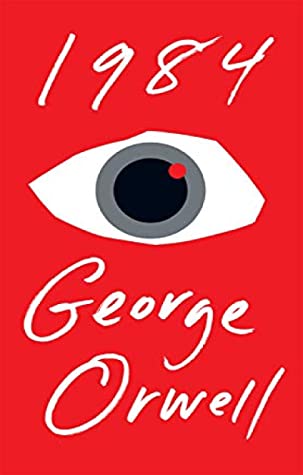
1984
by George Orwell
When I finished the first chapter of 1984, which introduces the very intrusive society of Oceania dominated by Big Brother and the Party, I was disquieted by what was happening in that society and the easy comparison to current events in the U.S. and around the world in 2020-2021. I knew I would return to the book, but immersed in the intensity of the total lack of personal freedom in this totalitarian regime, I allowed myself a few hours respite. I was only reading about it; what if I had to live it? George Orwell had my complete attention within the well-crafted words of the first few pages.
Winston Smith works in the Records Department at the Ministry of Truth where he rewrites the past to align it with current events. This process involves multiple revisions over time with all documentary evidence of a different previous reality immediately destroyed. He has a shabby existence—never enough food, a cold, dingy apartment, and most importantly the monitoring of every movement, facial expression, and utterance 24/7 by Big Brother through a telescreen. Even Big Brother’s eyes on giant posters seem to follow him. In this society, sex is allowed occasionally, but only for the sole purpose of procreation. Children belong to groups called “Spies;” and as they mature, they advance to the “Youth League.” Both organizations encourage their members to denounce their parents and other adults to the Thought Police for crimes of unorthodoxy. Party members engage in Two Minutes Hate daily to keep their loathing at a high level and focused on the internal threat, The Enemy of the People, and on the external threat, whatever group of countries is supposedly currently at war with Oceania.
Winston internally rebels, and 1984 charts the expression of his rebellion as well as the consequences. His parents were disappeared when he was ten or eleven. Using doublethink to convince the population that what is, isn’t and Newspeak to provide a minimal language in which it is impossible to express certain ideas, Big Brother (the Party) gains control of minds subtly, but effectively. We are, sadly, seeing a version of that today with censorship and mind control by main stream media as they tell us what to think and say and try to shame those who disagree. It is echoed in our educational system that stresses rote learning, eliminates creativity, and insists on social, political, and religious “correctness.” We are in a season that calls us to read or reread 1984 before this work of fiction becomes reality and is banned.
Rating: 5/5
Category: Fiction
Notes: 1. In the Signet Classic version, there is an afterword by Erich Fromm, a psychoanalyst who moved from Nazi Germany to the U.S. in 1934. This essay is about several books, including 1984 that warn us of the future unless we change our direction.
2. I strongly recommend reading Orwell’s Animal Farm first (and especially for younger readers) as an introduction to the ideas found in both books. As an allegory, Animal Farm is more gentle and less descriptive of the violence that is part of the control of the populace.
3. A reader’s guide is available at penguinrandomhouse.com
Publication: Originally it was published in 1949. I read one of the many reprints. My copy is a Signet Classic published January 1, 1961 by Penguin Random House.
Memorable Lines:
And if all others accepted the lie which the Party imposed—if all records told the same tale—then the lie passed into history and became truth. “Who controls the past,” ran the Party slogan, “controls the future: who controls the present controls the past.”
Doublethink means the power of holding two contradictory beliefs in one’s mind simultaneously, and accepting both of them…The process has to be conscious, or it would not be carried out with sufficient precision, but it also has to be unconscious or it would bring with it a feeling of falsity and hence of guilt…Even in using the word doublethink it is necessary to exercise doublethink.
…no change of doctrine or in political alignment can ever be admitted…And if the facts say otherwise, then the facts must be altered.
In the Land of Blue Burqas–eye opening view of the women behind the blue veils
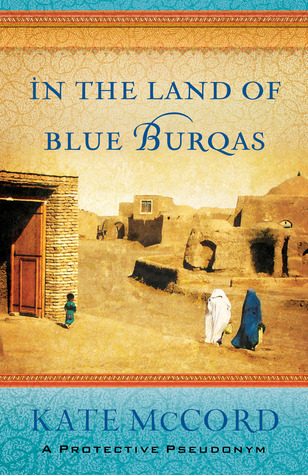
In the Land of Blue Burqas
by Kate McCord
What would it be like to live in a country where the language, religion, and culture are extremely different from your own, a country like Afghanistan? Kate McCord raised support from friends and embarked on what was destined to be a five year adventure as a project manager, arranging for and supervising programs to help the local people. In the process, she found ways to interact within the cultural norms which, if violated, could result in penalties including physical abuse, expulsion, or execution.
Although she could not openly evangelize, she spent much time there having tea with women, and sometimes men, sharing stories to illustrate the teachings of the Honorable Jesus who is regarded as a prophet in Islam. Those stories included parables Jesus himself shared with His followers. In recounting tales they could relate to and by the way she lived her life, Kate was able to show her Muslim neighbors and friends a God who loves them, unlike Allah, who is never associated with love. Allah’s followers obey him according to the interpretations of the local mullah in a most legalistic fashion.
Kate spent time learning the language and culture. Led by the Holy Spirit, she developed culturally sensitive ways to share difficult concepts like the Trinity. She lived as an Afghan woman, learning clothing requirements and social rules such as where to sit on a bus and when to make eye contact. Clearly a foreigner with her own religion, she adapted their customs to her own in a way that respected both traditions. Kate faced challenges in deciding whom to help in the most culturally appropriate way and looked to the locals to ascertain their attitudes toward individuals seeking aid. Knowing she could not revolutionize a society in which none of her many female friends said their husband had never beaten them, she nevertheless planted seeds of generosity, good attitudes, and kindness which helped the women in their relationships as well as showed them a side of the Honorable Jesus that they did not know thus drawing them to Him.
In the Land of Blue Burqas is the canvas on which Kate McCord paints a remarkably positive picture of Afghanistan and its citizens in spite of their dislike of most foreigners and regardless of the many brutal aspects of their culture. I came away with a clearer understanding of why the country vehemently resists change and is so hostile to non-Muslims. I also emerge from this enlightening book grateful that I live in a country where I am free to choose to worship a loving God.
Rating: 5/5
Category: Evangelism, Christian Missions
Notes: I had a difficult time choosing the memorable lines I wanted to share. Sound bites and even longer quotes don’t do this story justice. I urge you to read the book to get a more complete understanding. It is a fascinating read. It also stimulates me to want to read about how Islam plays out in other countries.
Publication: May 1, 2012—Moody Publishing
Memorable Lines:
Still, my greatest fear in the country has always been that I would be kidnapped and sold to some warlord as a fourth or fifth wife, relegated to household and sexual slavery behind a twelve-foot, mud-brick wall and locked gate. Even the mildest stories of Afghan women’s lives haunt me.
Our very presence challenges the power of the mullahs and the worldview of our neighbors. It’s one thing to hate and reject the voiceless, faceless masses of pig-eating, alcohol-drinking sons of Satan from the other side of the world—mythic caricatures interpreted by the mullahs through history and religion.
But we Christian foreigners are flesh and blood with eyes and voices, laughter and tears, stories and faith. When Afghans meet us, see our lives, hear our stories, and recognize our humanness, conflicting worldviews collide. The safe box of well-defined ideological fortress-orthodoxy trembles, walls collapse, and doors open.
 education pathways